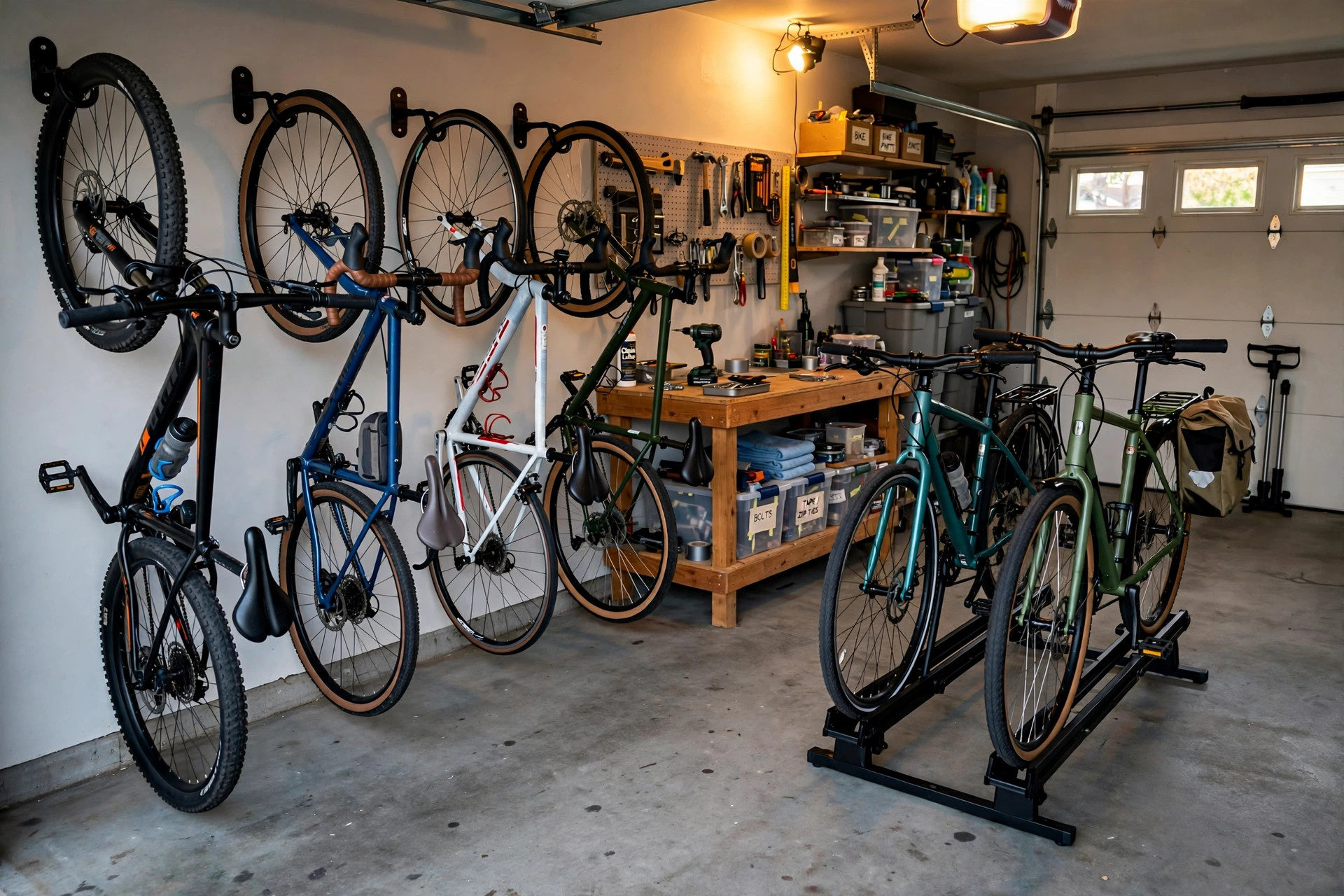

Anyone who owns more than one bicycle knows how fast a garage or apartment can turn into a mess of tangled frames and bent wheels. A good rack brings order. It lifts bikes off the floor, keeps tires round, and frees space for the car, the lawn tools, and the workbench. But the spread of prices can puzzle a buyer. A simple hook may cost less than a sandwich, while a deluxe standing rack may cost as much as a used bike itself. This bike storage racks price comparison USA guide lays out the types, the costs, and the trade-offs in plain terms so you can match the right rack to your space and your wallet. Prices mentioned here reflect what major American retailers charged in recent years and may shift with sales and seasons.
Why Price Comparison Matters
A bike storage racks price comparison USA exercise pays off because the same basic job is done at very different price points. A wall hook holds a bike. A free-standing tower holds four. A ceiling hoist holds two and keeps the floor fully clear. Materials differ too: coated steel, plain aluminum, wood, plastic. Each choice moves the price.
Buyers often overpay at the first store they visit. A quick look at several sellers shows how wide the range runs. One store may sell a basic two-bike floor stand for twenty dollars while another sells the same design for forty. Larger racks show even wider gaps. Comparison also reveals quality clues. A rack priced suspiciously low may use thin metal that bends under a heavy mountain bike. A fair bike storage racks price comparison USA review balances cost against build, finish, and warranty.
Households with children face a special concern. Kids ride often and toss bikes down carelessly. A sturdy rack protects the bikes and keeps walkways clear so nobody trips. Apartment dwellers have the opposite problem: very little floor space and a landlord who may forbid wall anchors. For them, a compact stand that needs no drilling is worth its weight. Comparing prices across types helps each household pick the right tool.
Types of Bike Storage Racks: Bike Storage Racks Price Comparison Usa
Wall-Mounted Racks and Hooks
Wall hooks are the cheapest entry point. A coated steel hook that screws into a wall stud holds one bike by its front wheel. Prices run from about five to twenty-five dollars each. Pairs and multi-hook kits cost more but still stay cheap. Folding wall brackets cost more, usually thirty to eighty dollars, and let you tuck the bike closer to the wall. Vertical wall racks hold two or three bikes and cost between sixty and one hundred fifty dollars. You can explore simple budget options in a budget friendly bike storage racks buying guide.
Floor-Standing Racks
Floor stands need no drilling. A single-bike parking stand costs roughly fifteen to forty dollars. Two-bike gravity towers, which lean against the wall and hold bikes by the wheels, run from about forty to one hundred twenty dollars. Large free-standing racks for four to six bikes cost one hundred fifty to four hundred dollars. These suit renters and anyone who moves racks often. Retailers such as The Home Depot and Wayfair stock wide ranges of these stands.
Ceiling Hoists and Pulley Systems
Ceiling hoists lift bikes overhead with ropes and pulleys. Single-bike kits cost twenty-five to sixty dollars. Heavy-duty hoists rated for e-bikes and tandems cost sixty to one hundred twenty dollars. They work well in garages with high ceilings but take some effort to install. Installation guides and safety tips appear regularly on Family Handyman.
Freestanding Towers and Columns
Tower racks use a central pole and adjustable arms. They hold two to four bikes in a small footprint. Prices range from fifty to two hundred dollars depending on build quality and capacity. Premium aluminum towers with locking arms sit at the top of the range. Organizing advice from Apartment Therapy often pairs these towers with other small-space storage ideas.
Outdoor and Shed Racks
Weatherproof racks for sheds, patios, and bike shelters cost thirty to one hundred fifty dollars. Covered bike shelters and lockable storage boxes cost two hundred to six hundred dollars. If you store bikes outside in cold states, check stackable bike storage racks for cold climates for designs built to handle snow and freeze.
How to Compare Prices Honestly
Start by counting your bikes and measuring your space. A rack for one bike should never be judged against a rack for six. Compare per-bike cost: divide the price by the number of bikes held. A one-hundred-dollar rack holding four bikes costs twenty-five dollars per bike, cheaper than four hooks at fifteen dollars each.
Check the materials. Powder-coated steel resists rust and supports heavy bikes. Bare metal rusts in damp garages. Aluminum is light and rust-proof but costs more. Plastic hooks may crack in cold weather. Reviews on The Spruce and Container Store listings often note these differences.
Look at weight limits. A road bike weighs about twenty pounds, but an e-bike can weigh sixty or more. Cheap hooks rated for thirty pounds may fail with an e-bike. Spending more for a higher rating is not luxury; it is basic safety.
Factor in installation cost. Wall racks need anchors, a drill, and perhaps a handyman visit. A fifty-dollar rack that needs a hundred-dollar install is really a one-hundred-fifty-dollar rack. Free-standing racks avoid this cost entirely. Hardware and mounting supplies are easy to find at Lowe’s.
Watch for hidden extras. Some racks need separate locks, protective pads, or spare arms. Add those to the price before you judge. Sale prices can mislead too. A rack listed at two hundred dollars “marked down” from three hundred may never have sold at three hundred. Check the seller’s price history when you can.
Cost and Price: What Americans Actually Pay
Across the country, the honest middle of the market looks like this. Basic hooks: five to twenty-five dollars. Single-bike floor stands: fifteen to forty dollars. Two-bike gravity towers: forty to one hundred twenty dollars. Two- to three-bike wall racks: sixty to one hundred fifty dollars. Four- to six-bike towers: one hundred fifty to four hundred dollars. Ceiling hoists: twenty-five to one hundred twenty dollars. Outdoor lockable storage boxes: two hundred to six hundred dollars.
Brand names add a premium. Racks sold under well-known cycling brands often cost twenty to forty percent more than plain designs of equal quality. That premium buys tested engineering and customer support, but a no-name rack from a reputable hardware store often does the same job. IKEA offers simple, low-cost options that appeal to budget buyers.
Shipping matters. Heavy steel racks may carry freight surcharges from some sellers. Many big retailers offer free store pickup, which erases that cost. Online-only sellers may charge less for the rack but more for delivery, so always check the final total.
Seasonal sales move prices. Late summer and early fall bring clearances as stores make room for holiday stock. Garage-organizing season in spring brings bundle deals. If you are not in a hurry, waiting six to eight weeks can save real money.
Care and Upkeep
Bike racks need little care, but a few habits keep them safe. Wipe down metal parts twice a year and look for rust spots. Touch up bare metal with rust-resistant paint. Tighten wall anchors and bolts every year; garages shake with car doors and temperature swings, and hardware loosens.
Coated hooks deserve a check too. The rubber or plastic coating can wear thin where it touches the wheel rim. Thin spots let metal touch metal, which scratches rims and invites rust. Replace worn hooks rather than wrapping them in tape. Tape holds moisture and makes rust worse.
Keep the area dry. A rack in a damp corner will rust faster than the same rack in a dry one. A small dehumidifier or a simple vent can add years of life to steel racks. In coastal towns, rinse outdoor racks with fresh water now and then to wash off salt.
If you store kids’ bikes on the rack, teach them to lift the bike onto the hooks instead of dropping it. Dropping bends hooks and knocks racks out of line. A rack that leans is a rack waiting to fall.
Safety
A full-size bicycle falling from a wall rack can injure a child or damage a car. Always mount wall racks into solid studs or masonry, never into drywall alone. Use the anchors the maker supplies or buy rated anchors for your wall type. Pull hard on each hook after install; if it moves, redo it.
Ceiling hoists need careful checking. Test the rope and pulleys with a slow lift before you trust them overhead. Keep children away while bikes are moving. Lock the hoist when the bike is stored; a slow leak in a cheap pulley can drop the load over time.
Floor towers can tip if overloaded on one side. Load the heaviest bike at the bottom and keep arms balanced. Place towers where nobody will bump them in the dark. Outdoor racks should be anchored to the ground or bolted to a shed wall so wind cannot topple them.
Locks are a separate matter. A storage rack organizes; it does not secure. If theft worries you, add a proper bike lock and consider a lockable storage box for outdoor use.
Frequently Asked Questions
How much should I spend on a bike storage rack? For one bike, twenty to fifty dollars buys a solid hook or stand. For two to four bikes, budget sixty to two hundred dollars for a wall rack or tower. Spending more than four hundred dollars only makes sense for large outdoor lockable units.
Are cheap bike racks safe? Cheap racks can be safe if used within their rated weight and mounted correctly. The risk comes from overloaded hooks, poor anchors, and thin metal that bends. Read the weight rating and the reviews before buying.
Do I need to drill holes for a bike rack? Not always. Floor stands, gravity towers, and some leaning racks need no drilling. Wall hooks, folding brackets, and ceiling hoists all need anchors. Renters should stick to free-standing designs.
Can a bike rack hold an e-bike? Yes, but only if the rack is rated for it. E-bikes weigh fifty to seventy pounds. Many budget racks top out at forty or fifty pounds. Look for heavy-duty designs and check the maker’s stated limit.
Where is the cheapest place to buy a bike storage rack in the USA? Big hardware stores and online marketplaces compete hard on price. Compare per-bike cost, check shipping fees, and look at seasonal sales. Our shoe storage racks price comparison USA shows how similar comparison works for another storage category.
How long does a good bike rack last? Indoor steel racks last ten years or more with basic care. Outdoor racks last five to eight years depending on weather and rust protection. Replace any rack with cracked welds, deep rust, or loose mounts.
A Short Final Word
A bike storage racks price comparison USA check takes less than an hour and can save you a surprising amount of money. Count your bikes, measure your space, compare per-bike cost, and read the weight ratings. The cheapest rack that does the job safely is the right rack. Buy quality where it counts, save where it does not, and your bikes will stay ready to ride for years.
References
Apartment Therapy. (n.d.). Home design ideas and inspiration. https://www.apartmenttherapy.com Family Handyman. (n.d.). DIY home repair and maintenance. https://www.familyhandyman.com IKEA. (n.d.). Home furnishings. https://www.ikea.com Lowe’s. (n.d.). Home improvement products. https://www.lowes.com The Container Store. (n.d.). Storage and organization products. https://www.containerstore.com The Home Depot. (n.d.). Home improvement products. https://www.homedepot.com The Spruce. (n.d.). Home and garden advice. https://www.thespruce.com Wayfair. (n.d.). Furniture and home goods. https://www.wayfair.com
Was this guide helpful?

About James Carter
The My Garden US editorial team writes practical, in-depth home and garden guides for American homeowners — tested advice, no fluff.
You May Also Like
Buy Under Sink Organizers Online in Colorado: A Simple Guide
May 30, 2026 0 views
Best Overhead Garage Storage Systems for USA Homes
May 23, 2026 0 views
Best Vertical File Cabinets for First Time Homeowners
June 21, 2026 0 views