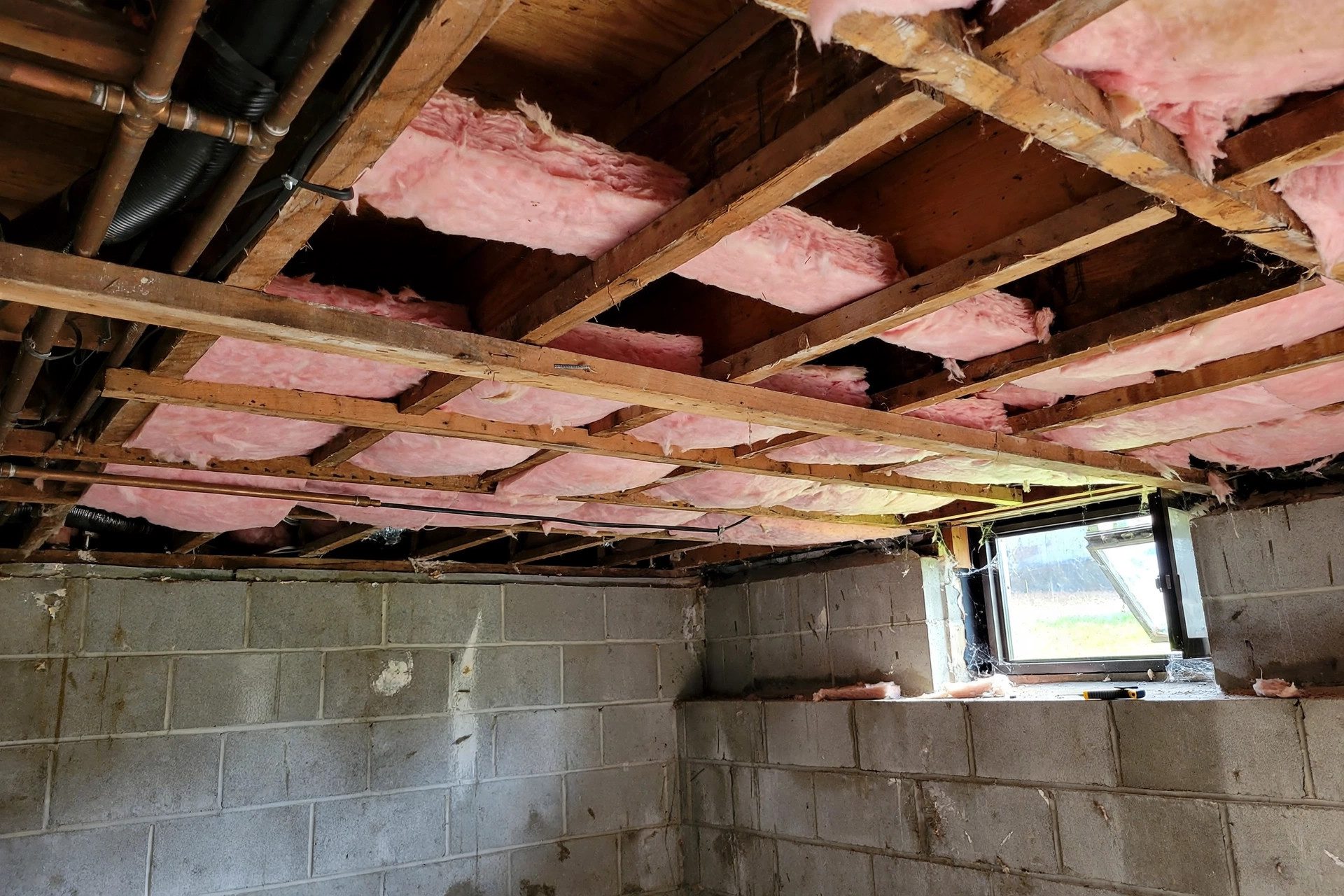

Many homeowners in the USA think about insulating basement ceiling spaces when rooms above feel cold or noisy. It seems like a simple fix. You add material between the joists, and the floor above should feel warmer. But the truth is more complex. Insulating a basement ceiling is not always the right move. It can help in some cases and cause new problems in others.
This guide weighs the pros and cons of insulating basement ceiling areas. It covers how it works, when it makes sense, what it costs, and what to watch out for. By the end, you will know whether this project suits your house or whether your money is better spent elsewhere.
Why Homeowners Consider It
A basement ceiling is the floor of the rooms above. Heat moves upward through it all winter. If the basement is cold, that heat escapes fast. Floors above can feel chilly underfoot. Rooms can also pick up noise from below, such as the hum of a furnace or the rumble of a washer and dryer.
Adding insulation between the joists slows this heat loss. It can make the first floor feel warmer. It can also cut noise traveling between floors. These are the main reasons people look into insulating basement ceiling spaces. But the basement itself gets colder as a result, and that trade-off sits at the heart of the debate.
How Basement Ceiling Insulation Works: Insulating Basement Ceiling Pros Cons Usa
A typical basement ceiling has open joists. These are the wood beams that hold up the floor above. The most common method is to press fiberglass batts between the joists. The batts come in rolls sized to fit standard joist spacing. Some homeowners use spray foam instead. Foam seals gaps better but costs more.
Another choice is rigid foam board attached to the underside of the joists. Each method has a different R-value. R-value measures how well a material resists heat flow. Higher numbers mean better insulation. Climate zone matters here. Cold northern states need higher R-values than warm southern states. The U.S. Department of Energy publishes R-value guidance by zone.
The Pros of Insulating a Basement Ceiling
Warmer Floors Above
The biggest benefit is comfort. Less heat escapes through the floor. Rooms above feel warmer in winter. This matters most when the basement is unheated. In a cold basement, the floor above loses heat quickly. Insulation slows that loss and keeps the living space cozier.
Lower Heating Bills
When less heat escapes, the furnace runs less often. That can trim heating bills. Savings vary by home and climate. In a cold state with high fuel costs, the savings add up faster. In a mild climate, the savings may be small. ENERGY STAR notes that sealing and insulating problem areas can cut overall energy use. The ENERGY STAR program offers home energy guidance worth reading.
Quieter Living Space
Insulation between floors also dampens sound. Footsteps upstairs sound softer in the basement. Furnace noise below reaches upstairs less. This is a real plus for families with bedrooms or offices near basement equipment. It is a side benefit, but many homeowners value it.
A Simple, Low-Cost Project
Compared with many home upgrades, this one is cheap and easy. Fiberglass batts are sold at every home center. A handy homeowner can install them in a weekend. No special tools are needed. The project is forgiving. Small gaps reduce results, but the job is hard to get badly wrong.
The Cons of Insulating a Basement Ceiling
A Colder Basement
This is the main drawback. Insulation between the floors keeps heat in the living space. It also keeps heat out of the basement. An unfinished basement gets noticeably colder. Pipes down there face a higher risk of freezing in winter. Water heaters and furnaces in a cold basement must work harder. This trade-off is the reason many building experts say: insulate the basement walls instead, not the ceiling.
Pipe Freeze Risk
When the basement turns colder, supply lines can freeze and burst. This is a serious and costly problem. A burst pipe can flood a basement and cause thousands of dollars in damage. If you insulate the ceiling, you must protect the pipes. That means insulating the pipes themselves or keeping some heat in the basement. Homeowners in freezing climates should take this risk seriously.
Moisture and Mold Problems
Basements are damp places. Insulation can trap moisture against wood joists. Fiberglass batts lose their R-value when wet. Worse, wet batts can grow mold. Mold harms air quality and can damage the structure. Vapor barriers help, but they must be placed on the correct side. Getting this wrong makes things worse. The EPA offers guidance on moisture control in homes.
It Does Not Always Pay Back
If the basement is already heated, insulating the ceiling gains little. The heat stays in the house either way. The project then adds cost with almost no benefit. The same holds in warm climates. When heating needs are small, the energy savings may never repay the cost of materials and labor.
When It Makes Sense
Insulating a basement ceiling is a reasonable choice in a few cases:
– The basement is unheated and will stay that way. – The rooms above feel cold in winter. – Pipes in the basement are already insulated or kept warm another way. – The basement is dry, with no moisture history. – You live in a cold climate where heating costs are high.
In these cases, the comfort gain and energy savings can justify the project. Many owners of older homes with drafty floors above see the best results.
When to Skip It
Skip the project when any of the following is true:
– The basement is heated or finished as living space. – The basement has moisture or mold problems. – Water pipes run through the joist bays and cannot be protected. – You plan to finish the basement later, in which case insulating the walls is the better long-term plan. – You live in a mild climate with low heating bills.
In these cases, the cons outweigh the pros. Your money buys more comfort elsewhere, such as sealing air leaks or adding attic insulation.
Choosing the Right Material
Fiberglass Batts
Fiberglass batts are the most common choice. They are cheap, easy to install, and widely available. Standard batts fit 16-inch joist spacing. They work well in dry basements. Their weak point is moisture. Wet fiberglass loses its insulating power and can grow mold.
Mineral Wool
Mineral wool batts cost more but resist moisture better. They do not feed mold growth. They also block sound better than fiberglass. Many contractors prefer mineral wool for basement work. It is heavier and harder to cut, but it holds its shape well.
Spray Foam
Closed-cell spray foam gives the highest R-value per inch. It seals air leaks at the same time. It is the best performer in damp or irregular spaces. The cost is much higher, and most jobs need a pro. Open-cell foam costs less but absorbs moisture, so it suits only dry basements.
Rigid Foam Board
Rigid boards can be fixed to the underside of the joists. They give steady coverage with no gaps. Foam boards must be covered with a fire-rated material in many areas, so check local code before using them.
Cost and Price
Costs vary by material and by whether you hire help. Fiberglass batts for a 1,000 square foot basement ceiling often run from $800 to $1,500 in materials. Mineral wool can double that figure. Spray foam installed by a pro can cost $3,000 to $6,000 or more for the same area.
Labor adds to the bill if you hire a contractor. A simple batt job is a common DIY project, so many homeowners skip labor costs. Payback time depends on climate and fuel prices. In cold states, savings can repay the cost in a few years. In mild states, payback may take a decade or more. Check reviews of local pros before you hire, such as guides on the best HVAC companies near me.
If heating costs are your main worry, also look at your equipment. An energy efficient mini split for 1500 sq ft of living space can change the math on where insulation pays best.
Care and Upkeep
Once installed, basement ceiling insulation needs little care. Check it once a year. Look for sagging batts, water stains, or musty smells. Replace any batts that have gotten wet. Keep basement humidity under control with a dehumidifier if needed. Make sure dryer vents and bath fans exhaust outside, not into the joist bays.
If you spot mold on insulation or joists, act fast. Remove the affected material and fix the moisture source first. Do not cover mold with new insulation. The problem will only grow.
Safety
Safety matters with any insulation job. Fiberglass irritates skin, eyes, and lungs. Wear gloves, long sleeves, goggles, and a dust mask. Work in a ventilated space. Keep insulation away from recessed lights unless the lights are rated for contact. Hot lights and insulation are a fire risk.
Spray foam needs extra care. The chemicals are harsh during application. Pros wear full protective gear and respirators. Leave the house during and right after application if the installer advises it. Let the foam cure fully before using the space.
Also mind electrical wiring in the joist bays. Do not pack insulation tight around old wiring. If wiring looks damaged or very old, have an electrician check it before you start.
Frequently Asked Questions
Should I insulate my basement ceiling or my basement walls? If the basement is heated or may be finished later, insulate the walls. This keeps the basement part of the warm envelope of the house. If the basement is unheated and will stay that way, the ceiling is the right place.
Will insulating the basement ceiling make my basement colder? Yes. That is the main trade-off. The insulation blocks heat from reaching the basement. Plan to protect pipes and equipment from the colder conditions.
Can I install basement ceiling insulation myself? Yes, fiberglass or mineral wool batts are a fine DIY job. Measure your joist spacing, buy the right size, and press the batts in place. Wear protective gear. Leave spray foam to the pros.
What R-value do I need for a basement ceiling? It depends on your climate zone. Cold zones call for R-30 or more. Milder zones need less. Check the zone map and guidance from the Department of Energy or a local building office.
Does basement ceiling insulation help with noise? Yes. It softens sound between floors. It will not make a room silent, but it cuts the transfer of voices, footsteps, and equipment hum noticeably.
Is it worth insulating the basement ceiling in a warm climate? Usually not. Heating savings are small in warm states. The project may never pay for itself. Sealing air leaks gives better value there.
Can insulation in the ceiling cause mold? It can if moisture is present. Fiberglass loses R-value when wet and can grow mold. Keep the basement dry and fix leaks before you insulate. Mineral wool resists moisture better.
A Short Final Word
Insulating a basement ceiling is not a one-size-fits-all answer. For an unheated basement in a cold state, it brings real comfort and savings. For a heated or damp basement, it can cause more harm than good. Weigh the pros and cons against your own home. Protect pipes, control moisture, and pick the right material. Get those basics right, and the project can serve you well for years.
Related reading: learn how a radiant barrier for attic pros cons usa comparison works for the top of your house, or check best hvac companies near me reviews 2026 before hiring help.
For more background, see Family Handyman, Carrier, and Trane. See Lennox for more detail.
References
Carrier. (n.d.). Heating and cooling systems. https://www.carrier.com ENERGY STAR. (n.d.). Energy efficient products. https://www.energystar.gov Family Handyman. (n.d.). DIY home repair and maintenance. https://www.familyhandyman.com Lennox. (n.d.). Heating and cooling systems. https://www.lennox.com This Old House. (n.d.). Home renovation guidance. https://www.thisoldhouse.com Trane. (n.d.). Heating and air conditioning. https://www.trane.com U.S. Department of Energy. (n.d.). Energy efficiency and renewable energy. https://www.energy.gov U.S. Environmental Protection Agency. (n.d.). Protecting human health and the environment. https://www.epa.gov
Was this guide helpful?

About Sarah Mitchell
The My Garden US editorial team writes practical, in-depth home and garden guides for American homeowners — tested advice, no fluff.
You May Also Like
How to Find Air Duct Leaks USA Guide
June 5, 2026 0 views
Mini Split Line Set Cover Kit Reviews: What American Buyers Need to Know
February 16, 2026 0 views
Oil to Gas Boiler Conversion Cost in the USA: A Full 2026 Guide
January 27, 2026 0 views