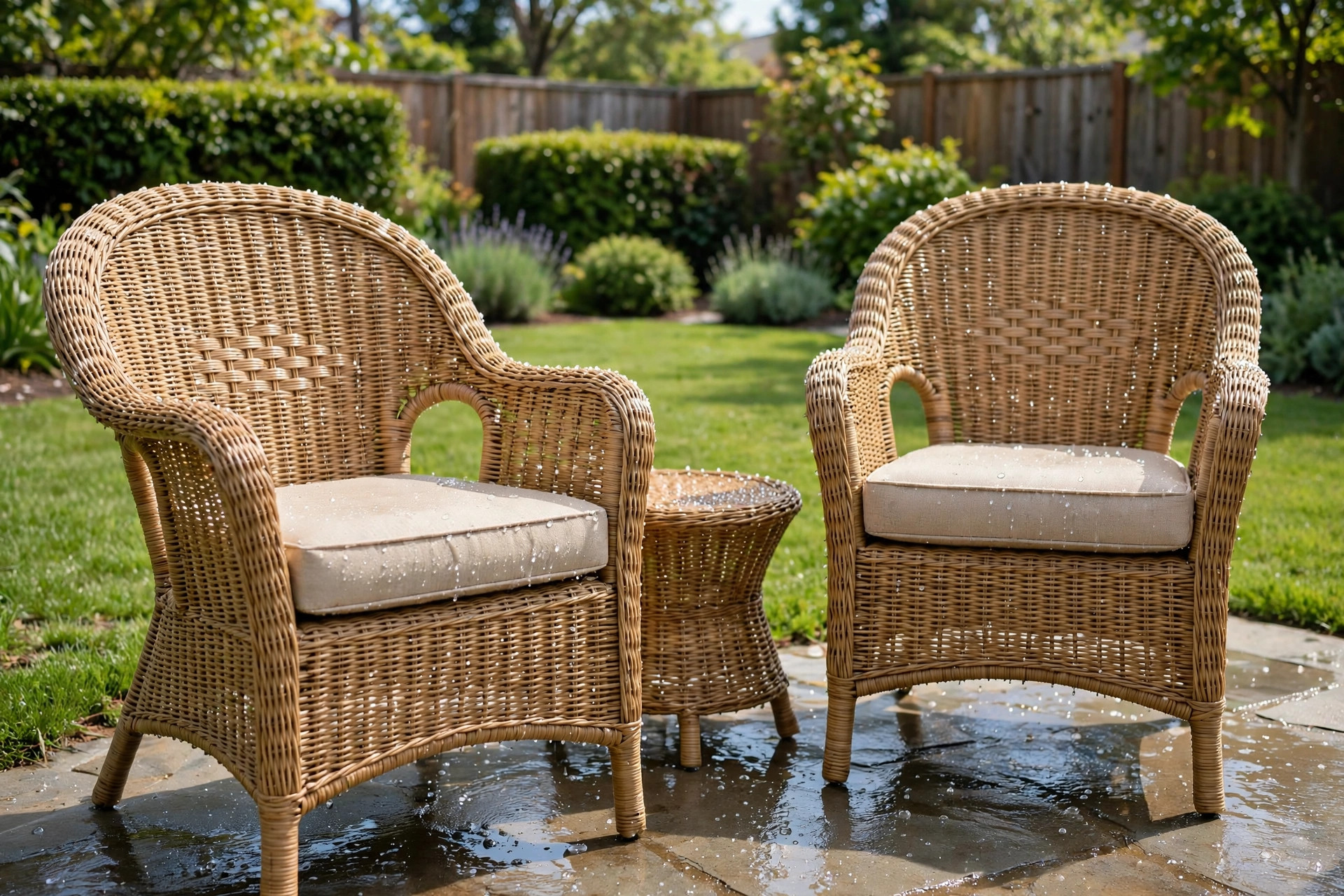

Wicker patio furniture gives a porch or yard a warm and easy look. But dust, pollen, and rain leave their mark. A chair that looked fine in June can look dull and gray by August. The good news is that learning how to clean wicker patio furniture is not hard. With a little water, a soft brush, and some patience, you can make old pieces look nearly new again.
This guide walks through the whole job in plain steps. It covers both natural wicker and modern resin wicker, which are made of very different things. It also tells you what to avoid, because one wrong move can crack the weave or ruin the finish.
Why Clean Wicker Matters
Wicker is not a solid board of wood. It is made of thin strands woven together, with many small gaps. Dust and dirt work their way into those gaps. When dirt sits there for weeks, it holds moisture. Moisture leads to mildew, and mildew leads to weak spots and bad smells.
Natural wicker is made from plant fibers such as rattan, reed, or willow. These fibers can dry out and crack if they are not kept clean. Resin wicker, also called all-weather wicker, is made of plastic strands woven over an aluminum or steel frame. It handles rain better, but grime still builds up in the weave and can stain the surface.
A regular wash takes away this risk. It also shows you problems early. A loose strand, a rust spot on the frame, or a crack in the finish is easy to fix when you catch it in time. If you wait until the piece breaks, the fix costs much more.
Know Your Wicker: Natural or Resin: How to Clean Wicker Patio Furniture
Before you touch a bucket, find out what kind of wicker you own. The cleaning method is different for each type. Using the wrong method can do real harm.
Natural Wicker
Natural wicker feels like dry wood or stiff grass. It has small color changes along each strand, and no two strands look exactly alike. Many older porch sets are made this way. Natural wicker must never be soaked in water. Too much water swells the fibers. When they dry, they shrink and crack.
Resin or All-Weather Wicker
Resin wicker feels smooth and even. The strands have a steady color, often brown or gray, and they look machine-made. Most sets sold today are resin wicker. These pieces can take much more water. You can even rinse them with a garden hose. Makers of outdoor sets, such as IKEA, state in their care guides that resin pieces need only mild soap and water.
What You Will Need
Gather your supplies before you start. You will need:
– A soft brush, like an old toothbrush or a paintbrush – A vacuum with a brush attachment – A bucket of warm water – Mild dish soap – A few soft cloths – An old towel for drying – A spray bottle, which helps for natural wicker
Optional items include white vinegar for mildew, linseed or tung oil for natural wicker, and a furniture paste wax for extra protection. For resin wicker, a non-abrasive all-purpose cleaner can help with tough stains. Independent testers such as Consumer Reports note that gentle cleaners work as well as strong ones on plastic outdoor surfaces, with less risk of damage.
How to Clean Wicker Patio Furniture, Step by Step
Work on a dry day so the pieces can air out fully. Move the furniture to a shaded spot. Hot sun can dry natural wicker too fast and cause it to crack.
Step 1: Brush Off Loose Dirt
Start dry. Use the soft brush to sweep dust and crumbs out of the weave. Work along the direction of the weave, not across it. Press lightly. On chairs, brush the back, the seat, and under the arms. Then use the vacuum with the brush attachment to pull dirt from the cracks the brush missed. This dry step matters more than most people think. Wet dirt turns into mud, and mud is harder to remove from tight weave.
Step 2: Wash with Mild Soap
Mix a few drops of mild dish soap into a bucket of warm water. For resin wicker, dip a soft cloth or sponge into the soapy water, wring it well, and wipe each strand. For stuck-on dirt, let the soapy water sit for a minute, then scrub gently with the brush.
For natural wicker, use less water. Dampen a cloth, not a sponge, and wipe the strands. You can also mist the piece lightly with a spray bottle, then brush. Never pour water over natural wicker, and never hose it down. If the piece is very dirty, clean it in small sections so no area stays wet for long.
Step 3: Rinse Carefully
For resin wicker, rinse with a garden hose on a gentle spray, or wipe with a clean damp cloth. A hose is safe for resin, but keep the pressure low. A strong blast can force water into the frame joints.
For natural wicker, skip the hose. Wipe the piece with a clean cloth dampened in plain water. Work section by section. The goal is to remove soap without soaking the fibers.
Step 4: Handle Mildew
If you see dark spots or a musty smell, you may have mildew. Mix one part white vinegar with two parts water in the spray bottle. Spray the spots lightly and let the mix sit for ten minutes. Then brush and wipe as before. Vinegar kills most mildew without harsh chemicals. For heavy mildew on resin wicker, you can use a diluted bleach mix of one part bleach to ten parts water, but rinse well after. Test any cleaner on a hidden spot first.
Step 5: Dry It Well
This step is as important as the washing. Shake off loose water from resin pieces. Stand chairs on their sides so water runs out of the legs. For natural wicker, blot with a dry towel right away. Then let every piece dry in the open air, in shade, for a full day. A fan can help. Do not put cushions back on until the frame is fully dry. Damp frames grow mildew under cushions faster than most owners expect.
Cost and Price of Cleaning Supplies
One of the best things about this job is its low cost. A bottle of dish soap, a brush, and some cloths cost very little. Most homes already have what they need. If you buy new supplies, expect to spend about five to fifteen dollars.
Specialty items cost a bit more. A small can of tung or linseed oil for natural wicker runs about eight to twelve dollars. Furniture paste wax costs about the same. Resin wicker cleaners sold at home stores, such as those stocked by Wayfair and other retailers, cost around ten dollars. These are optional. Plain soap and water handle most of the work.
Professional cleaning is another option for large sets. A patio furniture cleaning service may charge fifty to one hundred fifty dollars, based on the size of the set and the region. For most owners, a do-it-yourself wash once or twice a year is enough.
Care and Upkeep Through the Year
A little care between washes keeps wicker looking good and lasting longer.
– Brush or vacuum the weave once a month during the outdoor season. – Wipe up spills right away, before they stain. – Keep natural wicker out of long rain. Bring it under cover or use a cover. – Oil natural wicker once a year. Wipe on a thin coat of linseed or tung oil with a cloth, let it sit for an hour, then buff off the extra. This keeps the fibers from drying out. – Apply paste wax to natural wicker every year or two for added moisture protection. – Store pieces indoors or under good covers in winter. Cold and snow are hard on both natural and resin wicker. – Check the frame each spring. Tighten loose screws. If the frame is metal and shows rust, treat it before it spreads. Our guide on how to remove rust from patio furniture walks through that repair.
Cushions need care too. If your wicker set has seat pads, keep them dry and store them inside when it rains. For washing tips, see our guide on how to clean outdoor furniture cushions.
Teak is a different wood that some owners pair with wicker. It needs its own routine, so read our teak patio set maintenance tips guide if you own a mixed set.
Safety Notes
These cautions keep you and your furniture safe.
– Keep cleaners away from children and pets. Rinse well so no residue stays on the weave. – Do not mix bleach with other cleaners. The fumes can be harmful. – Wear gloves if your skin reacts to soaps or vinegar. – Keep natural wicker away from open flame. Dry plant fibers catch fire more easily than most people expect. – When moving furniture to wash it, lift with your legs, not your back. Wet pieces are heavy. – Let electrical items, such as outdoor lamps on wicker tables, dry fully before use.
Frequently Asked Questions
Can I use a pressure washer on wicker patio furniture?
It is risky. A pressure washer can cut through natural wicker and tear resin strands. It can also force water deep into the frame. A garden hose on a gentle setting is safer. If you must use a pressure washer on resin wicker, keep the pressure very low, hold the wand at least two feet away, and test a hidden spot first.
How do I clean wicker without damaging it?
The main rule is to use less water than you think you need. Brush off dry dirt first. Wash with a damp cloth and mild soap, not a soaking sponge. Dry the piece fully after. For natural wicker, add a light oil coat each year. These simple habits do more good than any strong chemical.
How often should I clean wicker patio furniture?
Wash it fully at the start of the outdoor season and again at the end. Brush off dust once a month in between. Pieces under a covered porch may need less. Pieces in open rain and sun need more. If you see gray film or mildew, wash sooner.
Why is my wicker turning gray?
Gray color on natural wicker usually means sun and weather wear. The fibers dry out and lose their finish. A wash, a light sanding of rough spots, and a fresh coat of oil or outdoor varnish can bring back much of the color. Gray film on resin wicker is often just grime or oxidation. Soap and water usually remove it.
Can old wicker be restored?
Yes, in many cases. Clean the piece well. Glue down loose strands with wood glue. Touch up the color with spray paint made for wicker or a matching stain. Replace badly broken strands if you can find matching reed at a craft store. Pieces with rotted or fully broken frames are harder to save. For those, a new frame may cost more than a new chair.
Is resin wicker better than natural wicker for outdoors?
For full sun and rain, resin wicker holds up better. It resists moisture and needs less care. Natural wicker looks warmer and more classic, but it needs covers, oil, and a dry spot. Many buyers choose resin for open decks and natural wicker for covered porches.
A Short Final Word
Learning how to clean wicker patio furniture takes one afternoon, and the payoff lasts for years. Brush first, wash gently, rinse with care, and dry fully. Know which kind of wicker you own, and treat it the way it needs. Do this each season, and your chairs and tables will greet you each spring ready for one more long summer.
References
Consumer Reports. (n.d.). Product reviews and ratings. https://www.consumerreports.org IKEA. (n.d.). Furniture and home furnishings. https://www.ikea.com Wayfair. (n.d.). Furniture and outdoor living. https://www.wayfair.com
Was this guide helpful?

About Lisa Anderson
The My Garden US editorial team writes practical, in-depth home and garden guides for American homeowners — tested advice, no fluff.
You May Also Like

Patio Furniture for Townhouse Backyard Ideas
April 29, 2026 0 views
Outdoor Ceiling Fan With Light Reviews: What Shoppers Need to Know
September 4, 2026 0 views
The Best Outdoor Pendant Light for Patio Evenings
May 25, 2026 0 views