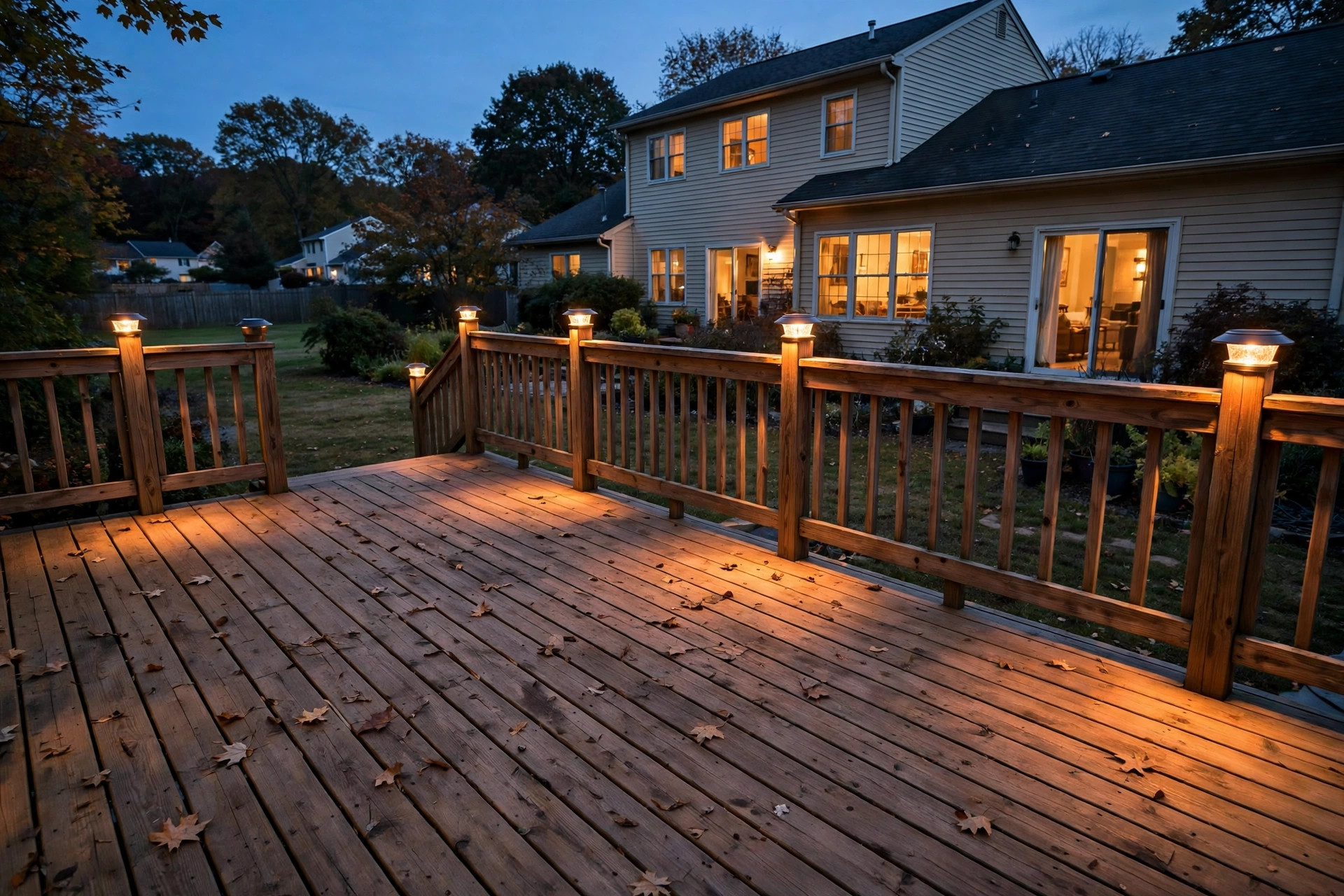

A deck should be a place you can use after dark. But many decks go dark when the sun goes down. Solar deck post lights solve this problem in a simple way. They sit on top of your deck posts. They charge during the day. They glow at night. No wires. No electrician. No power bill.
The market is full of choices. Some lights are bright and last for years. Others are dim and die in one season. That is why solar deck post lights reviews usa matter. Real buyers tell you what works in real yards. This guide covers how the lights work, what to look for, the main types, prices, care, and safety. It ends with answers to common questions.
Why Deck Post Lights Matter
A dark deck is a wasted deck. People eat dinner inside even when the evening is mild. Guests stay inside because the steps are hard to see. A few good lights change this. They mark the edges of the deck. They light the stairs. They make the railing visible. The whole space feels larger and more inviting.
Safety is the first reason. Falls on decks happen most often at night. A light on each post marks the boundary. It shows where the step begins. Older people and children benefit most.
The second reason is cost. Solar lights use no power from the grid. Once you buy them, they cost nothing to run. Wired lights need trenches, cables, and often a licensed electrician. Solar lights need none of that.
The third reason is looks. Warm light on wood makes the deck feel like a room. It adds value to the house in the eyes of buyers.
How Solar Deck Post Lights Work: Solar Deck Post Lights Reviews Usa
The idea is plain. A small solar panel sits on top of the light. During the day it turns sunlight into electricity. The electricity goes into a small rechargeable battery. At dusk a sensor detects the dark. It switches the light on. At dawn it switches off. The cycle repeats.
Most models use LED bulbs. LEDs use little power and last a long time. A good set will run six to eight hours on a full charge. Cheaper sets run four to six hours. The panel size matters. A larger panel charges faster and holds more energy for long nights.
The housing is usually plastic or metal. Plastic costs less. Metal, often cast aluminum, lasts longer and looks better. The cap fits over the top of the post. Most fit standard four-by-four posts. Some fit six-by-six posts or come with adapters. Always check the size before you buy.
What to Look for When You Choose
Reviews from American buyers point to the same key points. Use this checklist when you shop.
Brightness
Brightness is measured in lumens. Most solar post lights give ten to twenty lumens. That is enough for accent light and edge marking. It is not enough to read by. If you want brighter light for stairs, look for thirty lumens or more. Do not trust photos on the box. Read reviews that describe the light in real yards.
Battery Life
Look for a battery of at least 600 mAh. Lithium batteries last longer than older nickel batteries. A good light runs eight hours or more in summer. In winter, with short days, expect less. If a light dies by midnight in June, the battery or panel is too small.
Weather Resistance
Deck lights live outside all year. Look for an IP rating. IP44 is the minimum for rain. IP65 is better. Reviews often mention water getting inside cheap models. A tight seal keeps the electronics dry.
Build Quality
Plastic housing is fine for mild climates. In strong sun, cheap plastic turns brittle and cracks. Cast aluminum costs more but stands up to years of weather. Check how the cap attaches. A screw mount is more secure than a simple press fit, especially in wind.
Size and Fit
Measure your posts. A standard four-by-four post is actually three and a half inches square. Most solar caps are made for this size. If you have six-by-six posts, you need a larger cap or an adapter plate. Some sets include adapters for both. If the cap is loose, wind will move it and water will get in.
Color and Style
Most lights give a warm white glow, around 2700K to 3000K. Warm white looks natural on wood. Cool white, around 5000K, looks harsh and blue. Some models offer color-changing modes. Buyers like these for parties but use warm white most of the time. Choose a finish that matches your railing. Black and bronze are the most common.
Types of Solar Deck Post Lights
There are three main types. Each fits a different need.
Cap Lights
Cap lights are the most common. They cover the top of the post and give a soft downward glow. They are easy to install. You set them on the post and screw them down or let them sit by weight.
Down Lights
Down lights shine straight down onto the deck surface. They are best for stairs and walking areas. Some buyers mount small down lights on every other post to save money.
Lantern and Decorative Styles
Some models look like small lanterns and give light in all directions. They suit decks where the light is for mood, not for safety. They look best in sets of four or more.
Reading Reviews the Right Way
The best reviews are from people who have owned the lights for a year or more. They tell you how the light performs in winter and whether the battery still holds a charge.
Look for patterns. If many buyers say the light is dimmer than the box claims, believe them. If one buyer complains but fifty praise it, the product is probably fine. Check the date of the review. A review from three years ago may describe a different battery than the one sold today. Recent reviews count more.
Cost and Price Guide
Solar deck post lights are not costly. Prices fall into three groups.
Budget sets cost five to fifteen dollars per light. They are plastic and last one to two seasons. They suit renters and people who want a quick fix.
Mid-range sets cost fifteen to thirty dollars per light. They are the sweet spot for most buyers. The battery is larger. The light is brighter. Many last three to five years with basic care.
Premium sets cost thirty to sixty dollars per light. They are cast metal with the longest run times. They suit people who do not want to replace lights often.
Buying in sets of four, six, or eight saves money. A budget light that you replace every year costs more over five years than a mid-range light that lasts five years. The cheapest light is not always the cheapest choice.
Installation in a Few Easy Steps
You need no tools beyond a screwdriver in most cases. The steps are simple.
First, measure your posts and buy caps that fit. Second, charge the lights in full sun for a full day before you mount them. This first charge sets the battery up well. Third, pull the small tab from the battery compartment if there is one. This tab stops the battery from draining in the store.
Fourth, set the light on the post and screw it down or press it on firmly. It should not wobble. Fifth, check that the solar panel faces the sky with no shade from trees or eaves. Shade is the main cause of poor performance. Trim branches if you can.
That is all. There is no wiring. The whole job takes less than an hour for a full deck.
Care and Upkeep
Solar lights need little care, but a small amount of work keeps them bright.
Clean the solar panel every few months. Dust, pollen, and bird droppings block sunlight. Wipe the panel with a damp cloth. Do not use harsh cleaners. A dirty panel can cut charging by half.
Check the batteries once a year. Most use AA or AAA rechargeable cells. If the light is dim even after a sunny day, the battery is likely worn out. Replace it with a rechargeable cell of the same size and type. Do not use regular non-rechargeable batteries. This simple fix adds years of life.
Tighten the screws each spring. Winter wind loosens them. A loose cap lets water in. While you are up there, check the seal. If the gasket is cracked, add a bead of outdoor silicone.
Store is not needed. Good lights are made to stay out all year. But if you live where winters are very harsh, you can bring them in.
Safety Notes
Solar post lights are low voltage. They carry no shock risk. Still, follow a few rules.
Do not rely on solar lights alone for steep stairs. Add motion-sensor lights at stair tops for extra safety.
Keep the lights away from gas grills and fire pits. Heat can warp plastic housings and damage batteries. A few feet of distance is enough. If your deck has a large shade sail, a best patio umbrella for wind reviews guide can help you pick shade that will not block your panels.
When you replace batteries, recycle the old ones. Most hardware stores take them for free. If you mount lights near a seating area, keep the light low and warm. Bright cool light in the eyes ruins the mood of an evening outside.
Common Problems and Fixes
Buyers report the same problems again and again. Most have easy fixes.
The light does not turn on at night. Check the pull tab. New lights ship with a tab that blocks the battery. Remove it. Also check that the light sat in sun all day. A panel in shade will not charge.
The light is dim. Clean the panel. Then check the battery. Old batteries give dim light. Replace them.
The cap blows off in wind. Use screws instead of press fit.
How They Compare to Wired Lights
Wired low-voltage lights are the main alternative. They are brighter and run all night without fail. But they cost more to install. You must run cable and use a transformer. On a large deck, the wire runs get complex.
Solar lights win on ease and price. You install them yourself in an hour. You pay nothing to run them. They lose on raw brightness and on cloudy winter weeks. If you are building a new deck, wires go in easiest during construction. If the deck is already built, solar lights are the simpler path.
Buying Tips From Real Reviews
Buy one light first. Test it on your deck for a week. See how bright it is and how long it runs. If you like it, buy the rest of the set.
Buy from sellers with easy returns. Big home stores and online marketplaces usually allow returns within thirty to ninety days. Read the questions section on product pages. Buyers ask about post size and battery type. The answers often reveal details the description skips.
Look at the warranty. One year is standard. Two years is good. A maker that offers two years usually trusts its product.
Pairing Lights With Your Patio Setup
Lights work best as part of a full plan. A best round patio dining set for four looks better under warm light than in the dark. A teak patio set maintenance tips guide helps you care for wood furniture, and the same steady care keeps your lights looking fine year after year.
Retailers like IKEA and Wayfair sell both patio furniture and outdoor lighting, so you can plan the whole space in one place. For independent test results, Consumer Reports publishes reviews that many buyers trust.
Frequently Asked Questions
How long do solar deck post lights last?
Most last two to five years. Budget plastic models last one to two years. Mid-range and premium models last three to five years or more. Replacing the battery extends the life. Reviews from long-term owners are the best guide to real life span.
Do they work in winter?
Yes, but with less run time. Short days and weak sun mean less charging. Snow on the panel stops charging completely. Brush snow off the panels. In the far north, expect the lights to run only a few hours on winter nights. This is normal for all solar lights.
Do they work in shade?
No. The panel needs direct sun for at least four to six hours a day. A panel in full shade will not charge enough to run the light. If your deck is shaded, trim branches or place the lights where sun reaches them.
How bright are they compared to a bulb?
A standard deck post light gives ten to twenty lumens. A forty-watt bulb gives about four hundred lumens. Solar post lights are accent lights, not task lights. They mark edges and give mood. They will not light a book for reading.
Can I leave them out all year?
Yes. They are made for outdoor use in all seasons. Rain and snow are fine if the seal is good. Most buyers leave them out year round with no trouble.
What size post do they fit?
Most fit four-by-four posts, which measure three and a half inches square. Some fit six-by-six posts or include adapters. Measure your posts before you buy. A loose cap will wobble and let water in.
A Short Final Word
Solar deck post lights are a small buy that changes how you use your deck. They are cheap. They are easy to install. They cost nothing to run. The trick is to buy well. Read solar deck post lights reviews usa from buyers who have owned the lights for a year. Look for brightness, battery life, and weather sealing. Buy one to test before you buy the set.
References
IKEA. (n.d.). Home furnishings and outdoor lighting. https://www.ikea.com Wayfair. (n.d.). Outdoor furniture and patio lighting. https://www.wayfair.com Consumer Reports. (n.d.). Product reviews and ratings. https://www.consumerreports.org
Was this guide helpful?

About Emily Rodriguez
The My Garden US editorial team writes practical, in-depth home and garden guides for American homeowners — tested advice, no fluff.
You May Also Like

Outdoor Daybed with Canopy for Adults: Comfort, Shade, and Style in One Piece
May 15, 2026 0 views
A Guide to Choosing an Outdoor Bar Table Set for Four
January 17, 2026 0 views
Outdoor Chaise Lounge with Wheels Reviews: A Buyer’s Guide
August 31, 2026 0 views