
A round umbrella leaves the ends of a long table in full sun. The best rectangular patio umbrella for table use solves this simple problem. Its long shape matches the long shape of most outdoor dining tables. Every seat gets shade. Drinks stay cool. Food lasts longer on the plate.
Rectangular umbrellas have grown in favor in recent years. Homeowners want real shade for real meals. A square canopy looks fine over a small bistro set. It does not cover a six-seat table. A rectangle does. This guide walks through every point that matters. You will learn how to size the canopy, which frame to trust, what fabric lasts, and how to keep the umbrella safe in wind.
Why a Rectangular Umbrella Suits a Table
Most patio tables are not round. They are oblong. A rectangle table with chairs on both long sides begs for a rectangle of shade. A round canopy puts the widest point over the middle of the table. The short sides of the table still get shade. The long ends do not.
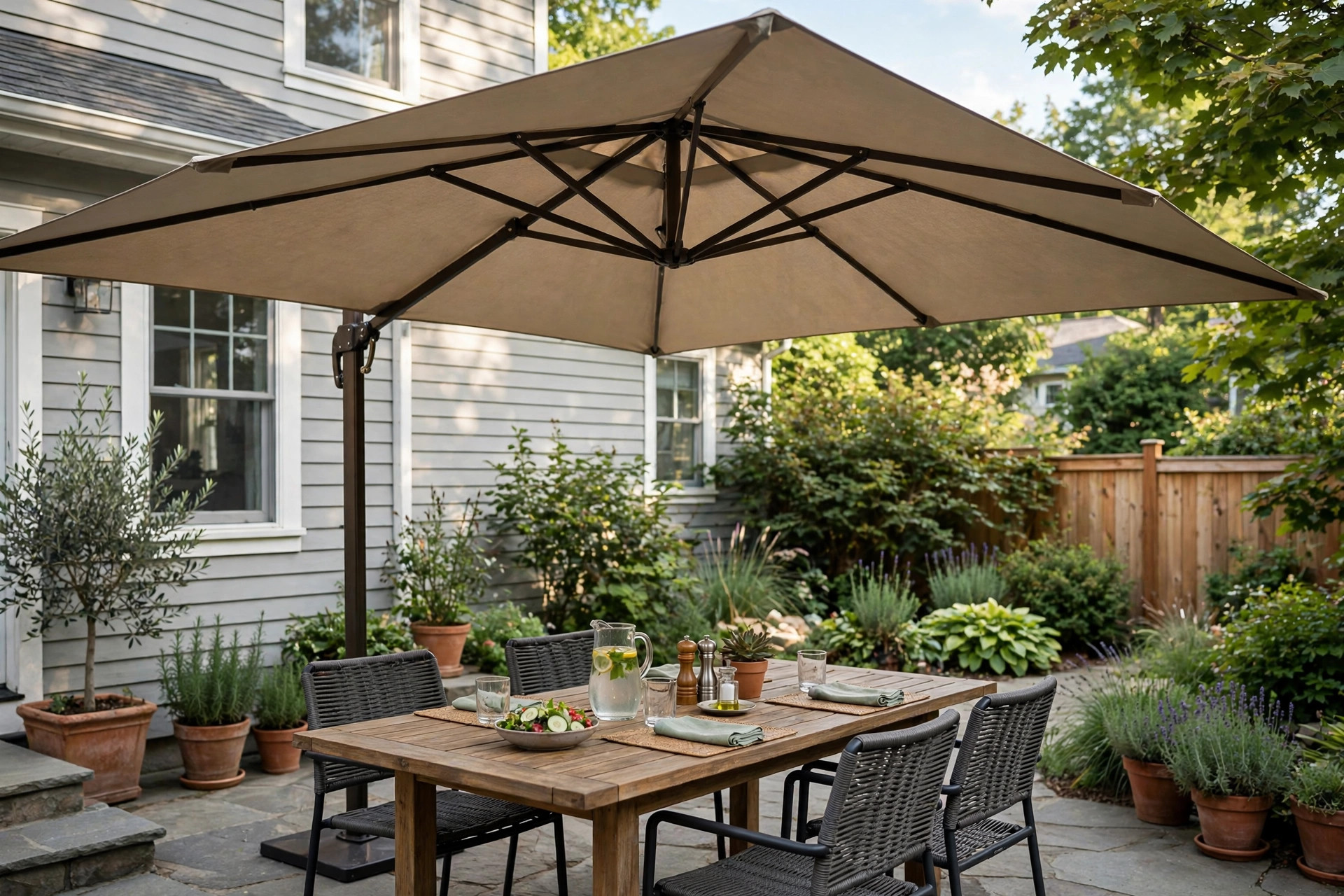
A rectangular canopy spreads its cloth along the table length. With a six-by-ten-foot canopy, a six-foot table stays fully covered. Each diner sits under cloth. That is the whole point of the purchase.
Rectangular umbrellas also fit narrow patios. A round nine-foot canopy swings wide. It can bump walls or rails. A rectangle covers the table with less waste to the sides. Small yards and tight decks benefit from this fit.
Style counts too. A rectangle looks orderly over a dining set. It echoes the table lines. Many shoppers pair it with a modern outdoor dining set for a clean look. If your table is round instead, a different shape fits better, such as a round set made for four diners.
The shade moves with the sun. In the morning the cool side faces east. By noon the shade sits straight down. In the evening it slides west. A rectangle tracks this path better than a round canopy. Its long edge follows the long edge of the table through each hour. Diners on the far side stay covered when the light turns low. This steady cover is why many families trade their old round umbrella for a rectangle and never look back.
What to Look for When You Choose: Best Rectangular Patio Umbrella for Table
Size of the Canopy
Measure your table first. Write down length and width. The canopy should hang at least two feet past each side of the table. For a table that is three feet wide and six feet long, look for a canopy near seven feet wide and ten feet long.
Common sizes run from six by eight feet up to eight by thirteen feet. Bigger is not always better. A very large canopy catches more wind. It also needs a heavier base. Match the canopy to the table, then add the two-foot rule.
Shape and Tilt
Most rectangular umbrellas open flat. The cloth stays level. This gives even shade at noon. A tilt feature helps in the late day. The sun drops. The shade shifts. A tilt lets you angle the canopy toward the low sun.
Look for a crank tilt or a collar tilt. The crank sits on the pole. You turn it. The head tilts. A collar tilt slides at the joint. Both work. The crank is easier on stiff joints after a season of use.
Frame and Pole
The pole takes all the load. Wood poles look warm and classic. They need oil and care. Aluminum poles weigh less and fight rust. Steel poles are strong and heavy. They need a powder coat to stop rust.
Eight ribs beat six ribs. More ribs spread the cloth tighter. They also hold up better in gusts. Check the rib joints. They should feel firm with no wobble. A loose joint at the store becomes a broken joint in a storm.
The pole should fit your table hole. Most tables take a two-inch pole. Measure the hole. Some umbrellas split the pole into two parts. This makes shipping easy. A one-piece pole is stronger.
Fabric That Lasts
The cloth faces the sun all day. Cheap cloth fades in one summer. Good cloth lasts five years or more. Solution-dyed acrylic is the top grade. The color runs through each thread. It resists fade and mildew. Olefin is a solid mid-grade choice. It dries fast and holds color well. Polyester is the budget pick. It works but fades faster.
Look for a UV rating. A UPF of fifty blocks most rays. A vent at the top helps too. Hot air rises out of the vent. The shade below feels cooler. The vent also lets wind pass through. This cuts lift in gusts.
The Lift and Crank
How the canopy opens matters more than most buyers think. A pulley and pin system is cheap and simple. You pull a cord and set a pin. It works but strains the shoulder on large canopies. A crank lift turns a handle to raise the cloth. It is smooth and steady. Most buyers favor the crank on any canopy wider than eight feet.
Check the crank in the store. It should turn with light effort. It should not slip or click. A cheap gear strips under load. Ask if spare cranks are sold. Good makers stock them for years. A broken crank should not end the life of a fine frame.
Color Choice
Light cloth reflects heat. The shade feels cooler. Dark cloth looks rich but fades faster in strong sun. Neutral tan and gray hide dust. Bold red and blue make a statement. Pick a tone that fits your chairs and cushions. Sunbrella and other top mills offer scores of shades.
Types of Rectangular Patio Umbrellas
Center Pole Market Umbrellas
The classic style puts the pole through the table. The pole stands in a base under the table. The canopy centers over the meal. This type is simple and cheap. It suits tables with a center hole.
The catch is the pole in the middle. It can block a serving dish. It can bump knees. Diners learn to work around it. Many families accept this trade for the low price.
Cantilever Offset Umbrellas
An offset umbrella hangs the canopy from a side arm. The pole stands beside the table. No pole blocks the middle. Servers can reach every plate. The look is modern and open.
These cost more. They need a heavy base. The side arm acts as a lever in wind. A light base will tip. Many owners fill the base with sand or water. Some bolt the base to the deck. Before you buy, read up on how much weight your base needs so the arm never wins.
Offset models often tilt and rotate. You can swing the canopy through the day. This suits long afternoons by the pool. It also suits a table that sits off to one side of the deck.
Cost and Price Ranges
Prices run wide. A small polyester market umbrella costs under one hundred dollars. A mid-grade aluminum model with olefin cloth runs one hundred fifty to three hundred dollars. A large offset umbrella with solution-dyed acrylic can cost four hundred to nine hundred dollars.
The base often sells apart from the umbrella. A cast iron base runs forty to ninety dollars. A fillable resin base costs thirty to sixty dollars. Granite bases cost more and look fine.
Do not judge by price alone. A cheap umbrella that tears in year two costs more per summer than a dear one that lasts seven. Read product test notes from independent labs when you can. Large home stores carry broad ranges, so you can compare cloth grades side by side. Retailers such as IKEA and Wayfair let you filter by size, tilt, and cloth type before you visit a showroom.
Care and Upkeep
Close the umbrella when you leave it. This one habit adds years of life. Sun and wind wear the cloth even when you are not under it. A strap holds the folded canopy tight. A cover adds more guard.
Wash the cloth each spring. Mix mild soap with cool water. Scrub with a soft brush. Rinse well. Let it dry fully in the sun before you fold it. A damp fold grows mildew.
Check the crank each season. A drop of silicone spray keeps it smooth. Tighten rib bolts. Look for frayed cords. A cord that snaps mid-summer ruins the season. Spare parts are cheap if you order before you need them.
Store the umbrella indoors for winter in cold states. Remove the canopy from the pole if you can. A dry garage or shed works. The base can stay out. Drain any water from fillable bases so ice does not crack them.
Safety in Wind and Storms
Umbrellas are sails. Treat them with respect. Close the canopy when winds rise above a light breeze. Never leave it open overnight. A night gust can snap a pole or hurl the whole stand.
The base must match the canopy size. A small base under a big canopy is a hazard. Heavier is safer. If your deck shakes in wind, move the umbrella to a sheltered corner or take the canopy down.
Watch for power lines. Do not raise a tall umbrella near overhead wires. Keep the canopy clear of grills and fire pits. Sparks and cloth do not mix.
If you live in a windy area, you may want shade options that stand up to gusts. Some models rate for higher wind. None are storm proof. When a storm comes, take the cloth off and lay the pole down.
Frequently Asked Questions
What size rectangular umbrella fits a six-person table?
Most six-person tables run about three feet wide and six feet long. A canopy of seven by ten feet gives the two-foot overhang on each side. This keeps every chair in shade at midday.
Can I use a rectangular umbrella without a table hole?
Yes. Choose an offset or cantilever model. The pole stands in a base beside the table. No hole is needed. You can also use a free-standing market umbrella in a heavy base next to a table, though the shade will sit off center.
How long should a good patio umbrella last?
A budget polyester model lasts one to three seasons. A mid-grade olefin model lasts three to five. A top-grade solution-dyed acrylic canopy on an aluminum frame can last seven years or more with care. The frame often outlives the cloth. Many makers sell replacement canopies.
What is the best fabric for a patio umbrella?
Solution-dyed acrylic is the best for fade resistance and mildew control. Olefin is a strong second choice and dries quickly. Polyester works on a budget but fades sooner. Look for a UPF rating of fifty for real sun protection.
How heavy should the umbrella base be?
Match the base to the canopy. A six-by-ten-foot canopy needs at least fifty pounds of base weight. Larger offset models may need one hundred pounds or more. Heavier is always safer. Fillable bases let you add sand or water for extra mass.
Should I leave my umbrella open all summer?
No. Close it when you are not using it. Constant sun weakens the cloth. A surprise gust can wreck the frame. Folding takes one minute. That minute is the cheapest care you can give.
A Final Word
The best rectangular patio umbrella for table use is the one that fits your table, suits your wind, and lasts past one summer. Measure first. Pick strong ribs and good cloth. Buy a base with real weight. Close it when the wind rises. Do these simple things and your table stays cool for years of long lunches and late dinners.
References
Consumer Reports. (n.d.). Product ratings and reviews. https://www.consumerreports.org IKEA. (n.d.). Outdoor furniture and patio products. https://www.ikea.com Wayfair. (n.d.). Outdoor furniture and patio products. https://www.wayfair.com
Was this guide helpful?

About Sarah Mitchell
The My Garden US editorial team writes practical, in-depth home and garden guides for American homeowners — tested advice, no fluff.
You May Also Like
Best Patio Sectional with Fire Table: A Buyer’s Guide
May 25, 2026 0 views
Outdoor Bar Height Chairs Set of Four: A Plain Guide for Your Patio
May 22, 2026 0 views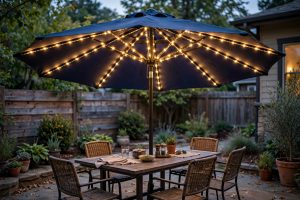
Best Solar Umbrella Lights for Patio: A Complete Buying Guide
July 4, 2026 0 views