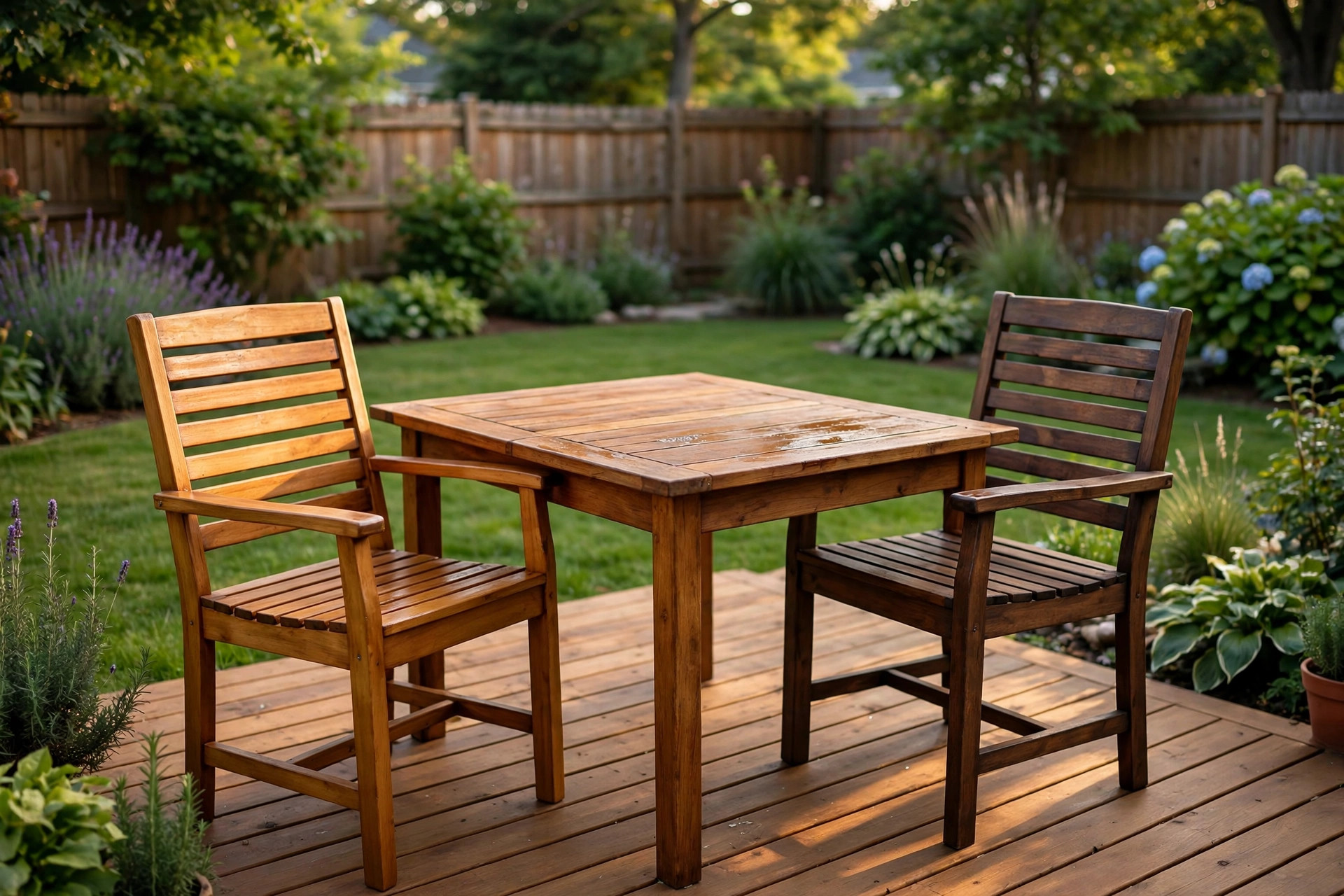

Teak oil vs stain for outdoor furniture is one of the oldest debates among people who own teak benches, chairs, and tables. Both finishes protect the wood. Both look good. But they work in different ways, they age in different ways, and they ask different amounts of work from you. This guide explains the difference in plain terms. By the end, you will know which finish fits your climate, your budget, and your patience.
Why the Finish You Choose Matters
Teak is a strong wood. It holds up well outside, even with no finish at all. Rain, sun, and snow do not destroy it the way they destroy soft woods. Many people let their teak turn silver gray.
But a finish changes the story. Oil feeds the wood and brings out a warm golden color. Stain adds color and forms a layer that fights sun and water. The wrong finish can peel or turn black with mold. The right finish can keep a table looking rich for years.
The choice matters because of the sun. Ultraviolet light breaks down wood fibers. It is the main reason outdoor furniture fades. Both oil and stain slow that damage. They do it by different means, and they look very different as the months pass.
Your climate matters too. A chair in dry Arizona faces brutal sun but little rot. A bench in wet Florida faces mold and mildew all year. Think about where your furniture lives before you buy anything.
What Teak Oil Is and How It Works: Teak Oil vs Stain for Outdoor Furniture
Teak oil is a penetrating finish. It soaks into the wood instead of sitting on top. Most teak oils are made from linseed oil, tung oil, or a mix of oils with added solvents. They dry inside the wood, not on the surface.
When you rub teak oil into a chair, the wood drinks it in. The color deepens to a warm honey brown. The grain shows through clearly. There is no shine and no film. The chair looks natural, as if the wood were simply richer.
Teak oil does not form a hard shell. Water still touches the wood. Sun still touches it. The oil slows the damage but does not stop it. Most owners reapply oil two or three times a year.
The Good Side of Teak Oil
Oil is easy to apply. You wipe it on with a rag or a brush. You do not need special skill. If a spot wears thin, you rub a little more oil into that spot. There are no brush marks to fix and no peeling film to sand off.
Oil keeps the natural look of teak. Many people buy teak for its color. Oil preserves that color better than anything else. The wood stays warm and golden instead of turning gray.
Oil is also forgiving. You can switch to stain later if you change your mind. You sand the piece, let the oil weather out, and apply stain over clean wood. Paint makers like Benjamin Moore explain that a clean, sound surface is the base for any finish, and oil makes a good base when it has worn away.
The Hard Side of Teak Oil
Oil needs work. A busy person who forgets maintenance will watch the color fade. In strong sun, a fresh coat of oil can look dull again within two months.
Oil can also grow mold. The oil itself is food for mildew in damp places. Chairs in shade near a pool may turn dark with black spots. You must wash the furniture often and keep air moving around it.
What Stain Is and How It Works
Stain is different. Stain adds color to the wood and usually forms a thin film on the surface. Outdoor stains for furniture come in three main types: transparent, semi-transparent, and solid. Transparent stain shows the grain fully. Semi-transparent stain shows some grain. Solid stain looks almost like paint.
Stain works by sitting partly in the wood and partly on it. The color comes from pigments. The protection comes from resins that harden into a film. That film blocks sun and sheds water. A good outdoor stain keeps its color far longer than oil.
The Good Side of Stain
Stain lasts longer between coats. A good exterior stain on teak can hold its color for one to three years. That is a big saving of time for owners who do not want to oil every season.
Stain gives you color choices. You can keep the natural teak tone with a clear stain. You can warm it with a cedar tone. You can go dark with a walnut tone. Home improvement writers at Bob Vila often note that stain is the best way to match outdoor furniture to a deck or a house trim.
Stain resists mold better than oil in many cases. The film on the surface sheds water instead of drinking it. Many exterior stains include mildewcide, a chemical that fights mold growth.
The Hard Side of Stain
Stain can peel. When the film breaks down, it flakes off in sheets or chips. Fixing a peeling stain means sanding the whole piece back to bare wood. That is a full weekend of hard work.
Stain hides the wood. Even transparent stain adds a layer between your eye and the grain. Solid stain hides the grain almost fully. If you love the look of raw teak, stain may feel like a cover-up.
Switching back is hard. Once you stain a piece, going back to oil means removing all the stain first. That means heavy sanding or a chemical stripper. Sanding and brushing guides from This Old House cover the right steps for a stain job that lasts. Think of stain as a long-term commitment.
Teak Oil vs Stain for Outdoor Furniture: Side by Side
The core question of teak oil vs stain for outdoor furniture comes down to five points: look, life, labor, cost, and change.
Look. Oil keeps the wood natural and warm. Stain adds color and can hide the grain. Oil wins for purists. Stain wins for people who want a chosen color.
Life. Oil fades in two to four months in full sun. Stain holds for one to three years. Stain wins on durability.
Labor. Oil is easy to apply but must be redone often. Stain is harder to apply but stays longer. Over five years, the total labor is closer than people think. Oil takes many small jobs. Stain takes one big job and then a few small ones.
Cost. A quart of teak oil costs about the same as a quart of exterior stain. But oil needs more coats per year, so oil costs more over time. Stain needs sandpaper, brushes, and sometimes a stripper, which adds to the first job.
Change. You can move from oil to stain with light sanding. You cannot move from stain to oil without heavy work. Oil keeps your options open. Stain closes them.
How to Choose for Your Own Furniture
Start with honesty about your habits. Will you oil the chairs every spring and fall? If yes, oil will reward you with the richest look. If you know you will forget, choose stain and save yourself the slow fade to gray.
Look at your weather. Hot sun favors stain, because stain fights UV light longer. Damp shade favors stain too, because oil feeds mold. Dry, mild climates with little sun are the one place where oil can last long enough to make sense.
Look at your furniture. New, smooth teak takes either finish well. Old, weathered teak that has turned gray needs sanding first either way. Check the pieces for cracks. Oil fills small checks better than stain. Stain bridges them with a film that may crack later.
Consider the whole yard. If your deck is stained a cedar tone, a matching stain on the furniture ties the space together. Retailers such as The Home Depot and Lowe’s sell stain lines in deck tones that pair well with patio sets.
A Word About Painted Pieces
Some owners paint outdoor furniture instead of oiling or staining it. Paint gives the strongest color and the longest life, but it hides the wood fully. If you like painted furniture, our notes on chalk paint for furniture cover where to find it and how it behaves. Paint is a third path, beyond the teak oil vs stain for outdoor furniture debate, and it suits pieces where the wood is already rough.
Cost and Price
Expect to spend between 15 and 40 dollars per quart for teak oil. A quart covers one large table or about four chairs with two coats. You will buy three to four quarts over five years for a full set.
Exterior stain costs between 20 and 50 dollars per quart. A quart covers a similar area. But you buy fewer quarts, because you recoat less often. Over five years, a stained set may use half the finish that an oiled set uses.
Tools add up. Oil needs only rags and gloves. Stain needs sandpaper, a good brush, painter’s tape, and drop cloths. The first stain job may cost 30 to 60 dollars in tools. Later jobs cost less.
If you hire the work out, prices change fast. A pro may charge 200 to 500 dollars to strip and stain a full teak set. Oiling by a pro costs less per visit but happens more often. For decks, our notes on deck staining cost show how pros price similar outdoor work in the United States.
Care and Upkeep
Whichever finish you choose, cleaning is the base of all care. Wash the furniture once or twice a year with mild soap and water. A soft brush lifts dirt from the grain. Rinse well. Let the piece dry fully before you add any finish.
For oil, plan on two or three coats a year. Light sanding between coats helps the oil grip. Wipe off the excess after twenty minutes. Puddled oil turns gummy and attracts dust.
For stain, inspect once a year. Touch up worn spots with a light sanding and a fresh coat. When the film starts to peel anywhere, plan a full strip and restain. Never put new stain over peeling old stain.
Store cushions separately. Cushions hold water against the wood. Even the best finish fails faster under a wet cushion. Care guides from The Spruce and HGTV both stress airflow as the first rule of outdoor furniture care.
Safety
Work outside or in a garage with the door open. Both oil and stain release fumes. Wear a dust mask when sanding. Old finishes may contain lead if the piece is very old, so test before you sand.
Teak oil rags can catch fire on their own. This is real. Oil-soaked rags heat up as the oil dries. Spread used rags flat outside to dry, or soak them in water in a metal can with a lid. Never ball up oily rags in a trash can. Finish makers such as Behr and Sherwin-Williams print this warning on every can, and it deserves your full attention.
Wear gloves with both products. Nitrile gloves cost little and save your skin. Wear eye protection when sanding overhead pieces.
Keep finishes away from children and pets until dry. Store cans in a cool place, upright, with lids tight. Dispose of old cans and rags at a household hazardous waste site, not in the regular trash.
FAQ
Will teak oil stop my furniture from turning gray?
It slows the graying but does not stop it. Sun always wins in the end. Fresh oil keeps the golden tone for a few months. Then the color starts to fade again. Regular coats are the only way to hold the color.
Can I put stain over old teak oil?
Yes, once the oil has worn down. Wash the piece well. Sand it lightly with 120-grit paper. Let it dry. Then apply the stain. Do not stain over fresh, oily wood. The stain will not grip, and it may peel within weeks.
Which finish is better for a rainy climate?
Stain is usually better in rain. The film sheds water, and many stains include chemicals that fight mold. Oil soaks up water and can feed mildew in damp shade.
How often must I reapply teak oil?
Two to three times a year in most of the United States. Pieces in full southern sun may need it four times. Pieces under a covered porch may need it only twice. Watch the color. When the honey tone starts to dull, it is time.
Does stain work on old gray teak?
Yes, but the gray must come off first. Sand the piece down to fresh wood, or use a wood cleaner made for teak. Stain over gray, weathered fibers looks blotchy and fails early. Clean wood is the base for a clean finish.
Is one finish better for the environment?
Both have trade-offs. Oil is often plant-based but needs frequent reapplication, which means more product over the years. Stain lasts longer but is a chemical film that must be stripped and thrown away. Choose low-VOC products and dispose of waste properly either way.
A Final Word
Teak oil vs stain for outdoor furniture is not a contest with one winner. It is a match between a finish and an owner. Oil suits the hands-on owner who loves the natural look and does not mind a spring and fall ritual. Stain suits the owner who wants color choice and long gaps between maintenance days.
Pick the finish you will actually maintain. A well-kept oil finish beats a neglected stain job every time. A well-kept stain finish beats forgotten oil every time. The best finish is the one that gets done.
If your project grows beyond the furniture itself, our porch and patio paint buying guide can help you match floors and trim to the pieces you just finished.
References
Behr. (n.d.). Paints, primers, and stains. https://www.behr.com Benjamin Moore. (n.d.). Paints and stains. https://www.benjaminmoore.com Bob Vila. (n.d.). Home improvement advice. https://www.bobvila.com HGTV. (n.d.). Home and garden ideas. https://www.hgtv.com Lowe’s. (n.d.). Home improvement products. https://www.lowes.com Sherwin-Williams. (n.d.). Paints and coatings. https://www.sherwin-williams.com The Home Depot. (n.d.). Home improvement products. https://www.homedepot.com The Spruce. (n.d.). Home and garden advice. https://www.thespruce.com This Old House. (n.d.). Home renovation guidance. https://www.thisoldhouse.com
Was this guide helpful?

About Robert Taylor
The My Garden US editorial team writes practical, in-depth home and garden guides for American homeowners — tested advice, no fluff.
You May Also Like

Geometric Wallpaper for Home Office USA: A Practical Guide
September 3, 2026 0 views
Peel and Stick Wallpaper for Small Bathrooms: A Plain Guide
April 24, 2026 0 views
Wallpaper for Powder Room Ideas USA: A Practical Guide for Homeowners
March 10, 2026 0 views