Homeowners across the country search for motion flood lights usa online deals because these lights do two jobs at once. They keep a yard safe at night, and they save power because they turn on only when something moves. A good deal is not the lowest price. It is the right light at a fair price from a seller you can trust. This guide explains how to find that deal and how to pick the right unit for your home.
Why Motion Flood Lights Matter
A dark yard invites trouble. Thieves prefer dark driveways and shadowed doors. A flood light that switches on at the first step of movement takes that cover away. Most burglars move on to a darker house. That simple fact has made the motion flood light one of the most common outdoor lights in America.
They also help in small daily ways. You come home late with arms full of groceries. The light sees you and switches on before you reach the door. You hear a strange sound at night and step to the window. The yard is lit, so you can see clearly. A parent lets a dog out after dark. The light makes the yard visible and safe.
Energy savings matter too. A plain flood light burns all night whether you need it or not. A motion model stays dark until its sensor sees heat and movement. In most homes this means the light runs a few minutes a night. That difference shows on the power bill, month after month. The federal ENERGY STAR program notes that efficient lighting cuts energy use sharply, and choosing an efficient LED model is the first step.
What to Look For When You Buy: Motion Flood Lights Usa Online Deals
Buying one of the motion flood lights usa online deals starts with knowing what counts. Several details separate a good unit from a poor one.
Brightness
Brightness is measured in lumens. A small porch may need only 700 to 1,000 lumens. A long driveway or a wide back yard may need 2,000 to 4,000. More is not always better. Too bright a light can glare into a neighbor’s windows. Pick the level that covers your space without flooding the street.
Detection Range and Angle
The sensor is the heart of the unit. Most models cover 30 to 70 feet with an angle of 180 to 270 degrees. Check the range against your yard. A light with a 30 foot range mounted on a garage will not reach the far end of a 60 foot driveway. Angle matters for corners. A 270 degree sensor watches three sides at once, which suits a corner mount.
Sensor Modes
Better units let you tune the sensor. Look for adjustable sensitivity so pets do not trip the light all night. Look for a daylight sensor so the unit stays off in daytime. Some models add a dusk to dawn mode with a dim setting that rises to full light on motion. These options cut false alarms and save more power.
LED Life and Weather Rating
LED heads should last 30,000 to 50,000 hours. That is many years of normal use. Check for a UL or ETL listing for wet locations. The unit will face rain, snow, and summer heat. A proper wet location rating means the housing is built for that duty.
Adjustable Heads
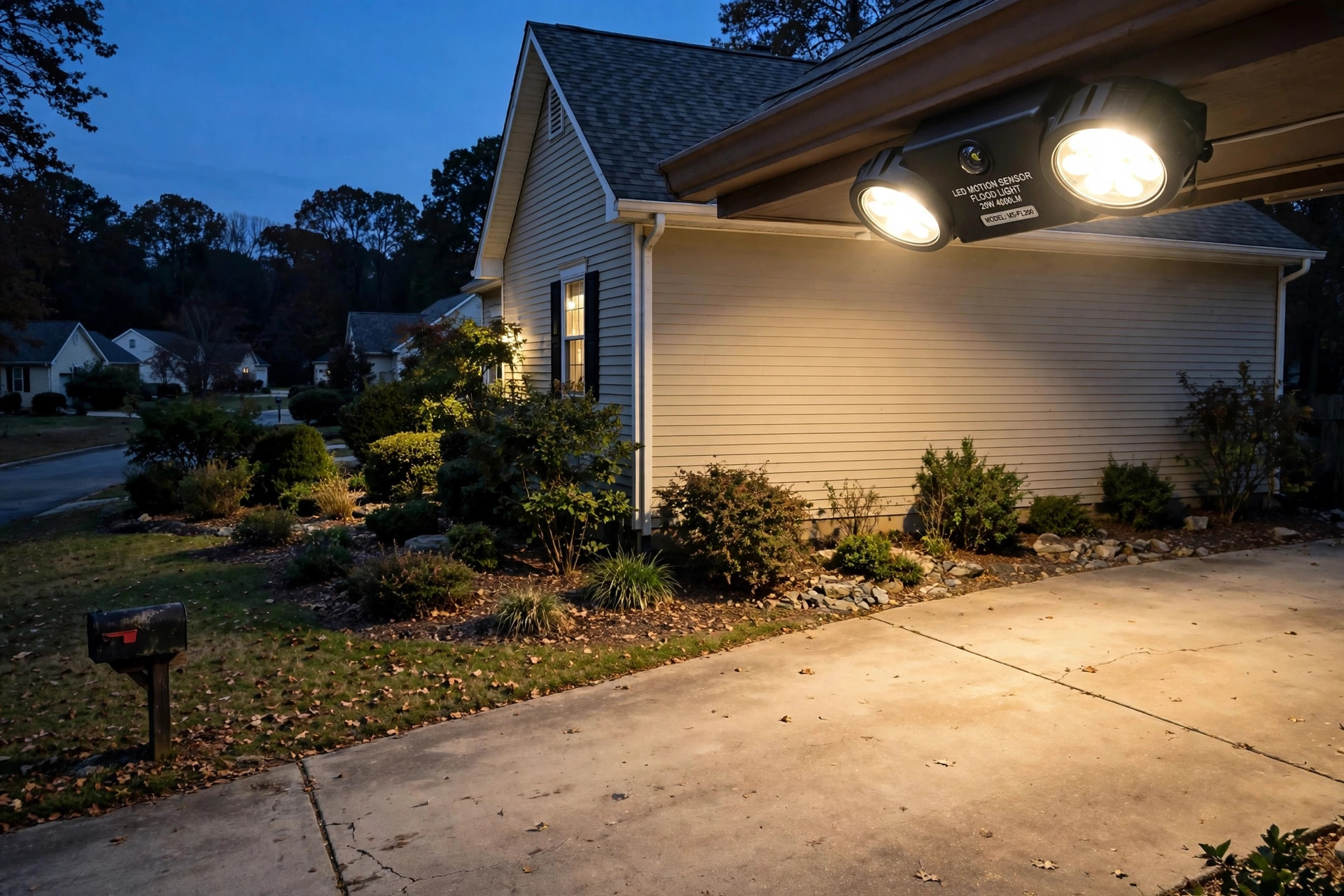
Twin head models let you aim each lamp separately. This helps you cover two zones with one unit. One head can point at the driveway while the other points at a side gate. Single head units are fine for small areas but offer less control.
Related choices for your home include sensor porch lights, which suit covered entries, and landscape spot lights, which suit paths and trees.
Power Source
Most motion flood lights wire into household current. Some are battery powered, and some are solar. Hardwired units give steady full power. Solar and battery models are easier to place but give less light and need care in winter. For main security duty, hardwired is the stronger choice.
Types and Options on the Market
Not all motion flood lights are built alike. The main types on store shelves today are these.
LED twin head flood lights. The classic security light. Two adjustable heads, a central motion sensor, hardwired power. They give the most light for the money and suit driveways, garages, and back yards.
LED single head flood lights. Smaller and cheaper. They suit porches, patios, and small side yards where one aimed lamp is enough.
Solar motion flood lights. No wiring needed. A panel charges by day and powers the light at night. Light output is modest. They work best in sunny states and as added coverage rather than main security.
Smart motion flood lights. These link to a phone app over WiFi. You can change settings, see alerts, and turn the light on from anywhere. Some pair with a camera. They cost more but give full control.
Motion sensor bulbs. A simpler option. A standard bulb with a built in motion sensor fits a porch fixture. It gives no flood power but can suit small entries. For more on accent lighting, see our guide to landscape spot lights.
For entry areas with covers, a sensor porch light may be a tidier fit than a full flood unit.
Cost and Price: What a Fair Deal Looks Like
Motion flood lights usa online deals vary widely. Simple single head LED models start near fifteen dollars. Twin head LED units from known brands usually run thirty to seventy dollars. Smart units with cameras can run one hundred fifty to two hundred fifty dollars or more.
Price alone should not decide. A twelve dollar unit with a weak sensor will false alarm all night and die in a year. A forty dollar unit from a known maker with a wet location rating and a three year warranty is often the better deal over time.
To judge an online deal, follow these steps.
First, set your need. Note your mounting spot, the distance to cover, and whether you want hardwired or solar. Second, compare three listings with the same lumens and range. If one is far cheaper, read its reviews for sensor problems. Third, add up the true cost. Include shipping, tax, and any wiring parts you need. A free shipping deal may beat a cheaper list price. Fourth, check the return window. A thirty day free return policy protects you if the sensor does not suit your yard.
Sales cluster around holidays. Memorial Day, July Fourth, Labor Day, and Black Friday bring strong lighting deals from big home stores like Home Depot and Lowe’s. Lamp specialty sellers like Lamps Plus and Lumens run their own sales too. Sign up for email alerts in spring so you catch the season’s first price drops.
Retailers such as Home Depot and Lowe’s carry wide lines from several brands, which makes side by side comparison easy. The lighting maker Philips offers LED flood options with strong efficiency records. For fixtures and design choices, Lamps Plus and Lumens give detailed specs that help you compare models fairly.
Installation: Doing It Right
Most homeowners mount a motion flood light under an eave, on a garage wall, or above a back door. Height matters. Mount between seven and ten feet. Too low and the sensor range shrinks. Too high and the sensor sees less clearly.
Point the sensor across the path a person would take, not straight at it. A sensor sees side to side movement better than movement straight toward it. Tilt the heads down so the light lands on the ground, not into the sky or into a neighbor’s windows.
Wiring should respect safety. Turn off the breaker before you touch any wires. If you have an old fixture in place, a new unit can often use the same box. If there is no wiring, you may need an electrician to run a line. A licensed electrician is the safe choice when you are unsure.
After mounting, walk the yard at dusk and test. Walk across the sensor’s edge to set the range. Walk near plants to check for false trips. Adjust the timer dial so the light stays on long enough to be useful, often one to five minutes. Set the sensitivity so small animals do not trip it.
Care and Upkeep
Motion flood lights need little care, but a small yearly routine keeps them sharp.
Clean the sensor lens and the LED heads once or twice a year. Dust and spider webs cut range and dim the light. Use a soft cloth and mild soap. Do not use harsh sprays on the sensor dome.
Check the housing seals each fall. Cracks let water in, and water kills electronics. Tighten loose screws and replace worn gaskets.
In cold states, check solar models after snow. Brush panels clear so they can charge. For hardwired units, test after big storms by walking the zone and watching for a clean on and off.
If the light stays on all night, the cause is often a stuck timer setting or a heat source in view. Dryer vents and HVAC units give off heat and can trip sensors. Re-aim the sensor away from them. If the light never turns on, check the breaker, then the daylight sensor setting. A unit set to full day mode will not fire at night.
The federal guides at Energy Star and the U.S. Department of Energy explain efficient outdoor lighting in plain terms and are worth a read before you buy. For setup ideas and reviews, The Spruce covers outdoor lighting projects step by step. Independent lab testing, such as the work at Consumer Reports, can help you compare brands on quality and life.
Interior task lighting is a different job. If you are fitting lights inside the house too, our piece on under cabinet strips covers that topic.
Safety Notes
Outdoor electricity needs respect. Always cut power at the breaker before wiring. Use only wire nuts and boxes rated for outdoor use. Never leave bare wire ends exposed to rain.
Light placement affects others. Aim heads down and inward so you do not glare drivers on the street or shine into bedrooms next door. Many towns have local rules about light trespass. A quick check of your town code avoids neighbor disputes.
Ladders are the most common cause of injury in this job. Use a stable ladder on firm ground. Keep one hand free. Do not reach too far to the side. If the mount point is high or awkward, hire a handyman or electrician.
Frequently Asked Questions
How many lumens do I need for a motion flood light? For a porch or small patio, 700 to 1,500 lumens is enough. For a driveway or wide yard, look at 2,000 to 4,000 lumens. Very large areas may need two units aimed from different points.
Are LED motion flood lights worth the price? In most cases, yes. LEDs use far less power than old halogen lamps and last much longer. A forty dollar LED unit can pay for itself in power savings and avoided bulb changes within a few years.
Why does my motion light turn on for no reason? Common causes are passing cars’ headlights, heat from vents, small animals, and moving tree branches in the sensor’s view. Lower the sensitivity, re-aim the sensor away from the street, and trim branches that wave in the detection zone.
Do solar motion flood lights work in winter? They work but with limits. Short days and snow cut charging. In northern states a solar unit may dim or fail on long winter nights. Hardwired units are the safer choice for year round security duty.
How high should I mount a motion flood light? Seven to ten feet is the common range. This height gives the sensor a wide view while keeping the light out of easy reach.
Can I install a motion flood light myself? If a wired fixture box already exists, many handy homeowners can swap a unit themselves after cutting the breaker. If new wiring is needed, or you are unsure at any step, call a licensed electrician.
A Short Final Word
The best of the motion flood lights usa online deals is the one that fits your yard, your wiring, and your budget all at once. Set your needs first. Compare like models on lumens, range, and warranty. Buy from a seller with fair returns. Then mount it well and test it at dusk. A well chosen motion flood light gives years of quiet service, switching on exactly when it should and resting dark the rest of the night.
References
Consumer Reports. (n.d.). Product reviews and ratings. https://www.consumerreports.org ENERGY STAR. (n.d.). Energy efficient products. https://www.energystar.gov Lamps Plus. (n.d.). Lighting and home decor. https://www.lampsplus.com Lowe’s. (n.d.). Home improvement products. https://www.lowes.com Lumens. (n.d.). Lighting and ceiling fans. https://www.lumens.com Philips. (n.d.). Lighting products. https://www.philips.com The Home Depot. (n.d.). Home improvement products. https://www.homedepot.com The Spruce. (n.d.). Home and garden advice. https://www.thespruce.com U.S. Department of Energy. (n.d.). Energy efficiency and renewable energy. https://www.energy.gov
Was this guide helpful?

About Sarah Mitchell
The My Garden US editorial team writes practical, in-depth home and garden guides for American homeowners — tested advice, no fluff.