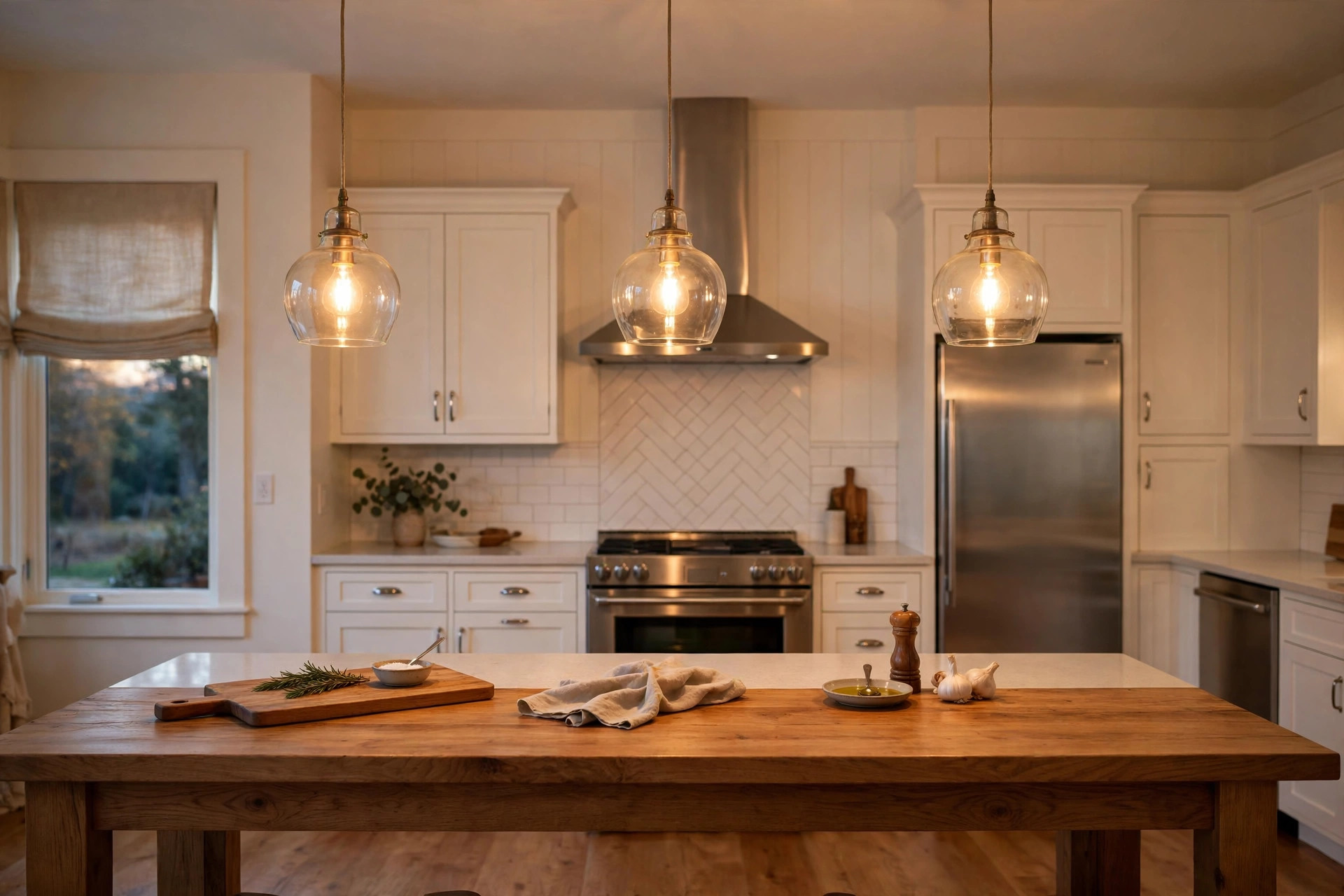
The kitchen island has become the heart of the American home. Families eat there. Children do homework there. Guests gather there. This kitchen island pendants american homes guide will help you choose the right lights for that space. The right pendant can make the island look warm and welcoming. The wrong one can leave dark spots or harsh glare. The good news is that the choice is simpler than it looks. A few basic rules will carry you through size, height, style, and cost. The rest of this guide walks you through each one in plain terms.
Why Kitchen Island Pendants Matter
Task light is the reason pendants exist. An island is a work surface. People chop vegetables there. They read recipes. They fold laundry. All of these tasks need clear, steady light from above. A ceiling light placed too far away will not reach the counter well. It will cast shadows from your own body. Pendants hang low and close to the surface. They put light exactly where the work happens.
Pendants also set the mood of the room. A kitchen can feel cold under bright, flat ceiling light. Warm pendant light softens the space. It makes wood look rich. It makes tile look bright. It invites people to sit down and stay a while. In many American homes, the island is the main eating spot. Good light there makes daily life more pleasant.
Style is the third reason. A pendant is one of the few fixtures that sits at eye level. People notice it the moment they walk in. A simple shade can look clean and calm. A bold design can give the whole room a focal point. Designers often call pendants the jewelry of the kitchen. The right pair or row can tie together the cabinets, the counter, and the floor.
How to Choose the Right Pendants: Kitchen Island Pendants American Homes Guide
Measure the Island First
Start with a tape measure. Write down the length and width of the island. This tells you how many pendants you need. A common rule is one pendant for every 24 to 30 inches of island length. A 48-inch island takes two pendants. A 72-inch island takes three. For very long islands, some homes use four small pendants or a long linear fixture.
Width matters too. Most islands are 36 to 42 inches wide. Pendants for islands of this width should be no wider than 16 to 20 inches each. Larger shades can look heavy and crowd the space. Keep at least 6 inches of open counter at each end. That way the end pendants do not hang past the edge of the island.
Get the Hanging Height Right
Hang pendants 30 to 36 inches above the counter top. Measure from the counter surface to the bottom of the shade. This range works for most kitchens. It keeps the light low enough to be useful. It also keeps the shades above the line of sight of seated people.
If family members are very tall, use the high end of the range. If the ceiling is low, stay closer to 30 inches. The shades should never block the view across the island. Two people should be able to look at each other and talk without a shade in the way. When in doubt, hold the fixture up before you mount it. Stand back and look at the room.
Think About the Number of Pendants
Odd numbers often look best. Three pendants suit most islands. Five suit long ones. Two can work on a short island or a small peninsula. Keep the spacing even. Measure the distance between centers. Equal spacing looks calm and planned.
A single long linear pendant is another option. It gives even light across the whole island. It suits modern kitchens. It also works when the island is very narrow. Some American homes use a row of small mini pendants for a classic look. Each choice has merit. The island size and the kitchen style should guide the pick.
Types of Kitchen Island Pendants
Glass Pendants
Glass shades are a popular pick for American kitchens. Clear glass shows the bulb. It gives bright, open light. It suits kitchens that need strong task light. Frosted glass softens the light. It hides the bulb from view. It cuts glare. Seeded glass has small bubbles. It adds texture and a cottage feel.
Glass keeps the room feeling open. It does not block the view. This matters in open floor plans. A room with a kitchen that opens to the living area benefits from light fixtures that seem to float.
Metal Dome Pendants
Metal domes are classic. They come in many finishes. Brushed nickel fits modern kitchens. Oil-rubbed bronze fits rustic rooms. Black domes fit farmhouse and industrial styles. The dome shape pushes light straight down. This makes them strong task lights.
The underside color affects the light. White undersides reflect clean light. Colored undersides can tint the glow. Look under the shade before you buy. A warm white interior gives food a natural look.
Drum Pendants
Drum shades are wide and short. They give a modern, soft look. Fabric drums spread light gently. They work well when the island is also a dining spot. Light through fabric feels warm and calm. Drum pendants suit kitchens with clean lines and neutral colors.
Multi-Light and Linear Pendants
Some pendants carry three or four bulbs on one bar. These are called linear pendants. They light a long island with one fixture. They need only one junction box. This can save on wiring costs. They suit modern and transitional kitchens. Many come with adjustable shades. That lets you aim light where you need it.
Mini Pendants
Mini pendants are small shades, often 6 to 10 inches wide. They hang in rows of three or more. They fit short islands and peninsulas. They add rhythm to the room. They work well in smaller American homes where a large shade would crowd the space.
Style Choices for American Homes
American kitchens come in many styles. Farmhouse kitchens are common. They use wood, white cabinets, and apron sinks. Black metal pendants with clear glass fit this style. They add contrast without noise.
Modern kitchens use flat cabinets and simple lines. Sleek metal or glass pendants fit well. Chrome and polished nickel give a crisp look. Keep the shape simple.
Coastal kitchens show up in many states near water. They use light colors and natural textures. Woven rattan shades or sea-glass tones fit this style. The light feels airy.
Traditional kitchens use raised-panel cabinets and warm woods. Brass or bronze pendants fit well. Seeded glass adds old-world charm. The finish of the pendants can match the cabinet hardware. This ties the room together.
Transitional kitchens mix old and new. They are very popular in the United States. Simple shapes in mixed finishes work here. A brushed nickel pendant with frosted glass fits almost any transitional room.
Light Bulbs and Brightness
Pendants are only as good as their bulbs. Use warm white light for kitchens. The color temperature should be 2700K to 3000K. This gives a warm, natural glow. It makes food look appetizing. Cool white light can make a kitchen feel like an office.
Brightness matters for tasks. Each pendant over a work island should give about 400 to 800 lumens. Three pendants at 500 lumens each give strong task light. Check the bulb box for the lumen number. Watts tell you energy use. Lumens tell you brightness.
LED bulbs are the smart choice. They use little power. They last for years. They stay cool to the touch. The Energy Star program lists efficient lighting options that can cut energy use. The Department of Energy also publishes clear guidance on efficient home lighting. Dimmable LEDs let you lower the light for dinner and raise it for cooking. Make sure the dimmer switch matches the bulbs.
Cost and Price
Pendant prices vary widely. Simple metal shades cost 50 to 150 dollars each. Glass pendants cost 80 to 300 dollars each. Designer fixtures can cost 500 dollars or more per shade. Linear pendants with multiple lights often cost 300 to 900 dollars.
Installation adds to the cost. A licensed electrician usually charges 100 to 250 dollars per fixture. The cost rises if new wiring is needed. If the ceiling has no junction box over the island, the electrician must add one. That work can cost 200 to 500 dollars more.
Most American homes spend 400 to 1,200 dollars for a set of three pendants with installation. This is a modest home project. It gives a big change for the money. Prices for fixtures and bulbs are easy to compare at The Home Depot and Lowe’s. Both sites list many pendant styles with customer reviews.
Installation Tips
Turn off the power at the breaker before any work. Test the wires with a voltage tester. Safety comes first. If you are not sure about the wiring, hire a licensed electrician. Bad wiring can cause fire.
Check the ceiling height. Standard American ceilings are 8 or 9 feet high. Pendant cords and rods can be cut to length. Leave enough cord so the shade hangs at the right height. Extra cord can hide inside the canopy at the ceiling.
Use a template for spacing. Mark the center points on the ceiling with painter’s tape. Step back and look. Adjust before you drill. This saves trouble later.
If you want light under the cabinets too, add under cabinet strips for extra task light. Layered light makes the whole kitchen work better. Pendants handle the island. Under-cabinet lights handle the counters.
Care and Upkeep
Clean pendant shades every few months. Dust and grease build up in kitchens. Glass shades can go in warm soapy water. Dry them well before you hang them back. Metal shades need only a soft cloth. Do not use harsh cleaners on brushed finishes. They can scratch.
Check bulbs once a year. Replace burned-out LEDs. Tighten any loose shades. Look at the cords for wear. Replace a cord that looks cracked or frayed. A small fix now prevents a bigger problem later.
Dust the tops of shades. Grease rises with cooking steam. It settles on the top of the shade where you cannot see it. A damp cloth takes it off. Keep the inside of glass shades clean too. Dirty glass blocks light and dims the whole island.
Safety Notes
Heat is the main risk. Bulbs get hot. LED bulbs run cooler than old bulbs, but they still warm up. Keep shades away from curtains and wood beams. Never put a bulb with more watts than the fixture rating allows. The rating is printed inside the shade or on the socket.
Hanging height also matters for safety. Shades hung too low can hit tall people. They can also catch steam and grease from cooking. The 30 to 36 inch range keeps shades clear of most pots and pans.
If your home has an island range or cooktop, the rules change. Pendants over a cooktop need more clearance. Heat and steam rise fast. Many codes call for at least 36 inches above a cooktop. Some cooks prefer a range hood instead of pendants in that spot.
Outdoor kitchens need rated fixtures. If your island sits on a covered porch, use damp-rated pendants. Indoor fixtures can fail in outdoor air. For porch and yard lighting ideas, see our guide on sensor porch lights and landscape spot lights. Each setting needs the right fixture for the job.
Frequently Asked Questions
How many pendants should hang over a kitchen island?
Use one pendant for every 24 to 30 inches of island length. A 4-foot island needs two pendants. A 6-foot island needs three. Keep the spacing even and leave about 6 inches of counter past the end pendants.
How high should kitchen island pendants hang?
Hang the bottom of the shade 30 to 36 inches above the counter top. This keeps the light close to the work surface without blocking the view across the island. Adjust within this range for ceiling height and the height of the people who use the kitchen.
What size pendant is best for a kitchen island?
Most islands suit pendants 10 to 20 inches wide. Smaller islands and peninsulas suit mini pendants of 6 to 10 inches. The shade should be narrower than the island is wide. It should never hang past the edge of the counter.
What kind of bulb works best in kitchen pendants?
Use dimmable LED bulbs in warm white, 2700K to 3000K. Aim for 400 to 800 lumens per pendant for good task light. Philips and other major brands make reliable dimmable LEDs in many shapes and bases.
Can I install kitchen island pendants myself?
You can swap an existing pendant for a new one if the wiring is already in place. Turn off the breaker and test the wires first. For new wiring or new junction boxes, hire a licensed electrician. The cost is worth the safety.
Do pendants give enough light for cooking?
Yes, when sized and spaced right. Three pendants with 500 lumens each give strong light for chopping and prep. Add dimmers so you can soften the light for meals. Under-cabinet lights add a second layer of task light on the counters.
A Short Final Word
Kitchen island pendants are one of the best upgrades an American home can make. They are not costly. They are not hard to choose. Measure the island. Pick a style that fits the room. Hang the shades at the right height. Use warm, dimmable LEDs. That is the whole job. Good light makes the island a place where people want to be. For more home lighting ideas, browse the fixture guides at Lumens, Lamps Plus, The Spruce, This Old House, and Bob Vila. Each site offers plain buying advice that can help you finish the job with confidence.
References
Bob Vila. (n.d.). Home improvement advice. https://www.bobvila.com ENERGY STAR. (n.d.). Energy efficient products. https://www.energystar.gov Lamps Plus. (n.d.). Lighting and home decor. https://www.lampsplus.com Lowe’s. (n.d.). Home improvement products. https://www.lowes.com Lumens. (n.d.). Lighting and ceiling fans. https://www.lumens.com Philips. (n.d.). Lighting products. https://www.philips.com The Home Depot. (n.d.). Home improvement products. https://www.homedepot.com The Spruce. (n.d.). Home and garden advice. https://www.thespruce.com This Old House. (n.d.). Home renovation guidance. https://www.thisoldhouse.com U.S. Department of Energy. (n.d.). Energy efficiency and renewable energy. https://www.energy.gov
Was this guide helpful?

About Emily Rodriguez
The My Garden US editorial team writes practical, in-depth home and garden guides for American homeowners — tested advice, no fluff.