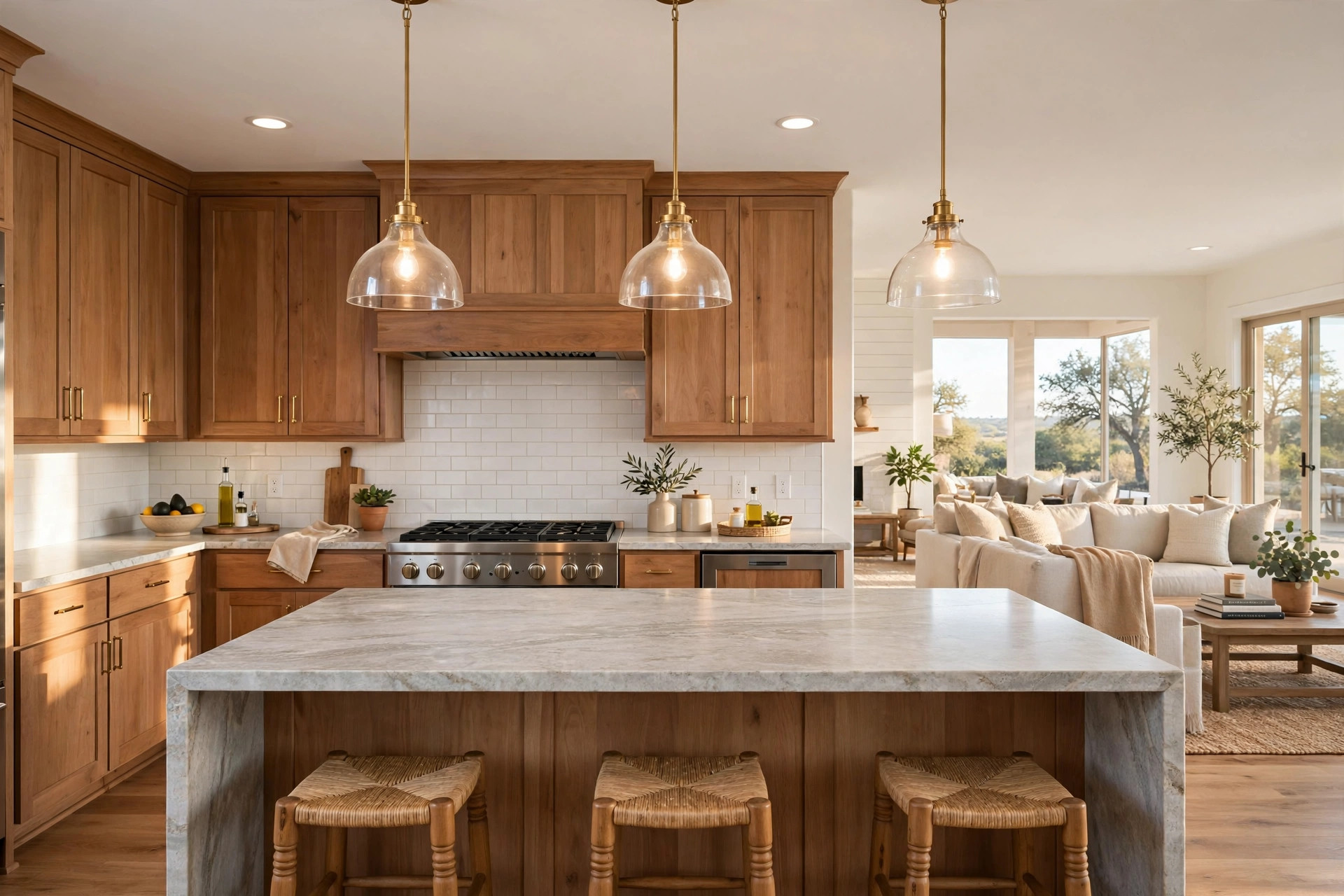

The right light over the right counter can change the whole kitchen. Many readers search for kitchen island pendants texas homes usa because they want clear facts, not sales talk. A pendant is a lamp that hangs from the ceiling by a cord, chain, or rod. It throws light down onto one spot. Over a kitchen island, it gives task light for cooking and warm light for evening meals. This guide explains the types, sizes, costs, and care in plain words, so you can buy with calm confidence.
Why Island Pendants Matter
A kitchen island does many jobs. It is a prep counter, a breakfast bar, and a place where guests stand with coffee. One ceiling light in the middle of the room cannot cover it well. Shadows fall across cutting boards and bowls. Pendants fix this. Each lamp sits low over the island and puts light right where the work happens.
Good light also changes how a kitchen looks. In Texas homes, kitchens often open into living rooms and dining areas. A row of pendants marks the island as its own zone. The shape, glass, and metal of the fixture become part of the room’s style. Choose well, and the light feels both useful and warm.
Poor choices bring real trouble. Lamps hung too high throw weak light and glare into eyes. Lamps hung too low get bumped by tall cooks. Cheap fixtures may flicker, buzz, or heat up. A steady, well-fitted pendant avoids all of this.
What to Look for When You Choose: Kitchen Island Pendants Texas Homes Usa
Start with the size of your island. Measure its length in feet. For a six-foot island, two medium pendants or three small ones usually fit. A nine-foot island can take three large pendants. A small rule helps: leave about 30 inches of space between the centers of two pendants. Leave at least six inches from each end of the island to the edge of the shade.
Next, think about light output. Bulb makers list brightness in lumens. For task light over a counter, 800 to 1,100 lumens per pendant suits most kitchens. A dimmer switch helps. Bright light works for morning prep. Soft light works for evening wine. The U.S. Department of Energy energy-saving lighting tips explain how dimmers and LEDs cut waste.
Color matters more than most buyers expect. Bulbs carry a Kelvin number. 2700K gives warm yellow light like old bulbs. 3000K gives a clean neutral white. 4000K and up look cold and blue. For Texas kitchens with wood cabinets and stone counters, 2700K to 3000K reads warm and welcoming. Keep the same color across all island pendants so the light looks even.
Check the mount. A sloped ceiling needs a sloped-ceiling adapter. A high Texas ceiling needs a longer rod or chain. Most pendants hang 30 to 36 inches above the countertop. Measure from the counter surface, not the floor. If family members are tall, use the 36-inch mark to keep sight lines clear.
Finally, look at the bulb type. Screw-base fixtures accept common bulbs and are easy to change. Built-in LED fixtures last many years but need a full swap when they fail. Choose what you can live with. Guides from a lighting showroom can help you compare the two paths.
Types and Options
Glass Shades
Clear glass shows the bulb and spreads light wide. It suits farmhouse and modern rooms. Frosted glass softens the light and hides the bulb shape. Colored glass, such as amber or smoke, tints the light and adds mood. Clean glass shades now and then, since grease from cooking clouds them over time.
Metal Shades
Metal shades push light straight down. They give strong task light and suit industrial or ranch styles common in Texas homes. The inside of the shade is often white or gold to bounce light down. Metal holds heat more than glass, so use bulbs rated for the fixture.
Drum and Fabric Shades
Drum shades wrap the bulb in fabric or linen. They soften glare and read calm and modern. Fabric near a stove can catch grease in the air. Keep drum pendants away from the range, and dust them often.
Lantern and Cage Styles
Lantern styles hold the bulb inside an open frame. They fit farmhouse and hill-country looks. Cage styles leave the bulb exposed, which can glare. A frosted bulb tames the glare.
Mini, Medium, and Large
Mini pendants run about 6 to 10 inches wide. Medium pendants run about 12 to 16 inches wide. Large pendants run 18 inches and up. One large pendant can anchor a small island. A pair or trio of minis suits a long island. Pendant sizing guides show how shade width pairs with island length.
Size and Height: Getting It Right
Hanging height decides comfort. Hang pendants 30 to 36 inches above the island surface. In rooms with 10-foot ceilings, which are common in newer Texas homes, add three inches for each foot of ceiling above eight feet. This keeps the light at the right level for the work below.
Keep the bottom of the shade above eye level for seated guests. If guests sit at the island and stare into bare bulbs, the height is wrong or the shade is too open. Frosted bulbs help here.
Line the pendants up with care. Center them over the island, not over the room. A laser level or a chalk line keeps the row straight. Each pendant should hang at the same height. Even small differences show.
Texas ceilings add their own quirks. Tray ceilings lift the center of the room, so measure the height from the lowest ceiling point that holds the mount. Exposed beams can block a clean row. If a beam runs across the island, mount the pendants to the beam itself or shift the row to sit between beams. In rooms with ceiling fans near the island, keep the pendants clear of the fan blades by at least two feet.
Cost and Price
Prices spread wide. A simple mini pendant at a big home improvement store can cost 40 to 80 dollars. A mid-range pendant with glass and brass parts runs 120 to 250 dollars. Designer or hand-made pieces can pass 500 dollars each. Most Texas buyers spend 100 to 300 dollars per pendant.
Plan the full cost, not just the fixture. An electrician may charge 150 to 300 dollars to hang one pendant if new wiring is needed. If the junction box already sits in the right spot, the cost drops. Dimmer switches add 20 to 50 dollars in parts plus labor.
Bulbs add up too. LED bulbs cost more up front but use far less power. An ENERGY STAR certified bulb program lists bulbs that meet strict rules for life and color. Over five years, cheap bulbs replaced often cost more than one good LED set.
Watch for sales at a lighting retailer around holidays. Lighting often goes on sale in January and July. Buying all pendants in one order keeps the finish batch the same. Two batches of the same finish can look slightly different side by side.
Care and Upkeep
Pendants over a kitchen island meet grease and dust every day. Wipe glass shades with a soft cloth and mild soap once a month. Dry them fully to avoid spots. Metal shades take a damp cloth and a quick dry. Never spray cleaner straight into the socket.
Change bulbs before they die if they flicker. Flicker strains eyes and hints at a loose wire or a failing bulb. Turn the power off at the breaker before you touch any socket. Let bulbs cool for ten minutes first.
Check the mount once a year. Give the fixture a gentle tug. If it moves, tighten the mount at the ceiling. Heavy pendants on old boxes can sag over time. A fan-rated box holds weight better than a standard box.
Dust the cords and chains. Dust builds up and dulls the look. A dry microfiber cloth does the job in seconds.
Safety
Electricity and heat demand respect. Always cut power at the breaker before you wire or change a fixture. Test the wires with a voltage tester. Do not trust a wall switch alone.
Keep flammable shades away from heat. Fabric shades must never touch bulbs that run hot. Use LED bulbs, which run cool, near fabric or paper shades.
Mind the weight. Some large pendants weigh 15 pounds or more. The ceiling box must be rated for that weight. If you are unsure, ask an electrician. A falling pendant can hurt a person and smash a stone counter.
Texas heat adds one more point. Attics in Texas run very hot in summer. Wires and drivers in the ceiling bake up there. Choose fixtures rated for the heat range of your attic, and leave air space around any driver box.
Keep cords out of reach of children. Long cords tempt small hands. Trim or tuck extra cord inside the canopy at the ceiling.
Frequently Asked Questions
How many pendants do I need over my island? Count the island length. A four-foot island takes one or two minis. A six-foot island takes two mediums or three minis. An eight-foot island or longer takes three. Keep about 30 inches between centers.
How high should kitchen island pendants hang? Hang them 30 to 36 inches above the countertop. Add three inches for each foot of ceiling height above eight feet. The bottom of the shade should sit above the eye line of seated guests.
Can I put pendants over an island with a cooktop? Yes, but use care. Heat and grease rise from the range. Pick metal or glass shades that wipe clean, and keep fabric away from the cooktop. Check that the fixture clears any range hood.
What color light is best for a kitchen island? Most cooks like 2700K to 3000K. That range reads warm and flatters food and wood tones. Use the same color for every pendant over the island.
Are LED pendants worth it? For most homes, yes. LEDs use less power and last far longer than old bulbs. LED bulb makers now sell warm colors that look close to old incandescent light. A dimmer makes them more flexible.
Where is the best place to buy pendants in Texas? Local lighting shops let you see the true finish and size. Big stores stock common styles at fair prices. Online shops carry the widest range. For ideas on what to buy and where to buy pendants for kitchen islands in the USA, see our guide to kitchen island pendants where to buy usa. Readers planning the rest of the room may also like our pieces on indoor wall sconces american homes guide and solar path lights california homes usa.
A Final Word
Good island light is not luck. It comes from three plain steps: size the pendants to the island, hang them at the right height, and pick a warm color that suits the room. Spend a little time on these steps and the kitchen pays you back every day, from bright morning prep to soft evening talk. Independent product tests and practical home guides can sharpen your choice further, and plain home advice sites keep the project grounded. The island is the heart of a Texas kitchen. Light it like it matters.
References
Bob Vila. (n.d.). Home improvement advice. https://www.bobvila.com Consumer Reports. (n.d.). Product reviews and ratings. https://www.consumerreports.org ENERGY STAR. (n.d.). Energy efficient products. https://www.energystar.gov Lamps Plus. (n.d.). Lighting and home decor. https://www.lampsplus.com Lowe’s. (n.d.). Home improvement products. https://www.lowes.com Lumens. (n.d.). Lighting and ceiling fans. https://www.lumens.com Philips. (n.d.). Lighting products. https://www.philips.com The Home Depot. (n.d.). Home improvement products. https://www.homedepot.com The Spruce. (n.d.). Home and garden advice. https://www.thespruce.com U.S. Department of Energy. (n.d.). Energy efficiency and renewable energy. https://www.energy.gov
Was this guide helpful?

About James Carter
The My Garden US editorial team writes practical, in-depth home and garden guides for American homeowners — tested advice, no fluff.
You May Also Like
Sensor Porch Lights for Sale in the USA: A Plain Buyer’s Guide
January 26, 2026 0 views
Landscape Spot Lights USA Online Deals: A Plain Guide for Homeowners
February 25, 2026 0 views
LED Recessed Lights Installation Guide USA
March 4, 2026 0 views