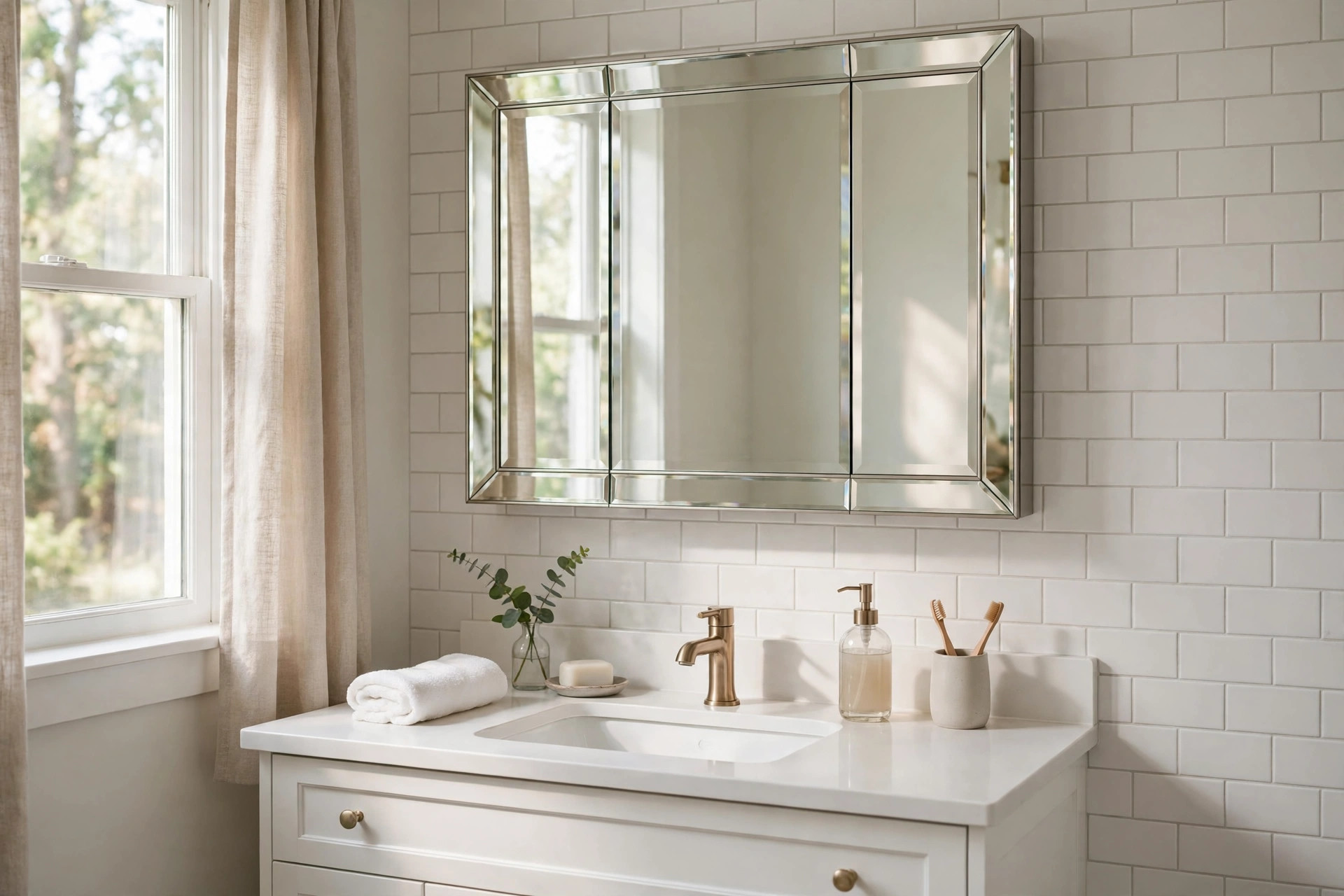

The mirrored medicine cabinet has served American homes for more than a century. It hangs above the sink. It holds daily goods behind a mirror. This mirrored medicine cabinets american homes guide covers sizes, mounting styles, materials, prices, and care, and it answers common questions owners ask after the sale.
Most buyers replace a cabinet once every fifteen to twenty years. A good choice will serve that whole span. The sections below walk through each decision in plain order. Start with why the cabinet matters. Then move to fit and features. Then weigh cost. Then plan for upkeep and safety.
Why a Mirrored Medicine Cabinet Matters
The American bathroom changed shape over the last hundred years. Early homes kept medicines in a small box on a shelf. By the 1920s, builders started to set a shallow steel box into the wall above the sink. A mirror covered the front. The idea spread fast. It solved two needs at once. It gave the household a mirror for the morning routine. It also gave a dry place for toothpaste, razors, and pills.
Space is the first reason the cabinet still matters. Many American bathrooms measure only forty to sixty square feet. Counter space is scarce. A medicine cabinet moves small items off the counter and into the wall. The sink deck stays clear. Cleaning takes less time. The room looks larger.
Speed is the second reason. Daily goods sit at eye level and within arm’s reach. There is no need to bend under the sink. The morning routine flows faster.
Looks count too. A mirrored front doubles the light in a small room. It bounces light from the vanity lamps back into the space. That is why so many new homes still include one, even when the design pages such as HGTV favor open shelves.
Storage safety is a final reason. Medicines and sharp tools stay behind a door. They stay out of sight of small hands. A cabinet with a latch adds one more layer of care for homes with children.
What to Look for Before You Buy: Mirrored Medicine Cabinets American Homes Guide
Size and Fit
Measure first. Standard widths run from sixteen to forty inches. Standard heights run from twenty to thirty-six inches. A single-sink vanity pairs well with a cabinet sixteen to twenty-four inches wide.
Depth matters as much as width. Surface-mount cabinets run four to six inches deep. Recessed cabinets sit inside the wall and give about three and a half inches of usable depth. Check the items you plan to store. Tall bottles of mouthwash need about nine inches of shelf height. Measure the tallest bottle before you shop.
Wall space also sets limits. The bottom of the cabinet should sit about six inches above the faucet spout. This keeps splashes off the mirror and leaves room to use the taps.
Recessed or Surface Mount
A recessed cabinet sets into the wall between the studs. The mirror sits nearly flush with the wall. The look is clean. The shelf depth is modest. A surface-mount cabinet hangs on the wall face. It sticks out four to six inches. It offers deeper shelves and an easier install.
Recessed mounting needs a wall cavity free of pipes, wires, and vent ducts. Many American homes run plumbing or wiring through the wall above the sink. Cutting into that wall without a check can cause real harm. Use a stud finder. Drill a small test hole first. If the cavity holds a pipe or a cable, choose surface mount instead.
Load-bearing walls deserve extra care. Cutting studs in a load-bearing wall weakens the frame. A contractor should frame a proper header before the cabinet goes in. For most owners, surface mount is the safer and cheaper path.
Mirror Quality and Door Design
Not all mirrors are equal. A plain flat mirror serves most homes well. A beveled edge adds a finished look and costs only a little more. Fog-free mirrors carry a special coating or a warming pad behind the glass. They stay clear after a hot shower. They cost more, but many owners in humid states find them worth the price.
Door design shapes daily use. A single door suits a small cabinet. Double doors suit wider units and open from the center. Check the hinges. Soft-close hinges stop the door from slamming. They also keep the glass from rattling loose over time.
Look at the door swing. A left-hinged door opens one way. Some units allow the hinge to switch sides. This small detail matters in tight rooms where a door might strike a light fixture or a towel bar.
Materials That Resist Moisture
The bathroom is wet by nature. Steam rises with every shower. Materials must stand up to it. Anodized aluminum bodies resist rust and serve for decades. Makers such as Kohler and Moen build many of their bath storage lines around rust-proof metals. Stainless steel also resists rust, though it costs more. Painted steel works in drier half-baths but may chip in a full bath.
Shelves deserve the same care. Glass shelves wipe clean and do not rust. Tempered glass is the safer pick. It breaks into small dull pieces instead of sharp shards. Some cabinets use adjustable shelves. These let the owner move a shelf up or down to fit tall bottles. Fixed shelves cost less but limit storage.
The mirror backing matters too. Cheap mirrors use a thin silver coat that spots and peels in steam. Better mirrors use a copper-free silver coat sealed against moisture. Ask the seller about the mirror backing before you buy. A five-year warranty on the mirror is a good sign.
Light and Power Features
Many modern cabinets add light. Some carry LED strips along the sides or top. Side lighting flatters the face better than a single top light. It cuts shadows under the eyes and chin. This helps with shaving and makeup.
The outlet must sit on a ground-fault circuit. The National Electrical Code calls for ground-fault protection near water. A licensed electrician should wire any lighted or powered unit.
Types of Mirrored Medicine Cabinets
The single-door cabinet is the classic. One mirror, one door, two or three shelves. It fits most half-baths and small full baths. It costs the least and installs the fastest.
The double-door cabinet splits the front into two mirrored doors. It suits wider vanities, and each side opens on its own, which helps couples who share a sink.
The tri-view cabinet adds narrow side mirrors that angle inward. They show the side of the head.
Lighted cabinets build LEDs into the frame. Some add a defogger pad. These extras raise the price and the wiring needs. They suit a full remodel more than a quick swap.
Cabinets with an interior outlet serve the electric toothbrush crowd. The cord stays hidden. The counter stays clear. Check that the outlet model lists a proper safety rating from a known test lab.
Cost and Price Ranges
Prices run wide. A basic surface-mount steel cabinet costs forty to one hundred twenty dollars. It holds the daily goods. It lasts about ten years in a steamy bath. A mid-range aluminum unit with a beveled mirror costs one hundred twenty to three hundred fifty dollars. This is the sweet spot for most buyers, and the buying guides at Lowe’s and Bob Vila point to the same range for quality bath storage. The mirror resists fog spots. The hinges close soft. The body fights rust.
Premium units cost three hundred fifty to one thousand dollars or more. They add LED light, defoggers, and interior outlets. Fixture makers like Delta Faucet and American Standard list designer lines in this band. A forty-inch wide tri-view unit with full lighting can pass one thousand dollars before install.
Install cost adds to the total. A surface-mount swap takes a handy owner about an hour. The only cost is the cabinet and a few screws. A recessed install takes longer. Cutting drywall, framing the opening, and patching the edges may take half a day. A contractor may charge one hundred fifty to four hundred dollars for the labor. Wiring a lighted unit adds an electrician visit. Plan for that cost before you buy the fanciest model.
Watch for the hidden costs too. A recessed cabinet in a tiled wall needs tile work. A wider cabinet may need the vanity light moved. A lighted cabinet may need a new circuit. Add these to the budget early. The cheapest cabinet on the shelf is not always the cheapest project.
Care and Upkeep
A mirrored medicine cabinet needs little care. A few habits keep it bright for years. Wipe the mirror with a soft cloth and plain glass cleaner. Do not spray cleaner straight onto the glass. Spray the cloth instead. Liquid that runs down the edge can seep behind the mirror and stain the silver coat.
Dry the frame after steamy showers. Water that sits on steel edges will find any weak spot in the paint. A quick wipe takes ten seconds. It adds years to the finish.
Check the hinges once a year. Tighten loose screws. A sagging door stresses the glass. A drop of light oil on a stiff hinge keeps the swing smooth.
Replace worn door bumpers. These small rubber pads stop the glass from striking the frame. They cost pennies. They guard a mirror worth far more.
Keep the shelves tidy. Heavy bottles on a high glass shelf strain the clips. Store the heaviest items low. Leave a small gap behind tall bottles so air can move.
Safety Notes
Mount the cabinet to studs, not to drywall alone. A loaded cabinet can weigh twenty to forty pounds. Drywall anchors may hold at first and fail later. Find the studs with a finder. Drive long screws into solid wood.
Treat the glass with respect. Tempered glass is safer than plain glass, but it can still break under a hard blow. Do not let children swing on the door. Do not slam it shut. If the mirror cracks, replace the door or the whole unit. Do not tape over a cracked mirror and keep using it.
Wire lighted units with care. The bathroom is a wet room. The code calls for ground-fault protection on bathroom circuits. A licensed electrician should make the final hookup.
Store medicines with care. The cabinet sits high, but children climb. A simple latch or lock adds real safety. Keep pills in their marked bottles. Keep sharp razors in a closed case on a high shelf. These small steps follow the common safety advice found on trusted consumer and maker pages, such as the guidance linked from This Old House and The Spruce in this guide.
Check local rules before a recessed cut. Some towns ask for a permit when you open a wall near plumbing. A quick call to the building office settles the question. It costs nothing and avoids a fine.
Frequently Asked Questions
Can I install a recessed cabinet in any wall? No. You need a clear cavity between studs. Many walls above the sink hold pipes, wires, or vent ducts. Check with a stud finder and a small test hole. Load-bearing walls need framed support before you cut a stud. When in doubt, pick surface mount.
What depth should the shelves be? Most daily items need three to four inches. Tall mouthwash bottles need a shelf about nine inches tall. Surface-mount units give deeper shelves than recessed units. Measure your tallest bottle before you buy.
Are fog-free mirrors worth the extra cost? In a full bath with daily showers, many owners say yes. In a half-bath with no shower, the extra cost buys little. Match the feature to the room.
Can I replace just the mirror and keep the box? Sometimes. If the box is solid and the size is standard, a glass shop can cut a new mirror to fit. Many owners find a full new unit costs little more than custom glass. Compare both prices first.
How do I keep medicines safe from children? Store them high and behind a latched door. Add a small cabinet lock if toddlers visit. Keep pills in marked bottles with caps that resist small hands. This advice lines up with the child-safety pages linked in the references below, including the federal safety guidance.
Will a wide cabinet work over a double vanity? Yes, if the width fits the mirror space. A thirty to forty inch unit suits most double vanities. Some owners prefer two matching smaller cabinets, one per sink. Both plans work. Check the light bar above. A wide cabinet may crowd the lights.
A Final Word
The mirrored medicine cabinet is a quiet workhorse of the American bathroom. It asks for little. It gives storage, light, and a clear mirror every day. The right choice starts with a tape measure. It ends with a solid mount on real studs. Between those two steps sit the choices of style, material, and price.
A mid-range aluminum cabinet with a good mirror will serve a busy family bath for twenty years. A lighted unit will please the owner who shaves or applies makeup each morning. Either way, mount it well, wire it safe, and wipe it dry. Small care keeps a simple fixture working for a long time.
Readers planning a wider bath update may also want the companion guides on bathroom sink vanities, vanity light bars, and LED bathroom mirrors linked here. Together they cover the full wall above the sink.
References
American Standard. (n.d.). Bathroom and kitchen products. https://www.americanstandard.com Bob Vila. (n.d.). Home improvement advice. https://www.bobvila.com Delta Faucet. (n.d.). Kitchen and bathroom faucets. https://www.deltafaucet.com HGTV. (n.d.). Home and garden ideas. https://www.hgtv.com Kohler. (n.d.). Bathroom and kitchen fixtures. https://www.kohler.com Lowe’s. (n.d.). Home improvement products. https://www.lowes.com Moen. (n.d.). Faucets and plumbing fixtures. https://www.moen.com The Spruce. (n.d.). Home and garden advice. https://www.thespruce.com This Old House. (n.d.). Home renovation guidance. https://www.thisoldhouse.com
Was this guide helpful?

About Michael Thompson
The My Garden US editorial team writes practical, in-depth home and garden guides for American homeowners — tested advice, no fluff.
You May Also Like
Bathroom Sink Vanities Reviews Buying Guide USA: How to Choose the Right One
July 27, 2026 0 views
Mirrored Medicine Cabinets: Where to Buy in the USA
August 3, 2026 0 views
Freestanding Soaking Tubs: Where to Buy in the USA
March 8, 2026 0 views