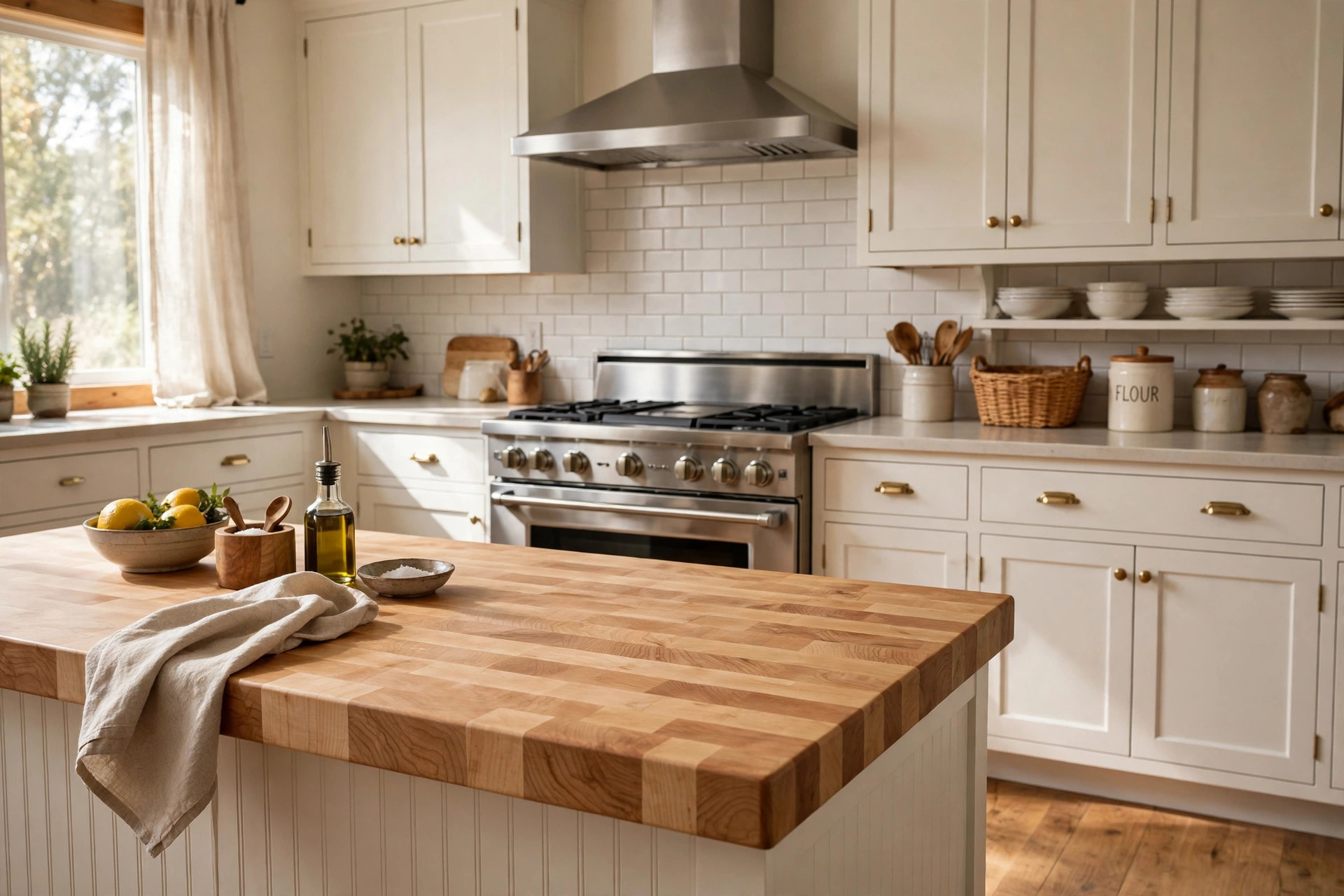

Butcher block countertops texas homes usa shoppers consider every year are one of the most loved choices in American kitchens. They bring warmth, work well for food prep, and cost less than stone. In Texas, where homes range from old ranch houses to new builds outside Dallas and Houston, wood counters fit almost any style.
This guide explains what to know before you buy. It covers wood types, Texas climate concerns, prices, installation, care, and safety. By the end, you will know if butcher block is right for your home.
Why It Matters
Kitchen counters take more use than almost any other surface in a home. They hold hot pans, wet dishes, and sharp knives. They set the look of the whole room. The choice matters.
Butcher block is made from strips of wood glued together into a thick slab. Maple, oak, and walnut are the most common woods. The surface can serve as a cutting board. Small marks can be sanded out. Unlike tile, there are no grout lines to trap dirt.
In Texas homes, butcher block pairs well with other popular features. Many owners combine wood counters with quartz countertop installation on an island or around a sink. The mix of warm wood and cool stone looks balanced and works well.
Texas families cook often. Weekend barbecues, holiday meals, and daily dinners all happen in the kitchen. A work surface that can take hard use matters here. Wood is more forgiving than granite when a pot slips from your hands.
What to Look for When You Choose: Butcher Block Countertops Texas Homes Usa
Wood Type
Maple is the most common choice. It is hard, light in color, and takes finish well. It shows less wear than soft woods. Oak is strong too, with a more open grain that hides small marks. Walnut is darker and richer. It costs more but looks fine in formal kitchens.
Cherry is softer. It darkens with age and light. Some buyers like this change. Others do not. Ask the supplier about the Janka hardness rating. A higher number means a harder wood.
Construction Style
Edge grain shows long strips of wood along the top. It is the most common style and often costs less. End grain shows the cut ends of the wood pieces. It looks like a checkerboard. End grain is the best surface for heavy chopping. It is also the most costly.
Flat grain, also called plank style, shows wide boards. It has a rustic look that suits farmhouse kitchens in Texas.
Thickness and Size
Most slabs run from 1.5 to 2 inches thick. Thicker slabs feel solid and can be sanded many times over the years. Standard counter depth is 25 inches. Check your cabinets before you order.
Finish
Food-safe mineral oil is the classic finish. It soaks into the wood and keeps water out. It needs to be applied often. Hardwax oil is newer. It lasts longer and resists stains better. Some slabs come with a polyurethane coat. This seals the surface but cannot be used as a cutting board.
Guides at This Old House explain the pros and cons of each finish type for busy kitchens.
Types and Options for Texas Homes
Standard Slabs
Most suppliers sell ready-made slabs in set lengths. You can find them at large stores such as The Home Depot and Lowe’s. These slabs suit straight runs of counter. They are the lowest cost option.
Custom Slabs
A custom shop can cut slabs to fit odd corners, curves, and large islands. Texas homes with open floor plans often have big islands. Custom work costs more but fits right.
Butcher Block Islands
Many owners add a butcher block top to a kitchen island while keeping other counters in a different material. This gives a big work surface for prep. It also adds a warm center point to the room.
Outdoor Kitchen Tops
Texas weather allows year-round outdoor cooking. Sealed butcher block can work in a covered outdoor kitchen. It needs more care than indoor wood. Sun and rain will wear the finish fast. Most experts suggest stone or metal for full outdoor use instead.
When you plan a full remodel, pair your counter choice with the right appliances. GE Appliances and Whirlpool both offer ranges and refrigerators that suit the warm look of wood kitchens. Bosch Home makes quiet dishwashers that fit well in open-plan Texas homes.
Cost and Price
Butcher block is one of the lowest cost counter materials in the USA. Prices vary by wood type, thickness, and where you buy.
A standard maple slab from a large store often runs 40 to 100 dollars per square foot for the material. Walnut can run 100 to 200 dollars per square foot. End grain costs the most. Custom work adds labor charges.
For a full Texas kitchen, material cost for maple often falls between 1,500 and 4,000 dollars. Installation adds 500 to 1,500 dollars if you hire a pro. Many handy owners install slabs themselves, which saves the labor cost.
Compare this with stone. Granite and quartz often run 60 to 150 dollars per square foot installed. Butcher block saves real money. Consumer Reports publishes countertop comparisons that show how wood ranks against other materials on price and durability.
Extra costs to plan for:
– Seams and joints for long runs – Cutouts for sinks and cooktops – Backsplash material, such as kitchen backsplash tiles – Matching cabinet updates, like new shaker cabinet doors – Finish oil and sandpaper for yearly upkeep
Get at least three quotes from local installers. Texas has many countertop shops. Prices differ between cities.
Care and Upkeep
Wood counters need more care than stone. The work is simple. It just needs to be done on time.
Daily Care
Wipe the surface after each use. Use a soft cloth, warm water, and mild soap. Dry the surface right away. Standing water is the main enemy of wood counters. Never soak the top.
Monthly Oiling
Apply food-safe mineral oil once a month for the first year. After that, oil when the wood looks dry. Pour a small amount on the surface. Rub it in with a clean cloth. Let it sit for several hours. Wipe off the extra oil.
In Texas, indoor air can be dry in winter and humid in summer. Heating and air conditioning change the moisture in your home. Watch the wood for signs of dryness. Small cracks mean it needs oil.
Care guides at The Spruce offer step-by-step oiling schedules for wood counters.
Dealing with Stains and Marks
Light stains often fade with lemon juice and salt. Rub gently. For deeper marks, sand the spot with fine sandpaper. Then oil the area. This is one of the best traits of butcher block. You can renew the surface yourself.
Knife cuts are normal if you chop right on the counter. End grain hides cuts best. Edge grain shows them more. A separate cutting board saves wear.
What to Avoid
Do not place hot pots straight on the wood. Use trivets. Do not cut raw meat on an oiled surface you also use for bread. Keep a separate board for meat. Do not use bleach or harsh cleaners. They dry out the wood and can leave marks.
Texas Climate Notes
Texas heat and humidity affect wood. Most Texas homes run air conditioning for much of the year. This keeps indoor air dry. Dry air can shrink wood slabs. Small gaps may open at seams.
Keep indoor humidity between 35 and 50 percent if you can. A simple hygrometer costs little. In very dry months, a humidifier near the kitchen helps.
Wood also expands in humid Gulf Coast summers. Installers should leave small gaps at walls to allow movement. A good installer knows this. Ask about it before you hire.
Direct sun can fade and dry wood counters near windows. Curtains or blinds help. This is one more reason many Texas owners pair wood with stone near bright windows.
If you upgrade appliances during the remodel, check ENERGY STAR ratings. Efficient fridges and dishwashers cut power bills in hot Texas summers. Reviews and project ideas at Bob Vila can help you plan the whole kitchen update.
Where to Buy in Texas
Texas buyers have many options. Big box stores carry standard slabs in common sizes. These are ready to take home the same day. Prices are clear. Selection is limited to a few wood types.
Local lumber yards and countertop shops offer more choice. They can order walnut, cherry, and end grain slabs. Many will cut custom sizes. Ask if the shop seals the slab before delivery. Some do. Some leave it to you.
Online sellers ship slabs across the USA. Shipping adds cost. Heavy slabs can cost 200 dollars or more to ship. Measure twice before you order online. Returns are hard with heavy freight.
Ask each seller three questions. What wood species is this? What glue was used? What finish is on it now? A good seller answers fast. A vague seller is a warning sign.
Safety
Butcher block is safe when cared for well. A few points matter.
Raw meat juices can soak into wood. This can harbor bacteria. Use a separate plastic or glass board for raw meat, poultry, and fish. Clean the wood top with soap and water after prep.
Oil finishes are food safe once cured. Mineral oil never goes rancid. Avoid vegetable oils like olive oil for finishing. They can turn bad and smell.
Check that your slab is made with food-safe glue. Most major brands use glues that meet food contact rules. Ask the seller if you are not sure.
Keep a fire extinguisher in the kitchen. Wood counters will not catch fire from normal use, but every kitchen needs one near the stove.
FAQ
How long do butcher block countertops last?
With good care, they last 20 years or more. Many last much longer. You can sand and refinish the surface many times. This renews the look. Stone cannot be renewed this way.
Are butcher block countertops good for Texas homes?
Yes. They suit the warm style of many Texas kitchens. They cost less than stone. They handle daily cooking well. You must oil them on time and control indoor humidity.
Can I install butcher block countertops myself?
Many owners do. Straight runs are simple. You need a circular saw, a sander, and basic skills. Cutouts for sinks take more care. If you are not sure, hire a pro for the cuts and do the rest yourself.
Do butcher block countertops stain easily?
They can stain if spills sit. Wipe spills fast. Oil the surface well. Dark woods hide stains better than light maple. Red wine, coffee, and turmeric are the worst offenders.
Butcher block vs quartz: which is better for a Texas kitchen?
Quartz needs less care and resists stains. Butcher block costs less and can be sanded new. Many Texas owners use both. Wood on the island, quartz on the perimeter. This gives the best of each.
How much does it cost to replace counters in a Texas home?
A full maple butcher block kitchen often costs 2,000 to 5,500 dollars with pro installation. Walnut and custom work cost more. Get local quotes. Prices in Austin, Dallas, and Houston can differ.
Final Word
Butcher block countertops remain a smart pick for Texas homes in the USA. They cost less than stone. They look warm and natural. They can be renewed for decades with simple care.
The key is honest upkeep. Oil on schedule. Wipe spills fast. Control humidity. Do these things and your wood counters will serve your family well for many years.
References
Bob Vila. (n.d.). Home improvement advice. https://www.bobvila.com Bosch. (n.d.). Home appliances. https://www.bosch-home.com Consumer Reports. (n.d.). Product reviews and ratings. https://www.consumerreports.org ENERGY STAR. (n.d.). Energy efficient products. https://www.energystar.gov GE Appliances. (n.d.). Kitchen and home appliances. https://www.geappliances.com Lowe’s. (n.d.). Home improvement products. https://www.lowes.com The Home Depot. (n.d.). Home improvement products. https://www.homedepot.com The Spruce. (n.d.). Home and garden advice. https://www.thespruce.com This Old House. (n.d.). Home renovation guidance. https://www.thisoldhouse.com Whirlpool. (n.d.). Home appliances. https://www.whirlpool.com
Was this guide helpful?

About David Wilson
The My Garden US editorial team writes practical, in-depth home and garden guides for American homeowners — tested advice, no fluff.
You May Also Like
Quartz Countertop Installation for California Homes
September 25, 2026 0 views
Dishwasher Third Rack Texas Homes USA: A Practical Guide
February 21, 2026 0 views
Dishwasher Third Rack for Sale USA: A Complete Buying Guide
June 9, 2026 0 views