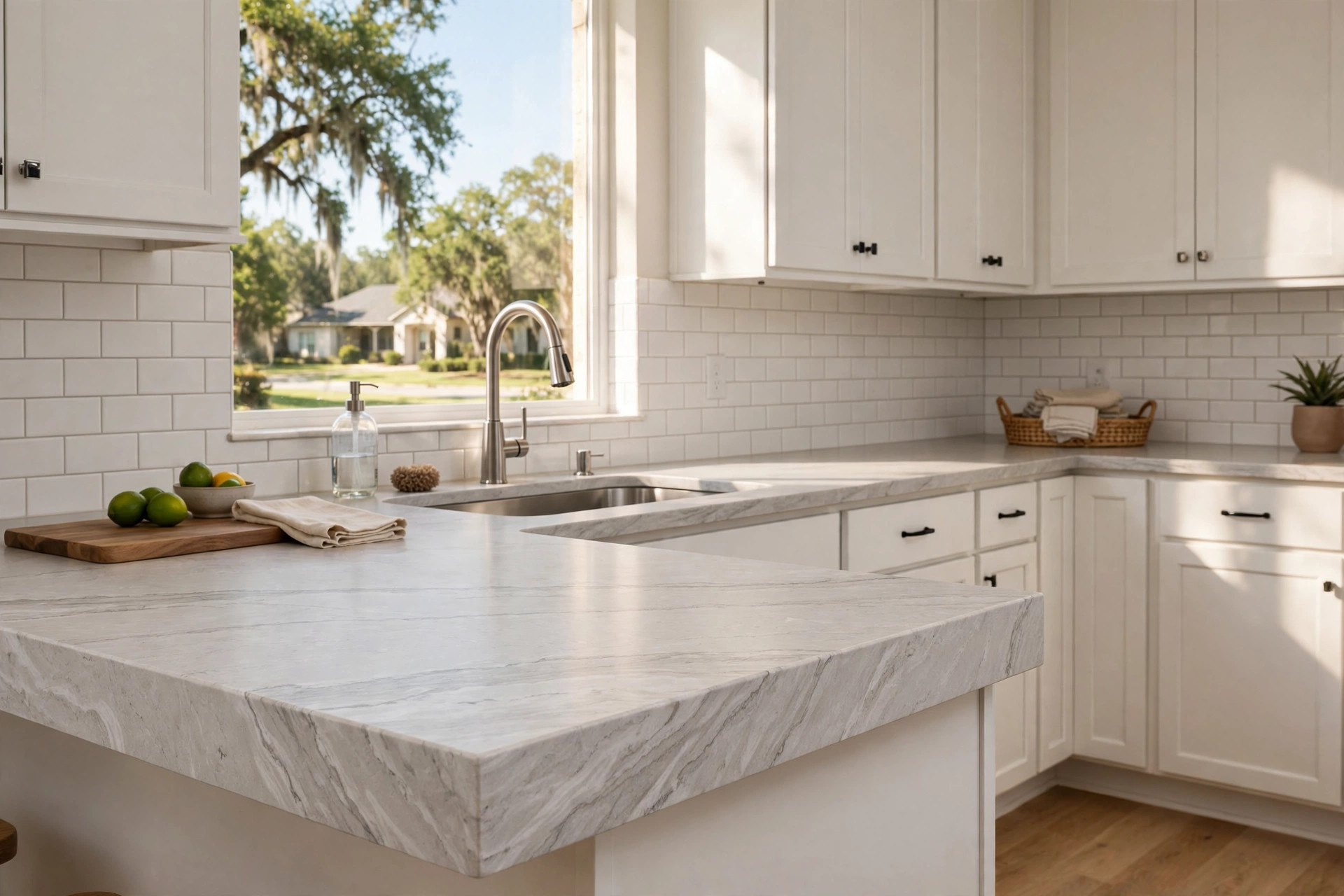

Quartz countertop installation texas homes usa is one of the most common kitchen upgrades in the state. Many owners choose quartz because it is hard, steady, and easy to keep clean. The stone holds its shape and color for years. It resists stains better than many natural stones. It does not need sealing each year. These facts make it a sound pick for busy kitchens.
Texas homes face their own conditions. Summers bring heat and strong sun. Hard water is common in many towns. Kitchens see heavy use for large meals and family events. A good counter must stand up to all of this. This guide walks you through the whole process, from first choice to long care.
Why Quartz Suits Texas Homes
Quartz is an engineered stone. Makers mix crushed quartz rock with resin. They press the mix into thick slabs. The result is dense and even. There are no soft spots like in some natural stone. The pattern runs through the whole slab.
A Surface That Handles Heat and Use
Texas kitchens work hard. Pots and pans move on and off the stove all day. Hot dishes land on the counter. Quartz handles daily wear well. It resists chips better than tile grout lines. It does not soak up red wine, coffee, or oil the way marble can. For a home that cooks often, this matters a great deal.
Low Care Over Many Years
Many stones need a seal coat every year or two. Quartz does not. The resin binder fills the pores. Wipe-ups with mild soap are enough for most messes. This saves time and cost over the life of the counter. Homeowners who want a simple routine find this point very strong.
Style That Fits Texas Kitchens
Texas homes range from ranch houses to new suburbs to city condos. Quartz comes in many looks. Some slabs look like white marble. Others have warm gray veins. Some are bold black or deep green. You can match a farmhouse look or a modern one. Edge styles also change the feel. A thick mitered edge looks bold. A thin eased edge looks neat and modern.
How to Choose the Right Quartz: Quartz Countertop Installation Texas Homes Usa
Choice matters more than most buyers think. Slabs differ in grade, pattern, and make. A careful buyer gets a better result.
Match the Grade to Your Use
Makers sell quartz in grades. Basic grades have small speckled patterns. They cost less and still perform well. Mid grades add vein patterns that copy marble. High grades have deep, bold veining across the slab. The strength is much the same. The price changes with the look. For a rental or a budget redo, a basic grade is a wise pick. For a dream kitchen, a veined slab pays off in looks.
Pick a Color With the Whole Room in Mind
Bring samples home before you decide. Look at the sample next to your cabinets, floor, and wall paint. View it in morning light and in evening light. A white that looks clean in the shop can look blue-gray at home. If your kitchen gets strong Texas sun, warm tones often look best. Pair white counters with shaker cabinet doors for a classic look that never feels dated.
Check Slab Size and Seam Plan
Slabs come in set sizes. Large islands may need a seam. A good installer plans seams where they show least. Ask where the seams will fall before you sign. Two slabs from the same batch match best. Ask that your slabs come from one lot.
Ask About Certification
Some brands test their slabs for food safety and low emissions. Labels from known programs show the product meets set limits. A known guide from Consumer Reports explains how to read such labels. You can also check project advice at This Old House for what a quality slab should meet.
Types and Options in Quartz
Quartz is not one single product. The market has several lines. Knowing the options helps you compare bids.
Polished, Honed, and Textured Finishes
Polished quartz is the most common. It shines and shows veins well. It wipes clean with ease. Honed quartz has a soft matte look. It hides small marks but can show oil spots more. Textured finishes add a slight feel to the stone. They suit rustic kitchens. Most Texas buyers choose polished for daily ease.
Thickness Choices
Standard slabs run about 2 centimeters or 3 centimeters thick. Thicker slabs look grand on islands. Thinner slabs can sit on a built-up edge to look thicker. Your installer can advise what your cabinets can bear. Older homes should have the base cabinets checked first.
Brand Lines
Many brands sell quartz in the United States. They differ in pattern range and warranty terms. Some focus on marble looks. Some focus on bold modern colors. Big home stores like The Home Depot and Lowe’s carry several lines in one place. This lets you compare patterns side by side.
The Installation Process, Step by Step
A quartz countertop installation texas homes usa project follows a clear order. Knowing the steps keeps stress low.
Step 1: Measure and Template
The installer visits your home. They measure the base cabinets. They note sink and cooktop cutouts. Many now use laser tools for exact templates. Exact templates mean tight fits. This visit takes one to two hours.
Step 2: Choose and Order Slabs
You pick your color and finish at the shop or showroom. The shop orders or pulls your slabs. Lead time runs from a few days to a few weeks. Popular colors move fast in Texas markets. Order early if your remodel has a tight date.
Step 3: Prepare the Kitchen
Clear the counters fully. Move small appliances out. Cover nearby floors and the stove. The old counter comes off on install day. If the old top is tile or laminate, removal is quick. If it is old stone, removal takes longer and makes more dust.
Step 4: Fabrication
The shop cuts your slabs to the template. They cut the sink hole and range opening. They shape the edge profile you chose. They polish the edges. Good shops do this work off site. It keeps dust out of your home.
Step 5: Set and Secure
On install day, the crew sets the pieces on the cabinets. They level each run. They join seams with color-matched epoxy. They set the sink if it is an undermount style. Many buyers pair the job with new hardware, and our guide to garbage disposal installation covers the plumbing side of that upgrade. The crew caulks where the counter meets the wall and backsplash. A standard kitchen takes most of one day.
Step 6: Final Check
Walk the whole counter with the lead installer. Look at seams in good light. Run your hand along edges. Check that the sink sits level. Ask for care sheets and warranty papers before the crew leaves.
Cost and Price in Texas
Price is the question every buyer asks first. Quartz costs more than laminate and less than top marble. Texas prices sit near the national middle.
What Drives the Price
Four things set the cost. First, the slab grade and brand. Veined and bold patterns cost more. Second, the square footage. Larger kitchens need more slabs. Third, the edge profile. Fancy edges add labor cost. Fourth, cutouts. Each sink, cooktop, or faucet hole adds a fee. Thick mitered edges and waterfall ends add the most.
Typical Ranges
In Texas, installed quartz often runs from about 60 to 120 dollars per square foot. A small galley kitchen may land near the low end. A large kitchen with an island lands higher. Get three written bids. Make sure each bid lists slab brand, color, thickness, edge, cutouts, removal of the old top, and haul-away. A bid missing these lines is not a full bid.
Ways to Keep Cost Down
Choose a basic pattern grade. Keep the layout simple with fewer corners. Limit cutouts to what you need. Ask if the shop has remnant slabs for a small bath or laundry top. Time the job outside peak remodel months if you can. Clear cost tips appear in project guides at Bob Vila, which tracks material prices by region.
Care and Upkeep
Quartz asks little, but it is not care-free. Right habits keep it new for decades.
Daily Cleaning
Use a soft cloth, warm water, and a drop of dish soap. Wipe spills soon. Dry the surface after wiping to stop water spots. Texas hard water leaves mineral marks if water sits. A quick dry stops this.
What to Avoid
Do not set red-hot pots straight on the stone. Use trivets. The resin can scorch under high heat. Do not cut food right on the counter. Knives dull fast on quartz, and deep cuts are hard to fix. Skip harsh cleaners with bleach or strong acids. Skip scouring pads. They dull the finish over time.
Dealing With Stains and Marks
Dried food lifts with a plastic scraper and soapy water. Grease films lift with a degreasing dish soap. Metal marks from pans often rub off with a soft eraser pad. If a mark stays, call your installer before you try strong chemicals.
Long-Term Upkeep
No sealing is needed. Check caulk lines once a year. Re-caulk where the counter meets the wall if gaps open. Tighten sink clips if the sink shifts. These small steps stop water damage under the counter.
Safety During and After Installation
Safety runs through the whole job. Plan for it from the start.
Dust and Air
Cutting stone makes fine dust. Good shops cut off site. On install day, the crew may still trim small fits. Keep children and pets out of the work zone. Ask the crew to run a vacuum with a fine filter. Air quality guidance from the U.S. EPA energy programs and ENERGY STAR notes that low-emission materials help indoor air. Choose slabs with low emission ratings when you can.
Lifting and Handling
Slabs are very heavy. Never try to move one yourself. Let the trained crew handle all lifts. Keep walkways clear on install day. Park cars out of the driveway so the truck can unload close to the door.
Electrical and Plumbing
Install day often touches outlets and pipes. The crew may move the range or dishwasher. Make sure water shut-off valves work before the job starts. Know where your breaker box is. If the sink moves, plan for a short water shut-off.
Food Safety After Install
Wait for all caulk and epoxy to cure before heavy cooking. Your installer will give a time, often 24 hours. Wash the new surface well before first food prep. Keep cutting boards between food and stone at all times.
Design Pairings That Work
A counter never stands alone. It works with the whole kitchen.
Backsplash tile sets the tone above the counter. Simple subway tile lets a veined quartz shine. Bold patterned tile pairs best with a quiet counter. Our guide to kitchen backsplash tiles shows how to match tile to stone.
Lighting changes how quartz looks. Under-cabinet lights bring out veining at night. Warm bulbs suit warm stone tones. Cool bulbs suit gray and white slabs. Ventilation also matters in a hard-working kitchen, and appliance makers like Whirlpool and Bosch publish clear specs for range hoods and cooktops that sit beside new counters.
Frequently Asked Questions
How long does quartz countertop installation take in a Texas home?
Measure day takes one visit. Fabrication takes one to three weeks. Install day itself takes four to eight hours for most kitchens. Large or complex jobs can take two days. Ask your shop for a written schedule.
Is quartz better than granite for Texas kitchens?
Both are strong. Quartz resists stains better and needs no sealing. Granite handles heat a bit better and each slab is unique. Quartz costs are more steady. Many Texas buyers pick quartz for easy care.
Can quartz go outside in Texas heat?
Most makers rate quartz for indoor use only. Strong sun can fade resin and warp slabs over time. Texas patios get very hot. Use a rated outdoor stone or tile for outside kitchens.
Will my quartz counter chip?
Chips are rare but possible at edges and around sink cutouts. Heavy blows from cast iron can chip an edge. A pro can fill small chips with epoxy. Rounded edge profiles chip less than sharp ones.
Does quartz add home value in Texas?
A quality quartz counter helps resale. Buyers see it as a lasting upgrade. Neutral colors appeal to the most buyers. Keep receipts and warranty papers for the next owner.
How do I find a good installer near me?
Ask for three recent local references. Look at photos of past seam work. Check that the shop is licensed and insured in Texas. Read reviews that mention on-time work and clean job sites. A good shop answers questions in plain words.
A Short Final Word
Quartz countertop installation texas homes usa is a project worth doing well. The stone suits the Texas way of cooking and living. It stands up to heat, stains, and daily wear. It asks little in return. Choose your slab with care. Hire a skilled crew. Follow the simple care rules. Your kitchen will serve you well for many years.
References
Bob Vila. (n.d.). Home improvement advice. https://www.bobvila.com Bosch. (n.d.). Home appliances. https://www.bosch-home.com Consumer Reports. (n.d.). Product reviews and ratings. https://www.consumerreports.org ENERGY STAR. (n.d.). Energy efficient products. https://www.energystar.gov Lowe’s. (n.d.). Home improvement products. https://www.lowes.com The Home Depot. (n.d.). Home improvement products. https://www.homedepot.com This Old House. (n.d.). Home renovation guidance. https://www.thisoldhouse.com Whirlpool. (n.d.). Home appliances. https://www.whirlpool.com
Was this guide helpful?

About Emily Rodriguez
The My Garden US editorial team writes practical, in-depth home and garden guides for American homeowners — tested advice, no fluff.
You May Also Like

Kitchen Island Seating Deals Near Me: A Plain Guide for American Homes
January 24, 2026 0 views
French Door Refrigerators: Where to Buy in the USA
April 10, 2026 0 views
Gas Kitchen Ranges USA Online Deals: How to Shop Smart and Save
June 29, 2026 0 views