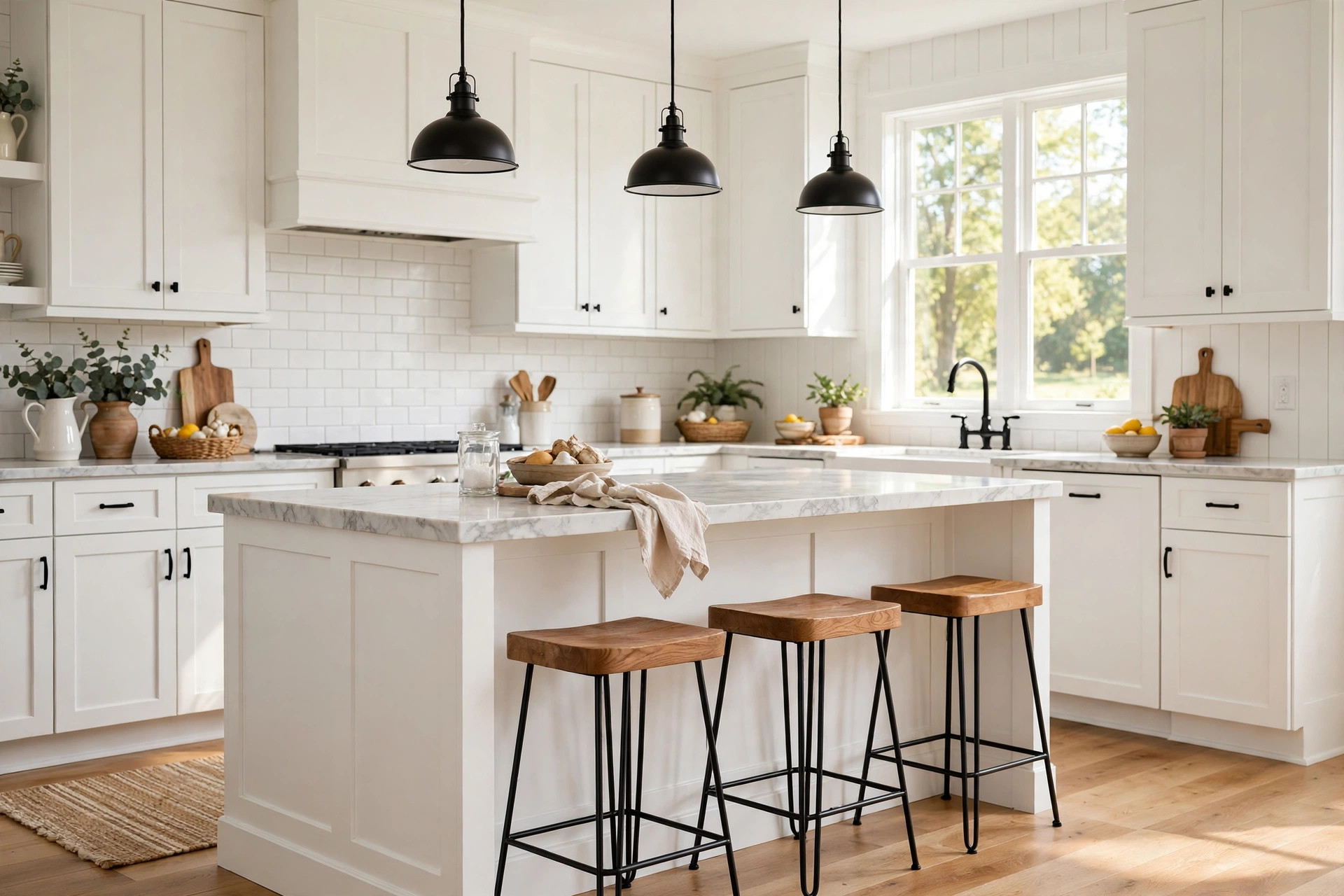

This kitchen island stools american homes guide was written for homeowners who want to pick the right seats for the busiest spot in the house. The kitchen island is where the family eats breakfast. It is where children do homework. It is where guests gather at a party. The stools around it matter more than most people think.
A stool that is too tall will make eating hard. A stool that is too short will strain the back. A seat with no back may suit a small kitchen, while a taller stool with a back may suit a long morning at the island. This guide walks through each choice, step by step. By the end, you will know what height to buy, which materials last, and what price to expect.
Why Kitchen Island Stools Matter
The kitchen island is the center of daily life in many American homes. People no longer eat only at a dining table. They eat at the island before school. They eat at the island after work. The stool is the seat for all of this.
Comfort matters because people sit here a long time. A child may read for an hour at the island. A guest may sit through a whole evening meal. A hard or wobbly seat will be noticed fast.
Style matters too. The stools are one of the first things visitors see in an open kitchen. They set the tone. Wood stools give a warm farmhouse feel. Metal stools give a clean modern look. The right choice ties the kitchen together, much like dining room sets for Florida homes tie a dining space together.
Stools and How You Use the Island
Think about what happens at your island. Quick snacks need a simple seat. Long meals need a seat with a back and a footrest. If the island is also a work spot, a stool that turns can help. If young children use it, pick a stool that is steady and has a low center of gravity.
What to Look For When Choosing: Kitchen Island Stools American Homes Guide
Get the Height Right
Height is the most common mistake. Measure first. Measure from the floor to the underside of the counter. Then subtract about ten to twelve inches. That gives the right seat height.
Most kitchen islands are about 36 inches tall. For those, counter height stools with a seat at 24 to 26 inches work best. Some islands are bar height, about 42 inches. For those, bar height stools with a seat at 28 to 30 inches are the right pick. When you shop for counter height stools for kitchen islands, check the listed seat height before you fall in love with the look.
Leave Room for Each Person
Allow about 24 inches of island edge per stool. Three stools need about six feet of counter. Crowded stools feel cramped. Give each seat room to turn and slide.
Check the Footrest
A footrest takes weight off the legs. It makes a long sit much easier. Most good stools have a metal or wood ring or bar between the legs. Test it in person if you can. Your feet should rest flat and relaxed.
Types of Kitchen Island Stools
Backless Stools
Backless stools are simple. They slide under the counter when not in use. They suit small kitchens and tight spaces. They cost less than other types. The trade-off is comfort. Without a back, they are fine for a quick bite but not for a long dinner. Many shoppers compare backless models when browsing bar height stools for home kitchens, since the backless style suits raised counters.
Low-Back Stools
Low-back stools add a small back rail or curve. They give light support without taking up much room. They are a good middle choice. They cost a bit more than backless stools. They work well in kitchens where people sit for thirty minutes or so at a time.
Full-Back Stools
Full-back stools feel the most like a chair. They have a tall back and often a padded seat. They are the most comfortable choice. They need more space and cost more. Pick these if the island is your main eating spot.
Swivel Stools
Swivel stools turn on a round base. They are easy to get in and out of. They suit islands where people face many directions, such as a kitchen that opens to a living room. Look for a swivel with smooth motion and a lock or a heavy base so it does not tip.
Adjustable-Height Stools
Adjustable stools use a gas lift to change height. They suit homes with counters of mixed heights or with both adults and children. They often come in metal with a modern look. Check the weight limit and the range of the lift before you buy.
Materials and Finishes
Wood
Wood stools are warm and classic. Oak, maple, and walnut are common. They fit farmhouse, rustic, and traditional kitchens. Wood seats can be padded with a cushion for extra comfort. Solid wood lasts for years if you wipe spills fast.
Metal
Metal stools are strong and modern. Steel and aluminum frames hold heavy weight. Many have wood or plastic seats. They fit industrial and modern kitchens. Powder-coated finishes resist chips. Wipe them with a damp cloth to keep them clean.
Upholstered Seats
Fabric or leather seats are soft and rich. They suit homes that value comfort and style. They cost more. Fabric can stain, so pick a stain-resistant weave if the stools will see daily meals. Leather wipes clean but costs the most.
Mixed Materials
Many popular stools mix wood, metal, and fabric. A metal frame with a wood seat and a fabric back gives strength and comfort together. Guides at home design resources often show mixed-material stools as the most versatile choice.
Colors That Work in American Kitchens
White and gray stools suit bright modern kitchens. Black stools give sharp contrast. Natural wood tones warm up white cabinets. For a soft look, cream or beige seats pair well with luxury area rugs for American homes in the nearby dining space.
If the kitchen has color, match it. Navy stools suit coastal homes. Sage green suits farmhouse kitchens. Brass or gold footrests add a touch of class.
Cost and Price
What Stools Cost
Prices vary a lot. A single backless stool may cost as little as forty dollars. A well-made wood stool often runs one hundred to two hundred dollars each. Full-back or upholstered stools can cost two hundred to four hundred dollars each. Designer brands cost more. A set of four quality stools often lands between four hundred and one thousand dollars.
Retailers such as large furniture stores run frequent sales. Watch for holiday weekends when prices drop.
What Drives the Price Up
Solid wood costs more than plywood. Real leather costs more than fabric. A swivel base adds cost. Hand-finished details add cost. American-made stools often cost more than imported ones, but they may last longer.
Saving Money Without Losing Quality
Buy a set of four to get a bundle price. Pick metal frames with wood seats for a strong look at a fair price. Skip the swivel if you do not need it. Read reviews about comfort before you buy cheap. A stool that nobody uses is wasted money.
How to Measure Before You Buy
1. Measure the counter height from floor to underside. 2. Subtract ten to twelve inches for seat height. 3. Measure the length of the island edge. 4. Divide by 24 inches per stool to find how many fit. 5. Note the depth of the island overhang for knee room. Eight to twelve inches of overhang is best.
Write these numbers down. Take them to the store or keep them open when you shop online. They will stop you from buying the wrong size.
Style Ideas for Different Homes
Farmhouse Kitchens
Farmhouse kitchens suit wood stools with simple lines. A spindle back or a saddle seat fits well. Warm wood tones and black metal bases are popular. These stools look right next to a white apron sink and open shelves.
Modern Kitchens
Modern kitchens suit clean metal stools. Black, white, or chrome finishes work. A molded plastic seat on a steel frame is light and easy to clean. Keep lines simple and skip extra detail.
Coastal Homes
Coastal kitchens suit light woods and white finishes. Rattan or woven seats add beach charm. Blue or sea-glass cushions tie the look together. Many coastal decor ideas feature pale stools that keep the room bright.
Traditional Homes
Traditional kitchens suit stools with carved details. A full back with an upholstered seat feels rich. Dark wood stains like walnut or cherry match classic cabinets.
Where to Put the Stools
Most islands seat stools on one side. Leave at least 36 inches of walkway behind the stools so people can pass. If the island has seating on two sides, leave 48 inches between the stools and the next counter or wall.
Do not block the work path. The line between the sink, the stove, and the fridge should stay clear. Stools that tuck fully under the counter help in tight kitchens.
Care and Upkeep
Daily Care
Wipe seats after meals. Food spills can stain fabric and mark wood. Use a soft damp cloth for most finishes. Dry metal legs to stop rust.
Wood Stools
Oil or wax wood seats once or twice a year. Tighten screws every few months. Wood loosens with daily use. A felt pad under each leg will protect floors.
Fabric and Leather
Vacuum fabric seats weekly. Blot spills fast with a clean cloth. Do not rub a stain. Use a leather cleaner made for furniture on leather seats. Keep leather out of direct sun to stop fading.
Metal Stools
Wipe metal with mild soap and water. Dry it well. Check the powder coating for chips. A small touch-up pen can fix a chip before rust starts.
Safety Tips
Stability Comes First
Pick stools with a wide base. Four legs beat a thin pedestal for families with children. Test for wobble before you buy. A rocking stool can tip.
Weight Limits
Every stool has a weight limit. Most hold 250 to 300 pounds. Check the listing. Do not guess. A stool used past its limit can break.
Children
Young children need steady stools. A low back and a footrest help them sit safe. Keep stools away from the stove side of the island. Teach children to sit, not stand, on the seat.
Floors
Hard floors scratch. Put felt pads on every leg. Check the pads twice a year and replace worn ones. For tile floors, rubber feet grip better than bare metal.
Shopping Checklist
– Counter height measured – Seat height picked (counter minus ten to twelve inches) – Number of stools that fit (24 inches per person) – Back style chosen for how long you sit – Material matched to kitchen style – Weight limit checked – Felt pads planned for floors – Budget set per stool and for the full set
Print this list or save it on your phone. It will keep you from buying on looks alone.
FAQ
What height stool do I need for a 36-inch island?
A 36-inch island needs a counter-height stool with a seat at 24 to 26 inches. This leaves about ten inches between the seat and the counter top, which suits most adults.
How many stools fit on a six-foot island?
Three stools fit well on a six-foot island. Allow 24 inches per stool. Four stools would feel tight and make it hard to slide in and out.
Are backless stools comfortable for daily meals?
Backless stools suit short meals and snacks. For daily family dinners, a stool with at least a low back is more comfortable. Long sits need back support.
What is the best material for kitchen island stools with kids?
Wood and metal stools clean up easiest around kids. Skip light fabric seats unless the fabric is stain resistant. A metal footrest and a wide base add safety.
How do I stop stools from scratching my floors?
Put felt pads on every leg. Replace them when they wear thin. For tile or stone floors, choose rubber feet for better grip.
Should the stools match my dining chairs?
They do not need to match exactly. They should share a color or material so the rooms feel linked. Many homes pair wood stools with couch throw pillows for sale in the USA and other soft goods in matching tones to tie open spaces together.
A Short Final Word
Kitchen island stools are small items with a big job. They carry family meals, homework, late-night talks, and party crowds. Take time to measure. Pick the right height first. Then pick the style that fits your home. A stool that fits well will be used every day for years. That is money well spent.
For more background, see Crate and Barrel, Houzz, and Apartment Therapy. See IKEA for more detail.
References
Apartment Therapy. (n.d.). Home design ideas and inspiration. https://www.apartmenttherapy.com Article. (n.d.). Modern furniture. https://www.article.com Crate and Barrel. (n.d.). Furniture and home decor. https://www.crateandbarrel.com HGTV. (n.d.). Home and garden ideas. https://www.hgtv.com Houzz. (n.d.). Home design and remodeling. https://www.houzz.com IKEA. (n.d.). Home furnishings. https://www.ikea.com The Spruce. (n.d.). Home and garden advice. https://www.thespruce.com Wayfair. (n.d.). Furniture and home goods. https://www.wayfair.com
Was this guide helpful?

About Michael Thompson
The My Garden US editorial team writes practical, in-depth home and garden guides for American homeowners — tested advice, no fluff.
You May Also Like

Velvet Living Sofas: Where to Buy in the USA
August 5, 2026 0 views
Sofa Console Tables: USA Online Deals Guide
May 6, 2026 0 views
Mid Century Chairs in Florida Homes: A Buyer’s Guide to Style, Comfort, and Care
January 17, 2026 0 views