Finding the Right Panels
When shoppers search for window curtain panels for sale usa, they want more than a price. They want panels that fit their windows, match their rooms, and last for years. This guide walks through every step of that choice. It covers why panels matter, how to pick the right ones, the main types, typical costs, simple care, and safety for homes with children.
Panels also save energy. Heavy lined panels add a layer of air at the glass. This cuts drafts in winter and heat in summer.
This guide covers it all: why panels matter, how to choose, the main types, costs, care, and safety.
Why Curtain Panels Matter: Window Curtain Panels for Sale Usa
Privacy at Home
Privacy is the first reason most people buy curtains. A panel closes off the view from the street. It lets you live without eyes on you. This matters most in bedrooms, bathrooms, and ground-floor rooms. Sheer panels give soft privacy by day. Heavier panels give full privacy at night.
In apartments and suburbs, windows face other windows. Match the panel weight to your need. You can layer sheers under heavier drapes for both worlds.
Light Control
Light changes how a room feels. Morning sun in a bedroom wakes you early. Afternoon sun fades a sofa and heats the air. Panels let you control this. Sheers soften light. Blackouts block it. Dimouts sit in the middle.
Many people work from home now. A home office needs steady light without harsh glare on a screen. Panels solve this fast. Readers often pair new curtains with other small pieces, like sofa console tables behind a desk area, to shape a room.
Warmth and Energy
Windows leak heat in winter and let heat in during summer. Heavy panels add a layer of air between the glass and the room. This cuts drafts and can lower heating and cooling bills by a small but real amount. Thermal-lined panels do this best.
Hang panels close to the wall and let them reach the floor or the sill. This traps air behind the fabric. In cold states, lined panels are a smart buy. In hot states, light-colored panels reflect heat away.
Style and Comfort
A room without curtains can feel bare. Fabric softens hard lines and adds color, pattern, and texture. Panels draw the eye up and make ceilings look taller.
Color choice sets the mood. Warm tones like rust or gold feel cozy. Cool tones like blue or gray feel calm. Neutrals blend with almost any decor. If your walls are bold, pick plain panels. If your walls are plain, try a pattern. Stores with modern curtain designs at West Elm show how fabric and color change a whole room.
How to Choose the Right Panels
Measure Your Windows First
Measure before you shop. This step saves returns. You need the width and the length.
For width, measure the window frame. Add four to eight inches on each side for the rod. This lets you push panels aside for full light. For a full look, the total fabric should be one and a half to two times the rod width. Two 50-inch panels suit a 60-inch rod.
For length, measure from the rod to where you want the fabric to end. Sill length ends at the sill and suits kitchens. Floor length ends about half an inch above the floor and suits living rooms and bedrooms. Puddle length spills onto the floor and looks formal but collects dust.
Hang the rod four to six inches above the frame. This makes windows look bigger. A window guide on Houzz shows how homeowners hang rods high and wide for the best effect.
Pick a Fabric
Fabric decides the look and the job the panel does. Cotton is the most common choice. It feels natural, hangs well, and comes in many colors. Linen looks airy but wrinkles fast. Polyester resists wrinkles and costs less.
Velvet feels rich and blocks light and sound. It suits bedrooms and formal rooms. Silk looks elegant but fades in strong sun and needs dry cleaning. Sheer fabrics like voile let light through while softening the view.
Think about the room. Kitchens need washable fabrics. Bedrooms need dark fabrics for sleep. Bathrooms need fabrics that stand up to moisture. If you want easy care, cotton-polyester blends wash well and keep their shape. The fabric guides at The Spruce explain how each fiber behaves at the window.
Choose a Header Style
The header is the top of the panel. It sets the style and fits a rod or track.
Rod pocket panels have a sewn pocket at the top. The rod slides through. They look casual and gather softly, but they are hard to open and close.
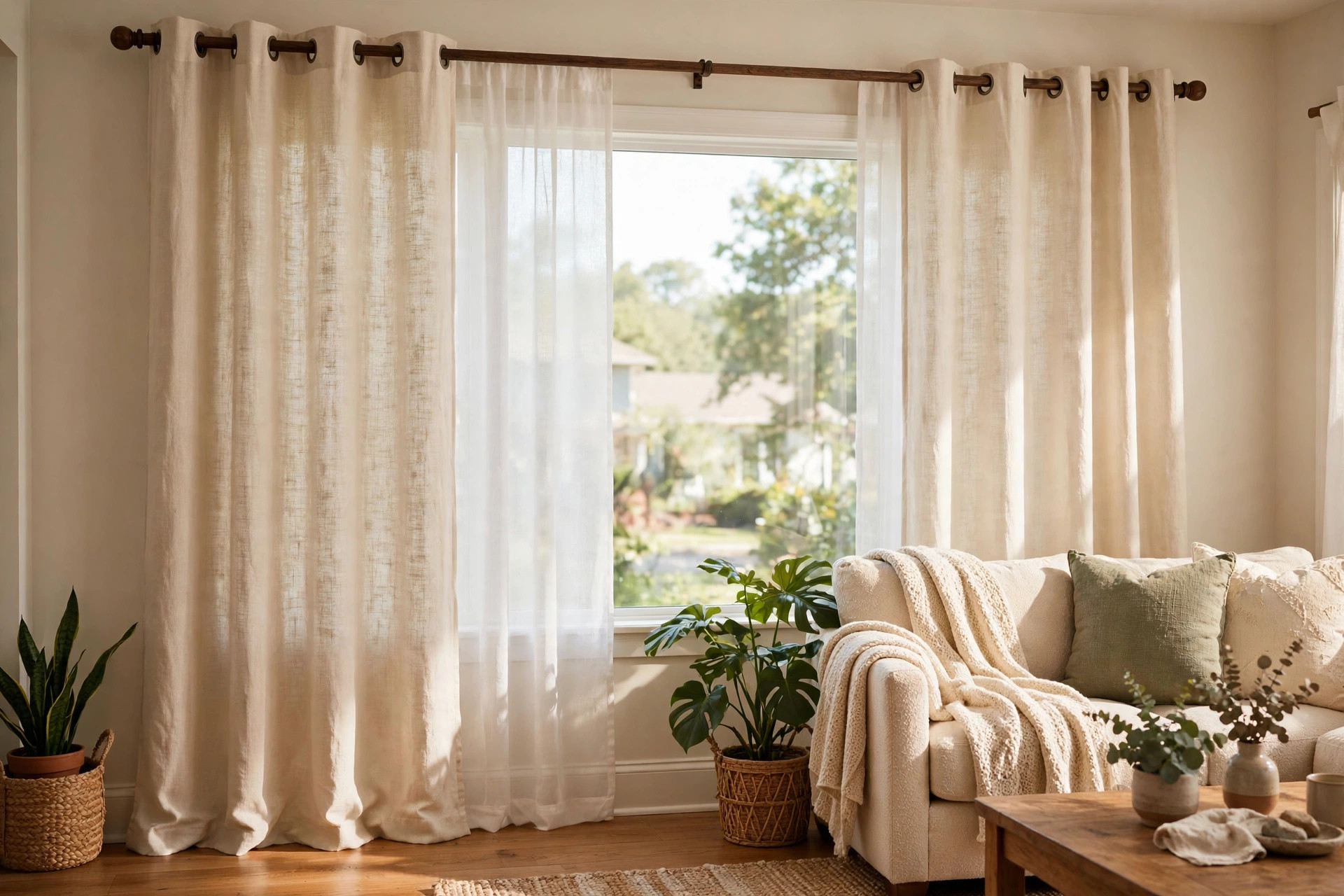
Grommet panels have metal rings at the top. They slide easily and make even folds. They look clean and modern.
Tab top panels have fabric loops and suit casual rooms. Back tab panels hide the tabs for a tailored look. Pinch pleat panels have sewn pleats and hang from hooks. They look formal and classic. Crate & Barrel window collections show several of these header styles side by side.
Match Your Home Style
Panels should fit the room. In a modern room, pick simple panels in solid colors. In a traditional room, pinch pleats and rich fabrics work best. In a farmhouse room, linen and cotton feel right. In a coastal room, whites and sheers keep things light.
Match your other decor. One bold pattern per room is enough. If the rug is patterned, keep panels plain. If the walls are plain, panels can carry the pattern. Shoppers often browse drapes at Article or CB2 collections to see how fabric and furniture work together.
Common Types of Curtain Panels
Sheer Panels
Sheer panels are light and see-through. They soften daylight and give daytime privacy. They work alone in rooms that need light all day and layer well under heavier drapes. Most sheers are washable polyester or voile.
Blackout Panels
Blackout panels block 95 to 100 percent of light. They suit bedrooms, nurseries, and home theaters. Shift workers who sleep in the day swear by them. Check the label: some panels say “blackout” but only dim the light.
Thermal and Insulated Panels
Thermal panels have extra lining for temperature control. They keep heat in during winter and out during summer. They are heavier than normal panels and need a strong rod. They pay for themselves over time in lower energy bills.
Room-Darkening Panels
Room-darkening panels block most light but not all of it. They suit living rooms and dining rooms where you want dim light for naps or movies but not total dark.
Outdoor Panels
Outdoor panels hang on patios and porches. They resist sun, rain, and mildew. They give privacy on a deck and cut glare. Shoppers often compare indoor and outdoor lines in one place, with thousands of curtain panels on Wayfair to sort by size and price.
Cafe Curtains
Cafe curtains cover only the lower half of a window. A short rod holds them. They give privacy at eye level and leave the top open for light. They are classic in kitchens and cost little.
Cost and Price Guide
Prices vary widely. Simple ready-made panels start around ten dollars per pair at discount stores. Budget panels from IKEA often fall in this range and suit renters and first homes. Mid-range panels cost thirty to eighty dollars per pair, with better fabric and more sizes.
High-end panels cost one hundred to three hundred dollars per panel. Custom-made drapes cost much more: a custom job with quality fabric and lining can run five hundred dollars or more per window. This makes sense for large or odd-shaped windows.
What drives the price up? Fabric quality is the main factor. Silk and real linen cost more than polyester. Lining and hand finishing add cost. Size adds cost too.
Watch for sales. Panels go on sale often, especially after holidays and during spring refresh season. Buying in pairs saves money over singles. Small-space tips at Apartment Therapy often point readers to seasonal sales for the best prices.
Set a budget per window before you shop. Count your windows first: a home with twelve windows adds up fast. Spend more on rooms you use most and less on spare rooms. You can buy in stages and finish the rest later.
Care and Upkeep
Washing
Read the label before washing. Cotton and polyester panels usually go in the machine on gentle with cold water. Hang them back up damp to avoid wrinkles. Velvet and silk need dry cleaning. Blackout panels may need spot cleaning only, since the coating can break down in a washer.
Wash panels once or twice a year. Kitchens need more frequent washing because cooking grease settles on fabric. Rehang panels while slightly damp for the smoothest drape.
Ironing and Steaming
New panels often arrive folded with creases. A handheld steamer removes wrinkles fast. Hang the panel first, then steam from top to bottom. Never iron the blackout coating side of a panel.
Dust and Sun
Dust settles on panels over time. Vacuum them with a brush attachment every month or two. Sun fades fabric, so rotate panels between windows if one side of the house gets more sun. Lined panels resist fading better than unlined ones.
Repairs
Small tears can be fixed with iron-on hem tape. Loose hems can be re-sewn by hand in a few minutes. If a rod sags under heavy panels, add a center bracket or switch to a thicker rod. Check brackets once a year, since wall anchors loosen over time.
Safety at Home
Curtain safety matters most in homes with small children and pets. Long cords can strangle a child. Choose cordless panels or rods with no looped cords. If you have old cords, cut the loops or tie cords high out of reach with a cleat.
Keep panels away from heat. Do not let fabric touch a radiator, a space heater, or a candle. In the kitchen, keep cafe curtains away from the stove. Sheer fabric catches fire fast.
Make sure rods are fixed well. A heavy velvet panel can pull a weak rod out of the wall. Use the right anchors for your wall type and test the hold by pulling down gently after you hang it.
Homes with toddlers should keep long puddled panels out of play areas. Small children pull on fabric. Sill-length panels are safer there. Reading HGTV guides on window dressing can help you plan a room that is both pretty and child-safe.
Frequently Asked Questions
How many curtain panels do I need per window? Buy two panels for most windows. They close in the middle and open to the sides. For a very wide window, use four. The total flat width of your panels should be one and a half to two times the rod width for a full, gathered look.
What is the standard size of a curtain panel? Common ready-made sizes are 84 inches long and 50 inches wide per panel. You will also find 63-inch, 95-inch, and 108-inch lengths. Measure your window and rod first, then pick the closest size. Floor-length panels usually need 84 inches for standard ceilings and 95 or 108 inches for taller ones.
Do blackout curtains really block all light? Good blackout panels block almost all light, but small gaps remain. Light leaks around the edges where the panel meets the wall. A wraparound rod that curves back to the wall closes the side gaps, and a valance across the top closes the gap above. For most sleepers, this is dark enough.
Can I mix curtain panels with blinds? Yes. Blinds give precise light control, and panels add softness and style. Mount blinds inside the frame and hang panels outside it on a rod. Open the panels wide during the day and use the blinds for privacy. At night, close both. White blinds pair with almost any panel.
How do I make cheap curtain panels look expensive? Hang them high and wide. Buy panels longer than you think you need: floor length always looks richer than sill length. Use two panels per window even for narrow windows. Steam out the wrinkles and choose a fabric with some weight to it. Shoppers hunting entryway mirrors and other accents use the same trick: placement and proportion matter more than price.
Where is the best place to buy curtain panels in the USA? Both stores and online shops work well. Big home stores let you touch the fabric. Online stores offer more sizes, colors, and reviews. Read reviews for notes on true color and thickness, and check the return policy before you order. Many buyers compare a few sources, then check deals on pieces like kitchen island stools at the same time to furnish a whole room in one order.
A Short Final Word
Curtain panels do quiet work in a home. They guard privacy, tame light, save energy, and finish a room. The best panel is not the most costly one. It is the one that fits your window, suits your room, and feels right to live with.
Start with measurements. Pick a fabric for the job. Choose a header style you like. Set a budget per window. Then shop with confidence.
References
Apartment Therapy. (n.d.). Home design ideas and inspiration. https://www.apartmenttherapy.com Article. (n.d.). Modern furniture. https://www.article.com CB2. (n.d.). Modern furniture and decor. https://www.cb2.com Crate and Barrel. (n.d.). Furniture and home decor. https://www.crateandbarrel.com HGTV. (n.d.). Home and garden ideas. https://www.hgtv.com Houzz. (n.d.). Home design and remodeling. https://www.houzz.com IKEA. (n.d.). Home furnishings. https://www.ikea.com The Spruce. (n.d.). Home and garden advice. https://www.thespruce.com Wayfair. (n.d.). Furniture and home goods. https://www.wayfair.com West Elm. (n.d.). Modern furniture and home decor. https://www.westelm.com
Was this guide helpful?

About Emily Rodriguez
The My Garden US editorial team writes practical, in-depth home and garden guides for American homeowners — tested advice, no fluff.