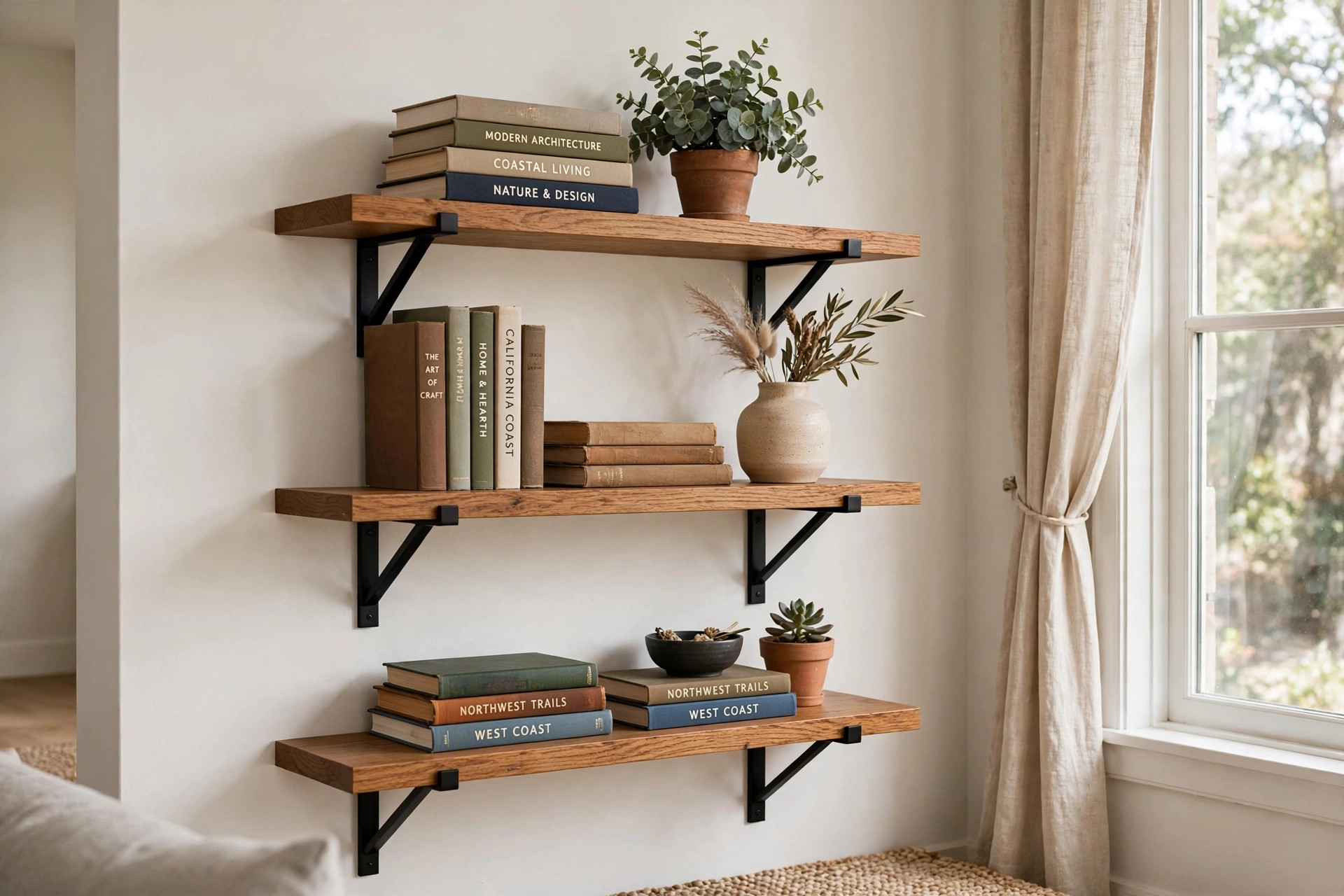

Finding modern wall bookshelves for sale usa can take some time, but the search is worth the effort. A wall shelf does more than hold books. It gives a room shape and order. It turns a plain wall into a place of interest. The right shelf can make a small living room feel larger and a large room feel warmer.
The market in the United States offers hundreds of choices. Some shelves are simple floating planks. Others are large modular systems with cabinets and hidden lights. Prices range from twenty dollars to several thousand. This guide walks you through the options in plain terms. It covers styles, materials, prices, and safety. By the end, you will know how to choose a wall bookshelf that fits your home and your budget.
Why a Wall Bookshelf Matters
Floor space is precious in most American homes. Apartments grow smaller, and family rooms fill up fast. A wall bookshelf solves this problem in a simple way. It uses the vertical space that most people ignore. Books, plants, and framed photos move up off the floor and onto the wall.
There is also the question of looks. A well-chosen shelf becomes the focal point of a room. Guests notice it first. It shows your taste and your interests. A row of well-placed books says something about the people who live there. A few green plants soften a hard modern interior.
Storage matters too. Modern life brings clutter. Mail piles up. Chargers tangle. Small boxes fill drawers. Wall shelves give every item a home. A shelf near the front door holds keys and mail. A shelf in the home office holds reference books and files. Each shelf has a job to do.
For ideas on styling a finished shelf, browse the decorating guides at Apartment Therapy. Their small-space articles show how wall storage changes a room.
What to Look for When You Shop: Modern Wall Bookshelves for Sale Usa
Before you spend a dollar, measure your wall. Note the width, the height, and the distance from nearby furniture. A shelf that is too wide will crowd the room. One that is too small will look lost. Most buyers forget to measure first. Do not make that mistake.
Think about the weight the shelf must carry. Books are heavy. A full shelf of hardcover books can weigh more than fifty pounds. Paperbacks weigh less, but they add up. Decorative items are usually light. Add the numbers before you buy. Then check the shelf’s weight rating. A good shelf lists its load limit in plain print.
Study the mounting hardware. The best modern wall bookshelves for sale usa come with brackets or hidden rods rated for the stated load. Cheap shelves sometimes ship with weak plastic anchors. Those anchors fail in drywall. Plan to buy metal toggle bolts or to screw directly into wall studs. A shelf is only as strong as its mounting.
Consider the finish. Real wood wears well and looks better with age. Engineered wood costs less and comes in many colors. Metal frames suit industrial interiors. Glass shelves look light and airy but show every speck of dust. Pick a finish that matches your other furniture. A warm oak shelf fits a cozy room. A black lacquer shelf fits a sharp modern one.
Look at the depth of the shelf. Standard books need about eight to ten inches of depth. Oversize art books need twelve inches or more. Shallow shelves, five or six inches deep, work for picture frames and small plants. Match the depth to what you plan to store.
Finally, check the return policy. Shelves look different in person than on a screen. A fair return window gives you peace of mind. Many large American retailers offer free returns on furniture. The product pages at Wayfair list return terms for each item.
If you want a deeper walk-through of measurements and mounting, see our companion piece on the modern wall bookshelves buying guide. It covers tools and stud-finding in detail.
Types and Options
Floating Shelves
Floating shelves are the most popular style. They have no visible brackets. A hidden rod or plate inside the shelf carries the load. The result is a clean line on the wall. Floating shelves come in singles and in sets of two or three. They suit modern and minimal rooms. Installation takes patience, because the hidden hardware must sit level.
Ledge and Picture Shelves
Ledge shelves are narrow with a small front lip. They were made for picture frames and art books. The lip keeps items from sliding off. Many homeowners line a hallway with three or four ledges. They also work well above a desk or a sofa. They cost less than deep bookshelves.
Modular and Cube Systems
Modular systems are made of cubes or boxes that join together. You can stack them, spread them, or hang them in a pattern. Some systems add doors, drawers, or lighting kits. They cost more, but they grow with your needs. A young couple may start with four cubes and add more each year. Retailers like IKEA built their names on this kind of flexible storage.
Corner Shelves
Corner shelves turn dead space into storage. They fit into the angle where two walls meet. Most are small and light. They suit plants, photos, and a few paperbacks. They are not made for heavy book collections. Measure the corner angle first, because old houses are rarely square.
Ladder Shelves
Ladder shelves lean against the wall at a slight angle. The shelves grow wider toward the floor. They need no wall mounting in most cases, which renters like. They hold books, baskets, and decor. The leaning design takes some floor space, so they are not truly wall-only. Still, they belong in the same family.
Wall-Mounted Bookcases with Cabinets
Some units combine open shelves with closed cabinets. The open part displays books and art. The closed part hides clutter. These units look like built-in furniture. They cost more and weigh more. They often need two people to install. For styling inspiration, the photo galleries at Houzz show hundreds of real installations.
Shoppers comparing display ideas may also like our guide to the living room wall art buying guide. Art and shelves pair well on the same wall.
Cost and Price Ranges
Prices for modern wall bookshelves for sale usa fall into clear bands. A single floating shelf from a mass retailer costs between twenty and sixty dollars. A set of three matching shelves runs forty to one hundred dollars. These are good starter pieces.
Mid-range shelves cost one hundred to three hundred dollars. At this level you find solid wood, better hardware, and nicer finishes. A sturdy four-foot floating shelf in real oak often sits near two hundred dollars. Modular cube systems start around one hundred fifty dollars for a basic set.
High-end pieces run three hundred dollars and up. Designer brands charge more for thick slabs, rare woods, and perfect finishes. A long live-edge floating shelf can pass five hundred dollars. Custom built-in systems reach into the thousands. These pieces last for decades and often become family keepsakes.
Watch for seasonal sales. January and July bring furniture clearances across the United States. Holiday weekends add coupons. Price tracking tools help you spot a real deal. If you prefer to hunt bargains close to home, our modern wall bookshelves deals near me page lists current local offers.
Do not forget the hidden costs. Mounting hardware, a stud finder, and a level may add thirty to fifty dollars. Delivery fees apply to large units. If you hire a handyman to install, budget one hundred to two hundred dollars for the visit.
Care and Upkeep
Wood shelves need little care. Dust them once a week with a dry cloth. Wipe spills at once. Strong cleaners can dull the finish, so use a mild soap and water for sticky spots. Once a year, check that the mounting screws are still tight. Wood expands and contracts with the seasons. A screw that was snug in winter may loosen by summer.
Metal shelves need a damp cloth and a dry follow-up. Avoid abrasive pads. They scratch the coating. Glass shelves show dust, so a quick wipe with glass cleaner keeps them clear. Painted shelves chip if books scrape across them. Lift books into place instead of sliding them.
Sunlight fades finishes over time. A shelf on a south-facing wall will lighten in a year or two. Books fade too. Rotate the books on sunny shelves, or add a light curtain. The care guides at The Spruce offer room-by-room cleaning schedules.
Check the load once in a while. People add books one by one and forget the total weight. If a shelf starts to sag in the middle, move some weight toward the ends. If a bracket pulls away from the wall, stop using the shelf until you remount it. Safety comes first.
Safety First
A falling shelf can hurt a child or a pet. It can also damage floors and furniture. Take mounting seriously. Always screw into studs when the shelf will hold books. A stud finder costs little and saves trouble. If no stud sits where you need it, use heavy-duty toggle bolts rated for the load.
Keep heavy items low. Place the heaviest books on the lowest shelf. Light decor goes up high. This lowers the center of gravity and cuts the risk of tipping. Ladder shelves and tall units should be anchored to the wall, even if they stand on their own.
Think about earthquakes and bumps. In some states, the ground moves. In every home, children climb. A small L-bracket at the top of a tall unit stops it from tipping forward. These brackets cost a few dollars at any hardware store.
Check local rules if you rent. Some leases forbid drilling into walls. In that case, choose freestanding ladder shelves or tension-mounted units. When you move out, the walls stay clean.
For general home safety advice, HGTV publishes checklists that cover furniture anchoring and childproofing.
Frequently Asked Questions
How much weight can a floating shelf hold?
It depends on the shelf and the mounting. A small decorative floating shelf may hold ten to fifteen pounds. A thick solid-wood shelf screwed into studs can hold fifty pounds or more. Always read the listed load rating. When in doubt, mount into studs and stay well under the limit.
Are wall bookshelves hard to install?
Most are not. A single floating shelf takes about thirty minutes with basic tools. You need a drill, a level, a stud finder, and a pencil. Large modular systems take longer and may need two people. If you are not handy, a local handyman can finish the job in one visit.
What is the best material for a modern wall bookshelf?
Solid wood is the best all-around choice. It is strong, it looks good, and it ages well. Engineered wood costs less and works fine for light loads. Metal frames suit a modern industrial look. Glass shelves look elegant but hold less weight and need frequent cleaning.
How do I style a wall bookshelf?
Start with books, then add variety. Mix horizontal and vertical stacks. Add one plant, one framed photo, and one decorative object per shelf. Leave some empty space. A crowded shelf looks messy. Step back and look from across the room. Move items until the shelf feels balanced. The styling editors at CB2 show good examples of the less-is-more approach.
Where can I find modern wall bookshelves for sale in the USA?
Large online retailers carry wide selections with customer reviews. Article focuses on modern designs with clean lines. Crate & Barrel offers mid-range to high-end pieces. Big-box stores carry budget options you can see in person. Local furniture shops may stock handmade solid-wood shelves.
Do wall shelves damage walls?
Any shelf screwed into a wall leaves holes. Good mounting leaves small, clean holes that are easy to patch with spackle. Toggle bolts leave larger holes. If you rent, ask your landlord first or choose freestanding options. Proper patching and paint make old holes invisible.
A Final Word
A wall bookshelf is a small project with a large payoff. It adds storage, style, and order to any room. Start by measuring your wall and listing what the shelf must hold. Choose a style that fits your home. Buy the best mounting hardware you can afford. Install with care, style with restraint, and enjoy the result for years.
The market for modern wall bookshelves for sale usa is wide and welcoming. Take your time, compare a few options, and trust your eye. The right shelf will feel like it was always meant to be there.
References
Apartment Therapy. (n.d.). Home design ideas and inspiration. https://www.apartmenttherapy.com Article. (n.d.). Modern furniture. https://www.article.com CB2. (n.d.). Modern furniture and decor. https://www.cb2.com Crate and Barrel. (n.d.). Furniture and home decor. https://www.crateandbarrel.com HGTV. (n.d.). Home and garden ideas. https://www.hgtv.com Houzz. (n.d.). Home design and remodeling. https://www.houzz.com IKEA. (n.d.). Home furnishings. https://www.ikea.com The Spruce. (n.d.). Home and garden advice. https://www.thespruce.com Wayfair. (n.d.). Furniture and home goods. https://www.wayfair.com
Was this guide helpful?

About James Carter
The My Garden US editorial team writes practical, in-depth home and garden guides for American homeowners — tested advice, no fluff.
You May Also Like

Couch Throw Pillows Texas Homes USA: A Practical Buying Guide
January 9, 2026 0 views
Modern Farmhouse Tables Deals Near Me: A Buyer Guide
May 6, 2026 0 views
Kitchen Island Stools Texas Homes USA: A Plain Guide to Buying Well
July 15, 2026 0 views