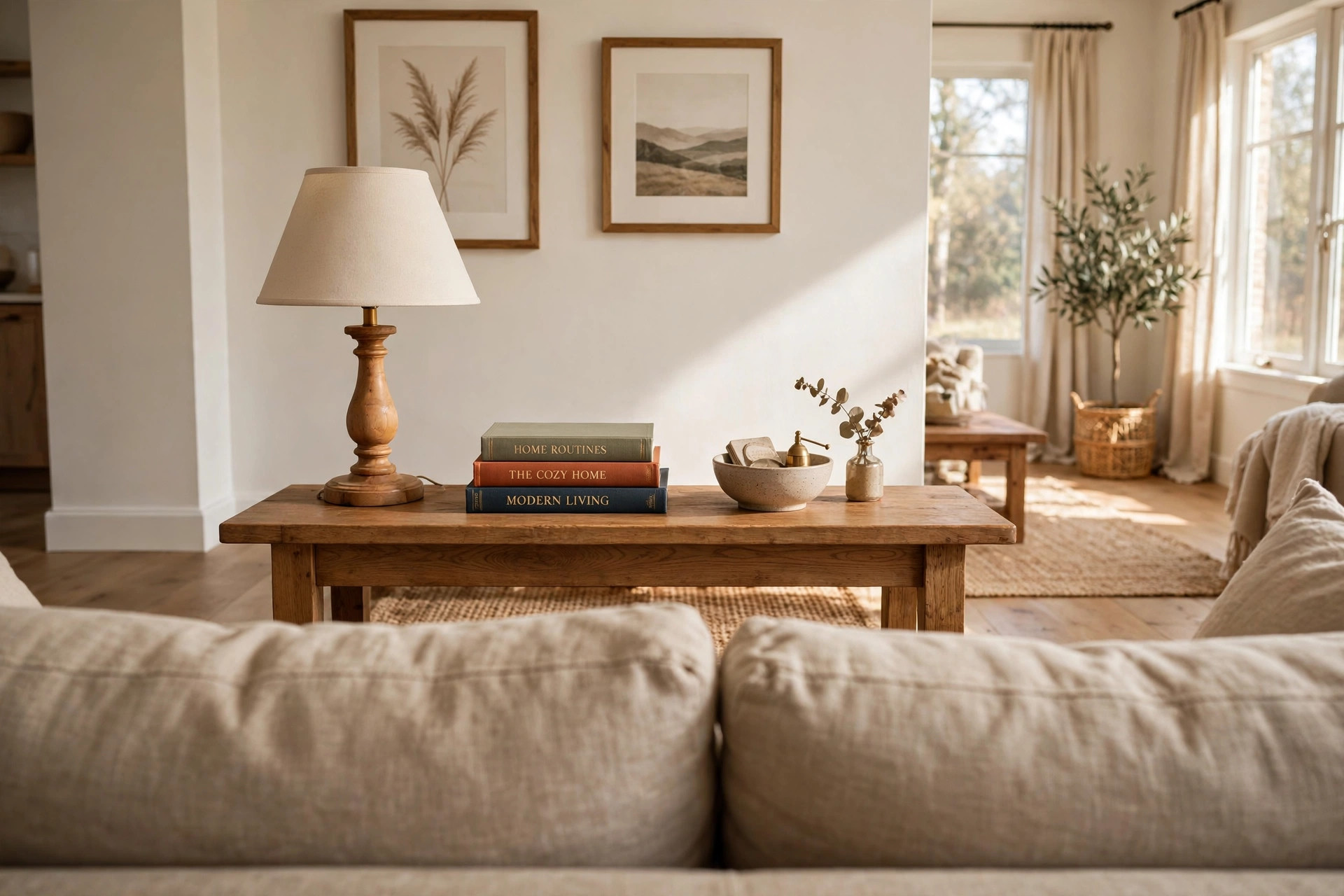

A sofa console table is the long, narrow table that sits behind a sofa. This sofa console tables buying guide USA edition walks through every choice you will face: the right size, the right material, the right style, and the right price. A good table fills the gap between the back of the sofa and the wall. It holds a lamp, a few books, and the remote control. A poor table wobbles, crowds the walkway, or clashes with the room. This guide helps you avoid the poor table.
Why It Matters
Many living rooms have a dead strip of space behind the sofa. It is too narrow for a chair and too wide to ignore. A console table turns that strip into something useful. It gives you a place for a reading lamp so the whole room gets better light. It holds a basket for throws and a tray for drinks. It also acts as a visual anchor. The back of a sofa can look bare from the other side of an open room. A table with a lamp and a small stack of books softens that line.
A console table also protects your sofa. Without one, people set drinks on the frame. The arms get stained and the fabric wears. A table takes that use instead. It is easy to replace a scratched tabletop. It is costly to replace a sofa. When you shop for a rustic console table for the entryway, the same thinking applies: pick the piece that guards the more expensive furniture nearby.
What to Look For When You Choose: Sofa Console Tables Buying Guide Usa
Measure the Sofa First
Start with a tape measure. The table should be about one inch shorter than the top of the sofa back, or level with it. A table that rises above the sofa looks wrong from across the room. A table that is far shorter looks lost. For length, aim for half to two thirds of the sofa length. A 84 inch sofa pairs well with a table that is 48 to 60 inches long.
Depth matters most in small rooms. Standard console tables run 12 to 16 inches deep. If the walkway behind the sofa is tight, choose 10 to 12 inches. You need at least 30 inches of clear walking space between the table and the wall or the next piece of furniture. Measure before you order. Returns on furniture are a headache.
Check the Height for Daily Use
Think about what will sit on the table. A lamp 26 to 34 inches tall casts good light from a console table 30 to 34 inches high. If you want to set books or a tray on the table, a lower table is easier to reach from a seated position. Decide the job first, then the height.
Judge the Build Quality
A table that weighs less than 15 pounds at 48 inches long is likely thin and light. It may tip when someone bumps it. Solid joints matter more than thick legs. Look for corner blocks, dowels, or metal brackets where the legs meet the frame. A good table does not twist when you press the top and rock it side to side.
The finish tells you a lot. Run your hand across the top. It should feel smooth with no rough patches or sticky spots. On stained wood, look at the edges for color that does not match the top.
Pick the Right Material
Solid wood lasts the longest and takes a scratch repair well. Mango, acacia, pine, and oak are common in American stores. Pine dents easily but costs little. Oak and acacia resist dents and age well. Wood veneer over engineered board looks fine and costs less, but a deep chip shows the pale board under it. If you choose veneer, ask for a thick top with edge banding.
Metal frames with wood or glass tops suit modern rooms. They are sturdy and easy to clean. Glass tops show dust and fingerprints, so they need more care. Marble or stone tops look rich but are heavy and can stain from coffee rings. If you love stone, use coasters and seal the top once a year. For households with small children, skip sharp glass edges and heavy stone.
Match the Style to the Room
A console table should echo something already in the room. It does not have to match the sofa. It can match the wood tone of the bookcase, the black of the lamp, or the curve of the coffee table. Farmhouse rooms take a plank top with turned legs. Modern rooms take slim metal legs and a clean rectangle. Mid century rooms take tapered legs and a walnut stain.
Color is the fastest way to tie a piece in. A black table behind a gray sofa reads as sharp and neat. A natural oak table behind the same sofa reads as warm and calm. If the room already has three wood tones, do not add a fourth. Paint the table, or choose metal. Browse room photos on Houzz to see how designers pair console tables with sofas, and look at West Elm for examples of slim frames in small rooms, before you commit.
Types and Options
The Classic Open Console
This is the plain rectangle: four legs and a top, maybe a lower shelf. It is the most flexible choice. You can see the floor under it, so the room feels larger. The lower shelf is a good home for large books or a storage box. Most buyers start here, and most are happy with it.
The Console With Drawers
A drawer turns the table into real storage. It holds remote controls, chargers, reading glasses, and the TV guide. Two small drawers beat one wide drawer, because a wide drawer on a narrow table can jam when pulled at an angle. Check that the drawer slides open fully and closes flush. Dovetail joints last longer than stapled ones. If the table is only 12 inches deep, make sure the drawer is still deep enough for a remote control.
The Console With Doors or Cabinets
Doors hide clutter better than open shelves. A low cabinet console behind a sofa can hold games, magazines, or extra throw blankets. The trade off is depth. Cabinet tables usually run 14 to 18 inches deep, which can crowd a tight walkway. Sliding doors or open backs solve this in narrow rooms.
The Narrow Demi Lune and Half Round
A half round table hugs the wall and takes almost no floor space. It fits in the gap between a sofa and a wall where a rectangle would stick out. The curved front softens a room full of straight lines. The downside is surface area. A half round 36 inches wide holds a lamp and a small bowl, and little else. It is a style piece more than a workhorse.
The Console That Doubles as a Desk
Some console tables are 28 to 30 inches high with a deep top. They can serve as a slim desk behind the sofa when needed. This suits small apartments where every surface must earn its place. A hard chair tucked under the table keeps the walkway clear.
Cost and Price
Console tables in the United States range from about 40 dollars to over 1,000 dollars. Price follows material, size, and brand.
Under 100 dollars, you get flat pack tables of engineered wood and veneer. They look decent for a year or two. The joints loosen with moves, so they suit a first apartment or a temporary setup. Assembly takes 30 to 60 minutes. Keep the tools and the extra screws.
From 100 to 300 dollars, the sweet spot sits. You find solid pine and acacia tables, metal and wood frames, and drawers that actually glide. Most American buyers land here. Stores like Wayfair, IKEA, and Article carry strong options in this range, with clear photos of the underside and the joints.
From 300 to 700 dollars, you get hardwood, better joinery, and finishes that survive a move. Tables from Crate and Barrel and CB2 live here. The design is sharper, and the packaging is kinder to the piece.
Above 700 dollars, you pay for design names, solid hardwood throughout, and hand finishing. These tables can outlast the sofa. They are worth it if you plan to keep the piece for a decade or more.
Watch for the true cost. Shipping a 50 pound table can add 60 dollars or more. White glove delivery costs extra but saves your back. Return shipping on furniture is often on you, so read the return policy before you order.
Care and Upkeep
Dust the top weekly with a dry soft cloth. A damp cloth once a month lifts the film that dry dusting leaves. Wring it well. Water is the enemy of wood finish. Never leave a wet glass on the table. Use coasters, and use a tray under anything that might leak.
Tighten screws every six months. Wood shrinks and swells with the seasons, and screws back out. A five minute turn with a screwdriver keeps the table tight. If a joint starts to creak, a drop of wood glue in the crack, clamped overnight, fixes most cases.
For scratches on stained wood, rub a matching furniture marker along the scratch and wipe the excess. For a deep gouge, fill it with colored wax, level it with a card, and buff. Test any repair product on the underside first. Sunlight fades wood stain over a year or two. If the table sits by a window, rotate the decor on top so the fade is even, or move the table out of direct sun.
Glass tops need a different routine. Wipe with a damp microfiber cloth and dry at once to stop streaks. Check the pads under the glass each year. They flatten with age, and the glass starts to slide. Replacement pads cost a few dollars. Care tips from Apartment Therapy and HGTV remind owners that simple habits beat expensive products.
Safety
A console table behind a sofa must not tip. Tall narrow tables tip more easily than low wide ones. If the table is over 34 inches tall and less than 12 inches deep, anchor it to the wall with a furniture strap. This is vital in homes with toddlers who pull up on furniture. Anchor kits cost under 15 dollars and take 10 minutes to fit.
Round sharp corners in homes with small children. Corner guards are cheap and clear ones are nearly invisible. Keep the load balanced. Do not pile heavy books on one end of a long light table. The table can twist and the joints loosen.
Cords are a trip hazard. If a lamp sits on the table, run the cord down the back leg and tape it to the leg or the wall. Do not let the cord cross the walkway. If you use the table near an outlet, a short cord beats a long one coiled on the floor. Keep candles away from lampshades and curtains. A flameless candle gives the same glow with no risk.
FAQ
What is a sofa console table, exactly?
It is a long narrow table made to sit behind a sofa, against its back. It is usually 30 to 34 inches tall and 12 to 16 inches deep. It holds lamps, books, and decor, and it fills the gap between the sofa and the wall. Some people use the same style of table in an entryway, where it is simply called a console table.
How long should a console table be behind a sofa?
Aim for one half to two thirds of the sofa length. A 90 inch sofa pairs with a table 48 to 60 inches long. A table nearly as long as the sofa crowds the ends and makes the arrangement look heavy. A table under one third of the sofa length looks like it wandered in from another room.
Can I put a console table behind a reclining sofa?
Yes, with care. Reclining sofas need clearance behind them for the backrest to tilt. Measure the sofa in the fully reclined position. Leave at least two extra inches beyond the deepest recline point. A low console table, 28 to 30 inches tall, is often the safer pick because the reclining back clears it more easily.
What should I put on a sofa console table?
A lamp is the best first item. It gives the seating area its own light. Add one low item, such as a stack of books or a bowl, and one tall item, such as a vase with branches. Keep the middle of the table partly clear so there is room for a drink or a phone. Three objects in varied heights look better than five objects crowded together. Pair the setup with an entryway mirror above the table if the wall behind is bare.
Are console tables out of style?
No. The style changes, but the piece stays. Farmhouse tables gave way to slim black metal frames, which gave way to curved designs. The job never goes away. Every sofa backed by an open room looks better with something behind it. Buy a simple shape in a good material and it will outlast the trend cycle.
Should I buy a console table with storage or without?
Buy storage if the living room lacks it. Drawers hide the small clutter that collects on every flat surface. An open table is better if the room already has plenty of storage and you want the space to feel light. A matching entryway storage bench can take the overflow if the console fills up.
A Short Final Word
The right sofa console table is the one that fits your sofa, fits your walkway, and holds what you need it to hold. Measure twice. Choose solid build over fancy looks. Then keep it simple on top: a lamp, a book, and a little breathing room.
References
Apartment Therapy. (n.d.). Home design ideas and inspiration. https://www.apartmenttherapy.com Article. (n.d.). Modern furniture. https://www.article.com CB2. (n.d.). Modern furniture and decor. https://www.cb2.com Crate and Barrel. (n.d.). Furniture and home decor. https://www.crateandbarrel.com HGTV. (n.d.). Home and garden ideas. https://www.hgtv.com Houzz. (n.d.). Home design and remodeling. https://www.houzz.com IKEA. (n.d.). Home furnishings. https://www.ikea.com Wayfair. (n.d.). Furniture and home goods. https://www.wayfair.com West Elm. (n.d.). Modern furniture and home decor. https://www.westelm.com
Was this guide helpful?

About Michael Thompson
The My Garden US editorial team writes practical, in-depth home and garden guides for American homeowners — tested advice, no fluff.
You May Also Like

Bedroom Side Tables Reviews: A Buying Guide for USA Shoppers
October 1, 2026 0 views
Living Room Ottomans USA Online Deals: A Shopper’s Guide
January 14, 2026 0 views
Modern Farmhouse Tables USA Online Deals: A Plain Guide to Buying Well
June 30, 2026 0 views