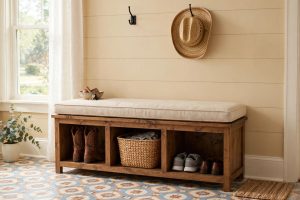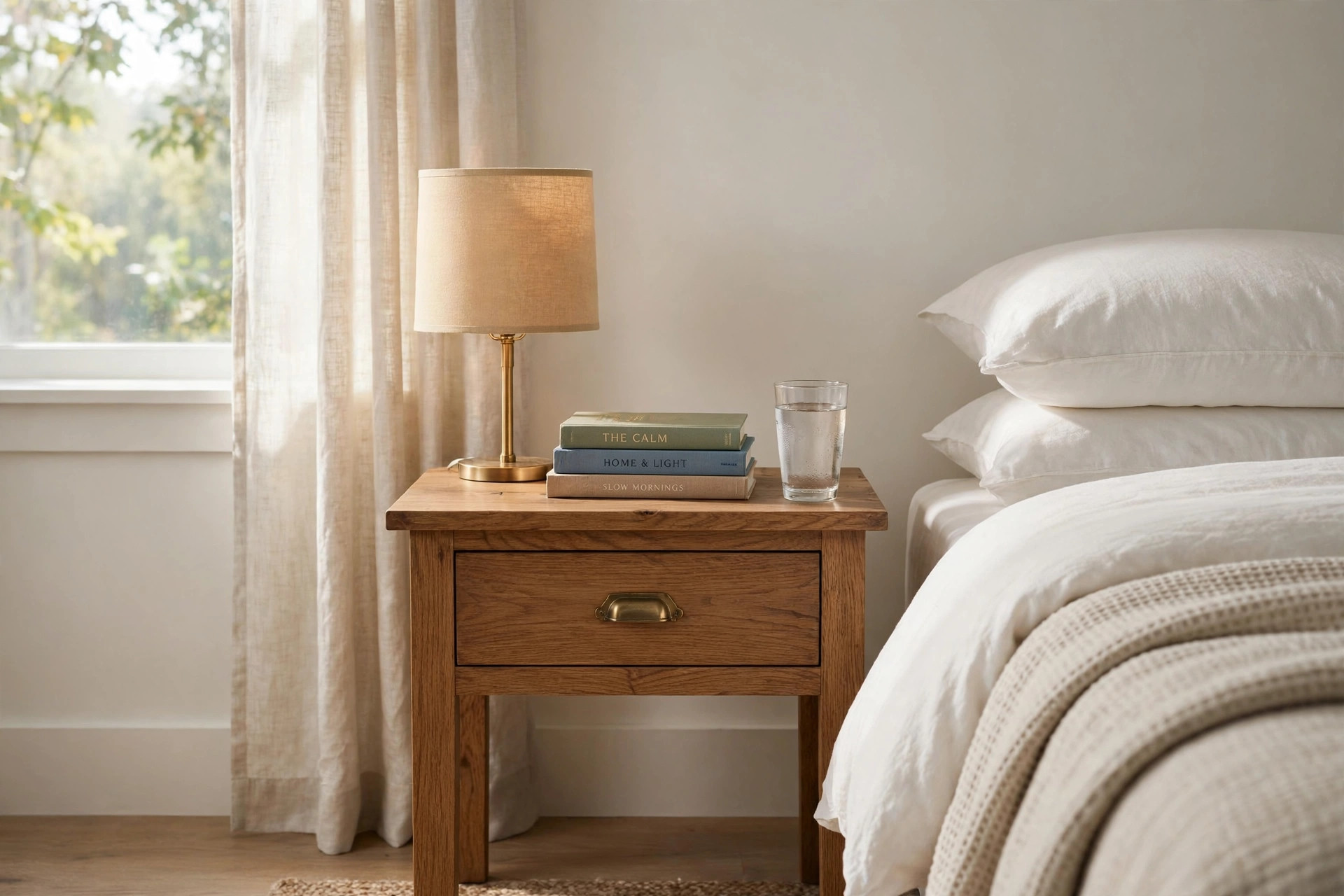

This bedroom side tables buying guide usa was written to answer one simple question: how do you pick the right small table for the side of your bed? A side table may look like a small thing, but you use it every day. It holds your lamp, your alarm clock, your glasses, and your book. A good one makes the room look calm and neat. A bad one wobbles, scratches the wall, or clashes with the bed. This guide walks you through size, height, storage, style, material, price, care, and safety.
Why the Right Side Table Matters
Most people buy a bed and a dresser first, then pick up two small tables as an afterthought. That is a mistake. The side table sits closer to you than any other piece of furniture. You reach for it in the dark. If it is too low, you strain your shoulder every time you reach for water. If it is too tall, it crowds the bed and looks odd. A well chosen table saves space, keeps small items off the floor, and ties the whole bedroom together. A large online furniture store such as Wayfair lists thousands of bedside tables, and the best sellers all share the same traits: a solid top, the right height, and a finish that fits the room.
The side table also shapes how the room works. A table with a drawer can hold medicine, a journal, and reading glasses out of sight. Think about your habits. If you read in bed, you want a wide top for a stack of books. If you charge a phone at night, you want a table near an outlet or one with a built in charging port. HGTV often suggests thinking of the bedside as a small work zone, not just a decoration.
How to Choose: Height, Width, and Depth: Bedroom Side Tables Buying Guide Usa
Start with height. The rule that furniture makers use is simple: the top of the side table should sit level with the top of your mattress, or one to three inches above it. Measure from the floor to the top of your mattress first. Then look for a table within two inches of that number. Most American bedside tables stand between 24 and 30 inches tall. Low platform beds pair well with tables around 24 inches, while tall pillow top mattresses may need a table closer to 30 inches.
Next comes width. For a single person, a top that is 18 to 22 inches wide is plenty. It holds a lamp base, a phone, and a glass of water. For a couple, or for someone who keeps books by the bed, look for 22 to 28 inches of width. Most side tables are 16 to 20 inches deep. In a narrow room, a shallow table around 14 inches keeps the walkway clear.
One more point on size: buy a pair when you can. Two matching tables frame the bed and make the room feel balanced. If the budget only allows one, place it on the side you sleep on and keep the other side clear. Readers comparing sofa console tables with nightstands often ask whether the two tables must match. Matching tables look calm, while two different tables can work if they share the same height and finish.
Types and Styles of Bedroom Side Tables
Side tables come in a few clear types. Knowing them helps you match the table to your room and your habits.
The classic nightstand has one drawer and one or two shelves. It is the workhorse of the bedroom. The drawer hides small items, and the shelf below holds books or a storage box. Solid wood versions, such as those shown by Crate & Barrel, tend to last the longest and can be refinished after years of use.
The open shelf table has no drawer at all, just one or two open shelves. It looks light and costs less, but everything you store stays in view, so you must keep it tidy.
The cabinet table looks like a small chest with doors. It hides clutter well but is deeper and heavier, so check that your room has space for it.
The drum table is round, often with a single door or a drawer behind a curved front. It softens a room full of straight lines. Round tables have less top space than square ones of the same width, so they suit small lamp setups.
The floating shelf is a wall mounted slab with no legs. It saves floor space in tiny bedrooms. It cannot hold much weight, so it suits a small lamp and a phone, not a pile of books. It must be fixed to a wall stud to be safe.
In style terms, wood tables dominate the American market. Oak, walnut, maple, and pine each bring a different tone. Painted tables in white, black, or soft gray fit modern farmhouse and coastal rooms. Metal frames with wood tops give an industrial look. Article focuses on modern wood designs with clean lines, which many buyers choose for mid century and Scandinavian rooms. Try to repeat at least one material already in the room, such as the same wood tone as your dresser, so the table looks like it belongs.
Cost and Price Ranges in the USA
Prices for bedroom side tables in the United States spread across a wide range. Knowing the bands helps you set a budget before you shop.
Budget tables cost 40 to 120 dollars. These are often made of engineered wood, particle board, or thin metal frames. They can look fine and serve well for a guest room or a first apartment. The drawer slides may be simple, and the finish may wear faster, but many buyers find them good value. Stores like IKEA sell simple small tables in this range that suit renters and small spaces.
Mid range tables cost 120 to 350 dollars. This is the sweet spot for most American households. You get solid wood tops, better drawer hardware, and sturdier frames. Many well known brands sell their best selling nightstands here. A pair of mid range tables gives a bedroom a finished look without a large bill.
High end tables cost 350 to 900 dollars or more. These are often solid hardwood throughout, with dovetail drawers and fine finishes. A high end table can last twenty years. If you plan to keep your bedroom set for a long time, one good table can be a better buy than two cheap ones.
A few tips on price: watch for holiday sales in January, July, and late November, when American furniture stores cut prices deeply. Buying a pair as a set often costs less per table than buying two singles. Shipping fees can add a lot online, so check whether the store offers free delivery.
Materials and What They Mean for Daily Use
The material decides how the table looks, how long it lasts, and how it handles daily wear.
Solid wood is the strongest choice. Oak resists dents. Walnut brings a rich dark tone. Pine is light and affordable but dents more easily. Solid wood can be sanded and refinished, which means a scratched table can look new again. Keep wood out of direct sun to stop fading, and use coasters under drinks.
Engineered wood, which includes MDF and particle board with a veneer or laminate skin, costs less and resists warping. It cannot be refinished, and the edges chip if hit hard. It works well in guest rooms or where the budget is tight.
Metal frames with wood or glass tops give a slim, modern look. They are strong and easy to clean. Add felt pads under metal legs so they do not scratch wood floors.
Rattan, wicker, and woven seagrass bring warmth and texture to casual bedrooms. They are light, but woven tops are not flat, so lamps may wobble. A thin board under the lamp can fix that.
Upholstered tables with fabric sides hide storage and soften the look of the room, but fabric stains and holds dust, so they need more care.
For any material, check the joinery before you buy. Drawers should slide smoothly and close fully. Legs should not wobble when you press the top.
Care and Upkeep
A bedroom side table needs little care, but a few habits keep it looking good for years. Dust the top once a week with a soft dry cloth. For wood tops, use a damp cloth for sticky spots and dry the surface right away. Never leave a wet glass sitting on wood without a coaster. Rings from glasses are the most common damage to bedside tables. The Spruce gives simple cleaning tips for wood furniture and warns against harsh sprays that strip the finish.
Lamp cords deserve a small note. A cord that hangs down the front of the table can snag and pull the lamp over. Route the cord behind the table or use a small clip to hold it to the leg.
Every year, tighten the screws on the legs and drawer handles. If a drawer sticks, rub a candle or a bar of soap along the runner. That old trick still works better than oil, which attracts dust.
For painted tables, touch up chips with a small brush and matching paint. For metal frames, wipe with a damp cloth and dry well to stop rust in humid rooms.
Safety Tips for the Bedroom
Safety matters around the bed because you move there in the dark. First, anchor tall or narrow tables to the wall if you have small children. A child can climb a table or pull on a drawer, and even a light table can tip. Anti tip straps cost little and take minutes to fit.
Second, keep the lamp stable. The lamp base should cover a good share of the tabletop. Place the lamp toward the back of the table, away from the edge where you reach.
Third, think about fire. Keep paper, curtains, and bedding away from hot bulbs. Modern LED bulbs run cool and are a safer choice for bedside lamps. They also save energy, a point that Houzz notes in its guides to bedroom lighting ideas.
Fourth, mind sharp corners if you get up at night. Rounded corners are kinder on hips and knees.
Fifth, do not overload the table. Check the weight limit if the maker lists one, and keep heavy stacks of books on a proper shelf. Shoppers comparing living room floor lamps with table lamp setups often find that moving the lamp to the floor frees the tabletop and cuts clutter near the bed.
Where to Shop
You can buy bedroom side tables in many places. Large home stores carry rows of options you can touch and test. Online shops offer more styles and customer reviews, but you cannot test the drawer slide or the wobble before it arrives. Read reviews that mention assembly and sturdiness, not just looks. Measure your space before you order, and compare the table height to your mattress height on paper. West Elm and similar design stores publish full dimensions for every piece, which makes online measuring easy. If you buy online, check the return policy, since free returns remove the risk of a table that looks right in photos but feels wrong in your room. Apartment Therapy often reminds readers to live with a piece for a few days before deciding, and good return terms make that possible.
Local furniture stores and antique shops can be a smart choice too. A used solid wood nightstand may cost less than a new engineered wood one and last far longer. Check drawers and look for damage before you buy used.
Frequently Asked Questions
What height should a bedroom side table be?
The top of the table should sit level with the top of your mattress or up to three inches above it. Measure from the floor to the top of your mattress, then shop for a table within two inches of that number. Most tables sold in the USA stand between 24 and 30 inches tall.
Should the two side tables match?
Matching tables look calm and balanced, and most designers prefer them. Two different tables can work if they share the same height and a similar finish. Height matters more than style, so keep the tops level on both sides of the bed.
How wide should the tabletop be?
For one sleeper, 18 to 22 inches of width is enough for a lamp, a phone, and a glass of water. For a reader or a couple, 22 to 28 inches gives room for books and a clock.
Wood or engineered wood: which is better?
Solid wood lasts longer, resists dents, and can be refinished when scratched. Engineered wood costs less and resists warping, but it chips at the edges and cannot be refinished. Choose solid wood for a table you will keep for years, and engineered wood for a guest room or a tight budget.
How much should I spend on a bedside table?
Most American buyers spend between 120 and 350 dollars per table for good quality. Budget tables from 40 to 120 dollars suit guest rooms. High end solid hardwood tables from 350 dollars and up last for decades.
Can I use a side table instead of a nightstand?
Yes. The words mean the same thing in most stores. A side table, a nightstand, and a bedside table are all small tables made to sit beside the bed. Shop by size and storage, not by the name on the label.
A Final Word
Buying a bedroom side table is a small decision that pays off every night. Measure your mattress, pick a height that matches it, choose a width that fits your habits, and buy the best material your budget allows. If you are furnishing the whole room, a bedroom dressers and mirror buying guide can help you match the table to the dresser. The right table makes the whole bedroom feel calm, finished, and ready for rest.
References
Apartment Therapy. (n.d.). Home design ideas and inspiration. https://www.apartmenttherapy.com Article. (n.d.). Modern furniture. https://www.article.com Crate and Barrel. (n.d.). Furniture and home decor. https://www.crateandbarrel.com HGTV. (n.d.). Home and garden ideas. https://www.hgtv.com Houzz. (n.d.). Home design and remodeling. https://www.houzz.com IKEA. (n.d.). Home furnishings. https://www.ikea.com The Spruce. (n.d.). Home and garden advice. https://www.thespruce.com Wayfair. (n.d.). Furniture and home goods. https://www.wayfair.com West Elm. (n.d.). Modern furniture and home decor. https://www.westelm.com
Was this guide helpful?

About James Carter
The My Garden US editorial team writes practical, in-depth home and garden guides for American homeowners — tested advice, no fluff.
You May Also Like

Modern Wall Bookshelves USA Online Deals: A Plain Guide to Smart Buying
August 20, 2026 0 views
Sofa Console Tables in California Homes: A Plain Guide to Choice and Care
January 16, 2026 0 views
Modern Wall Bookshelves for California Homes: A Practical Buyer’s Guide
May 25, 2026 0 views