---
Table of Contents
Table of Contents
- Pollinator Plants for a Small Sunny Balcony: Why Balconies Work for Pollinators
- What Makes a Good Balcony Pollinator Plant
- The 12 Best Plants
- 1. Lavender
- 2. Zinnias
- 3. Coneflower (Echinacea)
- 4. Lantana
- 5. Salvia
- 6. Marigolds
- 7. Cosmos
- 8. Herbs: Basil, Oregano, and Thyme
- 9. Black-Eyed Susan (Rudbeckia)
- 10. Verbena
- 11. Dwarf Sunflower
- 12. Alyssum
- Arranging Pots for Maximum Visits
- Containers, Soil, and Water
- Keep It Safe for Pollinators
- Small Extras That Help
- What to Expect
- References
You do not need a yard to help pollinators. A few pots on a sunny balcony can become a busy rest stop for bees, butterflies, and hummingbirds. The trick is choosing the right plants and giving them what they need in containers. Here is what to know about pollinator plants for a small sunny balcony before you start.
A sunny balcony is actually a fine place for pollinator plants. Most of the best nectar flowers love full sun. Pots warm up fast, drain well, and let you control the soil. This guide covers the best pollinator plants for a small sunny balcony, how to arrange them, and how to keep them blooming from spring to fall.
Pollinator Plants for a Small Sunny Balcony: Why Balconies Work for Pollinators
When it comes to pollinator plants for a small sunny balcony, getting the details right makes all the difference.

Many homeowners find that pollinator plants for a small sunny balcony is easier than they expected once they know the basics.
Bees and butterflies are always hunting for flowers. In a city, good flowers can be far apart. A balcony full of blooms is like a roadside diner on a long highway. Insects find it, feed, and remember it.
Research on urban pollinators keeps showing the same thing. Small patches of flowers add up. One balcony will not save the bees by itself. But a street full of balconies with flowers makes a real difference. And you get the show: butterflies at your railing, hummingbirds hovering at the pots, bees working the blossoms all afternoon.
Mississippi State University Extension notes that starting with pots or containers is one of the easiest ways to begin a pollinator garden, and that most pollinator plants want full sun. A south or west-facing balcony that gets six or more hours of direct sun is ideal. For more on the basics, see how to attract pollinators to your garden.
What Makes a Good Balcony Pollinator Plant
Many homeowners find that pollinator plants for a small sunny balcony is easier than they expected once they know the basics.
The key to pollinator plants for a small sunny balcony is choosing the right approach for your space and budget.
Not every pretty flower feeds pollinators well. Look for these traits:
- Open, simple flowers. Single blooms with visible centers beat fluffy double flowers. Bees need to reach the nectar and pollen. Many double varieties have been bred for looks, and the extra petals block insects out.
- Long bloom time. You want flowers that bloom for weeks or months, not days.
- Compact size. Balcony pots are small. Choose dwarf or naturally tidy varieties.
- Heat tolerance. Balconies get hot. Pots dry out fast. Pick plants that forgive a missed watering.
- No pesticides. Buy from growers who do not treat plants with systemic insecticides. Ask the nursery. If they cannot tell you, shop elsewhere. Birdshow's native container plant guide highlights butterfly weed and bee balm as proven container performers for monarchs and bees.
The 12 Best Plants
The key to pollinator plants for a small sunny balcony is choosing the right approach for your space and budget.
With a little planning, pollinator plants for a small sunny balcony can fit even a busy schedule.
1. Lavender
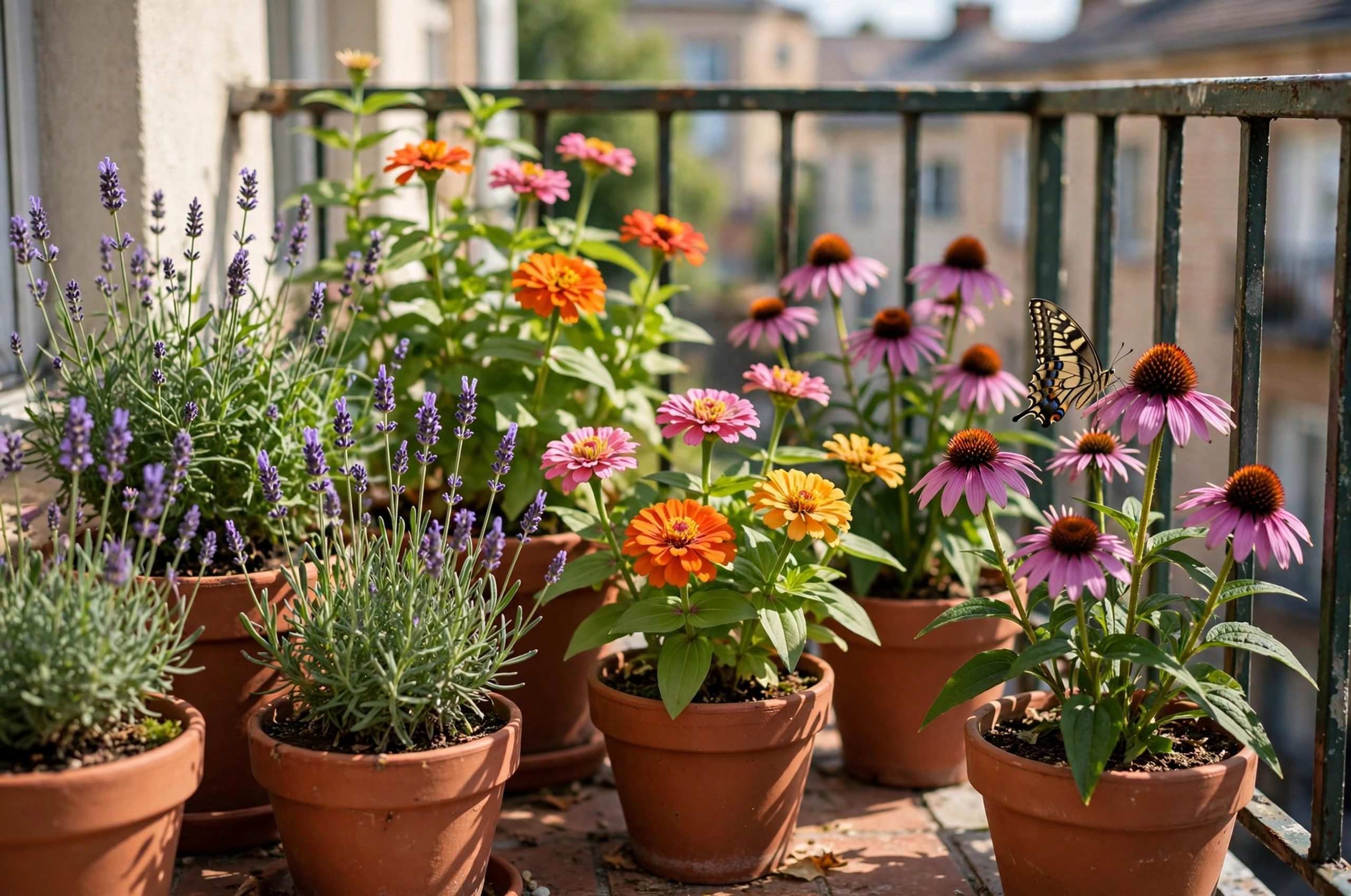
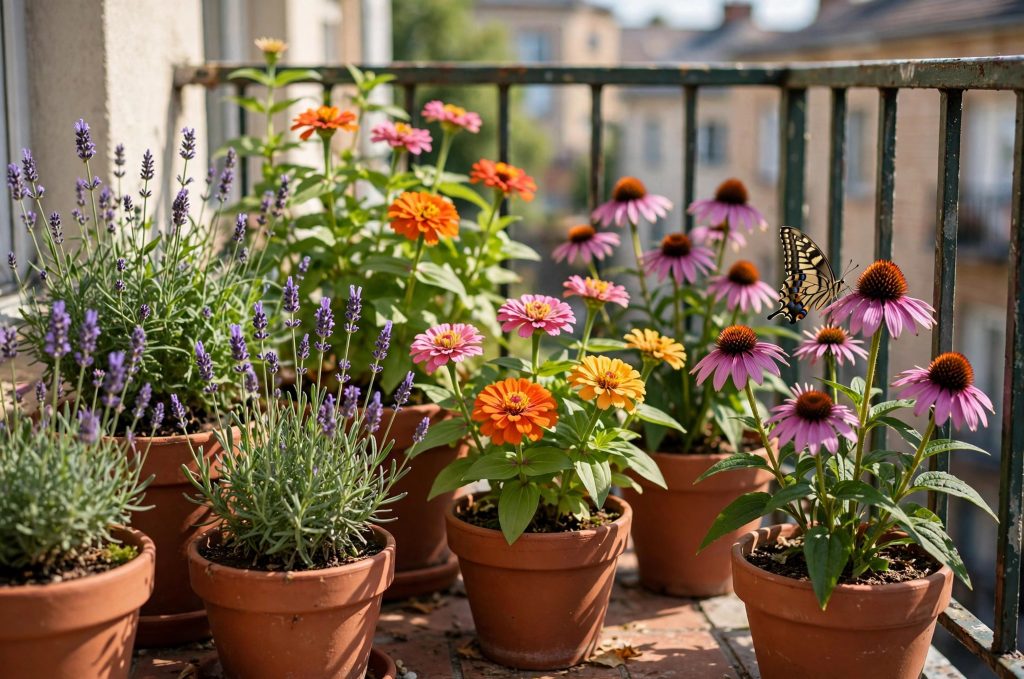
Lavender is the queen of the pollinator balcony. Bees crowd its purple spikes from morning to evening. It loves sun and sharp drainage, which pots provide naturally. English lavender stays compact. Give it the biggest pot you can spare and gritty soil. It also smells wonderful every time you brush past it.
2. Zinnias
Zinnias are butterfly magnets. Their flat, daisy-like heads are perfect landing pads. Dwarf series like 'Profusion' or 'Zahara' stay under a foot tall and bloom nonstop until frost. Sow seeds straight into the pot after the weather warms. Deadhead spent blooms and new ones keep coming. Our zinnia growing guide covers the best varieties for pots.
3. Coneflower (Echinacea)
Purple coneflower is a classic native that bees and butterflies love. Look for compact cultivars bred for containers, such as dwarf forms that stay around 18 inches. It is drought tough once settled. Leave the seed heads standing in fall and goldfinches may visit too.
4. Lantana
Lantana blooms in clusters of tiny, bright flowers that butterflies adore. It thrives on heat and sun, exactly what a balcony dishes out in summer. It blooms from planting until frost with almost no deadheading. Note: lantana can be invasive in warm southern states, so check local guidance and keep it in pots, never planted in the ground where it is a known problem.
5. Salvia
Annual salvias like 'Victoria Blue' and native scarlet sage are hummingbird favorites. Their tube-shaped flowers fit long tongues and beaks. They bloom for months in full sun. Plant several together. A drift of blue salvia in a wide pot is one of the prettiest things you can put on a balcony.
6. Marigolds
French marigolds are cheap, cheerful, and beloved by bees and hoverflies. They bloom within weeks of sowing. Their strong scent also confuses some garden pests. Tuck them into the edges of larger pots as fillers.
7. Cosmos
Cosmos grow tall and airy with feathery foliage and open flowers that butterflies love. Dwarf varieties like 'Sonata' stay around two feet and suit large pots. They bloom best when you do not fuss over them. Too much fertilizer gives leaves instead of flowers.
8. Herbs: Basil, Oregano, and Thyme
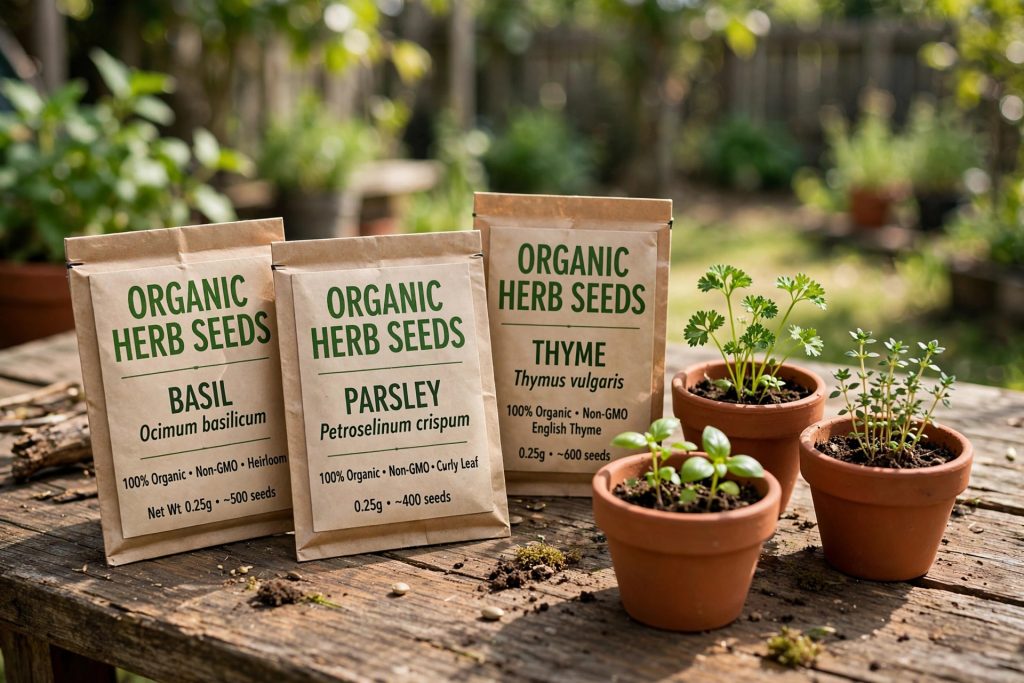
Let your herbs flower and they become pollinator plants. Basil flowers draw bees by the dozen. Oregano blooms are tiny bee buffets. Thyme makes a fragrant, low carpet at the pot's edge. You get a kitchen garden and a pollinator garden in the same pots. Just let a few stems go to flower instead of pinching every bud. For container herb tips, see how to grow strawberries in containers for general small-pot technique that applies to herbs too.
9. Black-Eyed Susan (Rudbeckia)
Dwarf black-eyed Susans bring bold gold-and-brown daisies that bloom for months. They are tough, heat-loving, and easy from seed. Bees work the centers all day. One plant can fill a medium pot.
10. Verbena
Garden verbena and its wild cousins produce clusters of small, nectar-rich flowers. Butterflies visit them constantly. They like sun and good drainage. Trailing types spill nicely over pot edges and railing boxes.
11. Dwarf Sunflower
Full-size sunflowers are too much for a balcony, but dwarf varieties that top out at two feet are perfect. Their big, sunny faces are bee magnets. The Georgia Extension container pollinator guide lists dwarf sunflowers among the most reliable container plants for attracting pollinators. Sow a few seeds in a deep pot and thin to the strongest.
12. Alyssum
Sweet alyssum is small but mighty. Its honey-scented white and purple flowers attract tiny native bees and hoverflies that larger flowers miss. It blooms in cool weather too, filling the gaps in spring and fall. Plant it along pot rims where it can cascade. Garden for Wildlife's patio and balcony native plant guide recommends black-eyed Susan and blazing star as reliable container natives for the same reason.
Arranging Pots for Maximum Visits
With a little planning, pollinator plants for a small sunny balcony can fit even a busy schedule.
Before you start, it helps to understand how pollinator plants for a small sunny balcony works in real homes.
How you arrange plants matters almost as much as which ones you pick.
Group pots together. A cluster of flowers is easier for insects to find than single pots scattered around. Three or more pots of the same plant make an even stronger signal. Pollinators learn that a big patch of one flower type is worth the trip.
Layer heights. Put tall plants like cosmos and dwarf sunflowers at the back, medium plants like zinnias and salvia in the middle, and low trailers like alyssum and thyme at the front. This gives insects flowers at every level and looks good from inside your home too.
Plan for succession. Aim to have something blooming from spring through fall. Start with alyssum and herbs in spring, peak with zinnias and lantana in summer, and finish with asters or late salvia in fall. The EcoBeneficial balcony guide suggests mixing spring, summer, and fall bloomers so there is always food available.
Mind the wind. High balconies are windy, and wind dries pots fast and makes it hard for insects to land. A railing box on the sheltered side, or pots grouped against the wall, gives pollinators a calm place to feed.
Containers, Soil, and Water
Before you start, it helps to understand how pollinator plants for a small sunny balcony works in real homes.
A good plan for pollinator plants for a small sunny balcony saves time, money, and frustration.
Pot size matters. Bigger pots hold more moisture and give roots room. A pot at least 12 inches wide and deep suits most of these plants. Make sure every pot has drainage holes. No drainage means rotted roots.
Use potting mix, not garden soil. Bagged potting mix is light, drains well, and is free of weed seeds. Garden soil compacts in pots and suffocates roots.
Water smart. Balcony pots in full sun may need water daily in summer. Water in the morning so leaves dry by night. A saucer under each pot catches runoff, but empty it if water stands for more than an hour.
Feed lightly. Too much fertilizer grows leafy plants with few flowers. A half-strength liquid feed every few weeks during bloom season is plenty. Native plants like coneflower and salvia need even less.
Keep It Safe for Pollinators
A good plan for pollinator plants for a small sunny balcony saves time, money, and frustration.
For most people, pollinator plants for a small sunny balcony comes down to a few smart choices.
The fastest way to ruin a pollinator balcony is with pesticides. Even products labeled "natural" can kill bees if sprayed on open flowers.
- Never spray insecticides on blooming plants.
- If aphids show up, blast them off with water or wipe them away by hand.
- Buy plants from nurseries that do not use neonicotinoids. Ask directly.
- Skip the "bug zapper." It kills moths, which are pollinators too. The Better India's balcony pollinator guide echoes the same rules: plant in clusters and keep the sprays away.
The Illinois Extension pollinator pocket brochure reminds gardeners to keep pollinator plantings pesticide-free and to favor native plants whenever possible.
Small Extras That Help
For most people, pollinator plants for a small sunny balcony comes down to a few smart choices.
If you are new to pollinator plants for a small sunny balcony, start with the simplest option and build from there.
A bee water dish. A shallow saucer filled with pebbles and water gives bees and butterflies a safe drink. The pebbles keep them from drowning. Refill it every day or two. CubeSmart's small-space pollinator tips suggest the same trick, along with grouping containers to make a stronger target for passing insects.
Bare soil patch. Many native bees nest in the ground. Leave a small area of bare, undisturbed soil in one large pot. You might get a tiny ground-nesting bee as a tenant.
A bee hotel. A small block of drilled wood hung in a sheltered spot gives solitary bees a place to nest. Keep it dry and out of direct rain.
Leave some mess. In fall, do not cut everything down at once. Hollow stems shelter overwintering insects. Cut back in spring when new growth starts.
What to Expect
If you are new to pollinator plants for a small sunny balcony, start with the simplest option and build from there.
When it comes to pollinator plants for a small sunny balcony, getting the details right makes all the difference.
In the first season, be patient. It can take a few weeks for local pollinators to discover new flowers. Once they do, they return daily and bring friends.
Keep a simple note of what visits. You will likely see honeybees first, then bumblebees, then small native bees you never noticed before. Butterflies follow the big flat flowers. If you are lucky, a hummingbird will claim your salvia as its own territory and chase all rivals away. That is a sign of a balcony garden done right.
Start with five or six pots this season. Learn what thrives in your exact sun and wind. Add more next year. A small sunny balcony, planted with care, can hum with life all summer long. For apartment-friendly soil and compost ideas, see how to compost in a small apartment. Once you try it, pollinator plants for a small sunny balcony gets easier each time.
References
When it comes to pollinator plants for a small sunny balcony, getting the details right makes all the difference.
- Mississippi State University Extension. (n.d.). Creating a pollinator garden. https://extension.msstate.edu/publications/creating-pollinator-garden
- University of Georgia CAES. (n.d.). Creating an impactful container pollinator garden. https://fieldreport.caes.uga.edu/publications/C1375/creating-an-impactful-container-pollinator-garden/
- University of Illinois Extension. (n.d.). Plant a pollinator pocket (brochure). https://extension.illinois.edu/sites/default/files/plantapollinatorpocket_brochure.pdf
- EcoBeneficial. (n.d.). What can I plant for pollinators on my balcony? https://www.ecobeneficial.com/ask_ecobeneficial/what-can-i-plant-for-pollinators-on-my-balcony/
- Birdshow Blog. (n.d.). Grow a pollinator oasis with native plants for containers. https://birdshow.blog/grow-pollinator-oasis-native-plants-containers
- Garden for Wildlife. (n.d.). Native plant gardening for patios and balconies. https://content.gardenforwildlife.com/learn/native-plant-gardening-for-patios-and-balconies
- CubeSmart. (n.d.). Creating a pretty pollinator garden to help your local ecosystem. https://www.cubesmart.com/blog/your-life/creating-a-pretty-pollinator-garden-to-help-your-local-ecosystem/
- The Better India. (n.d.). How to create a pollinator-friendly balcony garden. https://thebetterindia.com/gardening/pollinator-friendly-balcony-garden-winter-bees-butterflies-chemical-free-tips-10494281
Many homeowners find that pollinator plants for a small sunny balcony is easier than they expected once they know the basics.
The key to pollinator plants for a small sunny balcony is choosing the right approach for your space and budget.
Was this guide helpful?

About My Garden US
The My Garden US editorial team writes practical, in-depth home and garden guides for American homeowners — tested advice, no fluff.
You May Also Like
Tulip Bulbs Fall Buying Guide USA: How to Choose and Plant for Spring Color
July 24, 2026 19 views
Where to Find Sunflower Seed Packs USA Online Deals
January 30, 2026 17 views
How to Grow Collard Greens: Hearty & Sweet
October 22, 2026 17 views