---
Table of Contents
Table of Contents
- Paint a Room without Taping the Trim: Why Painters Skip the Tape
- What You Will Need
- The Order of Work Matters
- How to Cut In: The Basic Technique
- The Two-Pass Method for Beginners
- Feather the Inner Edge
- Cutting In Around Baseboards, Windows, and Doors
- Fixing a Slip Without Repainting
- Mistakes That Send People Back to Tape
- When Tape Still Makes Sense
- References
Tape takes forever to put down and even longer to pull up. It bleeds under the edges. It peels off fresh paint. And it costs money for every roll. Professional painters skip it most of the time. They use a brush technique called cutting in, and it gives them a straight line where the wall meets the trim. You can learn it too. It takes practice, but the payoff is a faster job and a cleaner finish. This guide shows how to paint a room without taping the trim in plain steps.
This guide shows you how to paint a room without taping the trim, step by step. You will learn which brush to buy, how to hold it, the order to paint the room, and how to fix a slip without starting over.
Paint a Room without Taping the Trim: Why Painters Skip the Tape
When it comes to paint a room without taping the trim, getting the details right makes all the difference.
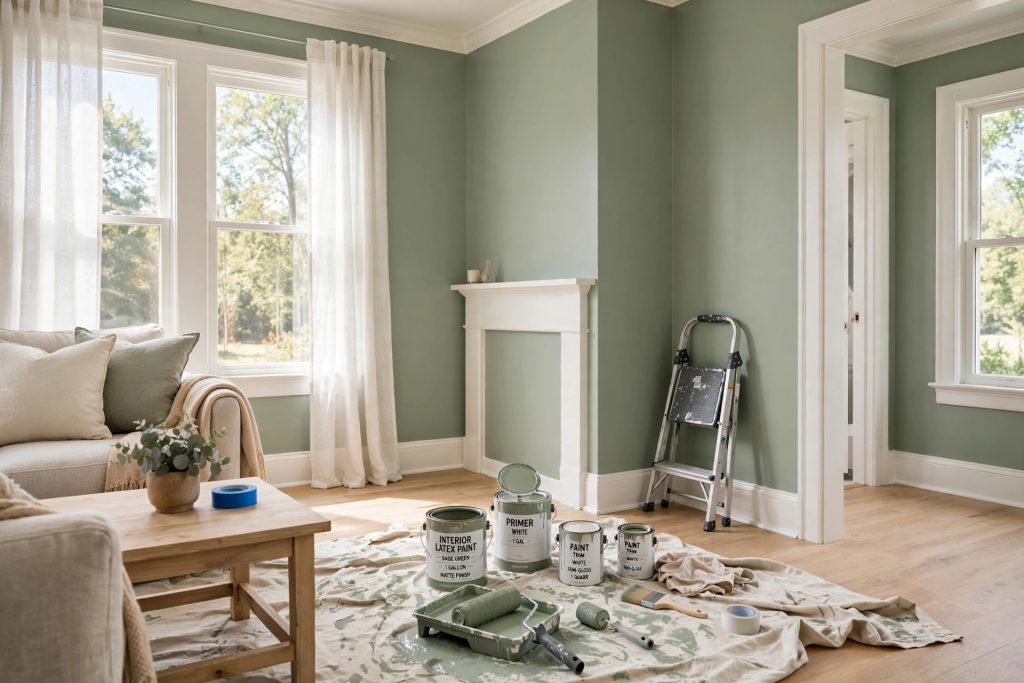
Many homeowners find that paint a room without taping the trim is easier than they expected once they know the basics.
Tape has its place, but it causes its own problems. Paint can seep under the edge of the tape, leaving a ragged line that looks worse than a freehand one. Pulling tape off too late can tear the new paint. Pulling it off a wall that was painted just a day before can lift the old finish right off the plaster.
Cutting in avoids all of that. A skilled hand makes a line as straight as any tape edge, and the basic cutting-in method is simpler than most beginners expect. The job goes faster because you do not spend an hour masking baseboards, window frames, and door trim. Many pros say cutting in is actually quicker than taping once you get the feel for it, and the line looks softer and more natural where two colors meet.
That said, tape is not the enemy. It helps on rough surfaces, fresh paint, and jobs where you cannot afford a single slip. But for a standard room repaint, you can leave the tape roll in the drawer.
What You Will Need
Many homeowners find that paint a room without taping the trim is easier than they expected once they know the basics.
The key to paint a room without taping the trim is choosing the right approach for your space and budget.
Good tools make the hard parts easy. Gather these before you open a can:
- A 2.5-inch angled sash brush with synthetic bristles. The angled tip fans out into a straight line, and synthetic bristles hold their shape in water-based paint. Cheap brushes shed bristles and leave streaks, so buy the best cutting-in brush you can afford.
- A small cut bucket. This is a hand-held paint pail, or you can cut the rim off an old quart can. You carry it with you as you work around the room.
- Drop cloths for the floor and furniture.
- A clean, damp rag for quick wipe-ups.
- A putty knife and spackle for filling holes, plus fine sandpaper for smoothing.
- Bright light. A work light or headlamp lets you see the line where the brush meets the trim. Most mistakes happen in dim corners.
- Quality interior paint. Better paint levels out on its own, which hides small wobbles in your line.
Some painters also keep a wide putty knife handy to use as a shield along the baseboard. You hold the knife against the trim and brush the wall right up to it. Wipe the knife clean after each pass. It is a good bridge between taping and full freehand.
The Order of Work Matters
The key to paint a room without taping the trim is choosing the right approach for your space and budget.
With a little planning, paint a room without taping the trim can fit even a busy schedule.
Work from the top of the room down. Paint the ceiling first. A roller throws fine splatter, and anything you paint below it will catch the drips. Let the ceiling dry, then cut in the trim. The standard order is ceiling, then trim, then walls, which keeps each fresh surface out of the path of the one above it. Do the baseboards, window casings, and door frames next. Paint the walls last.
When you cut in the trim without tape, let the trim paint lap a little onto the wall. Do not worry about a neat edge on the wall side yet. When you paint the walls later, you will cut a clean line right up to the trim, covering that overlap. This two-pass method is how pros get a sharp edge without masking anything.
How to Cut In: The Basic Technique
With a little planning, paint a room without taping the trim can fit even a busy schedule.
Before you start, it helps to understand how paint a room without taping the trim works in real homes.
Dip only the bottom third of the bristles into the paint. Push the brush against the inside of the cut bucket to knock off the extra. Never wipe the brush on the rim. Tapping loads the center of the bristles while the outside stays fairly clean, which gives you control.
Hold the brush by the metal ferrule, down near the bristles, the way you would hold a pencil. Gripping the far end of the handle makes every small movement bigger and sloppier. A short grip gives you a steady hand.
Place the brush on the wall about half an inch away from the trim. Press gently so the bristles fan out. Now pull the brush along the wall, and as you move, ease the fanned bristles toward the edge. You are not painting with the bristle tips. You are pushing a small bead of paint into the corner where the wall meets the trim.
Move your whole arm from the shoulder. Keep your wrist stiff. If you flick your wrist, the line waves. Work in sections of two to three feet at a time. Reload the brush, lay down a fresh section, and keep a wet edge so the new paint blends into the last section without a visible seam.
The Two-Pass Method for Beginners
If the full motion feels hard, break it into two passes, a method many painting guides recommend for beginners. First, brush a band of paint on the wall about half an inch from the trim. Do not try to touch the edge. Reload the brush, then make a second, slower pass that coaxes the paint right up to the line. The first pass puts paint where you need it. The second pass only has to shape the edge. Many beginners get their best lines this way.
Feather the Inner Edge
After you cut the line, feather the paint away from the edge with light strokes. This blends the brushed band into the part of the wall the roller will cover. If you skip the feathering, the cut-in band can dry with a different texture than the rolled paint, leaving a visible frame around the room.
Cutting In Around Baseboards, Windows, and Doors
Before you start, it helps to understand how paint a room without taping the trim works in real homes.
A good plan for paint a room without taping the trim saves time, money, and frustration.
Baseboards are the easiest trim to cut in because the floor is flat and you can brace yourself low. Crouch or sit on a cushion so your arm is level with the work. Good light aimed low along the baseboard shows the line clearly.
Window casings and door frames need a slower hand. The corners where the casing meets the wall are tight, and paint collects in the inside corners. Cut the straight runs first, then come back and tidy the corners with the corner of the brush. If paint builds up in a corner, pull the excess away with a light stroke before it dries into a ridge.
For the top of a door frame or the ceiling line, get your head close to the surface so you can see the edge straight on. A headlamp helps a lot here. Move slowly and keep the bead of paint small. Overhead cutting in is tiring, so take breaks and keep the sections short.
Fixing a Slip Without Repainting
A good plan for paint a room without taping the trim saves time, money, and frustration.
For most people, paint a room without taping the trim comes down to a few smart choices.
You will get paint where you do not want it. That is normal, even for pros, and a quick wipe with a damp rag handles most slips. The fix depends on timing.
If the paint is still wet, wipe it right away with a clean, damp rag. Do not scrub. One soft wipe lifts the paint off the trim without smearing it. Keep the rag clean by rinsing it often, and wring it well so you do not flood the spot with water.
If the paint has started to set but is not fully dry, leave it alone. Wiping half-dry paint makes a bigger mess. Wait until it dries hard, then scrape the spot gently with a putty knife or your fingernail. Touch up the trim with a small brush if you scuffed it, using a high-gloss or semi-gloss trim paint that matches the existing finish.
If paint dried on the trim days ago, use a plastic scraper and a little patience. Work the edge of the scraper under the dried drip and pop it off. Dried latex paint releases from glossy trim more easily than from flat paint, which is one reason trim is usually painted in satin or semi-gloss.
Mistakes That Send People Back to Tape
For most people, paint a room without taping the trim comes down to a few smart choices.
If you are new to paint a room without taping the trim, start with the simplest option and build from there.
Most freehand problems come from a few common errors. Fix these and the technique clicks.
Overloading the brush. Too much paint floods the edge and runs onto the trim. Dip shallow and tap off the excess. A light brush does clean work. You can always make a second pass.
Rushing. Cutting in is the slow part of the job. Trying to finish a whole room in one burst leads to wavy lines and slips. Short sections, steady pace.
Bad light. You cannot paint a line you cannot see. Bright, even light on the work surface is not optional. Move a lamp with you around the room.
The wrong brush. A wide, square brush is hard to steer along a tight edge. An angled sash brush does the steering for you, as long as you keep the bristles clean and shaped. For a full rundown of brush styles, see this paint brush guide.
Pushing the paint. Pressing hard shoves paint under the bristle edge and onto the trim. Let the bristle tips glide. Light pressure and a loaded brush do the work.
When Tape Still Makes Sense
If you are new to paint a room without taping the trim, start with the simplest option and build from there.
When it comes to paint a room without taping the trim, getting the details right makes all the difference.
Some jobs are easier with tape, and there is no shame in using it. Tape helps when you are painting a bold stripe or a two-color wall, when the trim paint is less than a few days old and still soft, or when the surface is rough brick or heavy texture where no brush can hold a line. If you do tape, use a low-tack delicate-surface tape on fresh paint, press the edge down hard, and pull the tape off at a sharp angle while the paint is still slightly tacky.
Learning to cut in is a skill that pays off on every paint job you do for the rest of your life. The first room feels slow. The second goes faster. By the third, you will wonder why you ever spent a Saturday afternoon sticking tape to baseboards. For help choosing the right sheen for the trim you are painting around, see our guide to satin versus semi-gloss for trim, and pick up ideas for durable wall color in our roundup of easy-clean paint for hallways with dogs. With these steps, you can paint a room without taping the trim with confidence.
References
When it comes to paint a room without taping the trim, getting the details right makes all the difference.
- Hunker. (n.d.). How to cut in paint. https://www.hunker.com/13716723/how-to-cut-in-paint/
- PaintingTips.net. (n.d.). How to trim paint without taping: Using proven techniques. https://paintingtips.net/how-to-trim-paint-without-taping/
- This Old House. (n.d.). Everything you need to know to cut in paint edges like a pro. https://www.thisoldhouse.com/painting/how-to-cut-in-paint-edges-with-a-brush
- Family Handyman. (n.d.). The best tips for cutting in paint. https://www.familyhandyman.com/list/the-best-tips-for-cutting-in-paint/?link_source=ta_first_comment&taid=6760f7647322a100013ff7fa&utm_campaign=trueanthem&utm_medium=organicsocial&utm_source=facebook
- ABC Home & Commercial Services. (n.d.). How to paint trim without tape and other tips. https://www.abchomeandcommercial.com/resources/how-to-paint-trim-without-tape/
- Sensible Digs. (n.d.). Do you paint trim or walls first? Order & tips. https://sensibledigs.com/do-you-paint-trim-or-walls-first/
- JCB Painting. (n.d.). What's the best brush for cutting in? A pro painter's guide. https://jcbpainting.substack.com/p/whats-the-best-brush-for-cutting
- MyProPainters. (n.d.). Your brush guide. https://mypropainters.com/blog/your-brush-guide/
Many homeowners find that paint a room without taping the trim is easier than they expected once they know the basics.
The key to paint a room without taping the trim is choosing the right approach for your space and budget.
Was this guide helpful?

About My Garden US
The My Garden US editorial team writes practical, in-depth home and garden guides for American homeowners — tested advice, no fluff.
You May Also Like

Scrubbable Paint for Dining Rooms Reviews: What Actually Works
June 10, 2026 16 views
Refinishing Outdoor Teak Furniture Cost USA
May 15, 2026 16 views
Refinishing Hardwood Floors vs Painting: Which Is Right for Your Home
June 20, 2026 16 views