---
Table of Contents
Table of Contents
- Clean Greasy Kitchen Cabinets without Damage: Why Cabinets Get So Greasy
- Rule One: Match the Cleaner to the Finish
- Method 1: Dish Soap and Hot Water
- Method 2: Diluted Vinegar Spray
- Method 3: Baking Soda Paste for Stubborn Spots
- Method 4: Oil Soap for Wood Cabinets
- Method 5: Commercial Degreasers (Use With Care)
- The Step-by-Step Deep Clean
- What NOT to Do
- Keeping Cabinets Grease-Free
- Frequently Asked Questions
- What is the best homemade degreaser for cabinets?
- Can I use vinegar on all cabinet finishes?
- How often should I degrease kitchen cabinets?
- Why are my cabinets still sticky after cleaning?
- References
Cooking sends tiny oil droplets into the air. They land on your cabinets, mix with dust and steam, and turn into a sticky film. Over months, that film hardens into grime that laughs at a damp cloth. This guide shows how to clean greasy kitchen cabinets without damage in plain steps.
You can cut through it. But harsh scrubbing and strong chemicals can wreck the finish you are trying to save. Here is how to clean greasy kitchen cabinets without damage, no matter what your cabinets are made of.
Clean Greasy Kitchen Cabinets without Damage: Why Cabinets Get So Greasy
When it comes to clean greasy kitchen cabinets without damage, getting the details right makes all the difference.
Many homeowners find that clean greasy kitchen cabinets without damage is easier than they expected once they know the basics.
Every time you fry, saute, or roast, oil goes airborne. The range hood catches some of it. The rest settles on the nearest surfaces, which are usually the cabinets around the stove.
The film builds slowly. At first the cabinets just feel a little tacky near the handles. Then dust sticks to the tacky layer. Then the layer darkens and hardens. By the time it is visible, it needs real work to remove.
Kitchens with gas stoves, frequent frying, or weak ventilation build grease fastest. If you can feel the film with your fingertip, it is time to clean.
Rule One: Match the Cleaner to the Finish
Many homeowners find that clean greasy kitchen cabinets without damage is easier than they expected once they know the basics.
The key to clean greasy kitchen cabinets without damage is choosing the right approach for your space and budget.
Different finishes tolerate different cleaners. Using the wrong one causes the damage you are trying to avoid.
Painted cabinets. Use mild cleaners only. Harsh degreasers can soften paint. Abrasive scrubbers wear through it. Stick to dish soap, diluted vinegar, or a gentle all-purpose cleaner.
Stained wood with clear coat. The clear coat is the armor. Strong solvents and abrasives cut through it. Use oil soap or diluted dish soap. Dry promptly, since standing water clouds clear finishes.
Laminate and thermofoil. These are plastic surfaces over engineered wood. Too much water seeps into seams and swells the core. Use a damp, not wet, cloth. Avoid abrasive powders.
Unfinished or waxed wood. Water is the enemy. Clean with minimal moisture and dry at once. Oil-based cleaners suit these finishes best.
When in doubt, test on the back of a door or inside a cabinet first. If the finish clouds, streaks, or feels rough after the test, pick a gentler method.
Method 1: Dish Soap and Hot Water
The key to clean greasy kitchen cabinets without damage is choosing the right approach for your space and budget.
With a little planning, clean greasy kitchen cabinets without damage can fit even a busy schedule.
The simplest method is also one of the safest. Dish soap is made to cut grease, and it is gentle on most finishes.
Mix a few drops of dish soap in a bowl of hot water. Dip a microfiber cloth, wring it out well, and wipe the cabinets from top to bottom. Work in small sections. Rinse the cloth often.
Follow with a second cloth dampened in clean water to rinse off soap residue. Then dry with a third cloth. The drying step matters. Leftover moisture spots finishes and feeds new grime.
This handles light to moderate grease. For the sticky layer near the stove, you may need to go over it twice. Cleaning pros recommend this as the starting point before reaching for stronger products (The Spruce, n.d.).
Method 2: Diluted Vinegar Spray
With a little planning, clean greasy kitchen cabinets without damage can fit even a busy schedule.
Before you start, it helps to understand how clean greasy kitchen cabinets without damage works in real homes.
Vinegar cuts grease and is safe on most sealed finishes. Mix equal parts white vinegar and warm water in a spray bottle. Add a drop of dish soap for extra power.
Lightly mist the cabinet surface. Do not soak it. Let the solution sit for five minutes so the acid can work on the grease. Wipe with a damp microfiber cloth, then dry.
One caution: vinegar is an acid. On some finishes it can dull the sheen with repeated use. The Spruce advises diluting it and testing first on delicate finishes (The Spruce, n.d.). Never use vinegar on natural stone, and use it sparingly on waxed wood.
Method 3: Baking Soda Paste for Stubborn Spots
Before you start, it helps to understand how clean greasy kitchen cabinets without damage works in real homes.
A good plan for clean greasy kitchen cabinets without damage saves time, money, and frustration.
For spots that resist sprays, make a paste of baking soda and water. Dab it on the sticky area with a soft cloth. Rub gently in circles. The mild abrasion lifts the grime.
Baking soda is safe on most finishes when used gently. Do not scour hard or use it dry on glossy paint, which can show fine scratches. Always rinse the residue off fully, since dried baking soda leaves a white film.
This method shines on textured areas: around handles, along the bottom edge of uppers, and on the face frames near the stove.
Method 4: Oil Soap for Wood Cabinets
A good plan for clean greasy kitchen cabinets without damage saves time, money, and frustration.
For most people, clean greasy kitchen cabinets without damage comes down to a few smart choices.
Oil soap, such as Murphy's Oil Soap, is made for wood. It cleans while leaving the wood conditioned. Mix it with warm water per the label directions.
Wipe the cabinets with a soft cloth dipped in the solution and wrung out. Work top to bottom so dirty drips do not land on clean wood. Rinse with a clean damp cloth and dry.
In head-to-head tests of cabinet cleaning methods, oil soap earned solid marks for cutting grease without harming wood, though testers noted the scent lingers (The Kitchn, n.d.; Cubby, n.d.). It is a good pick for stained wood cabinets with intact clear coat.
Method 5: Commercial Degreasers (Use With Care)
For most people, clean greasy kitchen cabinets without damage comes down to a few smart choices.
Sometimes grease is too thick for home mixes. Commercial degreasers cut it fast. But they are the riskiest option for finishes.
If you go this route, choose a product labeled safe for your cabinet material. Spray it on a cloth, not directly on the cabinet, so you control the amount. Work a small area. Rinse very well. Dry at once.
Never use oven cleaner, bleach, or undiluted ammonia on cabinets. They strip finishes and discolor wood. One maker of cabinet surfaces warns that aggressive cleaning with strong acids, alcohol, or hard abrasives can destroy modern coatings, especially on lacquered and matte finishes (Pravda, n.d.). Woodworking pros add that vinegar dulls finishes with repeated use, so save it for occasional deep cleans (Woodworking Advisor, n.d.).
The Step-by-Step Deep Clean
If you are new to clean greasy kitchen cabinets without damage, start with the simplest option and build from there.
For cabinets with real buildup, follow this order:
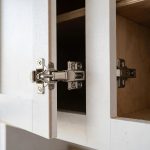
1. Clear and protect. Empty the counters below. Lay a towel along the counter to catch drips. 2. Dust first. Wipe cabinets with a dry microfiber cloth to remove loose dust. Cleaning dusty grease just makes mud. 3. Start at the top. Clean upper cabinets first, then lowers. Dirty water drips down, so work with gravity. 4. Doors, then frames. Remove what you can. Clean door fronts, then the face frames and sides. 5. Detail the edges. Use an old toothbrush around handles, hinges, and grooves where grime packs in. 6. Rinse. Wipe every surface with a clean damp cloth to remove cleaner residue. 7. Dry. Buff dry with a soft towel. Do not let water sit on the finish.
Take breaks between sections. Fresh eyes catch spots you missed.
What NOT to Do
When it comes to clean greasy kitchen cabinets without damage, getting the details right makes all the difference.
Do not soak the cabinets. Excess water is the top cause of finish damage. It swells wood, lifts laminate, and clouds clear coats. Damp cloths, never dripping ones.
Do not use abrasive scrubbers. Steel wool, scouring pads, and gritty powders scratch every finish. Even the rough side of a sponge can dull paint.
Do not mix chemicals. Bleach plus vinegar or ammonia creates toxic gas. Use one product at a time and rinse between different cleaners. Pros warn that TSP, ammonia, bleach, and strong bathroom cleaners are too harsh for ordinary grease buildup and can damage wood finishes (Southern Living, n.d.). For painted cabinets, a pH-neutral cleaner beats diluted vinegar on oily stains, and drying at once prevents cracking (Chowhound, n.d.).
Do not steam clean. Steam forces moisture into seams and joints. It can lift veneer and warp doors.
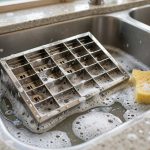
Do not ignore the range hood. If the hood filter is clogged with grease, more grease lands on the cabinets. Clean the metal filter regularly with hot water, dish soap, and baking soda, and the cabinets stay cleaner longer.
Keeping Cabinets Grease-Free
Many homeowners find that clean greasy kitchen cabinets without damage is easier than they expected once they know the basics.
Deep cleaning is occasional. Maintenance is what keeps cabinets looking good.
Wipe the cabinets near the stove monthly with a damp microfiber cloth. It takes five minutes and stops buildup before it hardens. Run the range hood fan every time you cook, and let it run a few minutes after you finish.
Wipe up splatters when they happen. Fresh grease wipes off easily. Old grease needs chemicals. A quick pass with a damp cloth after frying saves a deep clean later.
If your cabinets are due for a bigger refresh, see our guides on kitchen cabinet refinishing service cost in the USA, spray vs brush painting cabinets, and what it costs to paint oak cabinets gray.
Frequently Asked Questions
The key to clean greasy kitchen cabinets without damage is choosing the right approach for your space and budget.
What is the best homemade degreaser for cabinets?
Dish soap and hot water handle most grease safely. For tougher film, add vinegar to the mix or use a baking soda paste on spots. These are gentle on paint, wood, and laminate.
Can I use vinegar on all cabinet finishes?
Almost. Diluted vinegar is safe on sealed wood, paint, and laminate. Skip it on natural stone, waxed wood, and unsealed surfaces. When unsure, test a hidden spot.
How often should I degrease kitchen cabinets?
Wipe high-grease zones near the stove monthly. Deep clean the whole kitchen once or twice a year, depending on how much you cook. Heavy frying means more frequent cleaning.
Why are my cabinets still sticky after cleaning?
Sticky residue usually means cleaner was left on the surface. Rinse with a clean damp cloth and dry fully. If stickiness remains, the finish itself may be breaking down, which means it is time to repaint or refinish. With these steps, you can clean greasy kitchen cabinets without damage with confidence.
References
Chowhound. (n.d.). How to avoid damaging the finish of your cabinets when cleaning. https://www.chowhound.com/1858169/how-to-clean-kitchen-cabinets-without-damage/
Cubby. (n.d.). The best way to clean greasy wood kitchen cabinets. https://www.cubbyathome.com/best-way-to-clean-greasy-kitchen-cabinets-2-80043693
Hammer and a Headband. (n.d.). How to remove grease and restore vintage wood cabinets. https://www.hammerandaheadband.com/clean-restore-vintage-wood-cabinets/
Lush Homing. (n.d.). Best for cleaning grease from kitchen cabinets. https://lushhoming.com/best-for-cleaning-grease-from-kitchen-cabinets-2/
Pravda. (n.d.). How to remove grease from kitchen cabinets using a safe vinegar solution. https://english.pravda.ru/news/home/169602-safe-vinegar-grease-removal-kitchen-cabinets/
Southern Living. (n.d.). How to remove sticky grease from wood cabinets without damaging the finish. https://www.southernliving.com/how-to-clean-wood-cabinets-11981591
The Kitchn. (n.d.). I tested 5 ways to clean greasy cabinets: Here's the best. https://www.thekitchn.com/cleaning-showdown-greasy-cabinets-23393902
The Spruce. (n.d.). Greasy kitchen cabinets don't need heavy scrubbing. https://www.thespruce.com/how-to-degrease-kitchen-cabinets-11984547
Woodworking Advisor. (n.d.). How to clean wood cabinets without damaging the finish. https://woodworkingadvisor.com/how-to-clean-wood-kitchen-cabinets-without-damaging-the-finish/
Was this guide helpful?

About My Garden US
The My Garden US editorial team writes practical, in-depth home and garden guides for American homeowners — tested advice, no fluff.
You May Also Like

Shaker Cabinet Doors for Florida Homes USA: A Full Guide
March 5, 2026 20 views
French Door Refrigerators for Texas Homes: A Practical Buying Guide
May 20, 2026 20 views
Stainless Range Hoods for California Homes
August 3, 2026 17 views