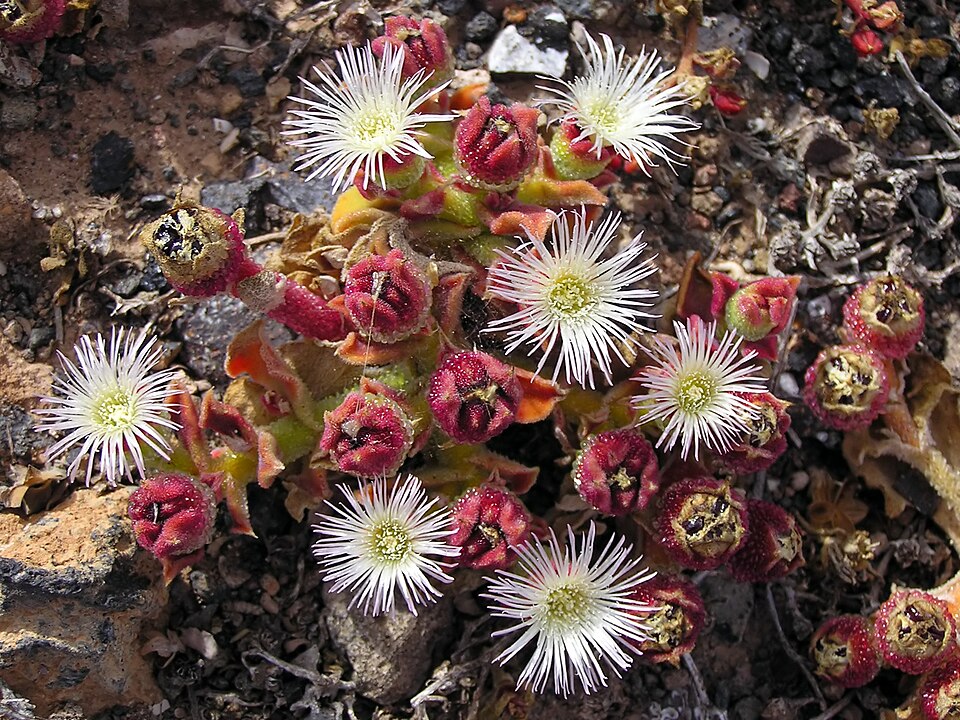
Ice plant looks like it belongs in a jewelry box. Its fleshy leaves are covered in tiny glistening bladder cells that sparkle like frost, and the leaves themselves are crisp, juicy, and faintly salty. Chefs prize it as a salad green unlike anything else. Gardeners learning how to grow ice plant get a conversation-piece crop that is as fun to grow as it is to eat.
Table of Contents
Table of Contents
The plant is a succulent from coastal South Africa, built for sun, sand, and dry air. That heritage defines its needs: sharp drainage, full sun, and a light hand with water. Give it those three things and it thrives. Grow it in heavy, wet soil and it rots before you ever taste a leaf.

Photo: Wikimedia Commons
Quick facts: Sun: full sun. Soil: sandy, well-drained. Water: low; avoid waterlogging. Surface sow; thin to 8 inches apart. Days to maturity: 60 to 75. Warm-season annual; rots in wet soil.
Choosing a Variety and Getting Started
When it comes to how to grow ice plant, getting the details right makes all the difference.
When it comes to how to grow ice plant, getting the details right makes all the difference.

Many homeowners find that how to grow ice plant is easier than they expected once they know the basics.
Ice plant seed is sold by specialty suppliers, usually just as ice plant or crystalline ice plant. There are no varieties to choose between for home gardeners. The seed is small and needs light to germinate, which determines the sowing method.
Plan for drainage first. Ice plant demands sharp drainage; mix sand or fine grit into heavy soil, or grow in raised beds or containers filled with a sandy mix. Cold, wet soil kills it faster than drought, so the bed preparation matters more than anything else you do. Before sowing, check your USDA zone planting dates on the planting calendar; ice plant is a warm-season annual.
If you have grown spinach for salads, ice plant is its crunchy succulent counterpart. Lettuce growers will appreciate a salad leaf that loves heat, and arugula shares the quick-crop rhythm.
When and How to Plant
Many homeowners find that how to grow ice plant is easier than they expected once they know the basics.
Many homeowners find that how to grow ice plant is easier than they expected once they know the basics.
The key to how to grow ice plant is choosing the right approach for your space and budget.
Sow ice plant in warm weather, about two weeks after your last spring frost. The seeds need light to germinate, so sow them on the surface of sandy, gritty soil and press gently without covering. Keep the seedbed lightly moist until the seedlings emerge, which takes a week or two in warm conditions.
Thin the seedlings to 6 to 8 inches apart once they are sturdy. The plants sprawl into low rosettes, and crowding restricts the airflow they need. Give them full sun from the start; shade makes them leggy and prone to rot.
The Old Farmer's Almanac planting calendar can confirm your sowing date. In warm climates, a second sowing in late summer extends the harvest into fall.
Soil and Sun
The key to how to grow ice plant is choosing the right approach for your space and budget.
With a little planning, how to grow ice plant can fit even a busy schedule.
Full sun and sandy, well-drained soil. This is the whole formula. Ice plant evolved on coastal sands, and it wants to feel that drainage under its roots. Mix coarse sand or fine gravel into the top several inches of the bed, or fill containers with a cactus-style mix amended with compost.
The plant even tolerates salty water, a legacy of its seaside origins, which makes it a curiosity for coastal gardeners. What it cannot tolerate is water sitting around the crown. Never let the bed stay soggy. Raised beds are the simplest insurance in rainy climates. Drainage guidance from the Clemson Home & Garden Information Center applies directly.
Its background under Mesembryanthemum crystallinum is listed in the USDA PLANTS Database. Warm-state growers can find succulent-crop advice through UF IFAS Gardening Solutions.
Watering and Feeding
With a little planning, how to grow ice plant can fit even a busy schedule.
Before you start, it helps to understand how how to grow ice plant works in real homes.
Water moderately at first, then back off. Young seedlings need steady moisture to establish, but mature plants tolerate dry spells and prefer to dry out between waterings. The bladder cells on the leaves store water, which is the plant's own reservoir.
Avoid overhead watering, which rots the glistening cells on the leaves and invites disease. Water at the base, in the morning, and let the foliage stay dry. Never let water sit around the crown; crown rot is the fastest killer of ice plant.
It needs almost no fertilizer. Too much nitrogen makes floppy, watery growth that rots easily. The compost in the planting mix is enough for the season. If the plants are compact and sparkling, they are fed. The University of Minnesota Extension makes the same lean-feeding point for succulent-type crops.
Care Through the Season
Before you start, it helps to understand how how to grow ice plant works in real homes.
A good plan for how to grow ice plant saves time, money, and frustration.
Keep the bed weeded and the air moving. Ice plant's low rosettes are easily overwhelmed by weeds, and crowded, airless conditions invite rot. A quick hand-weeding every couple of weeks and proper spacing handle both.
Aphids might cluster on new tips; blast them off with water. Slugs attack in damp climates, chewing the fleshy leaves; water in the morning and keep the bed tidy to discourage them. Otherwise, ice plant has few enemies. Its salty, succulent leaves are unappealing to most pests.
In rainy spells, rig temporary cover if you can, or at least make sure water drains away instantly. A week of soggy soil does more damage than a month of drought. This is a plant that forgives neglect and punishes kindness with the hose.
Harvest
A good plan for how to grow ice plant saves time, money, and frustration.
For most people, how to grow ice plant comes down to a few smart choices.
Harvest outer leaves once they are plump and covered in sparkling crystals. Take a few per plant so it keeps producing; the rosette keeps growing from the center. The leaves are crispest when harvested cool in the morning, though some growers prefer the afternoon, when the bladder cells are fullest and the crunch is at its peak. Try both and decide for yourself.
The mildly salty leaves stay crisp and are best eaten fresh in salads within a couple of days. Their sparkle makes them a garnish as much as a green; a few leaves transform a plain salad into something guests photograph. The flavor is clean, juicy, and faintly briny, like the seaside in a leaf.
Do not cook them at length. Brief wilting is fine, but long cooking collapses the texture that makes ice plant special. Raw or barely warmed is the way.
Serving Ice Plant
For most people, how to grow ice plant comes down to a few smart choices.
If you are new to how to grow ice plant, start with the simplest option and build from there.
Presentation is half the point. The glistening leaves look like they were dusted with crushed ice, and a salad containing them draws attention before anyone tastes a bite. Use the leaves whole as a bed for seafood, where the faint saltiness echoes the ocean. Scatter them over sliced citrus and avocado for a salad that tastes as bright as it looks. Chefs use ice plant as a garnish for sashimi and fine plates; at home, it elevates any summer salad into something guests remember.
The flavor is clean and lightly salty, juicy without being watery. It pairs naturally with seafood, citrus, and light vinaigrettes. Rich dressings overwhelm it; a squeeze of lemon and a thread of good oil are enough. Try it alongside grilled shrimp or scallops, where the crisp leaves contrast with the tender seafood. Or keep it simple: a plate of ice plant leaves with flaky salt is a snack in itself.
Harvest with serving in mind. Pick the plumpest, most crystalline leaves in the cool of the morning, rinse them gently, and use them within a day or two. They keep a few days in the refrigerator, but the sparkle fades with time. In containers on a sunny patio, a planting of ice plant is both a kitchen supply and a conversation piece; visitors always ask about the sparkling leaves, and handing them one to taste is a gardener's small joy.
Ice Plant in Containers
If you are new to how to grow ice plant, start with the simplest option and build from there.
When it comes to how to grow ice plant, getting the details right makes all the difference.
Containers are arguably the best home for ice plant. A wide, shallow pot with a gritty, fast-draining mix gives you complete control over the drainage this plant demands, and you can move the pot to the sunniest spot available. Terracotta is ideal; it breathes and dries out between waterings, which suits a succulent. Avoid oversized pots that stay soggy in the center.
The sparkling foliage makes ice plant a genuine ornamental. A pot of it on a sunny patio draws visitors like a magnet, and harvesting a few leaves for a salad straight from the pot is a small daily pleasure. Mix it with other succulents for a water-wise display, or give it a pot of its own where the crystalline leaves take center stage.
In rainy climates, the ability to move the pot under cover during wet spells is a lifesaver. A week of rain that would rot an in-ground planting is no problem when you can slide the pot onto a porch. Just remember to move it back into full sun afterward; ice plant sulks in shade even briefly. Water container plants at the base, let the mix dry between waterings, and the pot will produce all season.
Troubleshooting
When it comes to how to grow ice plant, getting the details right makes all the difference.
Many homeowners find that how to grow ice plant is easier than they expected once they know the basics.
Seedlings damp off or rot. Too much water or poor drainage. Sow on the surface of gritty soil, water lightly, and improve drainage.
Plants get leggy and pale. Too little sun. Ice plant needs full sun; move containers or thin surrounding plants.
Leaves lose their sparkle and go soft. Overwatering or overhead watering. Water at the base, let the soil dry between waterings, and keep foliage dry.
Slugs chew the rosettes. Damp conditions. Water in the morning, tidy the bed, and handpick slugs in the evening.
Ice plant is the sparkling salad succulent for gardeners with sun and sandy soil: crisp, salty, and beautiful. For a more traditional salad green, lettuce is the classic bedfellow. More on unusual salad crops is available from Gardenia.net, and background through the USDA National Agricultural Library.
References
Many homeowners find that how to grow ice plant is easier than they expected once they know the basics.
UF IFAS Gardening Solutions. (n.d.). Growing specialty greens in Florida. https://gardeningsolutions.ifas.ufl.edu/
Old Farmer's Almanac. (n.d.). Growing greens in home gardens. https://www.almanac.com/
Clemson Cooperative Extension. (n.d.). Home & Garden Information Center. https://hgic.clemson.edu/
Missouri Botanical Garden. (n.d.). Plant finder. https://www.missouribotanicalgarden.org/
Was this guide helpful?

About My Garden US
The My Garden US editorial team writes practical, in-depth home and garden guides for American homeowners — tested advice, no fluff.
You May Also Like

How to Grow Orach: Colorful Heat-Tough Greens
October 21, 2026 18 views
How to Grow Milk Thistle Safely
November 13, 2026 11 views
Morning Glory Seeds USA Online Deals: A Plain Guide to Buying Fresh Seed and Growing Bright Blooms
February 5, 2026 15 views