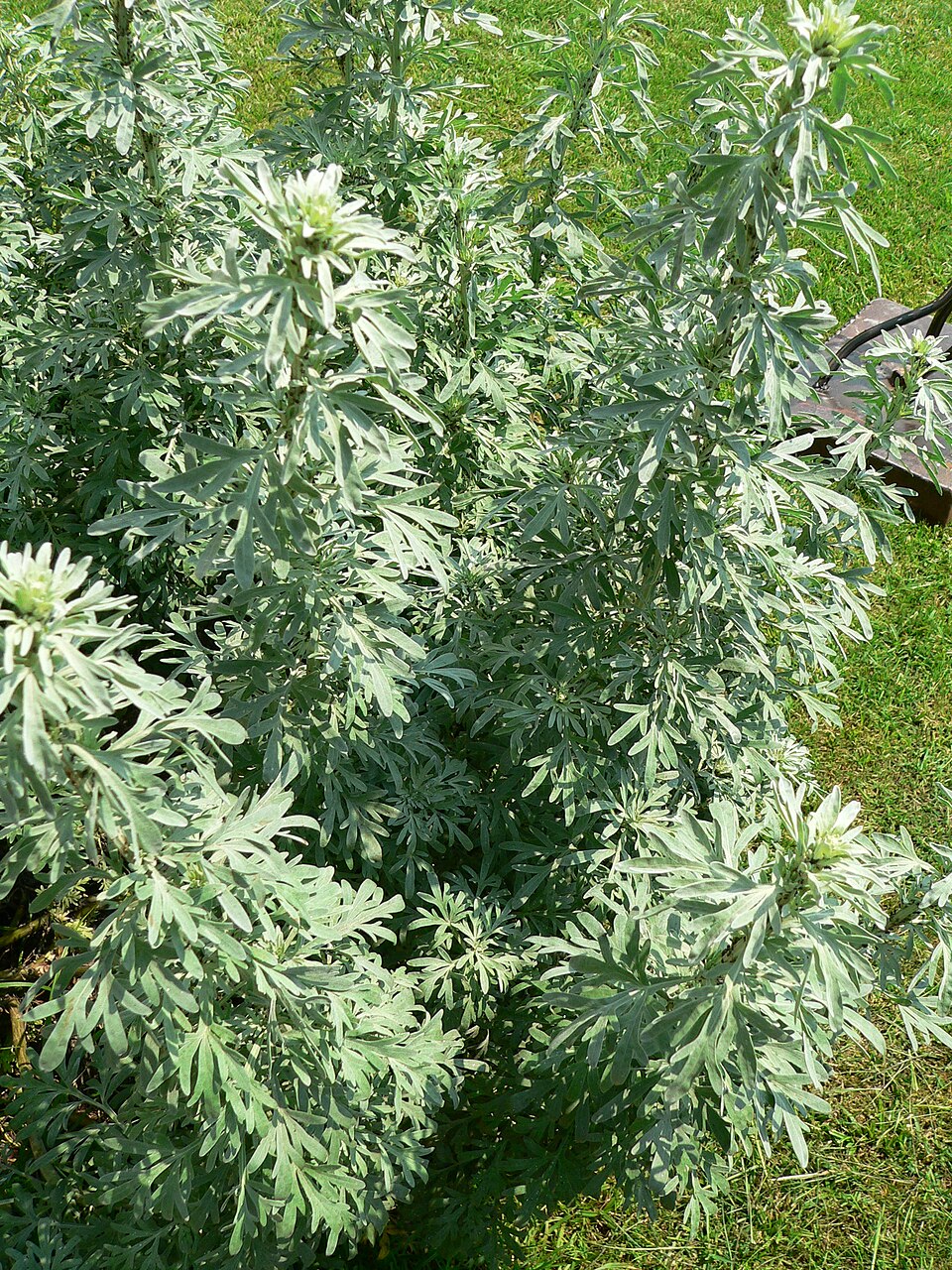
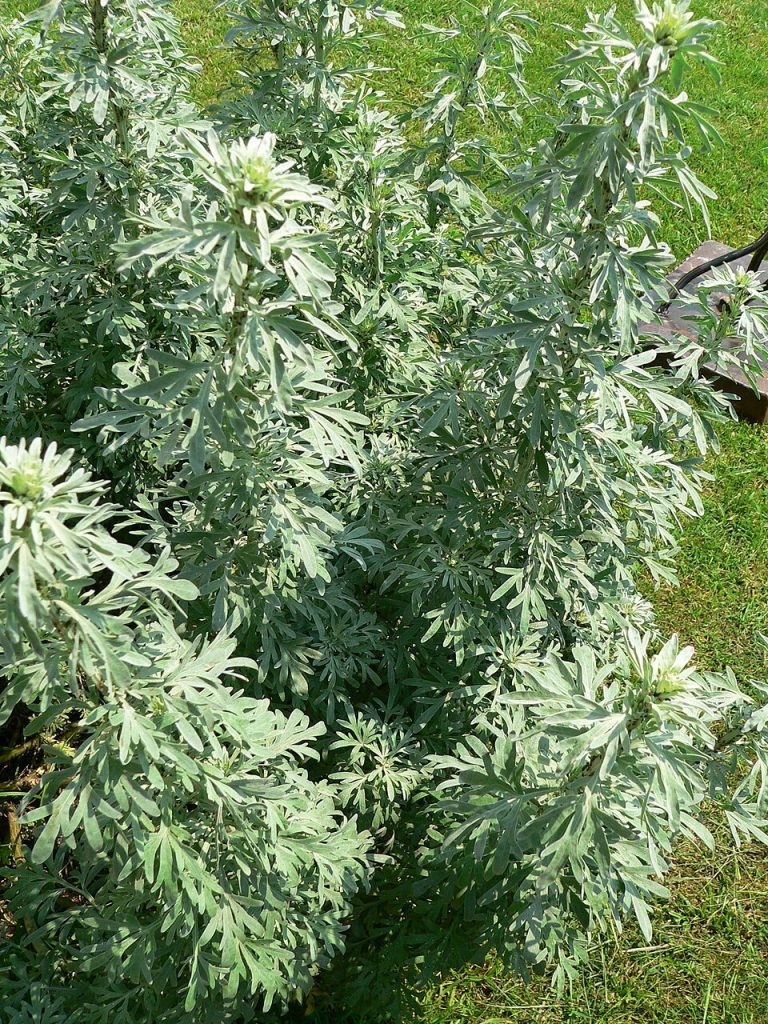
Wormwood - Artemisia absinthium - is the most dramatic foliage plant in the herb garden: mounds of finely cut, silvery-gray leaves that glow against green neighbors, topped in late summer with wands of tiny yellow flowers. It is also intensely, famously bitter - the "bitter as wormwood" of the old proverbs - and that bitterness makes it useful far beyond ornament. Learning how to grow wormwood is about giving a Mediterranean perennial the sun and drainage it demands and respecting a plant that does not do anything halfway.
Table of Contents
Table of Contents
This is the herb of absinthe legend and old-time vermouth, of moth-repelling sachets and garden pest sprays. It is not a casual tea herb - the bitterness is overwhelming and the plant is potent - but as a garden plant it is superb: drought-tough, deer-proof, pest-repelling, and beautiful for three seasons. Plant it for the silver foliage and keep it for everything else.

Photo: Wikimedia Commons
Getting Started: A Shrubby Perennial Herb
When it comes to how to grow wormwood, getting the details right makes all the difference.

Many homeowners find that how to grow wormwood is easier than they expected once they know the basics.
Wormwood is a woody-based perennial, hardy in zones 4 through 9, growing two to four feet tall with a shrubby habit. Unlike its cousin mugwort, it stays in a clump - it does not run rampantly by rhizomes, which makes it far better behaved in the border. The USDA PLANTS database documents the species and its long naturalization in North America, where it has grown in herb gardens for centuries.
Buy nursery transplants or grow from seed - sow indoors about six weeks before your last spring frost, barely covering the tiny seed, or direct sow around the last frost date. Seedlings are slow at first, then take off. Named selections exist, but the straight species is the classic and the toughest.
One siting warning matters more than any other: keep wormwood away from vegetables. Its roots release compounds that stunt neighboring plants - a real allelopathic effect, not folklore. Give it its own spot in the herb border or the ornamental bed, well away from the tomatoes. This is the plant's one difficult trait, and planning around it from the start saves trouble.
When and How to Plant
Many homeowners find that how to grow wormwood is easier than they expected once they know the basics.
The key to how to grow wormwood is choosing the right approach for your space and budget.
Set out transplants around your last spring frost, spacing them 18 to 24 inches apart - they grow into substantial mounds and need the room. The Almanac planting calendar helps you find that frost date for timing. If you want to check your USDA zone planting dates, our planting calendar will help you find that frost date.
From planting to harvestable growth runs about 90 to 120 days, but wormwood is a perennial investment - first-year plants establish, second-year plants are magnificent, and a well-sited plant lives for many years. Renew woody, leggy plants every few years from cuttings: take softwood cuttings in early summer, root them in sandy mix, and you have free replacements that stay vigorous.
Fall planting works in mild zones, giving roots a head start, but spring is safer everywhere - the plants establish through the growing season and face their first winter with mature roots. The Old Farmer's Almanac perennial-planting guidance favors spring for woody herbs in cold zones.
Soil and Sun
The key to how to grow wormwood is choosing the right approach for your space and budget.
With a little planning, how to grow wormwood can fit even a busy schedule.
Full sun - no exceptions. Wormwood wants maximum light for the dense, silvery growth that makes it beautiful; shade makes it leggy, green, and weak. The hottest, sunniest spot in the herb garden is the right spot. It evolved on dry Mediterranean hillsides, and it shows.
Very well-drained, even poor soil is ideal. Wormwood hates wet feet - raised beds, slopes, and sandy ground suit it perfectly. Do not enrich the soil: fertility makes soft, sappy growth that flops and dies back in winter, while lean soil grows the tight, silvery, woody mounds that survive cold. This is the opposite of hungry herbs, and the most common mistake is treating it like one. Like rosemary, wormwood's motto is sun, drainage, and restraint.
A near-neutral to slightly alkaline pH suits it. Very acidic soil can be limed lightly, but this is fine-tuning - drainage and sun matter a hundred times more than pH.
Watering and Feeding
With a little planning, how to grow wormwood can fit even a busy schedule.
Before you start, it helps to understand how how to grow wormwood works in real homes.
Water sparingly once established. New transplants need steady moisture for a few weeks, but after that, wormwood is deeply drought-tolerant - overwatering rots the crown faster than drought ever hurts it. In most climates, rainfall alone suffices; in arid regions, a deep watering every few weeks in the hottest weather is plenty. When in doubt, do not water.
Do not fertilize. This is absolute: feeding wormwood makes soft growth that flops, loses its silver color, and dies back in winter. The plant's beauty and toughness come from lean conditions. If you have been feeding the bed for neighboring plants, the wormwood will tolerate it, but it will never need it and will look better without it.
Mulch lightly with gravel or not at all - organic mulches hold moisture against the crown, which wormwood dislikes. A gravel mulch looks right with the silver foliage and keeps the crown dry. The University of Minnesota Extension notes that Mediterranean herbs share this crown-dryness requirement.
Care Through the Season
Before you start, it helps to understand how how to grow wormwood works in real homes.
A good plan for how to grow wormwood saves time, money, and frustration.
Prune back by a third after flowering to keep the mound compact and silvery. Without this haircut, wormwood grows leggy, the center goes woody and bare, and the plant looks tired by late summer. With it, you get dense new silver growth that carries the plant handsomely into fall. The pruned foliage is your harvest - nothing wasted.
Shear lightly in spring to shape the mound as new growth starts, removing any winter-damaged tips. Do not cut into old, leafless wood - wormwood resprouts reluctantly from bare stems. The spring shaping is cosmetic; the post-flowering cut is structural.
Few pests touch the bitter foliage - deer will not eat it, rabbits avoid it, and most insects leave it alone. This is why it works so well as a border plant: the intensely bitter leaves repel many garden pests from neighboring plants too. Ring a vulnerable bed with wormwood and watch the pest pressure drop. The Clemson Home and Garden Information Center notes aromatic bitter herbs among the companion-planting toolkit.
Renew woody plants every few years. Wormwood gets leggy and bare-centered with age no matter how well you prune; taking cuttings and starting fresh plants keeps the planting vigorous. Think of it as a five-year plant with free replacements, not a permanent fixture.
Harvest
A good plan for how to grow wormwood saves time, money, and frustration.
For most people, how to grow wormwood comes down to a few smart choices.
Harvest the leafy tops just as the yellow flowers open - this is the peak moment for the bitter compounds. Cut stems with shears in the morning after the dew dries, wearing gloves - the oils irritate some people's skin, and the bitterness transfers to everything you touch. Bundle the stems and hang them upside down in a warm, airy spot out of direct sun; they dry quickly and keep their potency well.
The dried herb has traditional uses that demand respect: bitter tonics, sachets, and garden pest sprays. Wormwood is powerfully bitter and not a casual tea herb - the old herbals prescribe it in measured amounts for specific purposes, and modern herbalists do the same. The USDA National Agricultural Library preserves the historical texts documenting its uses and its potency.
The most immediately useful harvest is the pest spray: steep the dried leaves in hot water, strain, cool, and spray on aphid- and flea-beetle-troubled crops. It is a genuine organic tool - the bitterness that makes it undrinkable makes it effective. Like sage grown for the kitchen, wormwood earns its space by being useful, not just beautiful.
Troubleshooting
For most people, how to grow wormwood comes down to a few smart choices.
If you are new to how to grow wormwood, start with the simplest option and build from there.
Center died out, all growth at the edges. Old, woody plant - normal after several years. Take cuttings from the vigorous edge growth, root them, and start fresh. Pruning harder each year delays this but does not prevent it forever.
Soft, floppy, green instead of silver. Too rich, too shady, or too wet - the classic over-pampered wormwood. Move toward full sun and lean, dry soil, stop fertilizing, and cut back hard. Silver comes from stress; pampering makes green.
Crown rotted. Waterlogged soil or mulch piled against the crown. Improve drainage, pull mulch back from the stems, and in heavy soil, plant on a mound. There is no reviving a rotted crown - replace the plant and fix the drainage.
Stunting neighboring vegetables. The allelopathic effect - real and documented. Move the wormwood or move the vegetables; they cannot share a bed. Give wormwood its own space at least a few feet from anything you eat. Gardenia.net growing guides flag this siting issue clearly.
Winter dieback. In the coldest zones, harsh winters kill top growth even on established plants. It usually resprouts from the base in spring - wait before declaring it dead. Clemson Cooperative Extension covers Mediterranean herbs for southern gardeners, including winter-protection basics.
Wormwood is the silver exclamation point of the sunny herb border - plant it lean, prune it yearly, keep it from the vegetables, and harvest the bitter tops with gloves on. The Missouri Botanical Garden rates it among the finest foliage plants for dry, sunny sites. Beautiful, useful, and utterly uncompromising - like all the best herbs.
References
If you are new to how to grow wormwood, start with the simplest option and build from there.
When it comes to how to grow wormwood, getting the details right makes all the difference.
- Gardenia. (n.d.). Wormwood growing guide. https://www.gardenia.net/
- Missouri Botanical Garden. (n.d.). Plant finder. https://www.missouribotanicalgarden.org/
- U.S. Department of Agriculture. (n.d.). PLANTS database. https://plants.usda.gov/home
- University of Minnesota Extension. (n.d.). Growing perennial herbs. https://extension.umn.edu/
Many homeowners find that how to grow wormwood is easier than they expected once they know the basics.
When it comes to how to grow wormwood, getting the details right makes all the difference.
Was this guide helpful?

About My Garden US
The My Garden US editorial team writes practical, in-depth home and garden guides for American homeowners — tested advice, no fluff.
You May Also Like

Heirloom Vegetable Seeds American Homes Guide: Growing Classic Varieties at Home
August 4, 2026 20 views
Lavender Seed Packets for California Homes: A Simple Guide
January 31, 2026 17 views
How to Grow Goldenseal: Complete USA Guide
November 11, 2026 11 views