When it comes to how to grow rue, getting the details right makes all the difference.
Table of Contents
Table of Contents
Photo: Wikimedia Commons
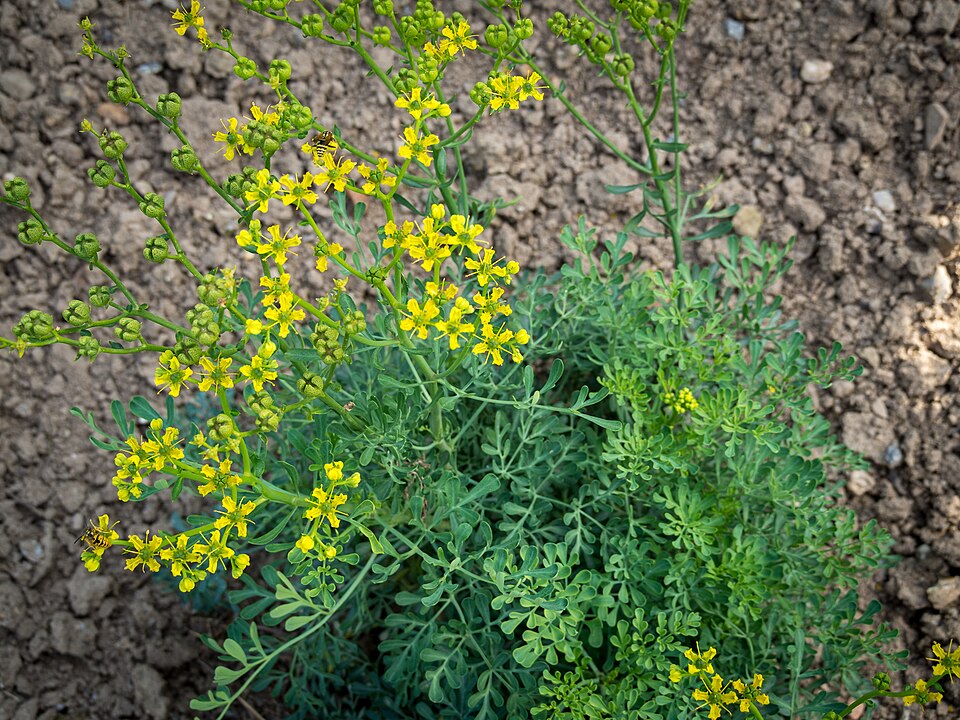
Rue has grown in herb gardens since ancient times, valued for its blue-gray beauty and powerful scent. The finely divided foliage looks like a gray-green fern that never wilts, and the yellow flowers feed beneficial insects in summer. It is one of the toughest perennials for hot, poor, dry ground, thriving where pampered herbs fail. Grow it for looks and fragrance, handle it with gloves, and never eat it.
Rue is the contrarian of the herb garden. It dislikes rich soil, needs no fertilizer, shrugs off drought, and repels most insects with its bitter oils. The blue-gray, finely divided foliage forms neat mounds that look good all season, and the yellow flowers feed beneficial insects. It is ornamental, aromatic, and historic, grown in gardens for centuries. Two cautions: it is not a culinary herb, and the leaf oils can irritate skin in sunlight, so wear gloves. Learning how to grow rue gives you a tough, beautiful perennial for the hottest, poorest corner of the garden.
The plant is Ruta graveolens, hardy in zones 4 through 9. The USDA PLANTS Database documents the species. It is a woody perennial that resents pampering; neglect grows the best plants.
Getting Started
When it comes to how to grow rue, getting the details right makes all the difference.

Many homeowners find that how to grow rue is easier than they expected once they know the basics.
Sow seeds on the soil surface; they need light to germinate. Start indoors about six weeks before your last spring frost, pressing seed onto damp mix and barely covering it. Germination is slow and uneven, so sow generously. Alternatively, buy nursery transplants, which skip the wait entirely.
Set transplants 12 to 18 inches apart in full sun. Choose the poorest, best-drained spot in the herb garden: a gravelly strip, a sandy bank, the edge of a path. Overfed rue grows floppy and dies back in winter, so skip the compost and fertilizer entirely. This is one plant where poor soil is the prescription.
Root 4-inch stem cuttings in sand in summer for free plants. They strike easily. The Old Farmer's Almanac propagation guides cover the cutting technique that works for all woody herbs.
When and How to Plant
Many homeowners find that how to grow rue is easier than they expected once they know the basics.
The key to how to grow rue is choosing the right approach for your space and budget.
Set out transplants in spring after all danger of frost has passed, right around the last frost date. Cool spring weather suits establishment. Direct-sow outdoors at the same time, pressing seed onto the surface.
Rue is a long-lived perennial, so plant it where it can stay. It dislikes moving once established. A permanent spot at the front of a border or in a dedicated herb bed works. Check your frost dates on the Old Farmer's Almanac planting calendar or your USDA zone planting dates.
Soil and Sun
The key to how to grow rue is choosing the right approach for your space and budget.
With a little planning, how to grow rue can fit even a busy schedule.
Full sun and well-drained, even poor, dry soil. Rue tolerates gravelly, sandy, and alkaline ground. What it cannot stand is rich, wet soil; fertility makes it floppy and winter-kill prone. Do not amend the planting hole with compost. Do not fertilize. Ever.
Sharp drainage matters most in winter. Wet crowns rot in cold soil. In heavy clay, plant on a mound or in a raised bed with gritty fill. The Missouri Botanical Garden plant profiles describe the lean-soil preference plainly.
Fellow tough herbs share the bed. Southernwood and lavender want the same sun and sharp drainage, making a handsome silver-foliage grouping.
Watering and Feeding
With a little planning, how to grow rue can fit even a busy schedule.
Before you start, it helps to understand how how to grow rue works in real homes.
Water only until established. Mature plants are very drought tolerant. A deep watering in extended drought is plenty; regular watering in normal weather is unnecessary and counterproductive. Overwatered rue grows soft and dies back.
Feed nothing. No compost, no fertilizer, no exceptions. Rue is one of the few garden plants that genuinely does better hungry. If the foliage looks blue-gray and compact, the plant is telling you the conditions are right. The Clemson Home & Garden Information Center lists rue among herbs that want lean culture.
Care Through the Season
Before you start, it helps to understand how how to grow rue works in real homes.
A good plan for how to grow rue saves time, money, and frustration.
Wear gloves when handling it. The sap causes blistering rashes in sunlight on sensitive skin, a condition called phytophotodermatitis. Long sleeves on bright days are wise. This is the plant's defense, and it works on gardeners too.
Prune lightly to keep the blue-gray mound compact. Remove dead wood in spring where new growth begins, and shear lightly after flowering. Do not cut into old wood that shows no green; rue resprouts poorly from bare stems. Few pests bother rue; its bitter oils repel most insects, and it can shelter tender plants nearby.
In cold zones, the top might die back in hard winters. Mulch the crown lightly and wait; established plants usually resprout from the base. Clemson Cooperative Extension notes that woody herbs benefit from light winter protection at the edge of their range.
Harvest
A good plan for how to grow rue saves time, money, and frustration.
For most people, how to grow rue comes down to a few smart choices.
Snip sprigs before flowering for the strongest scent. The aromatic oils peak just before the yellow blooms open. Dry the sprigs for wreaths or moth-repelling sachets; rue's strong scent drives moths away from stored woolens.
Rue is ornamental and aromatic but toxic in quantity. It is not a culinary herb, so grow it for fragrance and looks, not the kitchen. Keep it away from curious children who might taste the pretty leaves. The dried foliage holds its scent for months in sachets and drawers.
Take cuttings in summer to propagate, as noted. A single healthy plant supplies all the cuttings a gardener needs.
Rue Through the Seasons
For most people, how to grow rue comes down to a few smart choices.
If you are new to how to grow rue, start with the simplest option and build from there.
Spring is for planting and pruning. Set out transplants after the last frost in the poorest, best-drained spot you have. Cut back winter damage to where new growth begins, and shear lightly for shape. Do not feed; hungry soil grows the most compact, aromatic plants. Wear gloves from the first handling.
Summer needs nothing. Rue shrugs off heat and drought that defeat other herbs. The yellow flowers open and the beneficial insects arrive. Shear after flowering if you want tidiness, or leave the seed heads. Water only in extreme drought; normal rainfall is plenty.
Fall is for cuttings and cleanup. Root four-inch stem cuttings in sand for free plants. Cut back any straggly growth, but leave the woody framework; rue resprouts poorly from bare old wood. The evergreen-ish foliage holds into cold weather.
Winter in zones 4 through 9 needs only sharp drainage. Wet crowns rot in cold soil, so a mound or raised bed is the best winter protection. Mulch the crown lightly in the coldest zones. The plant rests, blue-gray and still, until spring.
Using Rue
If you are new to how to grow rue, start with the simplest option and build from there.
When it comes to how to grow rue, getting the details right makes all the difference.
Snip sprigs before flowering for the strongest scent, and dry them for wreaths and moth-repelling sachets. The bitter oils that make rue unpalatable also drive moths from woolens. Dried rue holds its fragrance for months in drawers and closets. In the garden, the blue-gray mounds edge paths beautifully and shelter tender neighbors with their insect-repelling oils.
Troubleshooting
When it comes to how to grow rue, getting the details right makes all the difference.
Floppy, dying-back plants mean too much fertility or too much water. Move to leaner, drier ground and stop feeding. Rotting crowns mean wet winter soil; improve drainage or plant on a mound.
Skin irritation means you handled it bare-handed in sun. Wear gloves; the reaction fades but it is unpleasant. Poor germination means the seed was buried; surface-sow with light.
Rue is hardy and trouble-free in zones 4 through 9 given sun and drainage. Outside that range it struggles: too cold in the far North, too hot and humid in the deep South. The USDA National Agricultural Library indexes herb research, and Gardenia.net growing guides note the handling precautions.
Plants that die back in winter might have suffered wet crowns, not cold. Improve drainage before replanting; a gritty mound solves most winter losses. In heavy clay, rue belongs in a raised bed, not in the ground.
Leggy growth with weak color means too much fertility or shade. Move to full sun and lean soil, and stop all feeding. Rue tells you plainly what it wants: sun, drainage, and neglect.
Skin rashes come from handling the plant bare-handed in sunlight. The sap causes blistering on sensitive skin. Wear gloves and long sleeves; the reaction fades, but prevention is painless.
For propagation, summer cuttings root fastest in warm weather; take four-inch stems, strip the lower leaves, and stick them in damp sand under light shade. Most root within weeks. A single mother plant can supply a whole herb garden's edging in one season.
Site rue where its scent works hardest: along paths, near seating, and at the front of borders where brushing is constant. The fragrance releases on contact, so placement determines how often you enjoy it. A neglected corner becomes a destination with one well-placed plant.
Old plants develop woody bases that resent hard pruning into bare wood; always cut back to where you see green shoots emerging. A yearly light shearing keeps the plant compact without ever needing drastic renovation. Little and often is the rule with woody herbs.
Water newly planted rue sparingly; the number one killer of new plants is kindness with the hose. Let the soil dry between waterings from the start, and the plant develops the deep roots that make it indestructible later.
References
Clemson University Cooperative Extension. (n.d.). Home & Garden Information Center. https://hgic.clemson.edu/
Missouri Botanical Garden. (n.d.). Plant finder. https://www.missouribotanicalgarden.org/
U.S. Department of Agriculture. (n.d.). PLANTS database. https://plants.usda.gov/home
University of Minnesota Extension. (n.d.). Yard and garden. https://extension.umn.edu/
Was this guide helpful?

About My Garden US
The My Garden US editorial team writes practical, in-depth home and garden guides for American homeowners — tested advice, no fluff.
You May Also Like

Native Grass Seed for California Homes: A Guide to a Lawn That Loves Dry Weather
February 20, 2026 21 views
How to Grow Aronia Berries: USA Shrub Guide
October 10, 2026 25 views
Fiddle Leaf Figs Buying Guide USA: Pick a Healthy Plant
June 23, 2026 16 views