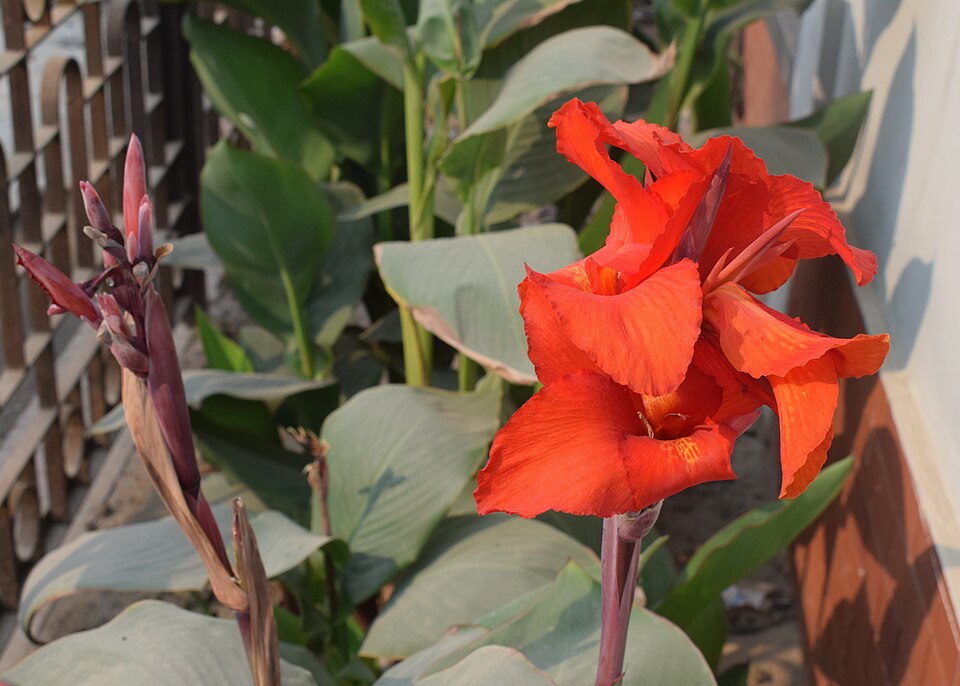
Canna lilies bring the tropics to any garden. Their huge paddle-shaped leaves, sometimes striped or bronze, and their bold red, orange, or yellow blooms create a lush, jungle look that nothing else in the temperate garden quite matches. They are also nearly indestructible once established, shrugging off heat that flattens fussier flowers.
Table of Contents
Table of Contents
This guide covers how to grow canna lilies from rhizomes to winter storage. They are hardy in zones 7 through 11; in colder regions gardeners lift the rhizomes each fall and store them frost-free. Cannas are water hogs and heavy feeders, which makes them wonderfully simple: give them heat, moisture, and food, and they do the rest. zinnias and marigolds make bright companions at their feet.

Photo: Wikimedia Commons
Choosing a Variety
When it comes to how to grow canna lilies, getting the details right makes all the difference.

Many homeowners find that how to grow canna lilies is easier than they expected once they know the basics.
Cannas are sold as named hybrids of Canna x generalis in a riot of colors. Tropicanna types have striped orange-and-green foliage that looks good even without flowers. Dwarf varieties stay two to three feet tall for containers, while giants reach six feet or more for the back of the border.
Buy firm, plump rhizomes in spring with visible eyes. Avoid shriveled or moldy stock. One rhizome multiplies into a clump within a season, so a few starters go a long way. The Missouri Botanical Garden plant finder lists canna cultivars by height and foliage color.
For containers, choose dwarf varieties that top out at two to three feet; giants in pots blow over and look out of proportion. For the back of the border, the six-foot giants create the true jungle effect. Match the variety's height to its job. The University of Minnesota Extension container flower guides stress proportion when choosing varieties.
When and How to Plant
Many homeowners find that how to grow canna lilies is easier than they expected once they know the basics.
The key to how to grow canna lilies is choosing the right approach for your space and budget.
Plant canna rhizomes horizontally three to four inches deep and about a foot apart, after all danger of frost has passed and the soil is warm. Cannas demand heat to get going; planted in cold soil they sit and sulk or rot. In cold regions, start rhizomes indoors in pots about six weeks before the last frost for a head start.
Choose the sunniest, moistest spot you have. Cannas thrive in rich, even boggy soil and are one of the few plants happy at a pond's edge. check your USDA zone planting dates to confirm your planting week. From seed, soak for twenty-four hours and nick the hard coat for germination, though rhizomes are far easier. The Old Farmer's Almanac bulb guides cover warm-season rhizome planting.
Soil and Sun
The key to how to grow canna lilies is choosing the right approach for your space and budget.
With a little planning, how to grow canna lilies can fit even a busy schedule.
Cannas want full sun and rich, moist soil. They are among the hungriest and thirstiest of all garden plants, so hold nothing back: work generous compost or rotted manure into the bed before planting. They tolerate clay and even standing water better than almost any ornamental.
A near-neutral pH suits them. In sandy soil, add extra organic matter to hold the moisture cannas crave. Full sun produces the strongest growth and best bloom; in shade they stretch and flower poorly. The Clemson HGIC tropical plant pages recommend the same rich, wet bed.
At the pond's edge, cannas tolerate soil that stays soggy, making them one of the few ornamentals for that tricky spot. Plant them just above the waterline in rich mud and they thrive where other flowers drown. The USDA PLANTS Database notes cannas' tolerance of wet sites.
Watering and Feeding
With a little planning, how to grow canna lilies can fit even a busy schedule.
Before you start, it helps to understand how how to grow canna lilies works in real homes.
Water generously all season. Cannas are water hogs and sulk in dry soil, with leaf edges browning and blooms stalling. In hot weather, a deep soaking every few days is not too much. Mulch heavily to hold moisture.
Feed heavily with compost or balanced fertilizer every few weeks for the biggest leaves and boldest blooms. This is one plant you almost cannot overfeed. Container cannas need even more frequent feeding, since watering leaches nutrients fast. If leaves are lush and new flower stalks keep rising, you are feeding enough. black-eyed susans nearby enjoy the same rich treatment. The Clemson Cooperative Extension notes cannas among the heaviest feeders in the flower garden.
Care Through the Season
Before you start, it helps to understand how how to grow canna lilies works in real homes.
A good plan for how to grow canna lilies saves time, money, and frustration.
Deadhead spent flowers to keep new buds coming. Snap off the faded blooms, and when a whole flower stalk finishes, cut it to the ground to make room for the next. Watch for canna leaf rollers, caterpillars that stitch the leaves shut with silk; unroll and crush them or spray Bt. Japanese beetles chew the blooms in bad years; shake them into soapy water in the morning.
Cannas multiply fast. Divide crowded rhizome clumps each spring when replanting, and you will have free plants to expand the bed or share. In freezing regions, dig rhizomes after frost: cut back the tops, lift carefully, and store frost-free in barely moist peat. The UF IFAS Gardening Solutions site has photos of leaf roller damage.
Each spring, divide the crowded clumps before replanting. A clump left undivided for years blooms less and the center dies out. Sharp divisions with at least one eye each replant easily, and the extras make fine gifts. The Old Farmer's Almanac planting calendar helps schedule spring division against your last frost.
Harvest
A good plan for how to grow canna lilies saves time, money, and frustration.
For most people, how to grow canna lilies comes down to a few smart choices.
Cut the dramatic blooms for tropical arrangements when the flowers are fully open. They last several days in water. Strip the lower leaves and recut the stems for best vase life. The huge leaves also work in large summer bouquets as dramatic greenery.
In fall, after frost blackens the foliage in cold regions, cut the tops and dig the rhizomes. Let them dry for a day, then store in boxes of barely damp peat in a frost-free spot. Check monthly and discard any that soften. In zones 7 and warmer, mulch the bed and leave them in the ground. The Gardenia.net guides walk through rhizome storage.
Troubleshooting
For most people, how to grow canna lilies comes down to a few smart choices.
If you are new to how to grow canna lilies, start with the simplest option and build from there.
No sprouting after planting usually means the rhizomes went into cold soil or rotted in waterlogged ground. Wait for warmth, plant in drained soil, and buy firm stock. Small plants with pale leaves are hungry or thirsty; feed and water heavily.
Leaf rollers stitching leaves shut are the signature canna pest. Open the rolled leaves and destroy the caterpillars. Rust spots on leaves in humid weather are cosmetic; remove badly affected leaves. If rhizomes freeze in a marginal zone, the bed needed deeper mulch or lifting; in zone 7, a thick winter mulch usually carries them through. The USDA National Agricultural Library hosts references on overwintering tender perennials.
Designing with Cannas
If you are new to how to grow canna lilies, start with the simplest option and build from there.
When it comes to how to grow canna lilies, getting the details right makes all the difference.
Cannas are architecture, not just flowers. Use them where you need height, bold texture, or a tropical exclamation point: behind a perennial border, flanking a doorway, or in a big pot on the patio. Their huge leaves contrast beautifully with fine-textured neighbors like ornamental grasses, ferns, or asparagus fern. Bronze-leaf varieties glow against chartreuse companions like sweet potato vine.
In the border, plant cannas in groups of three or five, not as single specimens; a clump reads as a deliberate design, while one lonely canna looks lost. Let them rise behind lower flowers like zinnias and marigolds, which hide the cannas' sometimes-ragged lower leaves. At the pond or in a rain garden, mass them for a lush, watery look. However you use them, give each plant its space; crowded cannas compete and the display suffers.
Overwintering Cannas in Cold Climates
When it comes to how to grow canna lilies, getting the details right makes all the difference.
Many homeowners find that how to grow canna lilies is easier than they expected once they know the basics.
Where winters drop below freezing, cannas survive as stored rhizomes, and the routine is straightforward. After the first hard frost blackens the foliage, cut the tops to a few inches and dig the rhizome clumps carefully with a fork. Work wide; the clumps are bigger than you expect and the rhizomes snap.
Let the clumps dry for a day in a sheltered spot, then pack them in boxes of barely damp peat, vermiculite, or wood shavings. The packing should be just moist enough to prevent shriveling, never wet enough to rot. Store the boxes in a frost-free spot around 40 to 50 degrees: a cool basement, an unheated garage that stays above freezing, or a root cellar.
Check the rhizomes monthly through winter. If they shrivel, mist the packing lightly; if any soften or mold, remove them before the rot spreads. In spring, after all danger of frost has passed and the soil is warm, divide the clumps so each piece has at least one eye and replant. Each year the clumps multiply, so one purchase becomes many plants. In zone 7, a thick winter mulch often carries cannas through in the ground, but lifting is the safe bet anywhere colder.
Canna lilies are the closest thing to a sure bet in the summer garden. Heat, water, food, and sun: give them all four in abundance and they respond with jungle foliage and months of bold blooms. Divide the multiplying clumps each spring, lift them where winters freeze, and enjoy the most tropical look a temperate garden can grow.
References
Missouri Botanical Garden. (n.d.). Canna hybrids. https://www.missouribotanicalgarden.org/
Clemson Cooperative Extension. (n.d.). HGIC: Tender bulbs. https://hgic.clemson.edu/
Old Farmer's Almanac. (n.d.). Growing cannas: planting guide. https://www.almanac.com/
UF IFAS Gardening Solutions. (n.d.). Flower gardening. https://gardeningsolutions.ifas.ufl.edu/
Was this guide helpful?

About My Garden US
The My Garden US editorial team writes practical, in-depth home and garden guides for American homeowners — tested advice, no fluff.