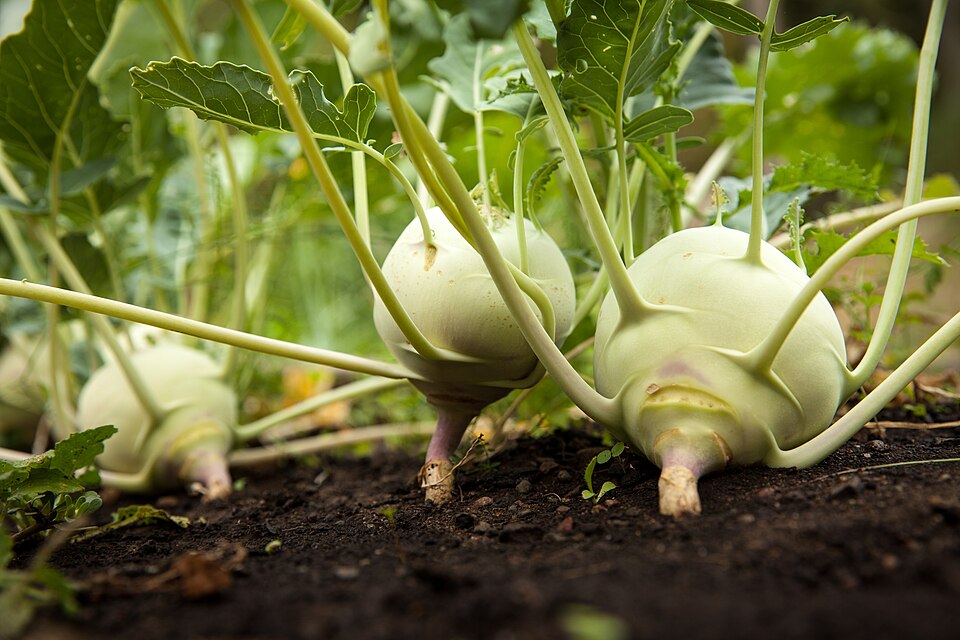
Kohlrabi looks like something from another planet: a pale green or purple bulb hovering above the ground on a stalk, with leaves sprouting from the top like antennae. It tastes far better than it looks. The swollen stem is crisp, mild, and sweet, somewhere between a turnip and a cabbage heart, and it is wonderful raw in salads or roasted with olive oil.
Table of Contents
Table of Contents
This guide shows how to grow kohlrabi in home gardens across the United States. It is a fast, cool-season brassica that goes from seed to harvest in about two months, which makes it one of the quickest payoffs in the vegetable garden. Grow it in spring and again in fall, and harvest the bulbs young. The single most important rule: pick them small. An oversized kohlrabi is a woody disappointment, while a tennis-ball-sized one is a treat. cabbage and broccoli share its cool-season habits if you want a full brassica bed.

Photo: Wikimedia Commons
Choosing a Variety
When it comes to how to grow kohlrabi, getting the details right makes all the difference.

Many homeowners find that how to grow kohlrabi is easier than they expected once they know the basics.
The classic varieties are Early White Vienna and Early Purple Vienna, both fast, reliable, and mild. White types tend to be a touch sweeter, purple types a touch nuttier, but the difference is small and both are excellent. For fall crops, look for varieties bred to hold well in the ground, such as Grand Duke or Kolibri, which size up evenly and resist splitting.
Kohlrabi comes in green and purple skin colors; the flesh inside is the same creamy white either way. Purple varieties add color to the garden and the plate, which is reason enough to grow a row of them. All kohlrabi is the same species as cabbage, bred for its swollen stem instead of its leaves. Buy fresh seed each year, since brassica seed loses vigor in storage. The USDA PLANTS Database lists the species under Brassica oleracea with its cultivated forms.
For a continuous supply, pair an early variety like Early White Vienna for spring with a holding type like Grand Duke for fall. The early types mature fast in cool spring weather, while the holding types size up evenly in the cooling days of fall without splitting. Sowing both extends the harvest by weeks on each end. The Clemson Cooperative Extension cole-crop guides recommend the same two-variety strategy for steady harvests.
When and How to Plant
Many homeowners find that how to grow kohlrabi is easier than they expected once they know the basics.
The key to how to grow kohlrabi is choosing the right approach for your space and budget.
Kohlrabi is flexible about starting. Direct sow seeds a quarter to a half inch deep about two weeks before your last spring frost, or start indoors four weeks before and transplant the seedlings out two weeks before the last frost. It shrugs off light frosts as a seedling, which is why it beats warm-season crops into the ground. Space plants six to nine inches apart in rows a foot apart.
For a fall crop, sow about ten weeks before your first fall frost so the bulbs mature in cool weather. check your USDA zone planting dates to line up both the spring and fall sowings for your area. Kohlrabi bolts in heat, so the spring crop must mature before hot weather settles in, and the fall crop should be timed to size up as temperatures drop. The Old Farmer's Almanac planting calendar gives frost dates by zip code for planning both seasons.
Sow a short row every two weeks in spring for a steady supply rather than one big glut. Thin seedlings to the final spacing without mercy; crowded kohlrabi makes small, misshapen bulbs.
In regions with short springs, start kohlrabi indoors in cell packs to buy time. Sow four weeks before the last frost, grow the seedlings cool and bright so they stay stocky, and transplant them out two weeks before the last frost. Harden them off for a week first; brassica seedlings moved straight from warmth to cold soil stall. The USDA National Agricultural Library seed-starting references cover hardening-off schedules.
Soil and Sun
The key to how to grow kohlrabi is choosing the right approach for your space and budget.
With a little planning, how to grow kohlrabi can fit even a busy schedule.
Give kohlrabi full sun and fertile, well-drained soil. Like all brassicas, it is a fairly hungry plant, so work compost or rotted manure into the bed before sowing. A soil pH near neutral suits it; very acidic soil invites clubroot, the dreaded brassica disease, so lime the bed if your soil tests strongly acidic.
The soil should hold moisture evenly without staying soggy. Kohlrabi grown in soil that swings between dry and soaked develops cracked, woody bulbs. A bed enriched with organic matter holds water like a sponge and releases it slowly, which is exactly what this crop wants. Full sun is best in spring; in warm regions a little afternoon shade helps the fall crop. The University of Minnesota Extension vegetable pages recommend the same rich, even-moisture bed for all cole crops.
Watering and Feeding
With a little planning, how to grow kohlrabi can fit even a busy schedule.
Before you start, it helps to understand how how to grow kohlrabi works in real homes.
Keep water consistent from sowing to harvest. Drought stress is the main cause of woody, cracked kohlrabi, so do not let the bed dry out. An inch of water a week, from rain or the hose, is the target. Mulch with straw or shredded leaves to hold moisture and keep the soil cool, which kohlrabi appreciates.
Feed lightly. Too much nitrogen pushes leafy tops at the expense of the swelling stem, delaying the very part you want to eat. A compost-enriched bed plus one side-dressing of balanced fertilizer midway through growth is plenty. If leaves are deep green and growing steadily, the feeding is right. kale in the same bed wants similar treatment, so they make easy companions. The Clemson HGIC vegetable guides warn against over-fertilizing all brassicas for this reason.
Care Through the Season
Before you start, it helps to understand how how to grow kohlrabi works in real homes.
A good plan for how to grow kohlrabi saves time, money, and frustration.
Kohlrabi has few demands once it is growing, but pests need watching. Flea beetles riddle seedling leaves with tiny holes; a lightweight row cover from the day of sowing excludes them completely. Cabbage worms chew the leaves later in the season; pick them off by hand or use Bt, an organic control that targets caterpillars. Row cover handles both problems at once, which is why experienced gardeners cover all their brassicas as a matter of routine.
Weed gently around young plants, since kohlrabi roots are shallow. Keep the bed evenly moist through the swelling stage, which is when the bulb forms fastest. If plants start to bolt, sending up a flower stalk, the cause is heat or stress; there is no fixing a bolted plant, so pull it and sow a fresh round for fall. The UF IFAS Gardening Solutions site has clear photos of common brassica pests for identification.
As the bulbs begin to swell, side-dress the row with compost and water it in. This single feeding at the swelling stage does more for bulb size than any earlier fertilizing. Keep the row cover on through the swelling stage if flea beetles are active; the cover costs nothing and the protection is complete. The Missouri Botanical Garden vegetable gardening pages recommend row cover as the first line of defense for all brassicas.
Harvest
A good plan for how to grow kohlrabi saves time, money, and frustration.
For most people, how to grow kohlrabi comes down to a few smart choices.
Harvest when the swollen stems reach two to three inches across, about the size of a tennis ball. This is the golden rule of kohlrabi: bigger is not better. Past tennis-ball size the flesh turns woody and fibrous fast. Check the row every few days at peak season, because bulbs can jump from perfect to overgrown in a week.
Pull the whole plant, twist off the leaves, and peel the tough outer skin with a knife. The leaves cook like collards, so do not waste them. Eat the bulbs raw in sticks or salads, or roast, steam, or stir-fry them. Refrigerated in a bag, peeled bulbs keep for weeks. The Old Farmer's Almanac recipe collections include simple roasted kohlrabi preparations.
Troubleshooting
For most people, how to grow kohlrabi comes down to a few smart choices.
If you are new to how to grow kohlrabi, start with the simplest option and build from there.
Woody, cracked bulbs come from uneven water or waiting too long to harvest. Keep moisture steady and pick at tennis-ball size, and the problem mostly disappears. Splitting after a heavy rain usually means the soil dried out first; mulch prevents the swing.
Bolting in spring means the plants hit heat before maturing. Sow earlier or switch to the fall crop, which rarely bolts. Flea beetle damage on seedlings looks alarming but the plants usually outgrow it; row cover prevents it entirely. Clubroot causes swollen, deformed roots and stunted plants in acidic soil; rotate brassicas to a new bed each year and lime acidic ground. If cabbage in the same rotation shows the same symptoms, suspect clubroot and rest that bed from brassicas for several seasons.
Planning Two Seasons of Kohlrabi
If you are new to how to grow kohlrabi, start with the simplest option and build from there.
When it comes to how to grow kohlrabi, getting the details right makes all the difference.
Kohlrabi's speed makes it a two-season crop in most of the country, and planning both sowings doubles your harvest. The spring crop goes in first: direct sow about two weeks before the last spring frost, or transplant started seedlings at the same time. It matures in fifty to sixty days, which usually beats the arrival of serious heat. Harvest every bulb at tennis-ball size without waiting for stragglers.
The fall crop is sown about ten weeks before the first fall frost. Fall kohlrabi is often the better crop: cooling weather sweetens the bulbs, pest pressure drops, and the plants hold well in the ground. Sow a little extra for fall, since germination in warm summer soil can be spotty; shade the seedbed with a board until seedlings emerge. Between the two crops, rest the bed or plant a quick green manure. The Gardenia.net vegetable planning guides lay out the same spring-and-fall rhythm for all cool-season crops, and kohlrabi fits it perfectly.
Kohlrabi is one of the easiest wins in the cool-season garden. Sow it early, keep it watered, cover it against flea beetles, and harvest small. In about sixty days you will be crunching sweet, crisp bulbs that most of your neighbors have never tasted. Grow a spring round and a fall round, and this odd little vegetable will earn a permanent place in your rotation.
References
When it comes to how to grow kohlrabi, getting the details right makes all the difference.
Many homeowners find that how to grow kohlrabi is easier than they expected once they know the basics.
University of Minnesota Extension. (n.d.). Growing kohlrabi in home gardens. https://extension.umn.edu/
Clemson Cooperative Extension. (n.d.). HGIC: Cole crops. https://hgic.clemson.edu/
Old Farmer's Almanac. (n.d.). Growing kohlrabi: planting guide. https://www.almanac.com/
UF IFAS Gardening Solutions. (n.d.). Vegetable gardening. https://gardeningsolutions.ifas.ufl.edu/
The key to how to grow kohlrabi is choosing the right approach for your space and budget.
Many homeowners find that how to grow kohlrabi is easier than they expected once they know the basics.
Was this guide helpful?

About My Garden US
The My Garden US editorial team writes practical, in-depth home and garden guides for American homeowners — tested advice, no fluff.