Few vegetables love real heat the way okra does. This Southern garden staple laughs at steamy days that make tomatoes quit, and it pays back a little patch with pods for gumbo, frying, and pickling all through the long season. Learning how to grow okra is mostly about one thing: waiting for the weather to get warm enough before you start, then staying on top of the harvest.
Table of Contents
Table of Contents

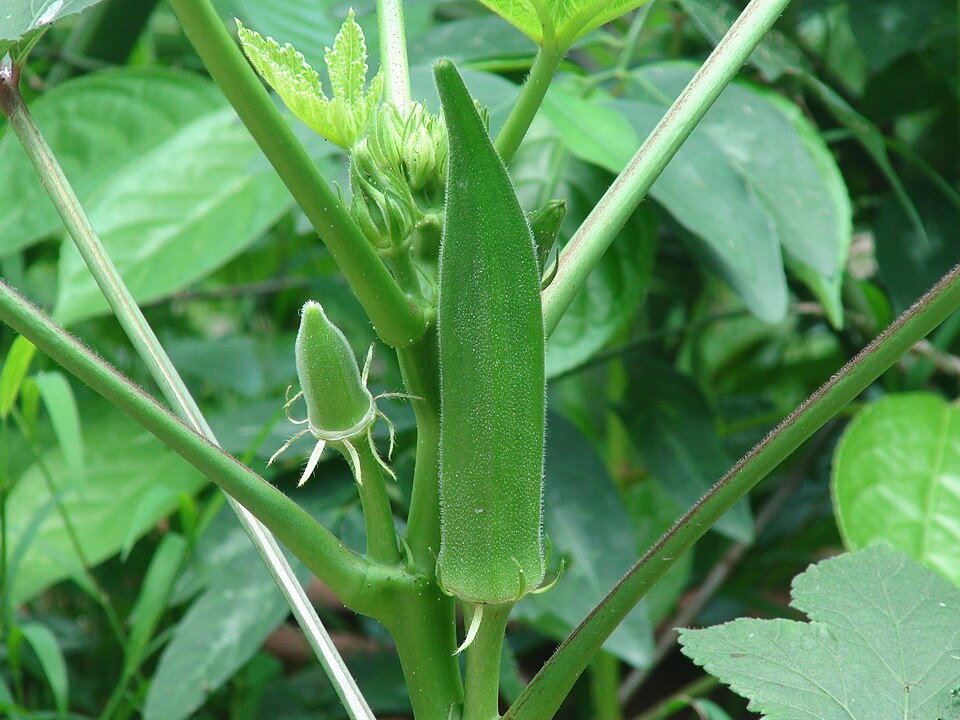
Photo: Wikimedia Commons
Okra is a heat-seeking annual that does its best in warm climates and longs for full sun. If your summers run hot and long, this is one of the easiest crops you can plant. Before sowing, you may want to check your USDA zone planting dates so the seed goes into truly warm soil.
Choosing a Variety
When it comes to how to grow okra, getting the details right makes all the difference.

Many homeowners find that how to grow okra is easier than they expected once they know the basics.
Seed racks offer a handful of tried-and-true types, and most of them perform fine. Clemson Spineless is the classic all-rounder - reliable, productive, and easier to pick than the old spiny kinds. Emerald makes dark green, smooth pods with very little fiber, while Jambalaya grows compact enough for smaller beds and starts bearing early. If you want red pods, Burgundy brings color to the plate (though the red fades in the pot). For long seasons, Cowhorn and Louisiana Green Velvet stay tender at larger sizes than most.
When you are learning how to grow okra, spineless varieties make harvest day far more pleasant - your arms will thank you. Pick one variety or mix two in separate rows and compare; gardeners rarely go wrong here. State extension services publish regional okra variety trials worth checking before you buy seed.
In short-season areas, choose an early type like Annie Oakley II or Jambalaya and give the plants every advantage: black plastic mulch to warm the soil, the sunniest spot in the yard, and a wind-sheltered corner. Container growing also works - one plant per five-gallon pot in a hot, sunny spot can produce a surprising number of pods, and the big hibiscus-like flowers make okra genuinely ornamental. Just keep the pot watered, since containers dry out fast in the heat okra loves.
When and How to Plant
Many homeowners find that how to grow okra is easier than they expected once they know the basics.
The key to how to grow okra is choosing the right approach for your space and budget.
Patience is the whole secret at planting time. Okra germinates poorly below 70 degrees, so wait until about three weeks after your last spring frost, when nights stay warm and the soil feels warm to the hand. Sowing too early is the single most common mistake - cold soil means spotty sprouts and stunted plants that never catch up. The Old Farmer's Almanac planting calendar can help you pin down frost dates for your area.
Soak seeds overnight in a cup of room-temperature water before sowing; this softens the hard coat and speeds sprouting by a few days. Sow seeds half an inch to an inch deep, about three inches apart, then thin seedlings to 12 to 18 inches apart in the row. Rows should be about three feet apart to give these big plants elbow room.
Okra can reach four to six feet tall in good soil, so think about placement. Plant it on the north side of the garden bed where it will not shade smaller neighbors - the same advice applies to tall sweet corn plantings and cucumbers on trellises. Direct seeding is best; okra roots resent transplanting, and peat-pot starts often sulk.
Starting From Seed
- Sow only when soil is reliably warm, roughly 70 degrees or more.
- Soak seeds overnight; plant one half to one inch deep.
- Keep the seedbed moist until seedlings stand an inch or two tall.
- Thin to the strongest plant every 12 to 18 inches.
Soil and Sun
The key to how to grow okra is choosing the right approach for your space and budget.
With a little planning, how to grow okra can fit even a busy schedule.
Give okra full sun - eight or more hours of direct light - and average, well-drained soil. It is not picky about fertility and actually performs well in ordinary garden soil where pampered crops struggle. Sandy loam warms fast in spring and suits okra nicely. The USDA PLANTS Database notes its preference for warm, sunny conditions and its tolerance of average soils.
Skip heavy applications of high-nitrogen fertilizer. Too much nitrogen grows giant, lush plants with almost no pods - a classic beginner error. Work a modest amount of compost into the bed before planting and leave it at that. A soil pH between 6.0 and 6.8 is ideal, but okra shrugs off a wider range. Mulch around the plants once they are a foot tall to hold moisture and keep weeds down, as Clemson HGIC recommends for warm-season vegetables generally.
Watering and Feeding
With a little planning, how to grow okra can fit even a busy schedule.
Before you start, it helps to understand how how to grow okra works in real homes.
Okra is drought-tolerant once established, and that toughness is part of its charm. Water deeply once a week during flowering and pod set, because steady moisture now means tender pods. Between times, let the soil dry out a bit - constant wet feet encourage disease and weak growth. Like eggplant, okra handles dry spells better than soggy ones.
Feed lightly, if at all. A side-dressing of balanced fertilizer a month after planting is plenty in poor soil; in rich soil, skip feeding entirely. Signs of hunger are rare - pale older leaves and poor pod set in truly worn-out ground. When in doubt, underfeed rather than overfeed.
Care Through the Season
Before you start, it helps to understand how how to grow okra works in real homes.
A good plan for how to grow okra saves time, money, and frustration.
Once the weather turns hot, okra nearly takes care of itself. Pull weeds early while plants are small, then let the broad canopy shade the ground. Watch for stink bugs and aphids on the buds and young pods, and for corn earworms chewing into pods - handpick or spray with an insecticidal soap if numbers climb. Blossom-end issues are uncommon; most trouble traces back to cold, wet weather early on.
Wear long sleeves and gloves when working among mature plants. The tiny hairs on leaves and stems itch and can raise a rash on bare skin, especially on hot days. This is not a disease problem - it is just okra being okra. Tall varieties may need no staking, but in windy spots a simple stake keeps six-foot plants upright.
Dead or yellowing lower leaves can be trimmed to improve air flow. If plants stall in a cool spell, there is little to do but wait for heat - okra does not grow until it gets what it wants, and then it takes off like a rocket.
Succession planting is rarely needed, since one sowing usually carries the whole season in warm regions. In very long-season areas, a second sowing a month after the first keeps young, vigorous plants coming as the first planting gets tall and tired. Leave plenty of room at the row ends for yourself - you will be walking these rows with a basket every other day at the peak, and brushing past itchy leaves in shorts is a mistake you make exactly once.
Harvest
A good plan for how to grow okra saves time, money, and frustration.
For most people, how to grow okra comes down to a few smart choices.
This is where how to grow okra turns into how to eat okra. Harvest pods when they are two to three inches long, cutting the stem just above the pod with a sharp knife or pruners. At peak season, pick every day or two - pods turn woody almost overnight when they get oversized, and one missed pod signals the plant to slow down.
Test a pod by bending it: a tender pod snaps crisply, while an overmature one bends without breaking and belongs in the compost or the seed jar. Wear gloves while picking - those itchy leaf hairs are just as rough on harvest day.
Fresh pods keep a few days in the refrigerator in a perforated bag. For long storage, slice and freeze them on a tray before bagging, or pickle them whole. If a pod escapes and becomes a woody club, leave it on the plant to mature fully, then save the dried seeds for next year's planting - free seed, perfectly adapted to your garden. The USDA National Agricultural Library has gardener-friendly guides to saving vegetable seed. For more ways to keep the harvest coming, see the companion guide on growing green beans, another daily-pick summer crop.
Troubleshooting
For most people, how to grow okra comes down to a few smart choices.
If you are new to how to grow okra, start with the simplest option and build from there.
Seeds never came up. The soil was too cool. Wait for sustained warmth and sow again - a replant in warm soil will outgrow an early, struggling one.
Plants are tall with no pods. Too much nitrogen, or still not enough heat. Hold the fertilizer and wait for hot weather; plants usually start setting once nights stay warm.
Pods are tough and fibrous. You waited too long between pickings. Harvest at two to three inches, daily in hot weather. Tough pods can still be dried for seed or decoration.
Leaves look chewed. Corn earworms and stink bugs are the usual culprits. Scout the plants every few days, handpick pests, and remove damaged pods so the plant keeps producing clean ones.
Plants wilted despite water. Check for stem damage at the base or root-knot nematodes in sandy soil. Rotate the okra patch each year and avoid planting where related crops struggled.
A final note on climate: okra needs sustained heat and fails to thrive below zone 5, so gardeners in the far north should choose the earliest varieties, use black plastic mulch to warm the soil, and keep expectations modest. For most of the country south of that line, though, okra is as close to plant-it-and-pick-it as summer gardening gets.
References
If you are new to how to grow okra, start with the simplest option and build from there.
University of Minnesota Extension. (n.d.). Growing okra in home gardens. University of Minnesota. https://extension.umn.edu/
Clemson Cooperative Extension. (n.d.). Okra. Clemson University. https://hgic.clemson.edu/
UF IFAS Gardening Solutions. (n.d.). Growing okra in Florida home gardens. University of Florida. https://gardeningsolutions.ifas.ufl.edu/
Missouri Botanical Garden. (n.d.). Abelmoschus esculentus. https://www.missouribotanicalgarden.org/
When it comes to how to grow okra, getting the details right makes all the difference.
Was this guide helpful?

About My Garden US
The My Garden US editorial team writes practical, in-depth home and garden guides for American homeowners — tested advice, no fluff.