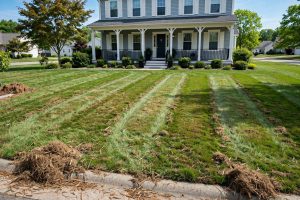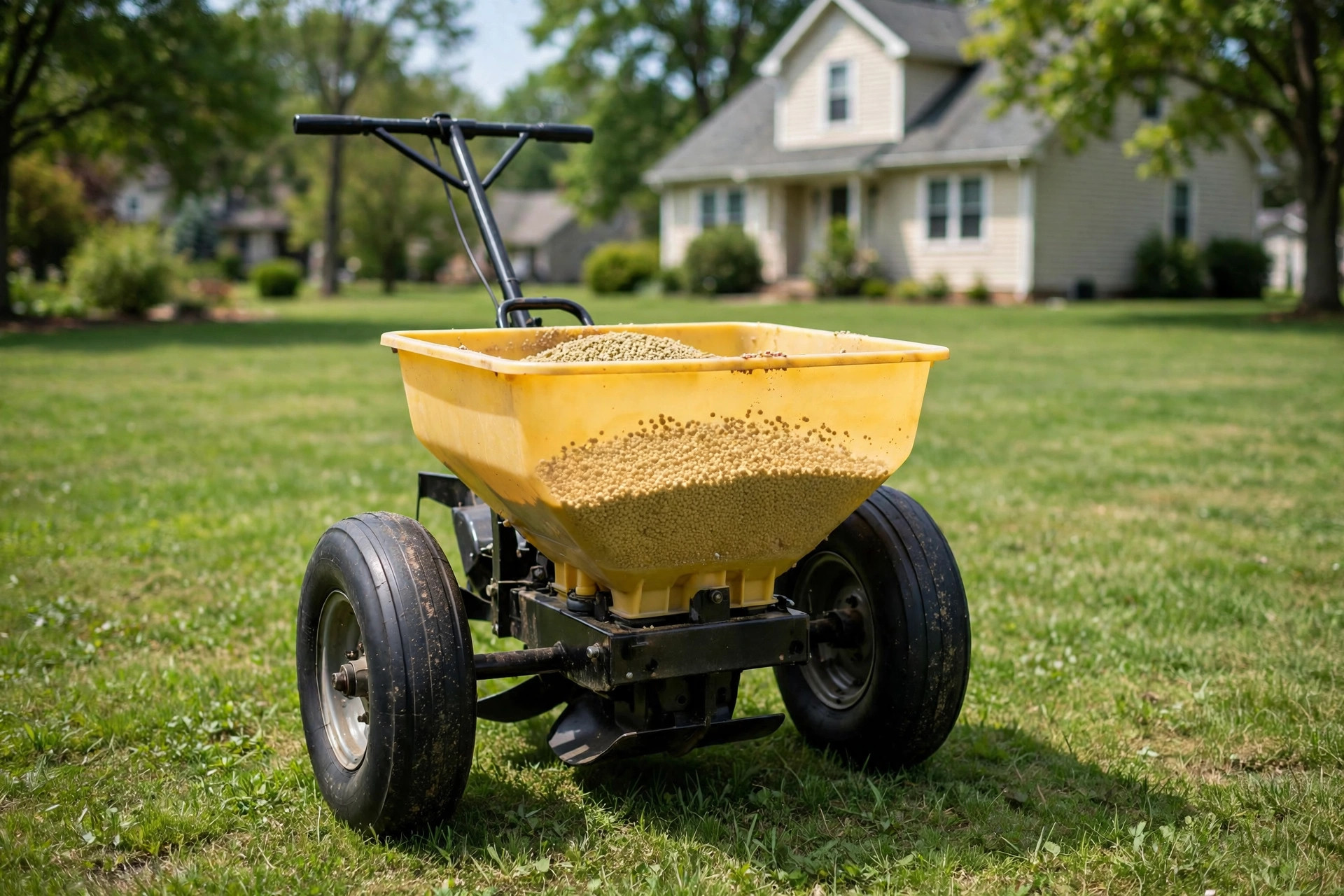

A lawn of half an acre or more takes real work to feed. A small hand spreader cannot do the job. A drop spreader takes too many passes. The best broadcast spreader for large lawns covers a wide band with each pass and holds enough product to treat the whole yard with few refills. This guide explains how these spreaders work, what to look for, and how to use one well.
Why a Broadcast Spreader Matters for a Large Lawn
Grass needs food on a schedule. Seed needs even cover in the fall. Weed control needs an even dose in the spring. When a lawn is large, uneven work shows fast. One strip grows thick and green. The next strip stays thin and pale. A broadcast spreader solves this by throwing granules in a wide fan. Each pass covers ten to twelve feet. That is twice the width of most drop spreaders.
Time is the other reason. Feeding a full acre by hand takes hours. A walk-behind broadcast spreader can treat that same acre in about one hour. A tow-behind model pulled by a riding mower works even faster. The owner refills the hopper less often because the hopper is large. Fifty pounds of fertilizer is a common load. That is enough for about one full acre at normal rates.
Even spread matters for safety too. Heavy piles of fertilizer can burn grass. Light spots let weeds take hold. A good spreader keeps the rate steady as it moves. The owner walks at a steady pace. The wheels drive the spinning plate. The granules land in a wide, even band. The result is a lawn that looks uniform from the road.
How a Broadcast Spreader Works: Best Broadcast Spreader for Large Lawns
The design is simple. A hopper holds the granules. A gate at the bottom of the hopper opens and closes. When the owner walks, the wheels turn. A gear drive spins a flat plate under the hopper. Granules fall onto the spinning plate. The plate throws them outward in a fan pattern.
Two controls matter. The gate control sets the flow rate. A higher number on the dial opens the gate wider. More product falls per minute. The on-off lever opens and closes the gate. The owner closes it at the end of each pass and at the edge of the driveway. This keeps granules off the concrete.
The spinning plate spreads the product in a band wider than the machine. Most walk-behind models cover eight to twelve feet. The middle of the band gets more product than the edges. This is why passes must overlap. A common rule is to overlap each pass by about one foot. Some owners use the wheel tracks from the last pass as a guide. They line up the outside edge of the band with the inside wheel track.
Types of Broadcast Spreaders for Large Yards
Two main types serve large lawns. Each fits a different yard and a different owner.
Walk-Behind Broadcast Spreaders
The walk-behind model is the most common. The owner pushes it like a lawn mower. It holds forty to eighty pounds of product. It fits yards of half an acre to two acres. It turns well around trees and beds. It costs less than a tow-behind unit. Most homeowners with a large but simple lot choose this type.
Good walk-behind models have tall pneumatic tires. Tall tires roll over rough ground without bouncing. Bouncing shakes extra granules out and breaks the even pattern. Pneumatic tires also grip well on slopes. A wide stance keeps the machine from tipping on a hill.
Tow-Behind Broadcast Spreaders
The tow-behind model hooks to the back of a riding mower or garden tractor. The owner rides and the spreader follows. Hoppers hold eighty to one hundred thirty pounds. A full load can treat two acres or more. The spread band reaches twelve to fourteen feet. A two-acre yard takes about forty minutes.
The tow-behind type suits open yards with few obstacles. Trees, tight corners, and steep slopes make it hard to use. The owner must plan the passes in advance. A wide turning radius means planning counts. Many owners on lots of two acres or more pair a tow-behind unit with their riding mower for one acre lots and up.
What to Look for When You Buy
The best broadcast spreader for large lawns is not always the biggest one. It is the one that matches the yard and the owner. These points matter most.
Hopper Capacity
A large hopper means fewer refills. Fifty pounds is a good size for a one-acre yard. One refill covers the whole lawn. Owners of two acres or more may want eighty pounds or more. A hopper that is too large gets heavy to push. Filled with fifty pounds of fertilizer, a walk-behind unit weighs close to eighty pounds. Consider strength and comfort before choosing the biggest hopper.
Spread Width and Flow Control
Wider spread means fewer passes. Look for a stated spread width of ten feet or more. The flow control should have clear numbers. A gate dial with marks from one to ten or one to fifteen lets the owner match the product bag rate. Cheap models with a simple open-shut lever make rate control hard. A well-marked dial is worth the extra cost.
Tires and Frame
Tall air-filled tires ride smoother than hard plastic wheels. A steel frame lasts longer than plastic. Stainless steel hardware resists rust from fertilizer salts. The handle should fit the owner’s height. A bent handle that forces the owner to stoop will cause back pain on a big yard. Some models have an adjustable handle. That feature helps when two people share the work.
Edge Control
An edge guard is a small shield that blocks one side of the fan. It keeps granules off the driveway, the sidewalk, and the neighbor’s beds. On a large lawn with long borders, this feature saves product and avoids staining the concrete. Look for a model with an easy on-off edge control at the handle. Stopping to flip a small lever at the hopper wastes time.
Cost and Price
Walk-behind broadcast spreaders for large lawns run from about eighty dollars to about three hundred dollars. Models near one hundred dollars work fine for most owners. They hold enough product and spread evenly. The more costly models add stainless parts, better tires, and finer rate dials. They last longer and hold calibration better.
Tow-behind models run from about one hundred fifty dollars to about five hundred dollars. The price rises with hopper size and frame strength. A heavy steel frame with a one hundred thirty pound hopper costs more. It also lasts many years. Owners who treat three acres or more each year should view it as a long-term tool.
Product cost matters too. Fertilizer, seed, and weed control for a large lawn add up. A fifty-pound bag of fertilizer covers about one acre and costs thirty to sixty dollars. Many owners shop for deals on lawn care supplies and equipment before the spring season. Buying early can cut the yearly cost.
How to Use a Broadcast Spreader the Right Way
Good results come from method, not from the machine alone. Follow these steps.
First, read the product bag. It gives the spreader setting for the product. Settings differ by brand of spreader. If the bag lists your brand, use its number. If not, start with a middle setting and test on a small patch. Too much product burns grass. Too little wastes a trip.
Second, fill the hopper on the driveway or on a tarp. Never fill it on the grass. Spills on the grass leave burned spots. Pour the product in with a scoop. Do not overfill past the top mark. An overfilled hopper spills at every bump.
Third, walk at a steady pace. A normal walking speed is about three miles per hour. Do not rush. Do not crawl. Start walking before you open the gate. Close the gate before you stop. This keeps the ends of each pass even.
Fourth, use a pattern. Most owners use back-and-forth stripes. Walk in straight lines. Overlap each pass by about one foot. At the end of each stripe, close the gate and turn. Some owners spread the border first, then fill the middle. A border pass gives a clean edge along the street and the beds.
Fifth, clean the driveway after. Sweep granules off concrete back onto the grass. Fertilizer stains concrete and runs into storm drains. A quick sweep takes five minutes. It protects the lawn and the street.
Timing matters as much as method. Spring weed control works best before weeds sprout. Our guide to pre emergent weed killer application timing explains the calendar. Fall feeding builds roots for the next year. Many owners overseed in the fall too. Read our step by step fall overseeding guide before spreading seed.
Care and Upkeep
Fertilizer salts corrode metal. A spreader that is never cleaned will seize up in one or two seasons. Care is simple and takes ten minutes.
After each use, empty the hopper. Pour leftover product back into the bag. Rinse the hopper and the spinning plate with a garden hose. Let the machine dry in the sun. Once dry, spray the moving parts with a light oil. Pay attention to the gate linkage and the gear drive. A little oil keeps the gate sliding free.
Store the spreader under cover. A garage or shed is best. If it must sit outside, cover it with a tarp. Sun breaks down plastic hoppers over time. Rain rusts steel frames. Check the tires each spring. Pump air-filled tires to the stated pressure. A soft tire drags and changes the spread rate.
Once a year, test the calibration. Put a known weight of product in the hopper. Spread it over a measured area. Weigh what is left. The math shows the true rate. If the rate is off, adjust the dial. This small check keeps the lawn fed at the right dose.
Safety
A broadcast spreader is a simple machine, but it handles chemicals. Treat it with care.
Wear gloves when you fill the hopper. Some products irritate the skin. Wear closed shoes. Do not let children play near the machine while it is full. Keep pets off the lawn until the product is watered in or the bag says it is safe. Our review of pet safe lawn weed killer options can help owners with dogs.
On slopes, push across the hill, not straight up and down. A full hopper is heavy. It can tip on a steep slope. Tow-behind units need extra care on hills. The trailer can push the mower on a downhill run. Slow down before turns. Keep clear of the spinning plate. It throws small hard granules that can sting the shins.
Frequently Asked Questions
What size spreader do I need for one acre?
A walk-behind model with a fifty-pound hopper suits one acre well. One fill covers the whole yard at normal fertilizer rates. For two acres or more, consider a tow-behind model with an eighty-pound hopper or larger. The fewer the refills, the faster the job.
Should I choose a broadcast or a drop spreader for a large lawn?
Choose a broadcast spreader. It covers a wider band per pass and finishes the job faster. Drop spreaders suit small yards where exact edges matter. On a large lawn, the speed of a broadcast unit wins. Use the edge guard near borders to keep product off hard surfaces.
How do I find the right setting for my fertilizer?
Check the product bag first. Most bags list settings for common spreader brands. If your brand is not listed, call the spreader maker or start at a middle setting. Test on a small hidden patch. Adjust up or down until the rate matches the bag. For lawns in warm states, pick a product made for the local grass. See our notes on the best fertilizer for St Augustine grass in Texas for one example.
Can I use a broadcast spreader for seed and ice melt too?
Yes. Most broadcast spreaders handle seed, fertilizer, pellet lime, and ice melt. The setting differs for each product. Ice melt is heavy and coarse. It needs a wider gate opening. Seed is light and needs a lower setting. Clean the hopper between products. Old fertilizer mixed with seed can harm young sprouts.
How long does a broadcast spreader last?
A well-kept steel spreader lasts eight to twelve years. A cheap plastic model lasts three to five years. The difference is care. Rinse after use, oil the moving parts, and store it dry. The gear drive wears first. Some makers sell replacement gears. A ten-dollar gear can add years to a good machine.
Where can I compare models and prices?
Major equipment makers list full lines of lawn care tools on their sites. Toro and John Deere both show spreader options and support pages. Independent test labs such as Consumer Reports publish ratings for outdoor power equipment. Compare hopper size, spread width, and warranty before you buy.
A Final Word
The best broadcast spreader for large lawns is the one you will use on schedule. A machine that sits in the shed does nothing for the grass. Pick a size that fits your yard. Learn the settings. Walk at a steady pace. Clean it after each use. A few hours of care each season keeps the lawn thick, even, and green from the street to the back fence.
References
Toro. (n.d.). Lawn care equipment. https://www.toro.com Deere & Company. (n.d.). Lawn and garden equipment. https://www.deere.com Consumer Reports. (n.d.). Product ratings and reviews. https://www.consumerreports.org
Was this guide helpful?

About James Carter
The My Garden US editorial team writes practical, in-depth home and garden guides for American homeowners — tested advice, no fluff.
You May Also Like
Smart Sprinkler Timer Rebates for California Homes: A Plain Guide
August 3, 2026 0 views
Stump Killer for Tree Stumps Reviews: What Buyers Should Know
July 22, 2026 0 views
Electric Riding Mower Reviews for Small Acreage
September 5, 2026 0 views