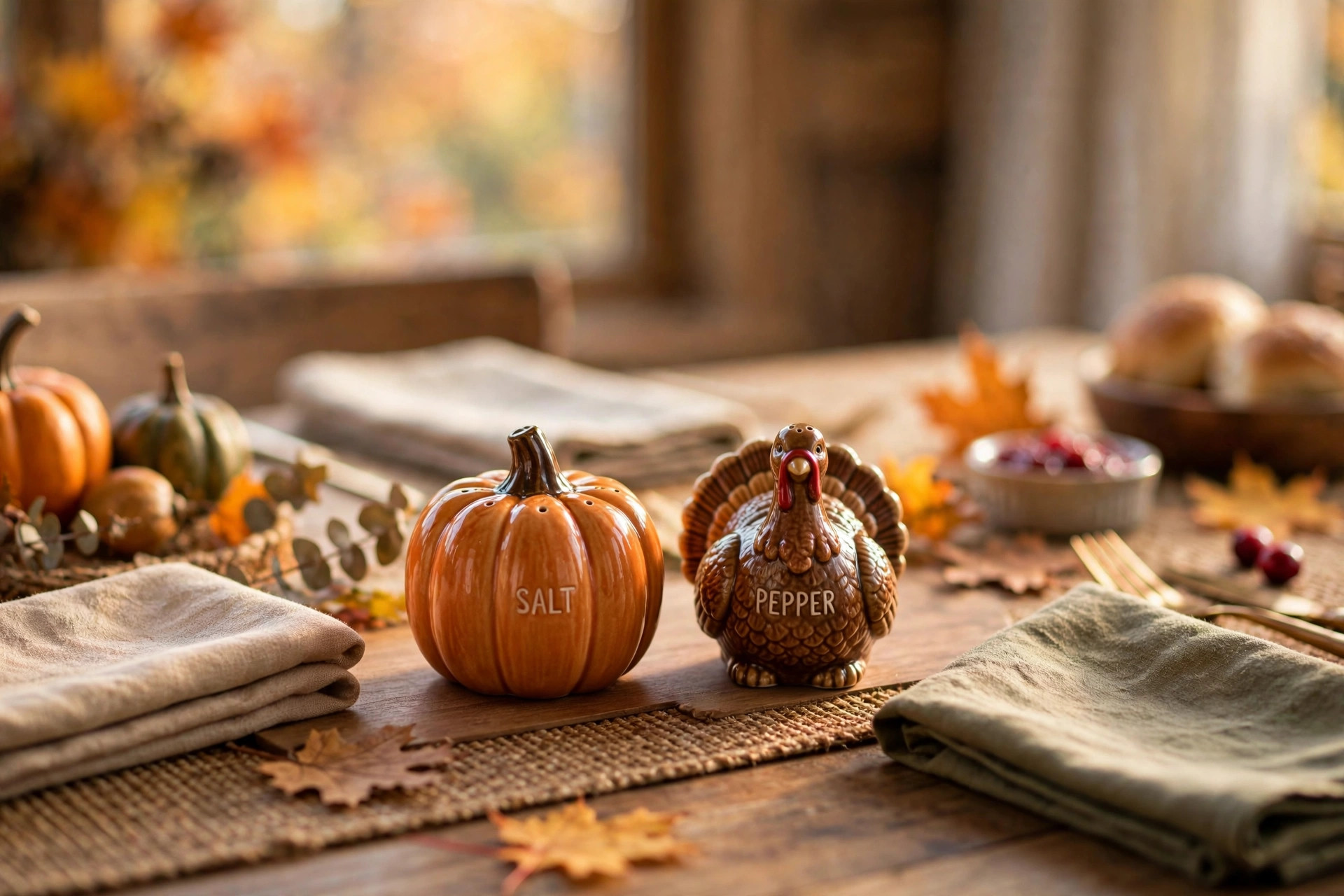

The table is set. The turkey rests under its cover. Guests will soon take their seats. In the middle of it all, small details do a large part of the work. Thanksgiving salt and pepper shakers for table service are among those small details. They sit within reach of every guest. They catch the light. They carry the mood of the holiday in a few inches of painted ceramic. A good pair does two jobs at once. It seasons the food. It decorates the table.
Many hosts buy new shakers each year. Others keep one set and use it for decades. Both ways work. What matters is that the shakers fit the table, match the meal, and pour cleanly. This guide walks through the choices. It covers types, materials, prices, care, and safety. It answers the questions buyers ask most.
Why They Matter
Thanksgiving is a meal about abundance. The table holds many dishes. Small objects like shakers fill the space between them. They keep the eye moving. A well-chosen pair can tie a whole tablescape together. Fall colors on the shakers repeat the tones of the centerpiece. Their shape echoes the season: pumpkins, leaves, turkeys, corn.
Shakers also get handled by everyone. Guests pass them hand to hand. Children reach for them. A sturdy pair survives the meal and the years of use after it. A fragile or poorly made pair may chip on the first pass. The difference is in the material and the build.
There is a third reason. Shakers are a low-cost way to change the look of the table. Plates and linens cost far more. A new set of shakers each year gives the table a fresh face for a few dollars. Many families turn this into a small tradition. Each November, someone picks the new pair.
How to Choose a Pair: Thanksgiving Salt and Pepper Shakers for Table
Match the Table
Look at your plates first. White plates accept almost any shaker style. Patterned plates call for restraint. If the china has a busy fall border, choose plain shakers in a solid color. If the table runs to rustic wood and burlap, painted folk designs fit best.
Think about height. Tall shakers can block the view across a crowded table. Low, wide shakers stay out of the line of sight. For a long table with many guests, two small sets work better than one large set. Place one pair at each end. Readers of The Spruce often note that pairs of small accents read better on long tables than one tall piece.
Check the Holes
Salt shakers and pepper shakers differ by hole count. Salt shakers usually have more, smaller holes. Pepper shakers have fewer, larger holes. Check before you buy. Some novelty sets ignore this rule. Their holes are cut for looks alone. The salt pours too fast or the pepper barely comes out. A set that cannot season food is a decoration, not a shaker.
Pick up the set if you can. Shake it gently. The holes should be clean and even. Look at the plugs or stoppers on the bottom. They should fit tight. Loose stoppers fall out during a meal. Cork stoppers work well. Plastic stoppers last longer in a dishwasher.
Think About the Guests
Children sit at most Thanksgiving tables. They will grab the shakers. They will shake hard. For a table with young children, choose sets that are short, wide, and heavy. Avoid tall thin shapes that tip. Avoid sets with tiny loose parts. The Consumer Product Safety Commission reminds buyers to check small decor items for parts that could break off around small children.
If grandparents with weak hands join the table, look for large stoppers and wide bodies. A shaker that is easy to grip is a shaker that gets used. Weight matters here. A shaker that is too light feels cheap and tips easily.
Types and Options
Ceramic and Stoneware
Ceramic is the most common choice. It takes paint well. It holds fine detail. Pumpkins, turkeys, and pilgrim figures all come in ceramic. Most ceramic sets are food-safe. Glazes are tested before sale. Hand-washing keeps the paint bright.
Stoneware is heavier. It suits rustic tables. Glazes on stoneware run to earth tones. A stoneware pumpkin pair can last for decades. Prices run higher than basic ceramic, but the build is tougher.
Glass and Crystal
Clear glass shakers show the contents. Some buyers like this. You can see how much salt remains. Glass sets often have metal tops. They look clean and modern. They pair well with simple white tables.
Cut-glass sets cost more. They catch candlelight. They suit formal dinners. They are fragile. They do not suit tables with small children.
Wood, Metal, and Acrylic
Wooden shakers bring warmth. They need hand-washing. Water can crack them over time. Oiling the wood once a year keeps it sound.
Metal shakers, often stainless steel, are plain and strong. They do not chip. They fit modern tables. Some have a fall-themed engraving. Acrylic shakers are light and cheap. They suit outdoor Thanksgiving meals on a porch or patio. Country Living often shows painted wooden and metal pieces on harvest tables for this reason.
Novelty Shapes
Thanksgiving brings a flood of shaped sets. Common shapes include pumpkins, turkeys, pilgrim hats, cornucopias, and acorns. These sets are fun. They make children smile. They also make good gifts.
Novelty sets vary in quality. Some are well made. Others are thin and chip fast. Read reviews before buying online. Look for mention of paint flaking or loose stoppers. Retailers such as Wayfair carry wide selections with buyer reviews that help here.
Cost and Price
Most Thanksgiving shakers cost little. Basic ceramic sets run from about five dollars to fifteen dollars. Craft stores sell them in the fall at low prices. Michaels stocks seasonal shakers each autumn and often runs them at a discount before the holiday.
Mid-range sets cost fifteen to forty dollars. These come from gift shops and kitchen stores. They tend to have better paint and tighter stoppers. Sets in this range make fine hostess gifts.
High-end sets cost forty dollars and up. Hand-painted artisan sets fall here. So do sets from well-known tableware brands. These are for collectors and for hosts who want a lasting piece. They often come in a gift box.
Price does not always track with function. A five-dollar set can pour well. A fifty-dollar set can have poor holes. Check the holes and the stoppers first. Then weigh the price. For the rest of the dining room decor, the same rule holds: function first, style second.
Care and Upkeep
Care starts with the material. Ceramic shakers can go in the top rack of a dishwasher. The paint may fade over years of machine washing. Hand-washing keeps them bright longer. Use warm water and a mild soap. Dry them fully before refilling.
Empty the shakers after the season. Salt draws moisture. It can cake in the holes. Stored salt can also pit metal tops. Pour out the contents. Let the shakers dry. Store them in their box or wrapped in cloth. Keep them in a cool, dry place.
Pepper needs more care. Ground pepper goes stale. It loses flavor in months. Empty old pepper before refilling. Rinse the shaker. Let it dry fully. Refill with fresh ground pepper. The meal tastes better for it.
If paint chips, set the shaker aside from food use. Chips can expose raw ceramic. They can also flake into food. A chipped set can still serve as decor on a shelf. Many families retire old shakers this way. The old set keeps its place in the holiday story.
For wooden shakers, skip the dishwasher. Wash by hand and dry at once. Rub in a little mineral oil each year. This keeps the wood from drying and cracking. For advice on wood care in the home, guides at Lowe’s cover the basics well.
Safety
Shakers are simple objects. Still, a few safety points matter. First, check that the set is labeled food-safe. Imported novelty sets sometimes skip testing. Buy from known sellers. Home Depot and other large retailers list food-safety details on product pages.
Second, watch for lead in old or antique sets. Vintage shakers from before the 1970s may carry lead paint. They are fine as shelf decor. Do not put salt or food in them. If you inherit an old set, enjoy it as decoration.
Third, keep small shakers away from very young children. A shaker can fit in a small mouth. A stopper can come loose. Seat toddlers away from the shakers or choose large, solid sets for their end of the table.
Fourth, mind the salt. Guests with high blood pressure may pass the salt. That is their choice. Keep the shakers filled anyway. A half-empty shaker looks careless on a holiday table.
Frequently Asked Questions
How can you tell which shaker is salt and which is pepper?
Salt shakers usually have more holes. Pepper shakers have fewer, larger holes. Many sets also mark the bottom. Some mark the top with an S or a P. When in doubt, shake a little onto your hand and look. Salt pours fine and white. Pepper pours dark and coarse.
Do Thanksgiving shakers need to match the rest of the table?
They do not need to match exactly. They should not clash. Pick up one or two colors from the plates or the runner. Repeat those tones in the shakers. This simple rule keeps the table looking planned rather than random. HGTV table guides use the same color-repeat rule for all table accents.
Can I use last year’s shakers again?
Yes. Empty them first. Wash and dry them. Refill with fresh salt and fresh pepper. Check the paint for chips. If the set looks tired, move it to a sideboard as decor and buy a new set for the table.
Where should shakers sit on the table?
Place them within easy reach. One pair per six to eight guests is a good rule. Set them near the center of each group of diners. Keep them off the runner if the runner is light in color. Salt spills stain light cloth.
What is the best material for a house with kids?
Short, heavy stoneware or thick ceramic. These survive drops. They do not tip easily. Avoid tall thin glass. Avoid sets with small detachable parts. A sturdy set can serve the table for years of family meals.
Are expensive shakers worth it?
Sometimes. Hand-painted sets can be lovely. They also chip like any ceramic. Buy an expensive set because you love the look, not because it will last longer. For daily pouring, a mid-priced sturdy set often does the best work.
A Short Final Word
Thanksgiving salt and pepper shakers for table use are small. They are also seen by every guest. Choose a pair that pours well, sits steady, and fits the table. Spend a little or spend a lot. What counts is that the shakers do their job and carry the season with them. Wash them, store them dry, and they will be ready next year. The table will look complete. The meal will taste seasoned. The small details will have done their quiet work.
For more ideas, see how others dress holiday tables at home or browse seasonal place settings at IKEA for simple pieces that pair well with festive shakers.
References
Country Living. (n.d.). Country home and lifestyle. https://www.countryliving.com HGTV. (n.d.). Home and garden ideas. https://www.hgtv.com IKEA. (n.d.). Home furnishings. https://www.ikea.com Lowe’s. (n.d.). Home improvement products. https://www.lowes.com Michaels. (n.d.). Arts and crafts supplies. https://www.michaels.com The Home Depot. (n.d.). Home improvement products. https://www.homedepot.com The Spruce. (n.d.). Home and garden advice. https://www.thespruce.com U.S. Consumer Product Safety Commission. (n.d.). Product safety information. https://www.cpsc.gov Wayfair. (n.d.). Furniture and home goods. https://www.wayfair.com
Was this guide helpful?

About Lisa Anderson
The My Garden US editorial team writes practical, in-depth home and garden guides for American homeowners — tested advice, no fluff.
You May Also Like

Best Christmas Bows for Outdoor Wreaths Large
January 9, 2026 0 views
Fall Throw Pillows for Couch: A Guide to Warm Autumn Decor
September 12, 2026 0 views
Thanksgiving Hand Towels for Bathroom Guest Decor: A Simple Guide
September 7, 2026 0 views