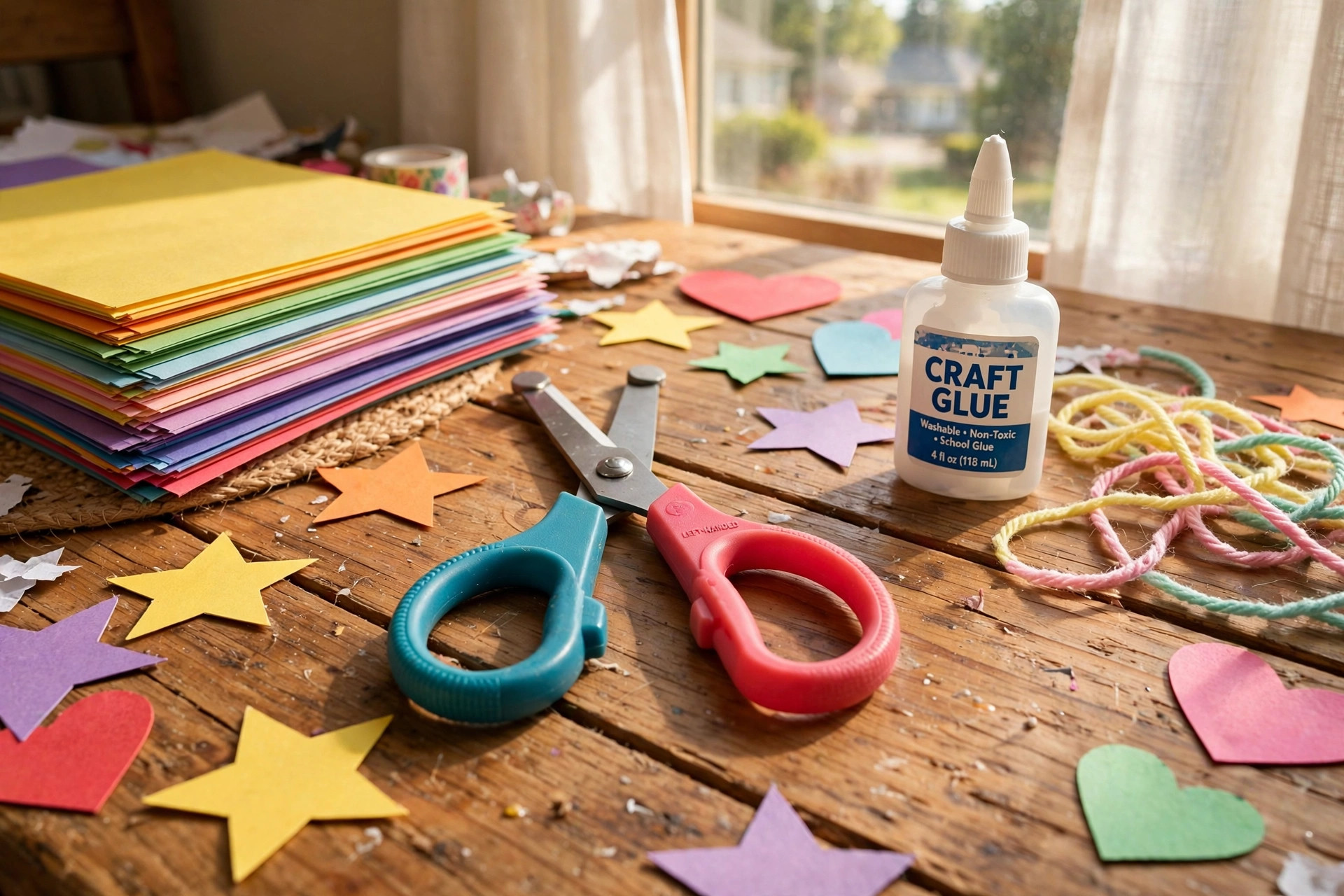

Finding the best craft scissors for left handed kids is harder than most parents expect. Standard scissors are made for right handed users. The blades cross in the wrong direction for a left handed child. When a left handed child uses right handed scissors, the blades push apart instead of sliding together. The paper folds and tears. Cuts come out ragged. The child presses harder, grows frustrated, and decides that cutting is too hard. The real problem is the tool, not the child. A true left handed pair reverses the blade order so the cutting edges meet when held in the left hand. This one change makes clean cuts possible. This guide explains what to look for, which types suit different ages, what they cost, how to care for them, and how to keep young crafters safe.
Why Left Handed Scissors Matter
About one child in ten favors the left hand. Schools still buy mostly right handed scissors because they are cheaper in bulk and easier to stock. A left handed child in a classroom of thirty often has no left handed pair available. The result is quiet struggle. Teachers may notice sloppy cutting and assume the child lacks skill. In truth the child is working against the tool.
Good left handed kids scissors change this picture. The thumb loop sits on the correct side. The blades align so the cutting line stays visible through the blades, not hidden behind them. Left handed children can watch the line they are cutting, which improves accuracy. Studies of school readiness have long treated scissor skill as a fine motor milestone. A proper pair supports that milestone. It also builds confidence. Children who cut well enjoy craft time more and attempt harder projects. For parents, the payoff is simple: less waste, less frustration, and crafts that look the way the child imagined.
Craft projects also ask more of scissors than school worksheets do. Cutting felt, foam sheets, yarn, ribbon, and cardboard needs a pair with real bite. A blunt classroom pair may fail on these thicker materials. This is why many families keep a dedicated craft pair at home, separate from the school pair. If you shop for both, craft supply stores such as Michaels and JOANN carry wide selections of childrens scissors, including left handed models.
What to Look for When You Choose: Best Craft Scissors for Left Handed Kids
Blade Design
Look for blades marked left handed, not just ambidextrous. True left handed scissors reverse the blade order. Many products claim to suit both hands but only reshape the handles. Reversed blades are the key feature. For children under six, blunt tips are the rule. The tips are rounded so they cannot puncture skin. Older children with steady hands can use pointed tips for detail work, but only with supervision.
Blade length matters too. Short blades, around five inches total length, suit small hands and short cuts. Longer blades give leverage for thicker materials but are harder for young children to control. Stainless steel blades hold an edge longer and resist rust from wet craft glue. Some brands coat blades with a nonstick finish that resists tape and sticker gum. For a home craft kit, this coating is worth the small extra cost.
Handle Shape
Handles must fit the childs hand today, not next year. The thumb loop and finger loop should both be comfortable. True left handed scissors place the thumb loop where the left thumb naturally rests, which is the opposite side from right handed pairs. Soft rubber grips reduce soreness during long craft sessions. Avoid handles with hard ridges that dig into small fingers.
Check that the child can open and close the pair with one hand. If the spring tension is too stiff, the child will use two hands and lose control. Many craft scissors include a spring that pops the blades open after each cut. This feature helps beginners and young children. It can be removed later as the child gains strength.
Size and Age Fit
Manufacturers label most kids scissors by age: ages three to five, ages five to eight, and ages eight and up. These ranges are guides, not rules. A small seven year old may fit a younger pair better. Let the child hold the pair in the store if you can. The blades should open fully without the child straining. If the childs fingers slide through the loops, the pair is too big. A loose pair can twist in the hand and cause slips.
Types of Craft Scissors for Kids
Blunt Tip School Scissors
This is the standard first pair. Rounded tips, short blades, and plastic handles keep the risk low. They cut paper, construction paper, and thin card with ease. Most schools require blunt tips through the early grades. Choose a left handed version with the reversed blade order. Many store shelves mix right handed and left handed pairs together, so check the label carefully before you buy. Blick Art Materials offers a useful range of school scissors for the classroom and home.
Pointed Tip Craft Scissors
Pointed tips allow detail work: cutting out shapes, trimming thread, and snipping fabric corners. Reserve these for older children, usually eight and up, or for younger children under direct adult supervision. The points also work well on felt and ribbon. A pointed pair makes a good second pair for a child who already handles a blunt pair safely. Keep the pointed pair in a sheath or a dedicated box when not in use.
Decorative Edge Scissors
Decorative scissors cut zigzag, scallop, and wave edges. Children love them for borders, greeting cards, and scrapbook pages. They are sold in sets with several edge patterns. The blades are short and safe, but the cutting action differs from straight scissors, so the child may need a few practice cuts. These scissors do not replace a straight pair. They are a fun extra. Buy a left handed set if the child is left handed; the same blade order rule applies.
Multi Purpose Craft Pairs
Some children outgrow basic scissors and want a pair that cuts foam, thin wood sheets, and plastic canvas. A sturdier craft pair with longer steel blades handles these materials. This type suits children of ten and up with solid scissor habits. Home improvement stores like Home Depot stock craft and hobby cutting tools that work for family projects, and project guides from Family Handyman and This Old House show how families use them safely at home.
Cost and Price
Kids craft scissors are one of the cheapest craft tools to buy. A single pair of basic left handed kids scissors costs between two and eight dollars at most stores. Blunt tip school pairs sit at the low end. Pointed tip and nonstick craft pairs cost a little more. Decorative edge sets usually sell in packs of six or more patterns and cost between eight and twenty dollars for the set.
Prices rise with quality. A well made pair with steel blades and soft grips may cost ten to fifteen dollars. For most families this is still a small expense. The cheapest pairs often dull fast and loosen at the pivot screw. Buying one good pair beats buying three weak ones. Watch for multi packs sold for classrooms. These packs are often right handed only, so read the listing before ordering a left handed child a bulk pack.
For price comparison, check the craft aisle pages of Michaels, JOANN, and Blick Art Materials. Seasonal sales around back to school time bring the best prices. Buying two pairs, one for school and one for home, means the child never has to share a worn classroom pair.
Care and Upkeep
Scissors last longer with simple care. Wipe the blades after each craft session, especially after cutting glue, tape, or sticker sheets. A damp cloth removes most sticky residue. For stubborn gum, a little rubbing alcohol on a cloth cleans the blades without damage. Dry the blades fully before storing to prevent rust.
Store kids scissors in a pencil box, a craft caddy, or a drawer tray. Do not toss them loose into a bin with other tools. Loose storage chips the blades and bends the tips. A blade guard or sheath adds protection for pointed pairs. Check the pivot screw now and then. If the blades feel loose, tighten the screw with a small screwdriver. A drop of household oil at the pivot keeps the action smooth. Wipe off any extra oil so it does not stain paper.
Sharpening kids scissors is rarely needed. Most childrens pairs are cheap to replace. But a good pair can be sharpened once or twice. Cut through folded aluminum foil several times to refresh a dull edge. For a proper sharpening, a local sharpening service or a hardware store counter can hone the blades. Do not let a child attempt sharpening. If the blades are nicked or bent, replace the pair.
Safety
Safety starts with the right pair for the childs age. Blunt tips for young children. No exceptions at the preschool table. Teach the cutting rules early: scissors cut paper, not hair, clothes, or fingers. Children should walk, never run, with scissors. Show the child how to carry them: blades closed, tips pointed down, held by the handles against the leg.
Set up a craft spot with a clear table and a tray for the scissors. When the child finishes cutting, the scissors go back to their spot at once. This habit prevents surprises. The U.S. Consumer Product Safety Commission publishes guidance on child product safety that parents can consult at CPSC. Its pages on small childrens products remind families to check age labels and to keep sharp tools out of reach of very young children.
Supervision matters most with pointed pairs. Stay nearby when a child uses a pointed tip pair for the first time. Watch the grip and the free hand. The free hand should hold the paper flat, with fingers well back from the cutting line. Praise careful work. Children repeat the habits that earn notice. Project guides from Bob Vila and Family Handyman often include safety tips for family craft projects that apply to scissor work too.
Frequently Asked Questions
How can I tell if scissors are truly left handed? Hold them in your left hand and open them slightly. Look at the top blade. In a true left handed pair, the top blade sits on the left side of the bottom blade. The thumb loop also rests under the left thumb. If the pair feels awkward in the left hand and smooth in the right, it is a right handed pair with a misleading label. Reputable scissor makers such as Fiskars mark their left handed models clearly.
What age should a child start using left handed craft scissors? Most children can start with blunt tip safety scissors around age three. At this age the goal is simply learning to open and close the blades. By age four or five, children can cut along lines with guidance. By age six, many children cut shapes on their own. Match the pair to the childs hand size and skill, not just the printed age range.
Can left handed children just learn to use right handed scissors? Some do, but it is a handicap. The blades of right handed scissors push apart in a left hand, which forces the child to squeeze harder and twist the wrist. Over time this builds bad habits and weak cuts. A left handed child with a left handed pair cuts cleaner, with less effort. The small cost of the right tool pays off in better craft results.
Are expensive craft scissors worth it for kids? Usually not. Mid range pairs give the best value. The cheapest pairs dull quickly and wobble at the pivot. The most expensive pairs offer features a child does not need. Spend five to ten dollars on one well made pair with reversed blades, soft grips, and steel blades. That pair will serve for years of school and home craft work.
Which craft projects need kids scissors most? Paper crafts come first: cards, collages, paper chains, and cut out shapes. Fabric crafts come next: felt animals, simple sewing, and doll clothes. Holiday crafts use scissors heavily for garlands, ornaments, and gift tags. A child with a good pair can join nearly every project in guides like the glass painting kit for beginners suncatchers diy or the diy tie dye kit for shirts and crafts, where trimming templates and fabric is part of the fun.
How do scissors fit into other kids craft supplies? Scissors are the base tool of the craft box. They cut the felt for puppets, trim the shapes for collage, and snip yarn for weaving. Pair them with glue, tape, paper, and coloring tools. Families building a full craft station often add supplies like the best modeling clay for kids crafts home for sculpting days. One tidy box with scissors, glue, and paper covers most rainy day projects.
A Final Word
The best craft scissors for left handed kids are not the most expensive or the most colorful. They are the pair with true left handed blades, a handle that fits the childs hand, and a tip that matches the childs age. Buy one good pair. Keep it sharp and stored safe. Teach the simple rules. With the right tool in hand, a left handed child cuts as cleanly and happily as any right handed friend.
References
Blick Art Materials. (n.d.). Art and craft supplies. https://www.dickblick.com Bob Vila. (n.d.). Home improvement advice. https://www.bobvila.com Family Handyman. (n.d.). DIY home repair and maintenance. https://www.familyhandyman.com Fiskars. (n.d.). Garden and cutting tools. https://www.fiskars.com JOANN. (n.d.). Fabric and craft supplies. https://www.joann.com Michaels. (n.d.). Arts and crafts supplies. https://www.michaels.com The Home Depot. (n.d.). Home improvement products. https://www.homedepot.com This Old House. (n.d.). Home renovation guidance. https://www.thisoldhouse.com U.S. Consumer Product Safety Commission. (n.d.). Product safety information. https://www.cpsc.gov
Was this guide helpful?

About James Carter
The My Garden US editorial team writes practical, in-depth home and garden guides for American homeowners — tested advice, no fluff.
You May Also Like
Punch Needle Kit for Beginners Rug Making: A Complete Start-Up Guide
August 30, 2026 0 views
Best Modeling Clay for Kids Crafts Home: A Simple Buying Guide
September 6, 2026 0 views
Leather Cord for Jewelry Making Crafts Bulk: A Plain Buying Guide
March 24, 2026 0 views