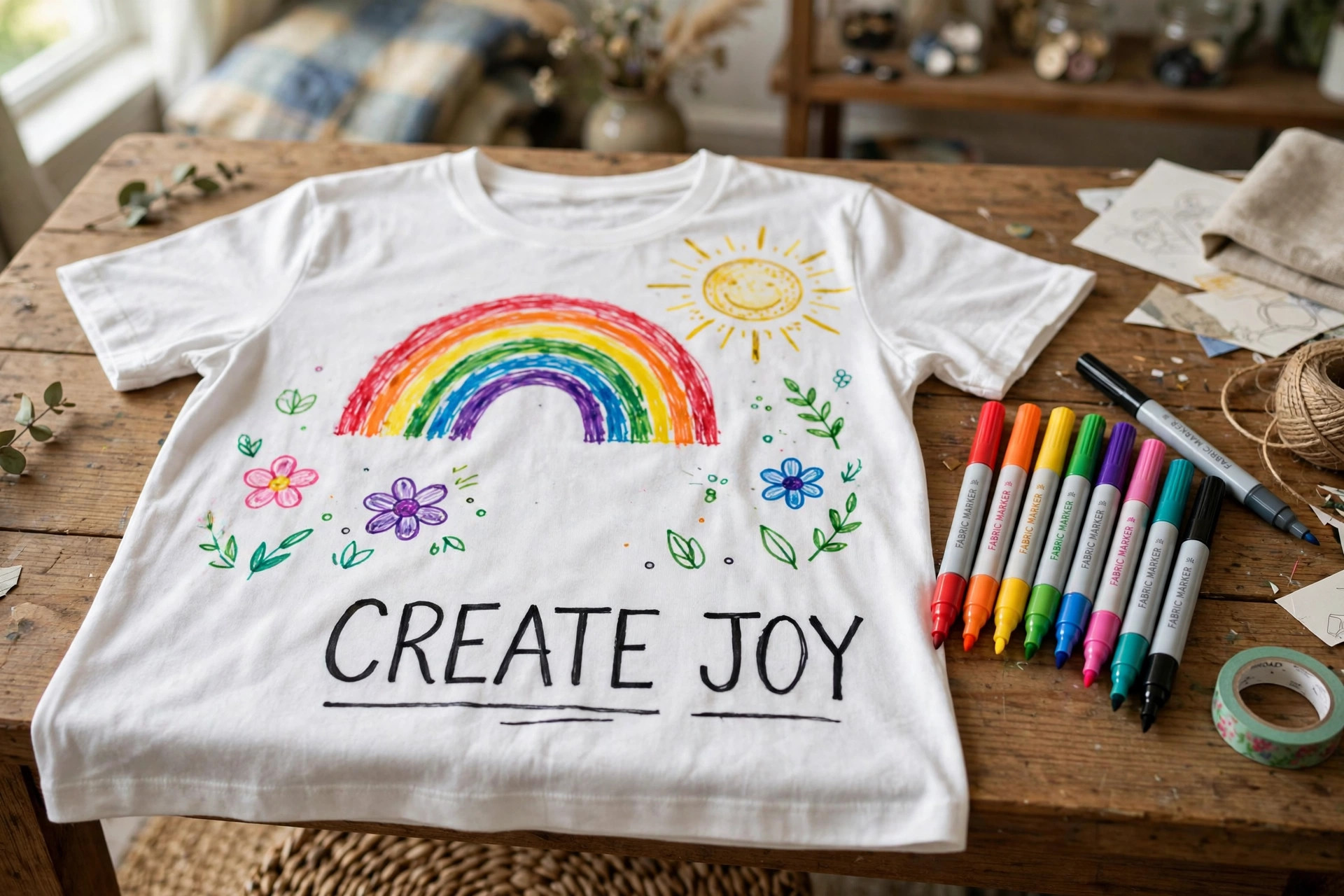

Decorating a plain t-shirt with fabric markers is one of the simplest crafts a family can enjoy. No sewing machine is needed. No paint brushes and jars of dye are needed. A shirt, a set of markers, and a little patience are enough. The best fabric markers for t shirt decorating lay down bright, lasting color that survives the wash. The wrong markers bleed, fade, and crack after two or three trips through the laundry. This guide explains how to tell the difference, what types are on the market, what they cost, and how to care for a decorated shirt so the design lasts for years.
Why It Matters
Fabric markers are not the same as ordinary felt-tip pens. Ordinary markers use ink that sits on the surface of paper and washes out of cloth in a single rinse. Fabric markers use special ink or paint made to bond with cloth fibers. Once the color sets, usually with heat from an iron, it becomes part of the fabric itself.
The stakes are small in money but large in feeling. A child may spend an afternoon making a birthday shirt for a grandparent. An adult may letter a shirt for a family reunion or a school fundraiser. If the color fades in the first wash, the disappointment is real. Choosing well at the start costs only a few extra dollars and saves that heartbreak. Good markers also write more smoothly, which means less hand strain and cleaner lines for young artists. For anyone who wants a craft that children can also enjoy, a look at the best stamp set for card making crafts offers another gentle entry point into paper and cloth crafts.
How to Choose the Right Markers: Best Fabric Markers for T Shirt Decorating
Not every set on the shelf is equal. Five features separate the good sets from the poor ones.
Tip Size and Shape
Fabric markers come with tips that range from ultra-fine points, about the width of a ballpoint pen, to broad chisel tips as wide as a thumb. Fine tips are best for lettering names, drawing small details, and coloring inside tight shapes. Broad tips cover large areas quickly and give bold, even color. Many experienced crafters keep both: a fine-tip set for outlines and details, and a broad-tip set for filling in background color. Brush tips, which bend like a paintbrush, give expressive strokes for lettering and shading.
Ink Type
Three ink families dominate the market. Fabric dye markers hold liquid dye that soaks into the fibers. They feel soft on the finished shirt because the color lives inside the cloth. Fabric paint markers hold a thicker, paint-like ink that sits on top of the fibers. They give strong, opaque color on dark shirts but can feel stiff. Alcohol-based fabric markers blend beautifully for shading and gradients but need a heat set and may fade faster than paint types. The ink family matters most when you know whether the shirt is light or dark.
Wash Fastness
The single most important quality is how well the color holds up in the wash. Quality markers state wash resistance on the package. Look for language such as “permanent after heat setting” or “machine washable.” Markers that need no heat setting exist, but the color is often weaker. As a rule, plan to heat-set every design with a warm iron, even when the package says it is optional. That single step doubles the life of the design.
Color Range
A set with 24 to 36 colors serves most projects well. Large sets of 48 or 80 colors please advanced artists but cost much more. For children, eight to twelve bright colors are plenty. Check whether the set includes the colors you will actually use. Black and white are the most useful colors in any kit. Black gives outlines and lettering. White writes on dark fabric where other colors fail.
Brand Quality and Reviews
Well-known craft brands test their inks for wash fastness and safety. Reading reviews before buying pays off. Stores such as Michaels and Joann stock fabric markers from established brands and often show customer reviews on their product pages. Art supply specialists such as Blick carry artist-grade fabric markers with honest product descriptions. General retailers like Target, Walmart, and Amazon make comparison shopping easy because many brands sit side by side with star ratings.
Types of Fabric Markers
Five common types appear on store shelves. Each suits a different style of project.
Fabric Dye Markers
Dye markers deliver true fabric dye in pen form. The color sinks into the fibers and leaves the cloth feeling natural. They work best on light-colored cotton shirts. Their colors blend well while wet, which allows for watercolor-style effects. Their weakness is dark fabric: the dye has no body to cover a dark background.
Fabric Paint Markers
Paint markers carry a thicker ink closer to craft paint. They cover dark fabric well, and metallic and neon colors look strong. The finished design feels slightly raised and stiff to the touch. They are the best choice for black or navy shirts. Most need a 24-hour cure before heat setting.
Puff and 3D Markers
Puff markers expand when heated, rising above the fabric into a soft, puffy line. They give a playful, textured look that children love. They are not meant for fine detail. Use them for dots, stars, and simple shapes. Over-applying the ink causes cracking, so light strokes work best.
Fine Liner Fabric Pens
Fine liners have needle-thin tips for lettering, outlines, and detailed drawings. They behave much like drawing pens on paper. They suit older children and adults who want crisp lines. They dry quickly, which reduces smudging for left-handed artists.
Dual-Tip Markers
Dual-tip sets carry a brush tip on one end and a fine point on the other. They save money and space because one marker does two jobs. Beginners who are unsure which tip they prefer should start here.
Cost and Price
Fabric markers are an affordable craft. A basic set of 12 dye markers costs about four to eight dollars. A mid-range set of 24 to 36 markers costs about twelve to twenty-five dollars. Large premium sets of 48 to 80 markers run from thirty to sixty dollars. Single premium markers, sold open-stock at art stores, cost two to four dollars each.
Price follows quality but not always. Some store-brand sets perform well in wash tests, and some costly sets fade fast. Reviews are a better guide than price alone. A family that decorates shirts a few times a year needs no more than a twenty-dollar set. A crafter who sells decorated shirts at fairs should invest in artist-grade markers and test every color on scrap fabric before selling a shirt.
Home improvement retailers also carry craft supplies in their paint departments, and project guides from sources like Home Depot can help set up a clean, well-lit craft table. For advice on keeping a tidy workspace, the how-to library at Family Handyman offers practical tips that transfer well to craft rooms.
Care and Upkeep of a Decorated Shirt
A decorated shirt needs gentle care, or the design will fade no matter how good the markers are.
Heat-set the design before the first wash. Place a sheet of plain paper inside the shirt to protect the back. Cover the design with a thin cloth and press a warm iron, not hot, over it for two to three minutes. Move the iron slowly so every part of the design gets heat. Some makers prefer to set designs in a warm dryer for thirty minutes instead. Either method works.
Wash the shirt inside out in cold water on a gentle cycle. Use mild detergent and skip the bleach. Wash decorated shirts with similar colors for the first few washes. Hang the shirt to dry or use a low dryer setting. High heat fades color faster than anything else. The shirt should not be ironed directly on the design afterward. If the shirt must be pressed, turn it inside out first.
Store unused markers with the caps tight and the tips pointed up or lying flat, following the maker’s directions. Most sets last two to three years if capped well. A dried-out tip sometimes revives if the marker stands tip-down in a small amount of warm water for a few minutes, though faded performance may follow.
Keeping scissors and other tools sharp and clean matters for fabric crafts of every kind. Crafters who also sew will find the best craft scissors for fabric cutting sharp a useful companion guide. Outdoor crafters who want to extend the hobby beyond cloth may enjoy a diy stepping stone kit for garden path usa as a weekend project.
Safety
Fabric markers are safe for general craft use when a few rules are followed. Choose markers labeled non-toxic and, for young children, labeled for ages three and up. Work in a room with fresh air, especially with alcohol-based markers, which release mild fumes. Cover the table with newspaper or a plastic sheet, because fabric marker ink stains wood and countertops. Have children wear smocks or old shirts, since the ink is designed to survive washing and will not come out of clothing.
Read the label on every set. Some specialty markers carry warnings about use on children’s sleepwear. Sleepwear rules are strict because of flammability standards, and added ink can change how fabric behaves near heat. When in doubt, decorate everyday shirts only. Never let small children chew on marker tips, and keep markers capped and out of reach of toddlers between sessions. Home safety guides from Bob Vila and This Old House cover craft-room ventilation and general household safety in plain terms.
Frequently Asked Questions
Do fabric markers work on dark-colored shirts?
Yes, but you need the right type. Fabric paint markers and opaque metallic markers cover dark fabric well. Standard dye markers will not show up on black or navy shirts. Always test a small spot on an inside seam before starting the design.
Will the design survive the washing machine?
It will if the markers are permanent and the design is heat-set. Wash inside out in cold water and avoid bleach and high dryer heat. Expect some softening of color over many washes. That gentle fade is normal and affects even professional screen printing.
How long do fabric markers last in the drawer?
Unopened, most sets keep for two to three years. Opened and capped properly, they keep about one to two years. Store them away from heat and direct sun. If a tip dries, standing the marker tip-down for a short time often brings it back.
Can young children use fabric markers?
Yes, with supervision. Choose sets labeled non-toxic and suitable for the child’s age. Dress the child in old clothes, cover the work surface, and keep a damp cloth nearby for quick cleanup. Fine-tip markers suit older children; broad tips suit younger hands.
Do I need to wash the shirt before decorating?
Yes. New shirts carry sizing and finishes from the factory that block ink. Wash and dry the shirt once before decorating, and skip fabric softener, which leaves a coating that resists ink. A clean, dry shirt takes color more evenly.
What is the difference between fabric markers and laundry markers?
Laundry markers are made to write small permanent labels on clothing tags. Their lines are thin, their colors are few, and the ink feels stiff. Fabric markers are made for art: broad color ranges, smooth flow, and ink meant to survive washing without stiffness. For decorating, fabric markers are the right tool.
A Final Word
The best fabric markers for t shirt decorating are the ones that match your project: dye markers for soft color on light cotton, paint markers for bold art on dark shirts, and fine liners for careful lettering. Buy a set with enough colors, check the wash rating, and always heat-set the finished design. Then wash gently and enjoy a shirt that stays bright for years. A decorated shirt is more than clothing. It is an afternoon well spent, a gift made by hand, and a memory you can wear.
References
Amazon. (n.d.). Online shopping. https://www.amazon.com Blick Art Materials. (n.d.). Art and craft supplies. https://www.dickblick.com Bob Vila. (n.d.). Home improvement advice. https://www.bobvila.com Family Handyman. (n.d.). DIY home repair and maintenance. https://www.familyhandyman.com JOANN. (n.d.). Fabric and craft supplies. https://www.joann.com Michaels. (n.d.). Arts and crafts supplies. https://www.michaels.com Target. (n.d.). Retail store. https://www.target.com The Home Depot. (n.d.). Home improvement products. https://www.homedepot.com This Old House. (n.d.). Home renovation guidance. https://www.thisoldhouse.com Walmart. (n.d.). Everyday low prices. https://www.walmart.com
Was this guide helpful?

About James Carter
The My Garden US editorial team writes practical, in-depth home and garden guides for American homeowners — tested advice, no fluff.
You May Also Like
DIY Clock Kit for Wall Art Home Crafts
August 22, 2026 0 views
Weaving Loom Kit for Beginners Wall Art: A Complete Guide
March 7, 2026 0 views
The Best Craft Spray Adhesive for Paper Projects: A Plain and Honest Guide
September 30, 2026 1 views