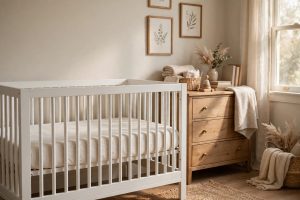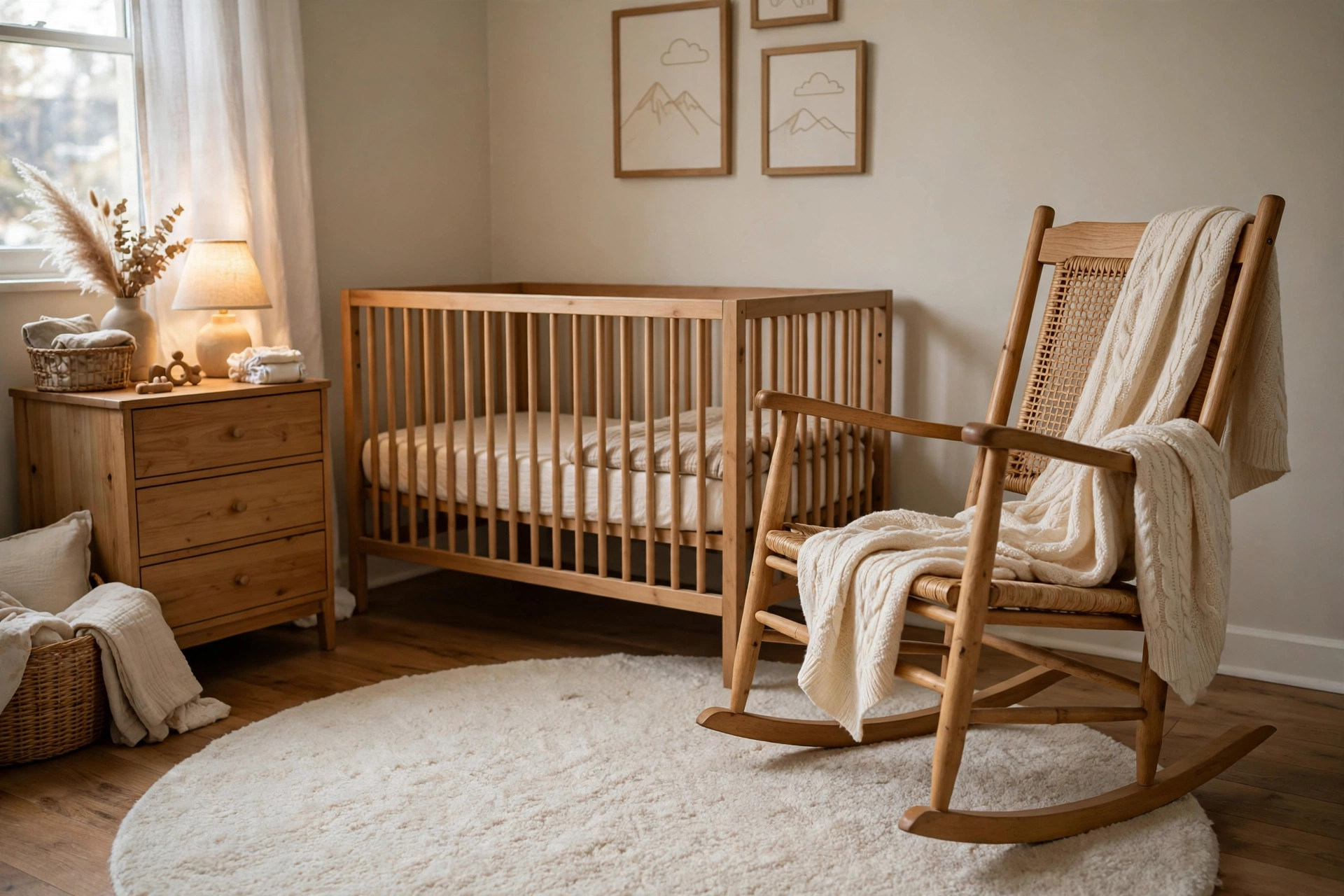

A nursery rug round for rocking chair area is one of the most useful small purchases a new parent can make. The rocking chair is where a mother or father spends long hours. Feeding, rocking, and quiet talks happen there. A round rug under that chair turns a bare corner into a warm place. It softens the floor. It warms cold feet in the night. It also quiets the sound of the rockers moving back and forth.
Why the Rocking Chair Corner Needs Its Own Rug
Most nurseries have hard floors. Wood or tile looks clean and is easy to mop. But bare floors feel cold at three in the morning. A nursing parent sits in that chair many times each day and night. Over months, those hours add up to hundreds of visits to the same spot.
A round rug fits this job well. Its curve sits nicely under a rocking chair. There are no sharp corners to curl up or catch a toe. The chair can rock freely on the rug without sliding off an edge. The shape also marks the corner as a special zone. It tells the eye that this is the place for quiet time.
The right rug also protects the floor. Rockers can scratch wood over time. A thick rug takes that wear instead. When the baby grows and the chair moves out, the rug stays useful. It can go to a play area or a reading nook. Parents often pair the rug zone with a kids bean bag chair for reading corner later, when the child is old enough to sit and listen to stories.
What to Look for Before You Buy: Nursery Rug Round for Rocking Chair Area
Size and Shape
Measure the chair first. A rocking chair needs room to rock. The front legs and the rocker rails should sit on the rug with room to spare. For most full-size rockers, a round rug of four to five feet across works well. A glider chair is wider, so it may need five to six feet.
Do not buy too small. A tiny rug looks lost under a large chair. It also fails to protect the floor where the rockers move. Do not buy too large either. An oversized rug can cover wall vents or reach the crib legs and look messy.
Lay tape on the floor in a circle before you order. This simple step shows how the size will look in the room. It also shows whether the rug will bump into the dresser or the door swing.
Material and Feel
Nursery rugs should be soft under bare feet. Wool is warm and lasts for years. It resists stains better than many parents expect. Wool also muffles sound, which helps the room stay quiet. The cost is higher, but the life is long.
Cotton rugs are cheaper and easy to wash. Many cotton rugs can go straight into a washing machine. They are light, so one person can move them. They do wear out faster, and thin cotton may bunch under the chair.
Synthetic rugs, often made of polyester or nylon, resist stains well. Spilled milk and spit-up wipe off easily. They come in many colors and hold their shape. Some are very soft, though they may feel less natural than wool or cotton.
Think about texture as well. A low pile is easier to vacuum and keeps the chair rocking smoothly. A very thick shag rug feels nice but can slow the rockers. A medium pile gives a good mix of comfort and function.
Color and Style
A calm nursery helps a baby settle. Soft whites, creams, light grays, and pale pastels work well around a rocking chair. These colors reflect night-light glow and keep the corner gentle. If the rest of the room is plain, the round rug can carry a pattern. Stars, dots, and simple arcs are common choices.
Darker colors hide stains better. A medium gray or warm beige forgives the small marks of daily life. Bright white looks beautiful in a photo but shows every drop of milk.
Match the rug to the room, not the other way around. The chair, the wall color, and the curtains matter more. The rug is the base that ties them together.
Types of Round Nursery Rugs
Flatweave rugs are thin and firm. They slide less on the floor and sit well under rockers. They are simple to clean. They offer less cushion for feet, but a pad under them can fix that.
Tufted rugs are soft and plush. They feel good and look full. They cost more than flatweave rugs. They may shed a little at first, which is normal for new tufted rugs.
Braided rugs have a classic look. They are sturdy and handle rocking well. Many are made of cotton or jute blends. Jute looks natural but feels rough. For a nursery, a soft cotton braid is a better pick than rough jute.
Washable rugs are a smart choice for nurseries. Many brands now sell thin washable rugs in round shapes. When a stain appears, the whole rug goes in the wash. Parents with pets or older siblings find these very practical. Reading guides from The Spruce can help compare washable rug options and care tips.
Rug pads matter too. A thin pad under the rug stops it from sliding. It adds cushion without making the rug too thick. Look for a pad made for low-pile rugs. A pad with a safe, low-odor backing is best for a baby room.
Cost and Price
Prices for a nursery rug round for rocking chair area vary widely. A basic cotton round rug of four feet may cost between twenty and forty dollars. A mid-range polyester or tufted rug often runs from forty to one hundred dollars. A quality wool round rug can cost one hundred to three hundred dollars or more.
Size drives price up fast. Each extra foot of diameter adds material and cost. Brand names also raise the price. A plain rug from a large store costs less than a designer rug of the same size.
Shop sales during holiday weekends. Many stores discount nursery items several times a year. Clearance sections often hold round rugs in good colors. Online stores carry wide choices, and sites like IKEA and Pottery Barn Kids stock nursery-safe rugs in round shapes.
Set a budget before you shop. Decide what you will pay for the right rug. It is easy to spend too much on nursery decor. A good rug does not need to cost a fortune. Comfort and safety matter more than a label.
Care and Upkeep
A nursery rug gets heavy use. Milk spills, drool, and dust settle into it daily. A simple care routine keeps it fresh.
Vacuum once a week with a gentle setting. Strong suction can pull up fibers on delicate rugs. For spills, blot right away. Rubbing pushes the stain deeper. Plain water and a mild soap handle most small messes.
Check the care tag before washing. Machine-washable rugs follow simple rules. Use cold water and a gentle cycle. Air dry or tumble dry on low. Never use harsh bleach on a nursery rug.
Rotate the rug every few months. The chair wears one spot more than the rest. Turning the rug spreads the wear evenly and extends its life. Sun from a window can also fade one side, so rotation helps there too.
Replace the rug when it looks worn. Thin spots under the rockers lose their cushion. A rug that bunches or curls at the edge can trip a tired parent. Safety comes first, and a new rug costs less than a fall.
Safety Notes for Nurseries
A baby room must be safe above all else. Rugs play a part in that safety.
Choose a rug that lies flat. Thick edges can catch a toe. A rug that slides across the floor is a hazard. Use a non-slip pad under every nursery rug. Tape made for rugs also works on hard floors.
Check materials for safety. Many rugs carry labels about low emissions or safe dyes. These labels give parents extra peace of mind. Avoid rugs with loose fibers that a crawling baby could pull and put in the mouth.
Keep cords and small items away from the rug area. The rocking corner should be simple. A lamp with a stable base, the chair, and the rug are enough. A cluttered corner is harder to keep clean and safe. Guidance from HealthyChildren.org offers clear advice on setting up a safe nursery.
The U.S. Consumer Product Safety Commission tracks nursery product recalls. It is wise to check cpsc.gov now and then for news about nursery items in your home. Safety rules change as new research comes out.
Also think about the wider room. Many parents later add a crib bumper alternative breathable mesh liner when safety questions come up about crib bumpers. Planning the whole nursery with safety in mind saves worry later.
FAQ
What size round rug fits under a rocking chair?
A rug four to five feet across fits most standard rocking chairs. Measure your chair with the rockers at full swing. Add six to twelve inches on each side. Glider chairs often need five to six feet. Tape a circle on the floor first to test the size in the room.
Should the rug go under the whole chair or just the front?
The whole chair should sit on the rug. The rockers or glider base need full support. If only part of the chair rests on the rug, the chair may tilt or rock unevenly. Full coverage also protects the floor where the rockers move.
Is a round rug better than a square rug for a rocking chair?
A round rug suits a rocking chair well. The curve matches the rocking motion. There are no corners to catch or curl. A square rug can work too, but the round shape marks the corner as a special zone and looks softer in a nursery.
What material is safest for a nursery rug?
Low-pile wool, cotton, and quality synthetics are all common choices. Pick a rug with safe dyes and low odor. Avoid rough fibers like raw jute where a baby may crawl. Use a non-slip pad underneath. Parenting resources such as What to Expect and Good Housekeeping publish regular guides on nursery setup and material choices.
How do I clean spit-up and milk from the rug?
Blot the spot right away with a clean cloth. Use plain water and a drop of mild soap. Do not rub, because rubbing spreads the stain. For washable rugs, follow the tag and machine wash on gentle. Let the rug dry fully before putting it back.
Can the rug stay when the baby becomes a toddler?
Yes. Many families keep the rug for years. It works under a small chair, a toy basket, or a play tent. As the child grows, the corner may hold a best kids chair for desk ergonomic support for drawing and homework. A quality rug adapts to each stage.
A Short Final Word
A nursery rug round for rocking chair area is a small buy with a big daily effect. It warms the floor for night feedings. It quiets the room. It guards the floor from the rockers. Pick the right size, choose a soft safe material, and keep it clean. The rocking corner will become the calm heart of the nursery. That quiet corner will hold some of the best memories of the baby years.
See Wayfair for more detail.
References
American Academy of Pediatrics. (n.d.). HealthyChildren.org. https://www.healthychildren.org Good Housekeeping. (n.d.). Product reviews and home advice. https://www.goodhousekeeping.com IKEA. (n.d.). Home furnishings. https://www.ikea.com Pottery Barn Kids. (n.d.). Kids furniture and decor. https://www.potterybarnkids.com The Spruce. (n.d.). Home and garden advice. https://www.thespruce.com U.S. Consumer Product Safety Commission. (n.d.). Product safety information. https://www.cpsc.gov Wayfair. (n.d.). Furniture and home goods. https://www.wayfair.com What to Expect. (n.d.). Pregnancy and parenting guidance. https://www.whattoexpect.com
Was this guide helpful?

About Sarah Mitchell
The My Garden US editorial team writes practical, in-depth home and garden guides for American homeowners — tested advice, no fluff.
You May Also Like
Nursery Rocking Chair Upholstered for Comfort: A Plain Buying Guide
February 21, 2026 0 views
The Best Kids Bed Tent for a Cozy Sleep Space
February 6, 2026 0 views
Kids Loft Bed With Slide for Fun Bedroom: A Parent’s Guide
August 3, 2026 0 views