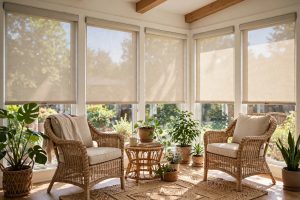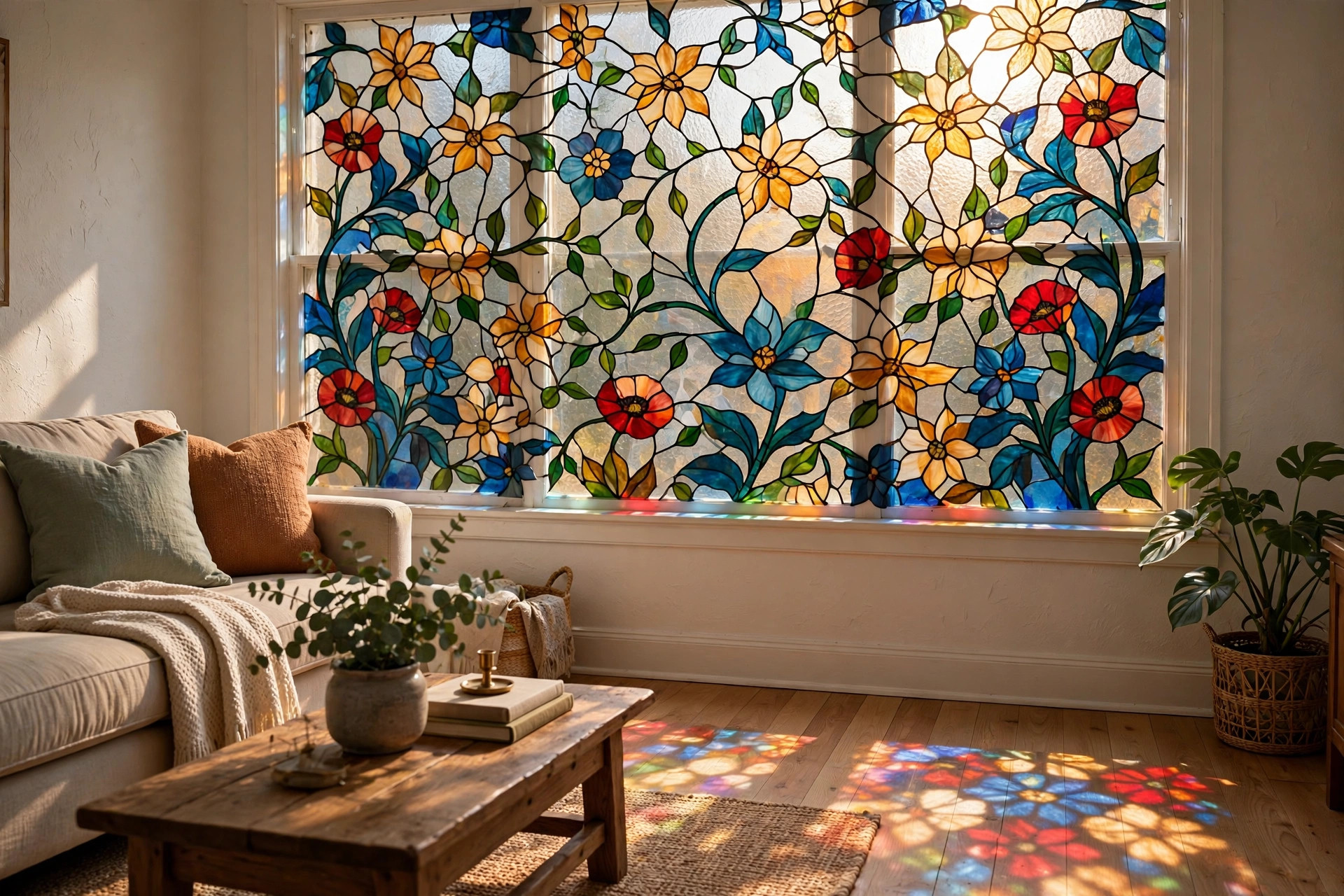

If you live in the South, you know the sun. It comes in strong. It fills the rooms. It also fades the rugs and raises the heat. Real stained glass costs a fortune. It needs a craft worker. It takes weeks to make. Affordable stained glass window film for southern states gives you the same bright color at a small price. You can put it up in an afternoon. You can take it down if you move. This guide walks through all of it. What the film is. Why it suits the South. How to pick a pattern. What it costs. How to keep it clean. And how to stay safe with cords and sharp tools.
Why Stained Glass Film Matters in the South
Southern states get more sun than most of the country. From Texas to Florida, from Georgia to Arizona, windows face long, hot days. That much light is a blessing. It is also a problem. Bare glass lets heat pour in. It fades wood floors. It turns sofas pale. It makes the air conditioner run harder. Energy saving guidance for windows notes that window film can be one part of a larger plan to cut heat gain. Stained glass film goes one step further. It tames the glare. It throws soft color across the floor. It gives the room a lift.
Privacy is the second gain. Many southern homes sit close to the street. Or neighbors look in from the side. Sheer curtains help. Blinds help. But film blocks the view while letting light pass. That is a rare mix. You keep the bright room. You lose the feeling of being watched. People who want simple privacy window film buying advice often find stained glass patterns a good answer. The pattern hides shapes. It does not hide the sun.
The third gain is style for little money. Real leaded glass can run into thousands of dollars per window. The film gives the look for the price of a family dinner. For renters, it is ideal. You stick it on with water. You peel it off when you go. No glue stays behind. No landlord needs to sign off on a big change.
What Stained Glass Window Film Is: Affordable Stained Glass Window Film for Southern States
The film is a thin sheet of plastic. Most kinds are PVC or PET. It sticks to glass with static or a light glue. The print copies real stained glass. It shows lead lines. It shows colored panes. Some copies copy old church windows. Some copy art nouveau flowers. Some copy simple geometric shapes. When the sun hits, the colors glow. It looks real from across the room.
Two kinds exist. Static cling film uses no glue. You spray water on the glass. You press the film on. You smooth out bubbles. It holds by itself. You can move it again and again. Self-adhesive film uses a light glue layer. It sticks harder. It lasts longer. It is harder to move. For a first try, static cling is the kind to buy. It forgives mistakes.
The film comes in rolls. Common widths are 17, 24, and 36 inches. You cut it with a craft knife and a straight edge. You trim it to fit the pane. It works on flat glass only. Do not put it on textured glass. The bumps stop it from sticking. Do not put it on a cracked pane. Heat can make a crack grow.
How to Choose the Right Pattern
The pattern sets the mood. Small floral prints suit a kitchen. Tall geometric prints suit a bathroom door. Deep blues and reds give a church feel. Pale amber and green give a garden feel. Hold a sample against the window before you buy a full roll. Look at it in morning light and evening light. Colors change through the day.
Light control matters too. Some films are dark. They cut a lot of glare. Some are light. They only break up the view. If the room gets full afternoon sun, pick a medium pattern. You want less glare but not a dark cave. Pair it with a plain shade for night. Blackout roller shade prices vary widely, so check reviews before you buy. For humid southern rooms, drapes made for damp climates can be a smart partner to film. The two together give day privacy from the film and night dark from the drapes.
Size and repeat count too. Large patterns suit large windows. Small patterns suit small panes. A sidelight by the front door looks best with a tall, narrow design. A wide picture window wants a pattern with big color fields. Measure each pane twice. Leave a small gap at the edges. Water needs a way out when you smooth the film.
Southern Sun and Heat: What to Expect
The southern sun is strong enough to test cheap film. Poor film curls at the edges after one hot summer. It turns yellow. The colors fade. Good film holds its color for five to eight years. It may last longer on a north-facing window. It may last less on a west-facing window that takes the full afternoon blast.
Heat is the hard part. Film alone does not stop much heat. It cuts glare. It adds a soft layer. But it is thin. If your main goal is a cooler room, film is only step one. Blinds and shades retailers carry cellular shades that trap air and cut heat better. A good plan is film for looks and privacy, plus a shade for real heat control. Used together, the room stays bright and cooler.
Moisture is another southern fact. Bathrooms steam up. Coastal homes get damp air. Static cling film can loosen when the glass sweats. Press the edges down again. A dry cloth helps. Self-adhesive film holds better in damp rooms. But it is harder to take off. Pick based on the room. Kitchen and bath windows do well with the glue kind. Living room windows do well with the cling kind.
Cost and Price
Affordable stained glass window film for southern states lives up to its name. Rolls run from about ten to forty dollars. A single roll covers several windows. The price per window often lands under ten dollars. That beats curtains. It beats real glass by miles.
What sets the price? Width and length set it first. Brand name sets it next. Some brands print sharper lines. Some use thicker stock that lays flatter. A kit with a squeegee and knife costs a little more. Buy the kit if this is your first time. The tools make the job much easier.
Shop around. Large home stores carry rolls on the shelf. Lowe’s window treatment aisles stock several brands. Online stores show more patterns. Wayfair’s window film selection runs wide. Read the reviews. Look for notes about color fade in hot sun. Look for notes about easy removal. A film that peels off clean is worth a few dollars more.
Real stained glass, for comparison, starts near a hundred dollars per square foot. It needs a frame. It needs an installer. Film costs less than a tenth of that. For most southern homes, film is the sane choice.
How to Install It Yourself
You need a spray bottle, water, a drop of dish soap, a craft knife, a straight edge, and a squeegee or old credit card. Clean the glass first. Use glass cleaner. Dry it well. Dust under the film makes bubbles you cannot fix.
Cut the film one inch wider than the pane. Fill the spray bottle with water and one drop of soap. Spray the glass until it is wet. Peel the back from the film. Lay the film on the wet glass. The water lets you slide it into place. Line up one edge. Then smooth from the center out. Push water and air to the edges. Wipe them up with a towel.
Trim the extra with the knife. Hold the straight edge along the frame. Cut slow. One clean pass beats three rough ones. Now step back. Look for big bubbles. Small ones dry out on their own in a day or two. Big ones need a pin prick and a press.
Work out of direct sun if you can. The water dries fast in hot light. That makes the job harder. Early morning works best. The glass is cool. The water stays put. You get time to slide the film.
Care and Upkeep
Stained glass film is easy to live with. Dust it with a soft cloth. Clean it with water and a little soap. Do not use ammonia cleaners. They can dull the print. Do not use rough pads. They scratch the surface.
Watch the edges in hot months. Southern heat can lift a corner. Press it back with a damp finger. If a corner keeps lifting, cut a thin strip of clear packing tape. Lay it along the edge. It holds the film flat. It hardly shows.
Expect some fade over years. West windows fade first. That is normal. The film is cheap. Replace it when the color goes soft. Peel it off slow. Warm the corner with a hair dryer on low. The heat loosens the hold. Pull at a low angle. Wipe the glass with soap and water. You can lay new film the same day.
In storm season, keep in mind the film is not safety glass. It does not stop a branch. It does not stop hail. Take the usual storm steps for your glass. The film is decoration. It is not protection.
Safety Notes
Window film is safe when used with care. A few rules keep it that way. Keep knives away from children during install. The craft knife is sharp. Cut away from your body. Lay a cutting mat under the film if you can.
Ventilation matters little for film itself. It gives off no strong smell. But if you pair film with new paint or new sealant, air the room out. Fresh paint fumes and heat do not mix well.
Cord safety is worth a note. Film has no cords. That is one of its charms. But many windows carry blinds with cords. If small children or pets live in the home, corded blinds are a risk. The CPSC window covering safety page explains cord hazards and recalls. When you add film, it is a good time to switch corded blinds to cordless. The room gets safer. The look stays clean.
Fire safety counts too. Film is plastic. Keep it away from open flame. Do not use it near a stove backsplash or a fireplace surround. It belongs on windows only. It melts if heat gets too close.
Frequently Asked Questions
Does stained glass film really look like real stained glass? From a few feet away, good film looks very close. The lead lines print dark. The colors glow in the sun. Up close you can see it is flat. Guests rarely look that close. For the price, the effect is strong.
Will it work on a double-pane window? Yes, on most flat double-pane glass. Put the film on the inside face. Keep it out of the air gap. Never try to open a sealed unit to put film inside. That breaks the seal. It also voids most warranties.
How long does it last in hot southern sun? Plan on five to eight years on a south or west window. North windows can go longer. Cheap film may fade in two or three years. A brand with UV-stable inks lasts longer. Read reviews from buyers in hot states.
Can renters use it without losing their deposit? Static cling film peels off clean. That makes it renter friendly. Check your lease first. Some leases bar any window change. Most do not mind film. Peel it off before the move-out walk-through. Clean the glass after.
Does it block UV rays? Most films block a good share of UV. That helps slow fabric fade. It does not make the room dark. Check the product label for the UV rating. Higher numbers mean more block.
Can I layer it with curtains or shades? Yes. Film and curtains work well together. Film gives day privacy. Curtains or shades give night dark. Mount the shade inside the frame if you can. The film stays flat on the glass. Nothing rubs.
A Short Final Word
Affordable stained glass window film for southern states is a small project with a big payoff. It costs little. It goes up fast. It turns harsh southern light into soft color. It gives privacy without dark rooms. It peels off clean when plans change. Pick a pattern you love. Measure with care. Smooth out the bubbles. Then step back and watch the sun do the rest. Your windows will look like they cost a fortune. Your wallet will know better.
Related guides on this site include affordable outdoor patio curtains with free shipping, top rated blackout curtains for bedrooms for sale, and navy blue velvet curtains reviews and buying guide.
References
Amazon. (n.d.). Online shopping. https://www.amazon.com Blinds.com. (n.d.). Window blinds, shades, and shutters. https://www.blinds.com Consumer Reports. (n.d.). Product reviews and ratings. https://www.consumerreports.org HGTV. (n.d.). Home and garden ideas. https://www.hgtv.com Lowe’s. (n.d.). Home improvement products. https://www.lowes.com U.S. Consumer Product Safety Commission. (n.d.). Product safety information. https://www.cpsc.gov U.S. Department of Energy. (n.d.). Energy efficiency and renewable energy. https://www.energy.gov Wayfair. (n.d.). Furniture and home goods. https://www.wayfair.com
Was this guide helpful?

About Lisa Anderson
The My Garden US editorial team writes practical, in-depth home and garden guides for American homeowners — tested advice, no fluff.
You May Also Like
Top Rated Pinch Pleat Drapes for Small Apartments
May 31, 2026 0 views
Top Rated Faux Wood Blinds for USA Homes
February 7, 2026 0 views
Custom Cafe Curtains for Kitchens for Sale: A Complete Buying Guide
May 27, 2026 0 views