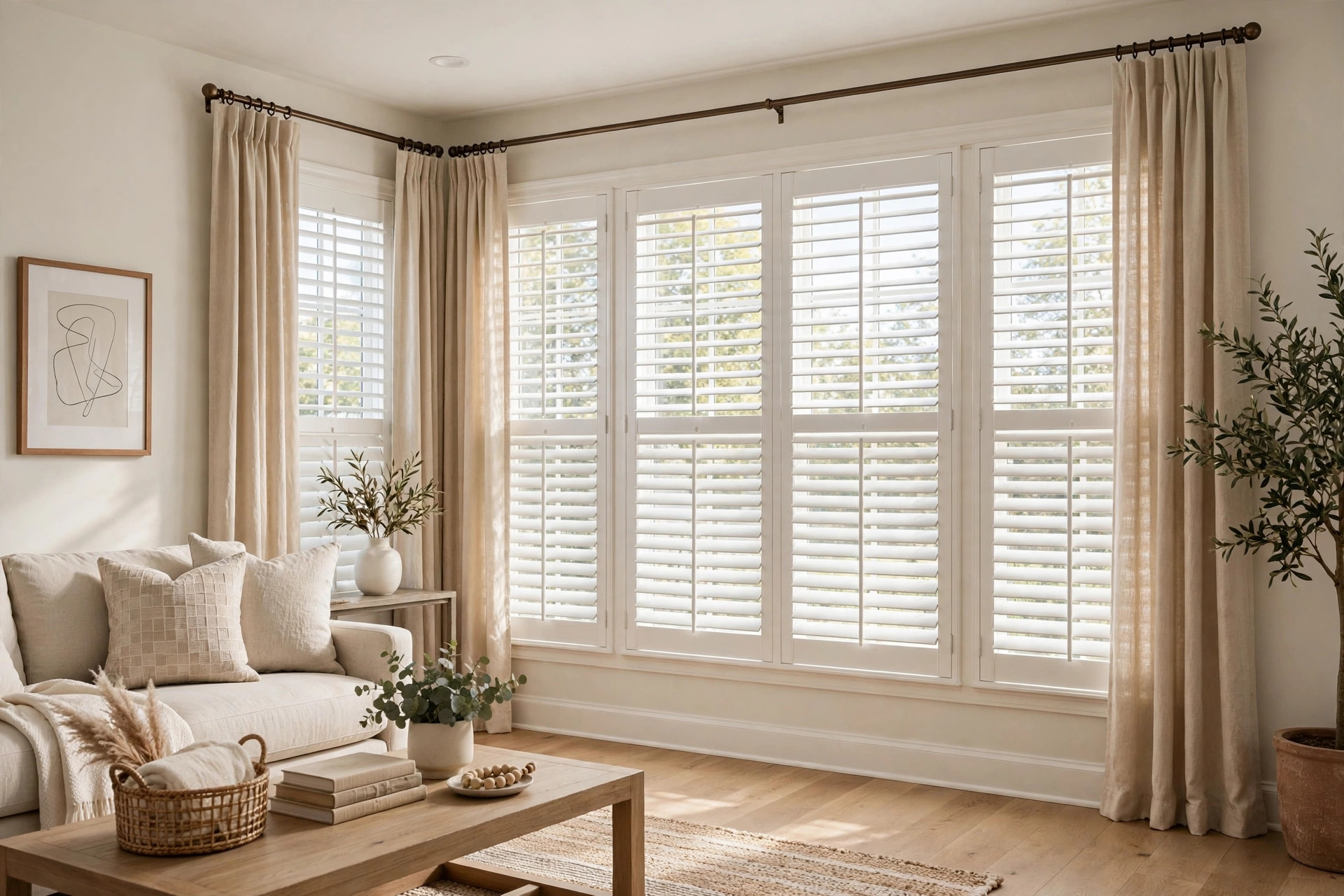

New curtains and blinds can change a room in a single afternoon. The fabric is only half of the story. The other half is the work of hanging it right. This window treatment installation services cost guide usa is written for the homeowner who wants honest numbers. It explains what installation services do, what they charge, and how to pick one with care.
Prices vary from state to state and from room to room. A simple blind on one window may cost little. Full drapery on a whole floor may cost much more. The pages below lay out the parts of the bill. They also show how to avoid common errors. If you also need work on shutters, see our notes on top rated shutter installation services for homeowners.
Why Installation Matters
Many people buy fine window coverings and then hang them badly. A blind that sits crooked will not close all the way. A drapery rod set too low will make the ceiling look lower. Small errors take away from the money spent on the fabric.
A professional installer brings three things. The first is proper tools. Brackets must go into studs or anchors. Soft walls need special fasteners. The second is a true measure. Windows that look square are often not. An installer checks the frame at three points before he drills. The third is experience. He has hung hundreds of windows and knows the hard ones.
Good installation also protects your purchase. Many makers will not honor a warranty on a product that was hung wrong. A torn mount can damage drywall. A heavy drape can pull a weak rod from the wall and break. The U.S. Consumer Product Safety Commission notes that cords on window coverings pose a hazard to small children, and proper installation keeps cords out of reach.
What to Look for When You Choose a Service: Window Treatment Installation Services Cost Guide Usa
Start with the license and the insurance. Most states do not require a special license for this trade. Still, a serious company carries general liability insurance. Ask to see proof. If a worker falls from a ladder in your home, you want the company covered.
Ask how long the crew has been in business. Five years is a good sign. Ten is better. Ask for three recent references and call them. Ask whether the crew arrived on time and cleaned up after the job.
Get the bid in writing. The paper should list each window by name or by room. It should show the labor charge per window. It should list any extra fees. Travel fees are common in rural areas. A fee for a second trip is fair if you add work later. Ask what happens if a product arrives broken. The installer should hold the old coverings until the new ones work. This Old House has long advised homeowners to get every promise on paper before work starts.
Check the warranty on the labor itself. One year is common. Two years is generous. It covers brackets that loosen and motors that need a reset. It does not cover normal wear on fabric.
Read reviews with care. Look for patterns. One bad review about a late truck means little. Six reviews about scratched sills mean much. Large retailers such as The Home Depot and Lowe’s list installer ratings beside their services, which can help you compare.
Types of Installation Services
Not every service is the same. Know which kind you are calling.
Retailer installation. Big stores sell the product and send an installer. The price is often a flat fee per window. The installer works for a contractor, not the store. The wait may be two to four weeks in a busy season. This path suits a standard blind or shade.
Manufacturer installation. Custom brands such as Blinds.com ship the product and arrange a local fitter. The price is higher, but the fit is exact. This path suits motorized shades and custom shutters.
Independent local installers. These are small firms or single craftsmen. They often charge by the hour or by the window. They handle hard cases well. Arched windows, bay windows, and tall walls need their skill. Search a local directory or ask a decorator for a name. The Bob Vila site keeps guides on finding skilled local trades.
Handyman services. A general handyman can hang simple blinds and curtain rods. He is cheaper than a specialist. He is a good choice for a rental unit or a quick fix. He is not the best choice for motorized systems or for heavy drapery. If blinds are your main need, you may also want to compare best blinds installation companies near me.
Design firm installation. Interior designers often send their own workroom crew. The cost is highest here. The result matches the design plan exactly. This path suits whole-home projects with drapery, valances, and trims.
What Is Usually Included
A full service visit has five parts. The crew lays drop cloths. They mount brackets to the frame or wall. They hang the product and test every moving part. They set limits on motorized shades so the hem stops in the right place. Then they take away packing and old hardware if you ask. Haul-away of old blinds may carry a small fee.
Some firms offer a free measure visit. This is a real service. The measurer checks every window and writes down the numbers. You may buy from another seller after, but most people stay. If you skip the measure visit, the risk of a wrong size falls on you.
Cost and Price
Now to the heart of this guide. Costs depend on the product, the window, and the labor market in your town. The numbers below are common ranges seen across the USA. They cover labor only, unless noted.
Per-window labor rates. A simple roller shade or mini blind runs about $50 to $80 per window for installation. A cellular shade runs about $60 to $90. A wood blind runs about $70 to $110. Plantation shutters run about $100 to $175 per window because the frames need exact shims. Drapery panels on a rod run about $75 to $150 per window. Full custom drapery with a board or cornice runs about $150 to $300 per window.
Whole-home packages. A typical ten-window job in blinds may carry $600 to $1,200 in labor. The same home in shutters may carry $1,000 to $1,800. A full drapery job for a living room and dining room may carry $800 to $2,000 in labor. Firms often cut the per-window rate when you book six windows or more.
Motorized and smart products. Motorized shades need more time. The installer must wire or pair each unit. He must test remotes and app links. Expect $120 to $250 per window for motorized work. Some firms add a setup fee of $100 to $200 for the whole system.
Difficult windows. Extra charges are fair here. A window over a stairwell may add $50 to $100. A skylight may add $75 to $150. A bay window with three sections counts as three windows. An arched top needs a template, which may add $75 or more.
Geography matters. Large cities pay more. A job that costs $60 a window in a small town may cost $95 a window in a coastal city. The west coast tends to run high. The south and midwest tend to run lower. Homeowners in the Golden State face some of the highest rates; see our notes on reliable window treatment installation services in california for local detail.
Travel and minimum fees. Many firms set a minimum visit fee of $100 to $200. If you need one blind hung, you still pay the minimum. Rural jobs may add a trip fee of $25 to $75.
How to Get a Fair Bid
Ask for three bids. Make sure each bid lists the same windows. A low bid that skips the haul-away fee is not really lower. Ask whether the price is per window or per hour. Ask how the firm handles a product that arrives the wrong size. A good firm reorders and returns free of charge. A poor firm blames the seller.
Watch out for pressure. A firm that demands a large deposit is a warning sign. Ten to twenty percent down is normal. The rest is due when the work is done and you are pleased. Never pay the full sum before the first drill hole.
Check seasonal sales. Late winter and late summer are slow months for installers. Some firms cut labor rates by ten to fifteen percent to fill the calendar. Wayfair and IKEA run their own seasonal sales on coverings, which pairs well with a winter install.
When Do-It-Yourself Makes Sense
A handy homeowner can hang a basic blind in twenty minutes. The tools are a drill, a level, and a pencil. If you rent, a tension rod avoids holes in the wall. Save the professional for motorized shades, for shutters, and for any window above a stairwell. Falling from a ladder is a real risk. The labor saving is not worth a broken ankle.
Care and Upkeep
Installed coverings need little care, but a small routine keeps them fresh. Dust blinds once a week with a soft cloth or a vacuum brush. Wash sheer curtains twice a year in cool water. Check cord cleats once a year and tighten any loose screws.
Motorized shades need battery changes. Most take a charge or new batteries once a year. Note the date when you change them. If a shade moves slowly or stops halfway, the battery is the first suspect. The Spruce home site has guides on routine shade care, and you can browse them at The Spruce.
Drapery hems collect dust. Shake them out twice a year. If a hem puckers, a steam iron on low heat will smooth it. Keep the iron moving so you do not scorch the fabric. For lined drapes, call a dry cleaner that handles window coverings.
Tighten brackets once a year. Sun and daily use loosen screws over time. A five-minute check saves a falling rod. If a bracket pulls out of drywall, do not just use a longer screw. Use a proper wall anchor or move the bracket to a stud.
Safety
Safety comes first with any window covering. Cords are the main hazard. Keep all cords and bead chains out of the reach of small children and pets. Use cord cleats to wrap up long cords. Better yet, choose cordless blinds or motorized shades for homes with young children. The federal safety commission has pushed for cordless designs for years; their guidance is at CPSC.gov.
Anchors matter. A heavy drapery rod can weigh many pounds. It must sit in studs or rated anchors. A rod that falls can injure a child or a pet. Test each rod with a firm pull before you call the job done.
Ladders need care. Set the ladder on level ground. Keep three points of contact at all times. Do not lean past the rails. For very high windows, hire the work out. HGTV often reminds readers that a professional is cheaper than an emergency room visit.
Frequently Asked Questions
How long does installation take?
One standard blind takes about twenty to thirty minutes. A full home of ten windows takes about three to five hours. Motorized shades take longer, about forty-five minutes per window. Custom drapery with a cornice may take a full day for one room.
Do I need to be home during the install?
Yes. The crew needs you to approve each window before they drill. You also need to test each product while the crew is still there. If a shade runs backward or a drape hangs short, speak up at once. It is much harder to fix after the crew leaves.
Should I remove old blinds myself?
You may, but most firms will do it for a small fee, often $10 to $25 per window. Let the crew handle it if the old blinds are heavy or if the mounts are stuck. Ask about the fee when you get the bid so there is no surprise.
What if my windows are not square?
Most older homes have windows that lean a bit. A good installer shims the brackets to make the product hang true. Tell the measurer about any known problem. Inside-mount products need the most exact fit. Outside-mount products forgive small flaws.
Does installation include the product price?
Usually not. The bids in this guide cover labor only. The product price is separate. A few firms sell packages that bundle both. Read the bid to see what is included. Ask plainly: “Is the product price in this number?”
Can I install motorized shades myself?
Some simple battery shades are made for do-it-yourself setup. The app pairs in minutes. Wired shades and whole-home systems are a different matter. They need exact limits and sometimes an electrician. For these, professional window blind installation is worth the cost.
A Final Word
Window coverings are among the few home upgrades that pay you back each day. They give privacy at night and soft light in the morning. They cut glare on your television. They save energy in hot summers. The installation is the quiet step that makes all of this work.
Take your time with the bids. Check the insurance. Get it in writing. Then enjoy the finished windows. A well-hung drape or a true-running blind will serve your home for many years. That is a fair return on the price of a careful install.
References
Blinds.com. (n.d.). Window blinds, shades, and shutters. https://www.blinds.com Bob Vila. (n.d.). Home improvement advice. https://www.bobvila.com HGTV. (n.d.). Home and garden ideas. https://www.hgtv.com IKEA. (n.d.). Home furnishings. https://www.ikea.com Lowe’s. (n.d.). Home improvement products. https://www.lowes.com The Home Depot. (n.d.). Home improvement products. https://www.homedepot.com The Spruce. (n.d.). Home and garden advice. https://www.thespruce.com This Old House. (n.d.). Home renovation guidance. https://www.thisoldhouse.com U.S. Consumer Product Safety Commission. (n.d.). Product safety information. https://www.cpsc.gov Wayfair. (n.d.). Furniture and home goods. https://www.wayfair.com
Was this guide helpful?

About Sarah Mitchell
The My Garden US editorial team writes practical, in-depth home and garden guides for American homeowners — tested advice, no fluff.
You May Also Like

Luxury Waterproof Outdoor Shades with Free Shipping: A Buyer Guide
January 12, 2026 0 views
Custom Cafe Curtains for Kitchens for Sale: A Complete Buying Guide
May 27, 2026 0 views
Premium Custom Drapery Services Near Me: A Homeowner’s Guide
March 6, 2026 0 views