
Many homeowners want to buy metal siding for homes online in California. The idea is simple. You browse styles from home, compare prices across sellers, and have panels shipped to your door or your job site. The process can save money and time. It can also go wrong if you do not know what to order. Metal siding comes in many gauges, finishes, and panel types. California adds its own demands, from hot desert sun to damp coastal air. This guide walks you through the full process. You will learn what to look for, what the common types cost, how online ordering works, and how to care for the siding once it is on the wall.
Why Metal Siding Makes Sense for California Homes
California is a big state with many climates. The coast brings fog, salt air, and steady wind. The inland valleys bring long hot summers. The mountains bring snow and cold nights. Metal siding handles these changes better than wood in most cases. It does not rot. It does not attract termites. It holds its shape through heat and cold.
Fire safety is another reason. Many parts of California sit in wildfire zones. Wood siding can catch and spread flame. Metal does not burn. That does not make a house fireproof. But non-combustible siding is one part of a safer home. Homeowners in fire-prone counties often choose metal for this reason alone.
Metal siding also lasts a long time. A good steel panel can serve 40 years or more. Painted finishes carry warranties of 30 to 40 years in many lines. You will repaint wood siding several times in that span. Metal lets you spend that time and money on other things. Energy guides at energy.gov note that light-colored, reflective surfaces can reduce cooling loads, which matters in hot parts of the state.
What to Look For Before You Buy: Buy Metal Siding for Homes Online in California
The first thing to check is the gauge. Gauge measures steel thickness. A lower number means thicker steel. Most home siding is 24, 26, or 29 gauge. Thicker panels resist dents from hail and stray balls. They cost more. They are worth it on walls that face play areas or busy streets.
The second thing is the coating. Galvanized steel has a zinc layer that fights rust. Galvalume steel has a zinc and aluminum mix. It resists rust even better in many tests. On top of the metal sits paint. Factory paint on metal siding is baked on. It is much tougher than paint you brush on at home. Look for panels with a written paint warranty.
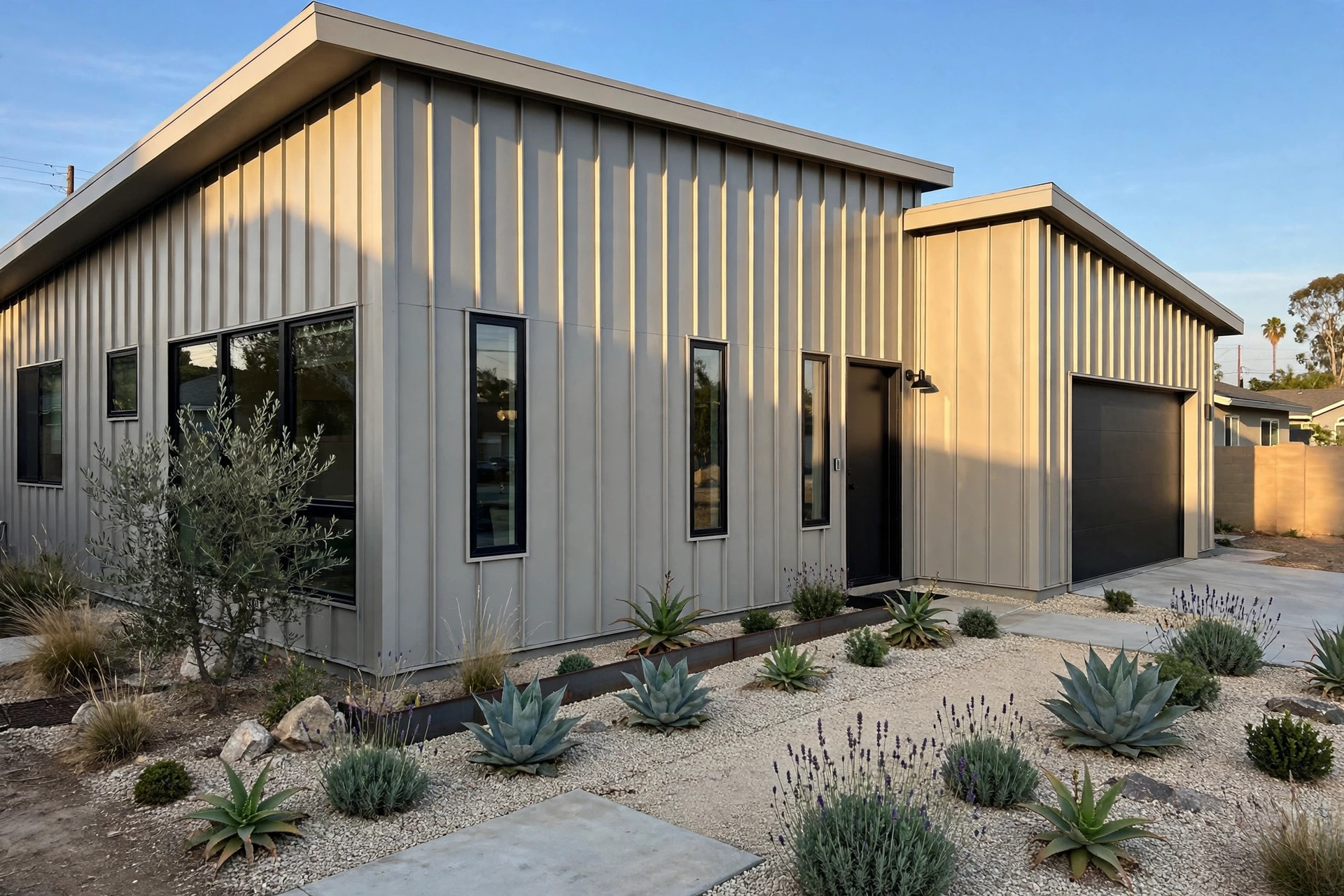
The third thing is the panel profile. Board and batten gives a farm look with narrow strips over wide boards. Standing seam gives clean vertical lines with raised ribs. Corrugated gives a wavy pattern with a rustic feel. Lap profiles copy the look of wood boards laid flat. The profile changes the look of the whole house. It also changes how rain runs off the wall.
Color matters more than many buyers think. Dark colors absorb heat. Light colors reflect it. In hot desert towns, a light color can keep the wall cooler. Many makers offer 20 or more colors. Some offer wood-grain prints that look like cedar or pine from a few steps away.
Finally, check the warranty in full. Read what it covers and what voids it. Some warranties require the installer to follow exact rules for flashing and trim. Online listings often show only the headline number. Ask the seller for the full warranty document before you pay.
Types and Options
Steel is the most common choice. It is strong, fair in price, and widely stocked. Most online sellers carry steel in several profiles. Aluminum is the second choice. It costs more per panel. It weighs less and never rusts the way steel can. That makes it a good pick near the ocean, where salt air attacks steel.
Zinc and copper are premium options. They are rare on full house walls. They appear more on accent walls, entry areas, and small additions. They age with a natural patina that many people find handsome. They cost several times more than steel.
Insulated panels are another option. They bond a foam layer to the back of the metal. The foam adds a small amount of insulation value. It also quiets rain noise and makes the panel feel solid. Insulated panels cost more and weigh more. They ship in fewer pieces per load, which can raise freight costs.
Finish choices go beyond solid color. Some lines offer a matte finish that hides small dents. Some offer a gloss finish that sheds dirt. Wood-look prints suit buyers who want the metal benefits with a wood feel. Check reviews on sites like consumerreports.org and guides at thespruce.com to see how finishes hold up over years of sun.
Cost and Price
Online prices for metal siding usually run from about two dollars to about eight dollars per square foot for the panels alone. Steel in 29 gauge sits at the low end. Thicker 24-gauge steel with a premium finish sits at the high end. Aluminum, insulated panels, and copper cost more.
The panels are only part of the bill. Trim pieces, corner posts, starter strips, flashing, and fasteners add up. A full trim package can add 20 to 40 percent to the panel cost. Delivery is the next cost. Full truckloads ship cheaper per panel than small orders. Some sellers offer free delivery over a set order size.
Labor is the largest cost if you hire out the work. A contractor crew may charge as much as the materials, or more. Get three bids if you can. Ask each bidder how many metal jobs they have done. Metal siding takes different skills than vinyl. Poor cutting and fastening cause oil-canning, which is the wavy look you sometimes see on cheap jobs.
Sales tax and possible permit fees apply in California. Your city or county may require a permit for re-siding. Check before the panels arrive. The building guides at thisoldhouse.com and bobvila.com explain typical permit steps for exterior work.
How to Order Online: Shipping, Samples, and Returns
Ordering online starts with measuring. Measure each wall in feet. Multiply height by width. Subtract large openings like garage doors. Add 10 percent for cuts and waste. Most sellers have a calculator on their site. Use it twice and compare the two results.
Order color samples before you order panels. Screens lie about color. Most makers ship small metal chips for a few dollars. Hold the chips against your house at noon and at dusk. Pick the winner in real light.
Read the shipping terms with care. Ask whether the price includes liftgate service. Panels come in long bundles that need a forklift or a liftgate truck. Rural delivery in California hill country may need a smaller truck, which costs extra. Ask for the delivery time in writing. Factory lead times of two to six weeks are normal for custom colors.
Check the return policy. Many sellers do not accept returns on custom-cut or custom-color panels. Stock colors in stock lengths may be returnable, sometimes with a restocking fee. Damaged goods are a different matter. Photograph the bundle on the truck before the driver leaves. Note any damage on the delivery slip. Repair guides and project checklists at familyhandyman.com show how to spot common shipping damage on metal panels.
Payment safety matters. Use a credit card or a payment service with buyer protection. Avoid wire transfers to sellers you have never met. Read recent reviews of the seller. Big-box sites like homedepot.com and lowes.com carry metal siding lines with clear return terms, which suits first-time buyers. Specialty makers like jameshardie.com and certainteed.com offer deep product data for buyers who want to compare specs line by line.
Care and Upkeep
Metal siding asks for little care. That is one of its main selling points. A wash once or twice a year keeps it clean. Use a garden hose and a soft brush. Add a mild soap for dirty spots. Rinse from top to bottom. Do not use a harsh pressure washer at close range. It can force water behind the panels and dent thin gauge metal.
Walk the walls once a year. Look for loose fasteners, lifted trim, and scratches down to bare metal. Touch up scratches with paint made for metal. Left bare, a scratch on steel can rust. Aluminum will not rust, but a scratch still looks bad.
Keep bushes and sprinklers off the wall. Plants hold moisture against the panels. Sprinklers spray minerals that stain the finish. Trim plants back a foot or more. Aim sprinkler heads away from the house.
Gutters matter too. Clean gutters keep water from running down the siding in sheets. Staining and mineral marks follow dirty gutters. A quick spring cleaning of the gutters protects both the roof and the walls.
Safety
Metal panels have sharp edges. Wear cut-resistant gloves when you handle them. Long sleeves and eye protection are wise. A fresh-cut edge can slice skin faster than you expect.
Roof and ladder work needs care. Metal siding often goes up with scaffolding or tall ladders. Keep ladders on firm, level ground. Never lean a ladder against a panel that is only half fastened. It can slip and take the panel with it.
Electrical safety is easy to forget. Metal conducts electricity. Keep panels and long trim pieces away from power lines. If a panel touches a service line, the result can be fatal. Call your power company if lines run close to the work area.
Fire rules in California add another layer. In high fire severity zones, the state sets rules for exterior materials and vents. Metal siding helps you meet them. Vents, eaves, and deck edges must meet the rules too. Check your local fire code before you start.
Frequently Asked Questions
Can I install metal siding myself? Yes, if you are handy and careful. A simple one-story wall is a fair first project. Cutting panels takes a nibbler or metal shears, not a wood saw. You must keep panels square and fasten them to allow for heat movement. Two-story walls, dormers, and complex corners are better left to a crew with metal experience.
How long does shipping take in California? Stock panels often ship in one to two weeks. Custom colors take two to six weeks from the factory. Add transit time across the state. Remote areas may wait longer. Order early in the building season, since spring brings a rush.
Does metal siding make the house hotter? It can, if you choose a dark color in a hot area. Light colors reflect heat and stay cooler. Insulated panels add a small buffer. Good attic ventilation and wall insulation matter more than the siding color alone. The house will not feel like an oven if the color and insulation are right.
Will metal siding dent? Thin panels can dent from hard hits. Thicker 24-gauge steel resists dents well. Aluminum dents more easily than steel of the same gauge. Place tougher panels on walls near driveways and play areas. Minor dents often hide in textured or matte finishes.
Can I buy metal siding for homes online in California and have it shipped from out of state? Yes. Many national sellers ship into California every week. Compare the delivered price, not just the panel price. Freight from the Midwest or South can erase a low panel price. California-based sellers may match the delivered cost with faster shipping.
Does metal siding need painting later? Factory paint lasts decades. You will likely never repaint it. If you want a new color, paint made for metal works over a cleaned and primed surface. Most owners never touch the finish for the life of the panels.
A Final Word
To buy metal siding for homes online in California is a sound plan when you do the homework first. Measure twice. Order samples. Read the warranty and the shipping terms. Pick a gauge, profile, and color that suit your climate and your street. Many buyers pair the project with other exterior upgrades, from top rated outdoor security cameras for sale to fresh fencing from reliable fence installation contractors in the usa, or a full refresh with premium curb appeal makeover services near me. Done right, metal siding gives you a wall that shrugs off sun, wind, and fire seasons for decades. Take your time at the order stage, and the wall will take care of itself for years to come.
References
Bob Vila. (n.d.). Home improvement advice. https://www.bobvila.com CertainTeed. (n.d.). Building materials and exterior products. https://www.certainteed.com Consumer Reports. (n.d.). Product reviews and ratings. https://www.consumerreports.org Family Handyman. (n.d.). DIY home repair and maintenance. https://www.familyhandyman.com James Hardie. (n.d.). Fiber cement siding and exterior products. https://www.jameshardie.com Lowe’s. (n.d.). Home improvement products. https://www.lowes.com The Home Depot. (n.d.). Home improvement products. https://www.homedepot.com The Spruce. (n.d.). Home and garden advice. https://www.thespruce.com This Old House. (n.d.). Home renovation guidance. https://www.thisoldhouse.com U.S. Department of Energy. (n.d.). Energy efficiency and renewable energy. https://www.energy.gov
Was this guide helpful?

About James Carter
The My Garden US editorial team writes practical, in-depth home and garden guides for American homeowners — tested advice, no fluff.
You May Also Like
Affordable Stone Veneer Panels for Sale: A Plain Guide for Homeowners
March 11, 2026 0 views
Durable Composite Decking Materials for Sale: A Practical Buyer’s Guide
January 25, 2026 0 views
Weather Resistant Composite Decking Materials for Sale
January 17, 2026 0 views