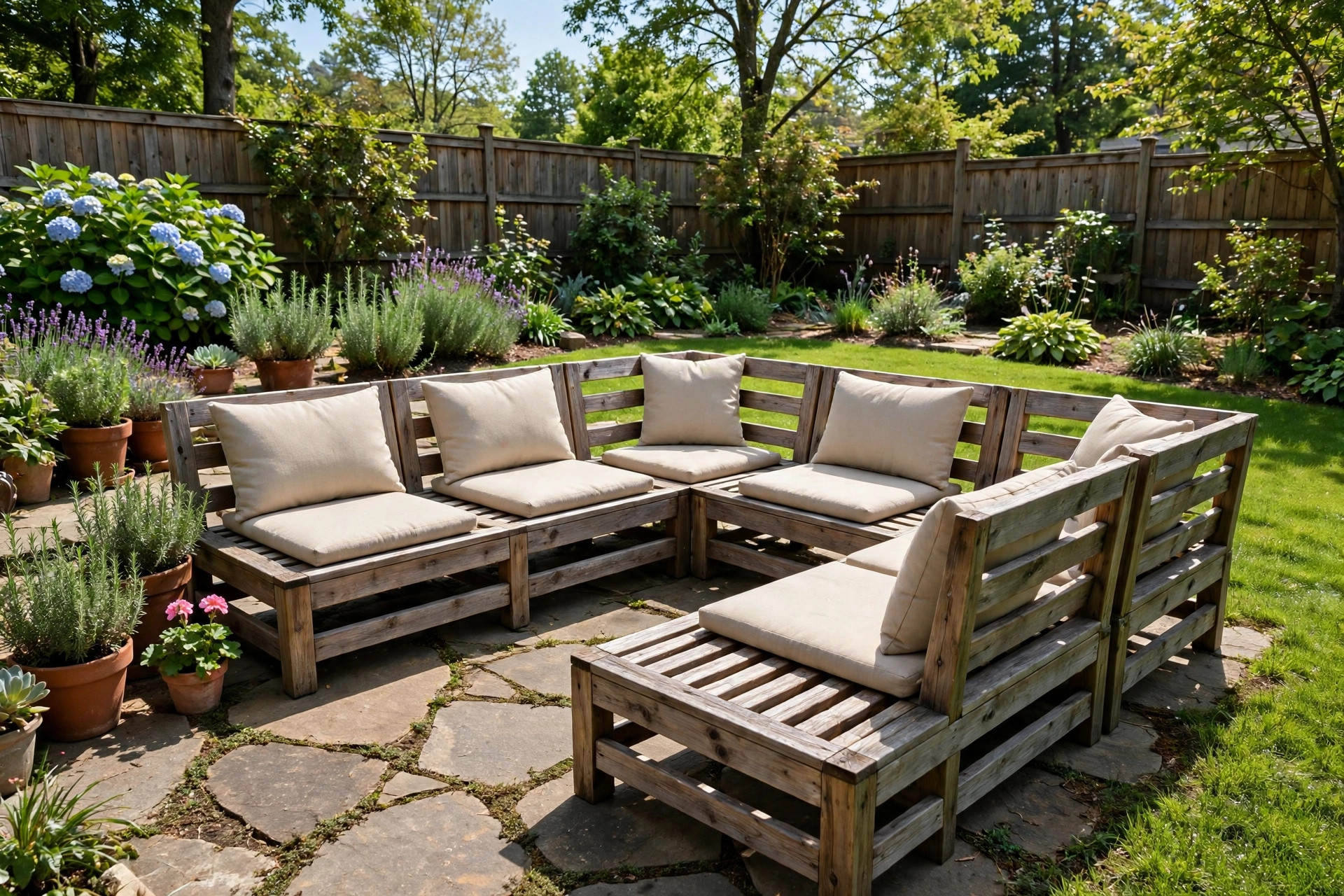

To learn how to build outdoor sectional sofa frames is to learn a simple craft. A sectional sofa is a sofa in parts. The parts fit together to form a couch. It often has a corner piece. It can hold more people than a single bench. When you build it yourself, you choose the size. You choose the wood. You choose the finish. This guide shows the full job from start to finish.
Why Build Your Own Sectional
Store sofas cost a great deal. A fine outdoor sectional may cost two thousand dollars or more. A home built one often costs a few hundred dollars in wood and screws. The saving is only part of the gain. The other part is fit. Patios come in odd shapes. Stores sell standard sizes. When you build, the sofa fits the space you have.
There is also strength. Many store frames use thin wood or hollow metal. A home builder can use thick cedar or treated pine. The joints can be bolted, not just stapled. Such a sofa can last for many years. When a part wears out, you can fix it. You do not need to throw the whole sofa away.
Plan Before You Cut: How to Build Outdoor Sectional Sofa
A good plan saves wood and time. Start by measuring the patio. Mark the spot where the sofa will sit. Use tape or string on the ground. Sit in the marked area. Make sure there is room to walk past. A common mistake is to build too big. Leave at least two feet behind the sofa for the wall or rail. Leave three feet in front for foot room.
Next, decide the shape. The most common shape is the letter L. It has a long seat and a short side seat. A U shape suits large patios. It holds eight or more people. For a small patio, you may want a straight bench with one corner seat. Many readers who start here later read our guide on the best outdoor sectional sofa for small patios to compare sizes before they cut.
Decide the seat height and depth. A seat height of about 17 inches suits most adults. A seat depth of 24 inches gives comfort without strain. Cushions will add two or three inches to the height. Keep this in mind when you plan the frame.
Sketch the plan on paper. Draw each section as a box. Write the length and width on each box. A typical section is 24 inches deep and 48 inches wide. A corner section may be 24 by 24 inches. Count how many sections you need. Most home sectionals use three to five sections.
Tools and Materials
You do not need a full workshop. Basic tools will do the job.
Tools
– Circular saw or miter saw – Power drill and driver bits – Tape measure and pencil – Carpenter square – Sandpaper or a random orbit sander – Clamps, at least two – Safety glasses and ear protection
Materials
– Pressure treated pine or cedar boards, two by four inches for the frame – Deck boards, one by six inches, for the seat slats – Exterior wood screws, two and a half to three inches long – Outdoor wood glue rated for wet use – Exterior wood stain or sealant – Outdoor cushions and pillows, sized to your seats
Choose wood that is straight and free of large knots. Wet treated wood may twist as it dries. It is wise to buy wood a week early and store it flat in the shade. The home improvement guides at Home Depot explain how to pick boards that will stay straight.
Step by Step Build
This method builds one seat section at a time. Repeat it for each section. Then join the sections together.
Step 1: Cut the Frame Parts
For one section that is 24 inches deep and 48 inches wide, cut the following from two by four boards:
– Four legs, 16 inches long – Two side rails, 24 inches long – Two front and back rails, 48 inches long
Cut all parts square. A miter saw gives the cleanest cuts. If you use a circular saw, guide it with a square for straight lines. The project articles on Bob Vila show safe cutting methods for beginners.
Step 2: Build the Base Frame
Lay two side rails on the ground. Place the front and back rails between them. This makes a rectangle. Check the corners with a square. Apply outdoor wood glue to the joints. Drive two screws through the side rail into each end of the front and back rails. Now you have a strong box frame.
Step 3: Add the Legs
Stand the frame on its side. Fix one leg inside each corner with glue and three screws per leg. The legs should sit flush with the top of the frame. Check that the frame sits level when you turn it upright. If one leg is short, sand it down or shim it.
Step 4: Fix the Seat Slats
Cut deck boards to 48 inches, the same length as the front rail. Lay them across the frame with a small gap of about one quarter inch between boards. The gap lets rain drain through. This is key for outdoor life. Screw each slat into the front and back rails with two screws per end. Start from the front and work back.
Step 5: Add the Backrest
A backrest makes the seat far more restful. Cut two back posts, 22 inches long. Screw them to the back corners of the frame at a slight lean, about ten degrees back from straight up. Cut three horizontal slats to 48 inches. Screw them across the posts. Leave small gaps for drainage. Round all sharp edges with sandpaper.
Step 6: Join the Sections
Set the sections in place on the patio. To join them, use simple steel plates or corner brackets on the underside. Drive bolts through the frames of joining sections. Bolts hold better than screws for joints that carry weight. Do not join the sections until all of them are built. Test the layout first.
Types and Design Options
Once you know how to build outdoor sectional sofa frames, you can change the design to suit your taste.
The open slat style. This is the simplest. The seat and back are open slats. Air moves through. Rain drains fast. It suits hot climates.
The solid seat style. A sheet of exterior plywood covers the seat. It feels more solid. It needs full sealant, since water can pool on it. Add small drain holes if you choose this style.
The corner bench style. One section turns the corner at a right angle. It seats more people in less space. It is the heart of the classic L shape.
The storage style. The seat lifts on hinges to reveal space inside. You can store cushions in rain. This takes more skill, but it adds real value.
Many designs pair the sectional with a table. A coffee table in front gives a place for cups and plates. If you like a fire feature, read our page on the outdoor coffee table with fire pit for safe spacing ideas.
The retail catalogs at Wayfair and Article show current sectional styles. You can copy the look you like while you build the frame your own way.
Cost and Price
Wood prices change by region and year. A rough guide follows.
– Lumber for a three section sofa: 120 to 250 dollars – Screws, glue, and hardware: 30 to 60 dollars – Stain or sealant: 25 to 50 dollars – Cushions for three sections: 150 to 400 dollars
The total often falls between 325 and 760 dollars. Compare this to store prices. Consumer Reports tests outdoor furniture for strength and value. Their reports show that home built pieces often outlast cheap imports.
Cushions are the largest cost after wood. You can save by making simple covers from outdoor fabric and foam. Many fabric stores cut foam to size. Sewing straight covers is a simple job. The design ideas on HGTV show fabric colors that suit wood frames.
Care and Upkeep
Wood outdoors needs care. Clean the sofa twice a year with soap and water. Let it dry fully. Check the screws each spring. Tighten any that have worked loose. Wood moves with heat and cold, so small checks are normal.
Re seal the wood every one to two years. Sand lightly before you stain. Two thin coats last longer than one thick coat. If you used cedar, you may let it turn gray with age. Gray cedar still needs sealant to resist rot. Our notes on teak patio set maintenance tips guide give the same care steps, and they suit cedar as well.
Store cushions under cover in rain and winter. Wet cushions breed mold. A simple storage box or a shed works well. The outdoor living guides at Frontgate list cover sizes for sectionals.
Safety
Woodwork has real risks. Take them in earnest.
– Wear safety glasses when you cut or drill. Chips fly fast. – Wear ear protection with saws. Loud tools harm hearing over time. – Keep the work area clear. Cut on a stable surface, never on your lap. – Unplug saws before you change blades. – Use treated wood in open air. Do not burn treated wood scraps. – Lift with care. Full sections are heavy. Get help to move them.
When the sofa is in use, check it for loose parts each month. A loose backrest can tip. Fix loose screws at once. The safety tips on Lowe’s project pages stress the same checks.
FAQ
How long does it take to build an outdoor sectional sofa? A simple three section sofa takes most people two weekends. Cutting and framing takes one day. Sanding, staining, and joining takes another. Cushion fitting takes a few hours.
What wood is best for an outdoor sectional? Cedar and redwood resist rot by nature. Pressure treated pine costs less and lasts well if sealed. Avoid plain indoor pine. It will rot in one season outdoors.
Can a beginner really build this? Yes. The cuts are straight. The joints are simple. If you can use a drill and a saw, you can build a sectional. Start with one section as a test. The beginner projects on The Spruce walk through the same basic joints.
How do I keep the sofa from wobbling? Wobble comes from uneven legs or loose joints. Cut legs to equal length. Glue every joint before you screw it. Add a diagonal brace across the back of each frame if the sofa still moves.
Should I paint or stain the wood? Stain shows the wood grain and needs less prep. Paint covers flaws and comes in more colors. Both need an outdoor rated product. Stain is the common choice for patio sofas, as shown in the furniture care pages at IKEA.
How long will a home built sectional last? With cedar or treated pine, good joints, and yearly sealant, a home built sectional can last ten to fifteen years. Cushions wear out sooner. You can replace them without rebuilding the frame.
A Short Final Word
Learning how to build outdoor sectional sofa frames is a task any careful person can finish. Measure first. Cut with care. Join with strong bolts. Seal against the weather. The result is a sofa that fits your patio and your budget. It will serve your family for many summers.
References
Article. (n.d.). Modern furniture. https://www.article.com Bob Vila. (n.d.). Home improvement advice. https://www.bobvila.com Consumer Reports. (n.d.). Product reviews and ratings. https://www.consumerreports.org Frontgate. (n.d.). Outdoor furniture and decor. https://www.frontgate.com HGTV. (n.d.). Home and garden ideas. https://www.hgtv.com IKEA. (n.d.). Home furnishings. https://www.ikea.com Lowe’s. (n.d.). Home improvement products. https://www.lowes.com The Home Depot. (n.d.). Home improvement products. https://www.homedepot.com The Spruce. (n.d.). Home and garden advice. https://www.thespruce.com Wayfair. (n.d.). Furniture and home goods. https://www.wayfair.com
Was this guide helpful?

About James Carter
The My Garden US editorial team writes practical, in-depth home and garden guides for American homeowners — tested advice, no fluff.
You May Also Like
Outdoor Side Table with Umbrella Hole: A Practical Guide for Your Patio
October 1, 2026 0 views
The Best Patio Furniture Brands Made in USA: Quality for Your Outdoor Space
March 8, 2026 0 views
Waterproof Outdoor Throw Pillows for Patio: A Practical Buying Guide
September 8, 2026 0 views