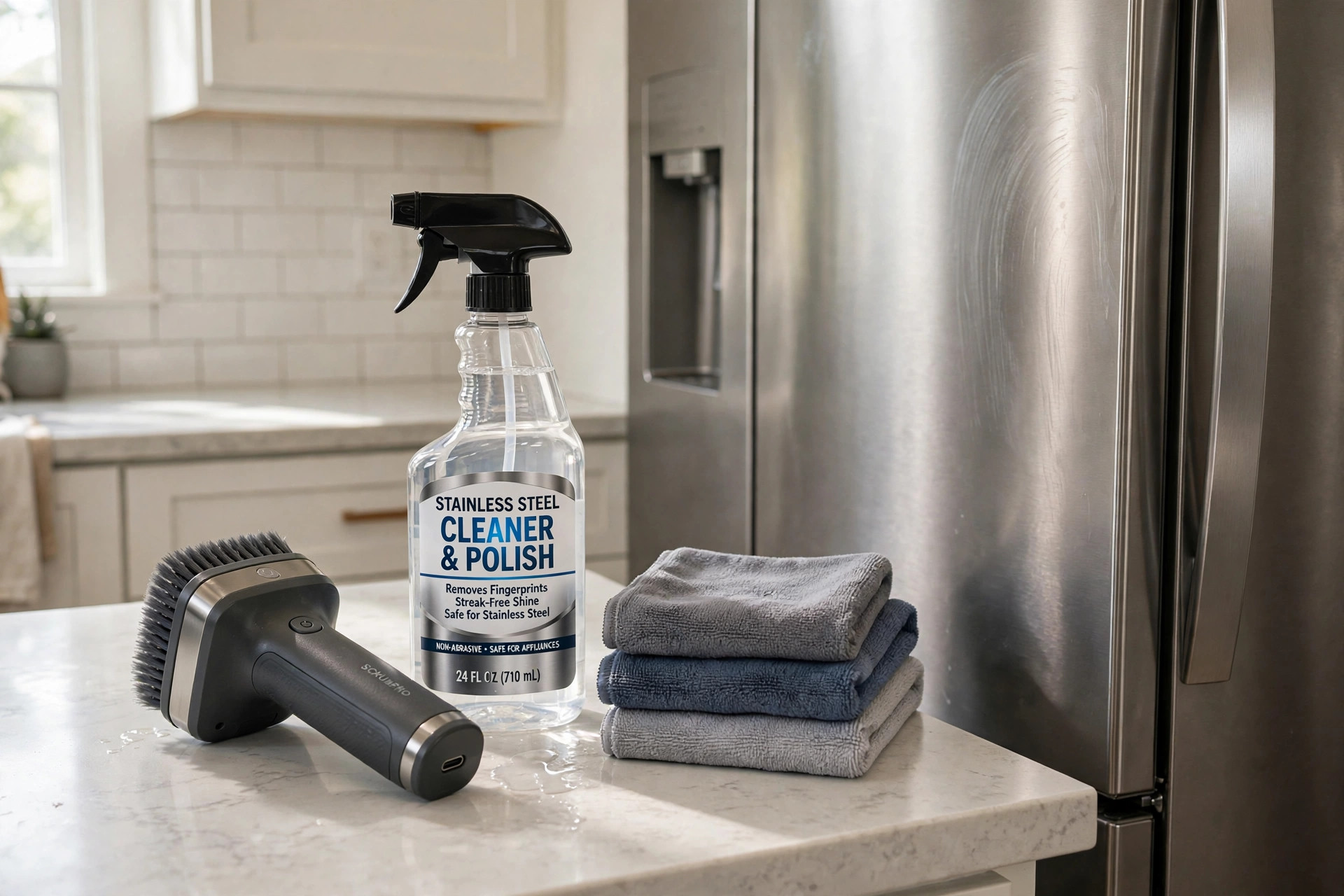

A cordless stainless steel appliance cleaners buying guide starts with a simple truth. Steel appliances look fine when they are new. They show every fingerprint, smudge, and water spot after that. Many people buy a cleaner, wipe once, and end up with streaks that look worse than the fingerprints. The right tool and the right cleaner make the job easy. This guide walks through what matters when you shop, what each type of cleaner does, what you should expect to pay, and how to keep your refrigerator, dishwasher, range, and microwave looking clean every day.
Why It Matters
Stainless steel is a strong and durable surface. It resists rust and heat. It does not resist fingerprints. The metal has a grain, which is a fine set of lines that run in one direction. Dirt, oil from hands, and cleaning residue settle into that grain. A poor cleaning method pushes the residue around. It dries into streaks. A good cleaning method lifts the residue out and follows the grain.
Cordless tools entered the cleaning market for a reason. A battery powered stainless steel appliance cleaner often means an electric scrubber or polisher that removes the need for hard rubbing. You still need a cleaner that is safe for steel. The tool does the work of rubbing. The liquid does the work of cutting grease. Together they give an even finish without sore arms.
People with large kitchens gain the most. A full set of steel appliances means a lot of surface area. A cordless electric scrubber cuts the time in half. People with a small kitchen gain too. A cordless tool needs no outlet and stores in a drawer. No cord means no tangle and no risk of dragging a cord across a clean floor.
Health matters as well. Harsh chemicals leave fumes. They can irritate eyes and skin. Many steel appliance cleaners now come in mild formulas. Some use plant based ingredients. The United States Environmental Protection Agency runs a Safer Choice program that marks products with safer chemistry. Look for that mark when you compare labels.
What to Look For: Cordless Stainless Steel Appliance Cleaners Buying Guide
A good buying process starts with the surface. Check whether your appliance has a clear coat. Some steel appliances have a factory coating that resists fingerprints. The manual will say. A coated surface needs a mild cleaner. An abrasive cleaner can damage the coating. If the manual is gone, test a hidden spot first. The back of a refrigerator door works well.
Read the label for the words abrasive and scratch. A cleaner that contains grit can harm the finish. Non abrasive formulas are the safe choice. Gel cleaners stay on vertical surfaces. Sprays run down. For a refrigerator door, a gel or foam clings better. For a small area, a spray works fine.
Check the grain direction. Run your finger across the steel and feel which way it runs. Cleaning with the grain gives an even result. Cleaning against it leaves streaks. Any good guide should stress this. It is the single biggest factor in a streak free finish.
For the cordless tool itself, check battery life. A small scrubber that runs for twenty minutes covers a full kitchen. Check the charge time. Many tools charge in two to three hours. Check the head options. Soft brush heads work on steel. Stiff heads suit grout and tile, not appliances. Some brands, such as Dyson, have built a name on cordless battery tools, and the same battery standards now appear in cleaning scrubbers.
Weight matters. A light tool is easy to hold overhead when cleaning a range hood. A heavy tool tires the wrist. If you have trouble gripping, look for an ergonomic handle. Consumer Reports tests cleaning tools for ease of use and scores them on handling as well as cleaning power.
Noise is worth checking. Some electric scrubbers hum loudly. If you clean while others sleep, pick a quieter model. Product pages often list noise in decibels. Below 70 decibels is comfortable for home use.
Types of Stainless Steel Appliance Cleaners
Cream cleaners are the most common. They come in a bottle or tube. You squeeze a small amount on a cloth. They cut grease well. They often leave a thin protective layer. That layer resists new fingerprints. Cream cleaners suit a deep clean once a week.
Spray cleaners are fast. You spray, wipe, and move on. They suit daily touch ups. They can run on vertical surfaces, so use less than you think. A light mist is enough. Many sprays contain polish. That gives shine in one step.
Wipes are the simplest option. You pull a wipe from the canister. You clean. You throw it away. Wipes cost more per use. They are handy for a quick pass before guests arrive. They dry out if the lid stays open. Keep the lid closed.
Electric scrubbers are the cordless tool this buying guide centers on. They are small hand held devices. A round head spins or vibrates. You apply cleaner to the head or the surface. The tool does the rubbing. They shine on large doors and oven fronts. They also clean tile and fixtures, so one tool can serve the whole kitchen. Family Handyman publishes guides on electric scrubbers and rates their heads for different home tasks.
Polishing cloths and microfiber pads are the quiet option. Microfiber lifts oil without chemicals. A damp microfiber cloth handles light smudges. Pair it with a drop of mild cleaner for heavier spots. Wash the cloths often. A dirty cloth spreads grease instead of removing it. Good Housekeeping tests microfiber products and recommends washing them without fabric softener.
How to Use a Cordless Cleaner the Right Way
Start with a dry pass. Wipe loose dust and crumbs with a dry microfiber cloth. Dust turns to mud when mixed with cleaner. A dry pass takes one minute. It prevents most streaks.
Apply the cleaner. For a cream, use a pea sized amount. For a spray, mist lightly from six inches away. For an electric scrubber, dot the cleaner on the head. More product does not mean more clean. Extra product leaves film.
Work with the grain. Move the cloth or tool in the direction of the grain. Use steady, even strokes. Overlap each stroke by half. On a wide door, work top to bottom in columns. This pattern keeps the finish even.
Let the tool do the work. Pressing hard does not help. It can scratch. Hold the scrubber flat against the surface. Let the head spin. Move slowly. One slow pass beats three fast ones.
Buff at the end. After the cleaner dries to a haze, take a clean dry microfiber cloth. Buff lightly with the grain. This step removes haze and brings out shine.
Clean one appliance at a time. Finish the refrigerator before starting the dishwasher. This keeps the method consistent and stops the cleaner from drying too long on one spot.
Cost and Price
Manual cleaners cost little. A bottle of stainless steel cleaner runs between five and fifteen dollars. A canister of wipes runs between six and twelve dollars. A pack of microfiber cloths runs between eight and twenty dollars. These supplies last for months.
Cordless electric scrubbers cost more up front. Basic models run between twenty and forty dollars. Mid range models with extra heads run between forty and eighty dollars. Premium models run above eighty dollars. The price buys battery life, build quality, and head variety. For steel appliances, a basic model is often enough.
Look at the total cost over a year. A spray bottle used weekly lasts about three months. That is four bottles a year, roughly forty dollars. Wipes used daily cost much more. A scrubber is a one time purchase. The cleaner you use with it stays the same. Many buyers find the scrubber pays for itself in saved time within a few months.
Watch for kits. Some brands sell a bundle with cleaner, cloths, and a scrubber. A kit can save ten to twenty dollars compared with buying each item alone. Check that the kit cleaner suits your surface. A kit built for coated steel may not suit uncoated steel.
Shipping and store stock affect price. Home centers often run sales on cleaning tools in spring. Online stores cut prices during holiday sales. If you plan to buy stainless steel appliance cleaners online in California, compare a few sellers. Prices can vary by several dollars on the same item.
Care and Upkeep
Store cleaners in a cool dry place. Heat breaks down some formulas. A cabinet away from the stove is ideal. Keep the cap tight. An open bottle dries out and loses strength.
Charge the scrubber after each use. A full battery is ready for the next job. Do not leave it on the charger for weeks. Most modern chargers stop on their own. Check the manual. Wipe the head after use. Rinse brush heads with warm water. Let them air dry.
Replace heads when they wear. A worn head cleans poorly and can scratch. Most brands sell replacement heads. A pack of heads costs between ten and twenty dollars. Check fit before you buy. Heads from one brand may not fit another.
Wash microfiber cloths separately. Use warm water and mild detergent. Skip fabric softener. Softener coats the fibers. Coated fibers smear instead of lift. Air dry or tumble dry on low. Replace cloths when they feel rough. A rough cloth can mark the steel.
Keep a simple schedule. Daily, wipe fingerprints with a damp microfiber cloth. Weekly, clean each appliance with cleaner and the scrubber. Monthly, check the heads and cloths. Replace what is worn. This routine keeps the kitchen clean with little effort. If you also compare tools like steam mops for tile floors price comparison usa, you will see the same routine logic applies to floors as well.
Deep clean the oven door and range hood once a month. Grease builds up near heat. Warm the area slightly first. A warm surface releases grease faster. Wipe with the grain. Buff dry.
Safety
Read every label before you start. Some cleaners warn against use on certain surfaces. Some warn against mixing with bleach. Never mix cleaners. Mixing can release fumes. Use one product at a time.
Ventilate the room. Open a window or run the range hood fan. Fumes build up in a closed kitchen. If you feel dizzy or your eyes sting, stop. Leave the room. Get fresh air.
Wear gloves if your skin is sensitive. Nitrile gloves work well. They cost little and protect the hands. Eye protection helps when spraying overhead. A spray can drift down into the eyes.
Keep products away from children and pets. Store them in a locked or high cabinet. Wipes look like snacks to a small child. The EPA warns that household cleaners are a top cause of child poisoning. Their household guidance explains safe storage.
Unplug the charger when not in use for long periods. Keep the battery away from heat. Do not charge a damaged battery. If the tool smells hot or the battery swells, stop using it. Contact the maker.
Test first on coated surfaces. As noted earlier, some steel has a fingerprint resistant coating. An abrasive cleaner can strip it. A hidden test spot takes one minute. It prevents a costly mistake.
For broader home safety tips, This Old House covers safe cleaning practice in the kitchen. Bob Vila also publishes safety checklists for cleaning tools. The Spruce keeps updated guides on safe products for homes with pets and children.
Frequently Asked Questions
Can I use a cordless scrubber on all stainless steel appliances?
Yes, on most. Use a soft head and a non abrasive cleaner. Work with the grain. Avoid stiff brush heads. Check the manual for coated surfaces. If the manual bans power tools, follow the manual.
Do I need a special cleaner, or will soap and water work?
Soap and water work for light cleaning. A drop of dish soap in warm water removes fresh fingerprints. For old smudges and grease, a cleaner made for steel works better. It leaves a protective layer. Soap alone does not.
Why do I still get streaks?
Four common causes exist. One, you cleaned against the grain. Two, you used too much product. Three, the cloth was dirty. Four, you skipped the final buff. Fix all four. The streaks will stop. Hard water can also cause spots. Dry the surface fully after cleaning.
Are cordless scrubbers worth the money?
For most buyers, yes. They save time and effort. They give an even finish. A basic model costs less than a year of wipes. They also clean tile, grout, and fixtures. That makes them a multi use tool. If you want to compare with other powered cleaners, see our upholstery cleaning machines reviews and buying guide.
How often should I clean my steel appliances?
Wipe fingerprints daily or every other day. Deep clean weekly. Clean the range hood monthly.
Can I make my own stainless steel cleaner?
Some people use vinegar and oil. Vinegar cuts grease. A drop of mineral oil adds shine. This mix works on plain steel. It can damage some coatings. Test a hidden spot first. Store bought cleaners are more predictable. They also include rust inhibitors.
Final Word
A cordless stainless steel appliance cleaners buying guide comes down to a few habits. Pick a non abrasive cleaner that suits your surface. Pair it with a light cordless scrubber and clean microfiber cloths. Work with the grain. Buff at the end. Keep a weekly routine. The cost is modest. The result is a kitchen that looks new. Start with one appliance. See the difference. Then keep going.
References
Bob Vila. (n.d.). Home improvement advice. https://www.bobvila.com Consumer Reports. (n.d.). Product reviews and ratings. https://www.consumerreports.org Dyson. (n.d.). Vacuum cleaners and home technology. https://www.dyson.com Family Handyman. (n.d.). DIY home repair and maintenance. https://www.familyhandyman.com Good Housekeeping. (n.d.). Product reviews and home advice. https://www.goodhousekeeping.com Shark. (n.d.). Home cleaning appliances. https://www.sharkclean.com The Spruce. (n.d.). Home and garden advice. https://www.thespruce.com This Old House. (n.d.). Home renovation guidance. https://www.thisoldhouse.com U.S. Environmental Protection Agency. (n.d.). Protecting human health and the environment. https://www.epa.gov Weiman. (n.d.). Specialty surface care products. https://www.weiman.com
Was this guide helpful?

About Jennifer Lee
The My Garden US editorial team writes practical, in-depth home and garden guides for American homeowners — tested advice, no fluff.
You May Also Like
Buy Antibacterial Disinfectant Sprays Online in Arizona: A Simple Shopping Guide
April 19, 2026 0 views
Affordable Wet Dry Shop Vacuums With Free Shipping: A Buyer’s Guide
July 5, 2026 0 views
Commercial Grade All Purpose Cleaning Caddies Buying Guide
June 16, 2026 0 views