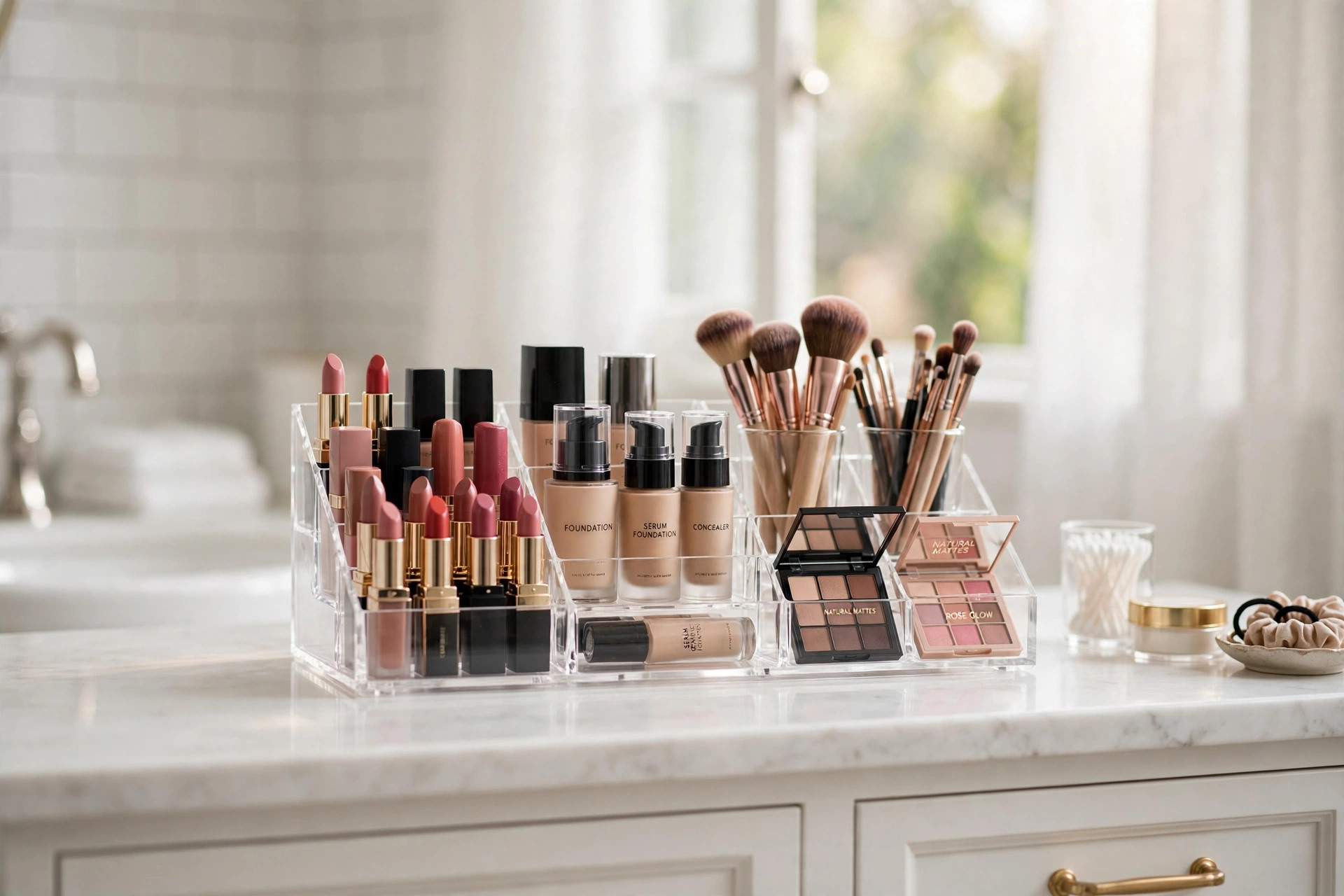

A vanity drawer can turn into a mess in a matter of weeks. Tubes slide under the counter, lids fall off, and one favorite lipstick goes missing for a month. This makeup and cosmetics organizers reviews and buying guide will help you bring order to that small but busy corner of your home. A good organizer does more than tidy a drawer. It protects your products, saves time each morning, and keeps the bathroom or dressing table easy to clean. Readers leave detailed reviews on many popular models, so this guide also shows how to read those reviews well. The pages below cover the main types, what to look for, what reviewers say, how much to pay, and how to keep an organizer in good shape for years.
Why a Makeup Organizer Matters
The average woman in the United States owns dozens of cosmetic items, from foundation bottles to brushes and palettes. When those items have no set place, they spread across counters and into drawers where they collect dust and fall over. An organizer gives every item a home. Reviews on retailer sites and home media outlets often point to the same benefit: owners spend less time hunting for products and more time using them.
There is also a practical reason tied to hygiene. Loose brushes and open compacts in a damp bathroom pick up moisture and germs. A raised, ventilated holder lets brushes dry after washing. A covered box keeps powders away from steam. Cleaning experts at The Spruce advise that small storage tools are among the simplest ways to keep a bathroom cleaner with less effort.
Types of Makeup and Cosmetics Organizers: Makeup and Cosmetics Organizers Reviews and Buying Guide
Organizers come in many shapes. The right type depends on how much you own and where you get ready.
Acrylic display organizers. Clear acrylic is the most popular material. It shows every item at a glance, so you reach for what you need instead of digging. Most models have sections for lipsticks, bottles, and brushes. Reviewers praise the clean look but note that acrylic scratches and shows dust, so it needs regular wiping.
Drawer inserts and trays. These low dividers sit inside a vanity or bathroom drawer. They turn one deep drawer into neat rows. Homeowners who prefer a bare counter often choose this style. Related guides on stackable bathroom vanity organizers explain how drawer units pair well with tiered trays for small spaces.
Spinning carousels. A rotating base gives access to a full circle of products. These work well on deep counters and inside tall cabinets. Reviews warn that cheap turntables can stick or wobble, so a smooth bearing matters.
Stackable units. Small boxes and trays that stack let you build upward as your collection grows. They suit renters and small bathrooms because you can move or add pieces one at a time. Readers comparing models often look at stackable makeup organizers with free shipping when they want a unit that can grow later.
Wall-mounted and mirrored cabinets. For the smallest bathrooms, a shallow cabinet on the wall or behind a mirror adds storage without taking counter space. Installation takes a little work, but the result is a clean, hotel-like vanity.
Travel cases. Hard-shell cases with elastic loops and padded slots keep products safe on the road. They are a separate purchase for most people but worth it if you travel with makeup.
Luxury organizers. At the top end, units made of lacquered wood, brass, or heavy glass turn storage into decor. Design writers at Apartment Therapy often feature these pieces on styled vanities. Our roundup of luxury makeup and cosmetics organizers covers what the high-end market offers.
How to Choose: What Reviews Say Matters Most
Hundreds of product reviews point to the same few features. Use this checklist when you shop.
Size and Fit
Measure first. Take a tape measure to your drawer or counter before you order anything. A unit that is half an inch too wide will not fit, and return shipping is a waste of time. Note the height of tall bottles like foundations and setting sprays, since many organizers are too short for them. If you share the space, count how many items each person owns so the unit is big enough for both.
Material
Acrylic is clear and light but scratches. Bamboo and wood look warm but need care in damp bathrooms. Fabric bins are soft and quiet but hard to clean. Metal mesh is airy and sturdy but can snag delicate brushes. Product testers at Wirecutter often note that the best material is the one that fits the room: plastic or acrylic for steamy bathrooms, wood for dry dressing rooms.
Compartments
Look for sections sized for real products. Lipstick slots, tall bottle wells, brush cups, and a wide tray for palettes cover most needs. Adjustable dividers are a plus because products change with the seasons. A unit with one giant open space will fill up fast and stay messy.
Cleaning
Everything near a sink gets dusty or wet. Choose smooth surfaces that wipe clean with a damp cloth. Avoid rough finishes where spilled powder settles into the grain. Reviews at Good Housekeeping often single out easy cleaning as the feature buyers value most after a few months of use.
Stability
A light unit slides when you pull a heavy drawer or reach for a bottle. Rubber feet or a weighted base keep it still. Wall units need solid anchors in studs, not just drywall.
Value
Read reviews that mention six months of use, not just the first week. Storage experts at The Container Store suggest buying one size larger than you think you need, since collections grow.
What Reviewers Like and Dislike
Across hundreds of reviews on major retailer sites, clear patterns appear. Buyers love organizers that keep everything visible. “I finally use the products I forgot I owned,” is a common remark. Spinning units earn praise from people with deep vanities. Drawer dividers earn praise from people who want a clean counter.
The complaints repeat as well. Units that arrive smaller than expected top the list, which is why measuring matters. Cheap acrylic that arrives scratched is second. Lids that do not fit back on tall bottles are third. Weak rotation on budget carousels is fourth. Shoppers who buy from established home stores like IKEA or Home Depot often report more consistent sizing and fewer surprises, since listings from big retailers tend to include full dimensions.
DIY sites such as Family Handyman add a useful note: many standard organizers can be improved with small fixes, like adding felt pads under a sliding tray or lining a drawer with washable shelf paper before the insert goes in.
Cost and Price Ranges
Prices for makeup and cosmetics organizers vary widely. Here is what shoppers can expect to pay in the United States.
Budget, five to fifteen dollars. Small acrylic trays, basic drawer dividers, and simple brush cups. These do the job but may scratch or crack within a year.
Mid range, fifteen to forty dollars. Sturdy acrylic displays, spinning carousels with smooth bearings, and bamboo drawer organizers. Most buyers find their answer here. Reviews in this range are the most detailed, so comparison shopping is easy.
Premium, forty to one hundred dollars. Heavy-gauge acrylic, lacquered wood, and multi-piece stackable systems. Better finishes and tighter build quality.
Luxury, over one hundred dollars. Designer pieces in brass, leather, or thick glass. Bought for looks as much as function.
Shipping costs matter on low-priced items. A ten-dollar tray with eight-dollar shipping is not a bargain. Many shoppers sort by free shipping to get a true price comparison, which is why options like free shipping appear so often in buying guides.
Home renovation writers at Bob Vila note that an organizer is one of the cheapest upgrades in a bathroom refresh. Even a twenty-dollar insert can make a vanity feel new.
Care and Upkeep
A makeup organizer needs little care, but a few habits keep it looking new.
Wipe acrylic with a soft cloth and mild soap once a week. Skip rough sponges, which scratch the surface. Wash brush cups separately so dried makeup does not build up. Empty each section once a month and toss expired products. Cosmetics go bad: mascara in three months, liquid foundation in about a year. Stale products can irritate the skin, so the monthly clean-out protects your health as well as your storage.
Keep organizers away from direct sun on a windowsill, since heat can warp cheap plastic and melt lipsticks. In a shared bathroom, wipe the unit after heavy steam so water does not sit in the corners.
If a drawer insert starts to smell musty, pull it out and dry the drawer beneath it. Bathroom humidity is the main enemy of wooden units. A small vent or a cracked door after a shower helps.
Safety Notes
Makeup organizers are simple products, but a few safety points deserve attention.
Place heavy units low so they cannot fall from a shelf. Keep small drawers and loose items out of reach of young children, since cosmetics can be harmful if swallowed. If you mount a cabinet on the wall, use proper anchors and check that it is level before loading it. In households with pets, avoid glass units on low shelves where they can be knocked over.
Travel cases should have secure latches. A case that pops open in luggage can spill liquids over clothes and other items. Choose models with zipper or lock closures for air travel.
Frequently Asked Questions
What is the best material for a makeup organizer?
Clear acrylic is the most popular because it shows every item and wipes clean. Bamboo suits dry dressing rooms and looks warm. For steamy bathrooms, plastic or coated metal resists moisture best.
How do I measure for a drawer organizer?
Measure the inside width, depth, and height of the drawer, not the outside. Leave a small gap on each side so the unit slides in and out. Note the height of your tallest bottle to be sure it fits under the drawer above.
Should I choose a display unit or a drawer insert?
Pick a display if you want to see your products and use them often. Pick a drawer insert if you want a clear counter and a calm look. Many people use both: a display for daily items and a drawer unit for backups.
How often should I replace a makeup organizer?
A well-made unit lasts for years. Replace it when sections crack, lids no longer close, or your collection outgrows it. Cheap acrylic may cloud within a year in a sunny bathroom.
Can a makeup organizer help me use products before they expire?
Yes. When everything is visible, you notice what is running low and what is going stale. A monthly clean-out of the organizer is an easy way to check dates.
Are expensive organizers worth the price?
For daily use, mid-range units give the best value. Luxury pieces suit styled vanities where looks matter. Spend based on how often you use the items and how much you care about the finish.
Final Word
A makeup and cosmetics organizer is a small purchase with a large daily payoff. Measure your space, pick the type that fits your routine, and read reviews that mention months of use. The right unit turns a crowded vanity into a calm station where every product has its place. Start with one solid piece, keep it clean, and add to it as your collection grows.
References
Apartment Therapy. (n.d.). Home design ideas and inspiration. https://www.apartmenttherapy.com Bob Vila. (n.d.). Home improvement advice. https://www.bobvila.com Family Handyman. (n.d.). DIY home repair and maintenance. https://www.familyhandyman.com Good Housekeeping. (n.d.). Product reviews and home advice. https://www.goodhousekeeping.com IKEA. (n.d.). Home furnishings. https://www.ikea.com The Container Store. (n.d.). Storage and organization products. https://www.containerstore.com The Home Depot. (n.d.). Home improvement products. https://www.homedepot.com The Spruce. (n.d.). Home and garden advice. https://www.thespruce.com Wayfair. (n.d.). Furniture and home goods. https://www.wayfair.com Wirecutter. (n.d.). Product reviews from The New York Times. https://www.nytimes.com/wirecutter
Was this guide helpful?

About Robert Taylor
The My Garden US editorial team writes practical, in-depth home and garden guides for American homeowners — tested advice, no fluff.
You May Also Like

Best Under Bed Storage Containers for USA Homes: A Simple Buying Guide
February 24, 2026 0 views
Premium Attic Storage Solutions Buying Guide
February 13, 2026 0 views
Luxury Bathroom Vanity Organizers with Free Shipping
April 26, 2026 0 views