
Many Florida kitchens share the same small problem. The water from the tap looks fine, but it smells of chlorine or tastes odd. Under sink filters Florida homes USA owners install solve this quietly. They sit inside the cabinet under the kitchen sink. They clean the water that comes from a small tap or from the main faucet. No bottles to carry. No pitcher to refill. This guide explains the topic in plain words so a Florida homeowner can choose, install, and care for one with confidence.
Why Under Sink Filters Matter in Florida
Florida water has a story of its own. Most tap water in the state comes from ground wells that draw from limestone. Limestone water is hard. It carries calcium and magnesium. These minerals leave white spots on glasses and a chalky film on pots. Many Florida homes also notice a rotten egg smell. That smell comes from sulfur in the ground. Chlorine is added at the treatment plant to keep water safe, and some people dislike its taste.
An under sink filter does not replace the treatment plant. It adds a last step before the water reaches the glass. It cuts down chlorine taste and odor. It catches sand and silt. Some types soften the bite of hard water or reduce lead and other metals. Florida also sees hurricanes and storms that stir up pipes and force boil water notices. After such events, a filter helps the water taste clean again once the notice is lifted.
A good filter also saves money. Bottled water costs add up over a year. A pitcher filter needs frequent refills and slow drips. An under sink unit sits out of sight and works each time the tap opens.
What to Look For: Under Sink Filters Florida Homes Usa
Start with the water itself. Every Florida city publishes a yearly water quality report. Read it. It lists what is in the tap water and at what levels. A low cost home test kit gives more detail on hardness, chlorine, and iron. Knowing the problem shapes the choice. A carbon filter handles taste and odor. It does not remove dissolved minerals. A reverse osmosis unit removes a much wider range of items, but it uses more water and costs more.
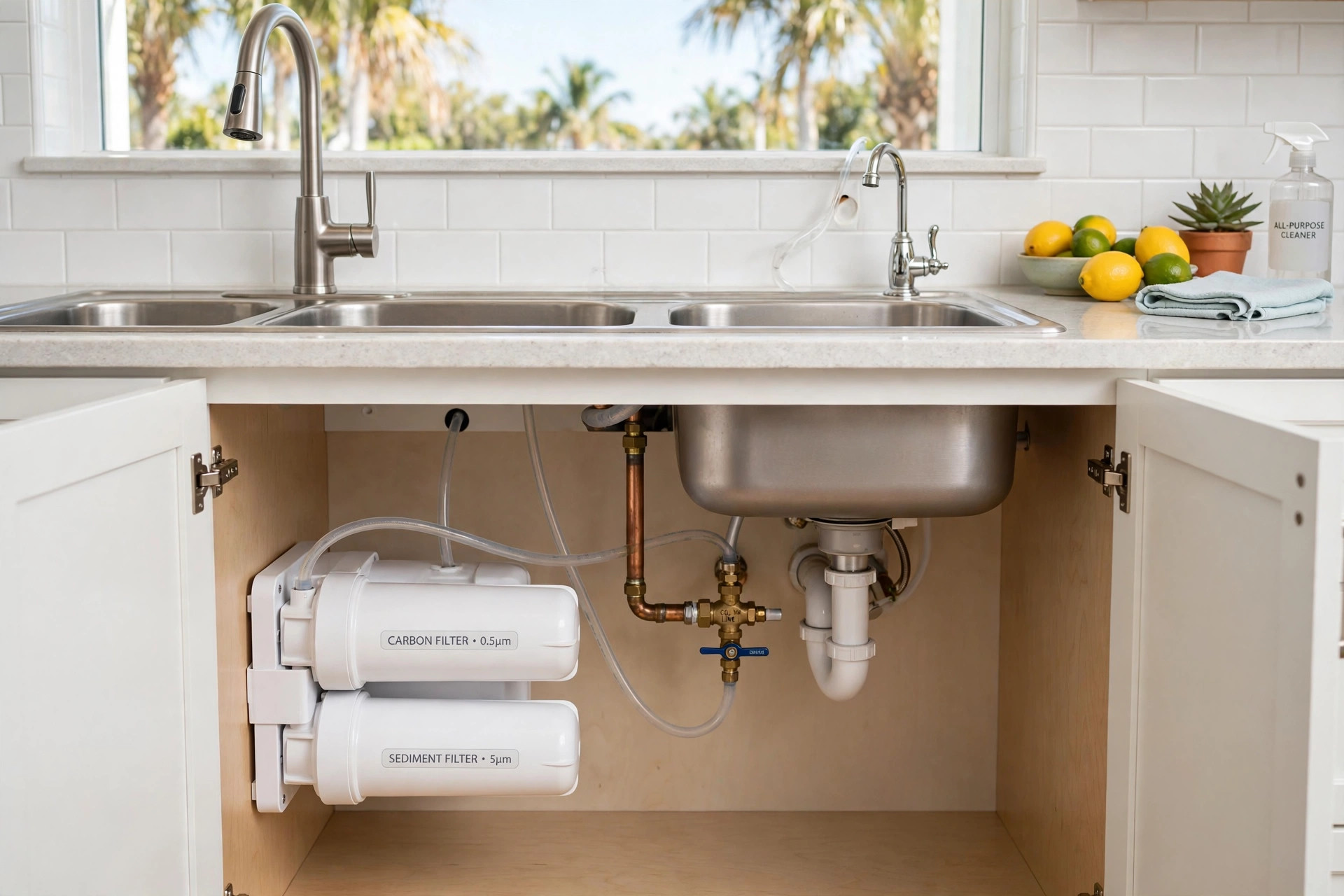
Next, look at the space under the sink. Measure the width, depth, and height inside the cabinet. Many Florida homes have a garbage disposal, a dishwasher drain line, and pipes that crowd the space. A single cartridge unit fits most cabinets. A multi stage unit needs more room. Plan where the small drinking water faucet will go on the sink deck if the unit needs its own tap.
A Florida renter should check the lease before buying. Some landlords allow a simple unit that ties in without drilling. A tee valve that screws onto the cold line and a faucet that uses the existing soap dispenser hole leaves no mark. Keep the original parts in a bag so the sink can be put back at move out. A homeowner can pick a permanent setup and drill with care.
Look at the filter life. Cartridges list how many gallons they clean or how many months they last. In Florida, where water is hard, life may run shorter than the printed number. A clear change schedule matters more than a bold claim.
Types and Options
Single Stage Carbon Filters
This is the simplest kind. One cartridge holds activated carbon. Water passes through. Chlorine taste and odor drop. Sediment is caught. The unit is small and cheap. Cartridge swaps take minutes. For Florida homes where the main complaint is taste and smell, this type is often enough.
Multi Stage Filters
These units line up two or three cartridges. The first catches sand and silt. The second holds carbon for taste and odor. A third may target lead or cysts. Multi stage systems handle more problems at once. They take more cabinet space and cost more to keep up, since each cartridge has its own life.
Reverse Osmosis Systems
A reverse osmosis unit pushes water through a fine membrane. It removes a wide range of dissolved items, including many minerals and metals. The water tastes very clean. These systems need a drain hookup for the waste water. They also need a storage tank under the sink. In Florida, where hard water can shorten membrane life, a prefilter stage is smart. Running costs are higher than a simple carbon filter.
Scale and Conditioner Add Ons
Some Florida homes pair a filter with a small scale reducer. It does not make true soft water. It slows the buildup of white scale on fixtures. For homes fed by very hard well water, this add on keeps the kitchen faucet cleaner for longer.
Installation Basics
Most under sink filters suit a careful do it yourself job. The kit includes a saddle or tee valve that ties into the cold water line. A short tube carries water to the filter head. From there, a second tube runs to the drinking faucet. The waste line for reverse osmosis units ties into the sink drain with a clamp.
Turn off the cold water before starting. Keep a towel and a small bucket nearby. Florida cabinets often hold a garbage disposal that crowds the work area, so move cleaning bottles out first. Follow the kit diagrams step by step. Test every joint by opening the tap and watching for drips for a full five minutes.
Some homes need a small hole drilled in the sink deck for the drinking faucet. Stainless sinks drill with care and a sharp bit. If the sink is stone or the plumbing is old, call a plumber. One hour of help costs less than a cracked sink.
Cost and Price
Prices run wide. A single stage carbon unit costs little to buy and little to run. Multi stage units cost more up front and ask for two or three cartridge swaps a year. Reverse osmosis systems are the dearest, and their filters and membranes add a yearly cost.
Florida homeowners should count the running cost, not just the box price. A cheap unit with short lived cartridges can cost more per year than a dearer unit with long life parts. Bottled water math helps here. A family that buys two cases a week spends hundreds a year. Most under sink systems pay for themselves in a year or two.
Professional install adds a fee. In many Florida towns a plumber charges for one hour of work for a basic unit. Reverse osmosis with a drain tie in takes longer and costs more.
Care and Upkeep
Mark the cartridge change date on the calendar. Hard water in Florida shortens life. Change cartridges on time even if the water still tastes fine. A tired cartridge can stop cleaning and start harboring growth.
Sanitize the housing at each change. Rinse the head with clean water. Check the tubes once a year for stiffness or cracks. Florida heat under a sink, paired with the warm weather outside, can age rubber parts faster.
Flush a new cartridge before drinking from it. Most kits ask for a few minutes of running water. This clears carbon dust that would gray the first glasses.
If a storm disrupts the water supply, wait for the all clear from the local utility. A home filter is not rated to make unsafe water safe. Replace the cartridges after a boil water event, since they may have caught extra sediment.
Safety Notes
An under sink filter cleans water that is already treated. It is not a cure for unsafe well water. Florida homes on private wells should test the well each year. Bacteria, nitrates, and salt intrusion near the coast are well water concerns. A filter adds polish. It does not replace testing or treatment.
Lead is another point. Older Florida homes may hold lead solder in the pipes. A filter rated for lead helps. Let the tap run for a short time in the morning before drawing drinking water, since water that sits in pipes overnight picks up more metal.
Keep the cabinet dry. A slow leak under the sink ruins the cabinet floor in Florida humidity. Mold grows fast in the warm, damp air. A cheap battery water alarm under the filter gives early warning.
Where to Buy and Learn More
Big home stores stock many units, and their aisles let a shopper compare sizes in hand. Helpful project guides on sites such as The Spruce walk through cabinet space planning for small kitchens. Bob Vila covers common plumbing tie in points under a kitchen sink. For questions about drinking water standards, Energy Star and government health pages set the baseline. Independent test results from Consumer Reports help compare filter claims before buying.
For a wider view of the category, read the <a href="//”>under sink filters buying guide. If the cabinet is crowded, the <a href="//”>garbage disposal installation guide helps plan the space. A <a href="//”>pot filler faucet buying guide is handy for homeowners who plan a larger kitchen upgrade at the same time.
Retailers like Home Depot and Lowe’s list many models with shopper reviews. Appliance makers such as GE Appliances, Whirlpool, and Bosch sell filtration lines that match their kitchen products. The renovation library at This Old House shows real installs in real kitchens, which helps a first time installer see the steps.
Frequently Asked Questions
Do under sink filters work with hard Florida water?
Yes, up to a point. Carbon filters cut taste and odor but do not remove hardness minerals. Reverse osmosis removes most of them. For very hard well water, a whole house softener ahead of the kitchen filter is the stronger fix.
How long does a cartridge last in Florida?
A maker may print six to twelve months. In Florida, hard water and sediment can shorten that. Watch the flow. When it slows or the taste returns, change the cartridge. Mark a date and change on schedule, not on guesswork.
Can I install one myself?
Most handy owners can. The kit taps the cold water line and mounts in the cabinet. Old plumbing, stone sinks, or tight spaces call for a plumber. Plan for one to two hours.
Do these filters remove the sulfur smell?
Carbon filters cut it down well in many cases. A strong sulfur odor from a private well may need a well side treatment first. Test the water to know the level.
Is the water safe after a hurricane?
Not always. Storms can stir pipes and push utilities to issue boil water notices. A home filter does not make unsafe water safe. Wait for the all clear, then flush the taps and change the filter cartridges.
Do I still need bottled water?
Most families do not. The filter gives clean drinking and cooking water at the tap. Keep a few bottles for storm season, since outages can stop the water supply itself.
A Short Final Word
Under sink filters Florida homes USA buyers choose are simple machines that do a plain job. They sit out of sight. They cost little to run. They turn a tap that tastes of chlorine into a tap the family trusts. Pick the type that fits the water, the cabinet, and the budget. Install it with care. Change the cartridges on time. The reward is quiet: a glass of clean water, drawn at home, any day of the year.
References
Bob Vila. (n.d.). Home improvement advice. https://www.bobvila.com Bosch. (n.d.). Home appliances. https://www.bosch-home.com Consumer Reports. (n.d.). Product reviews and ratings. https://www.consumerreports.org ENERGY STAR. (n.d.). Energy efficient products. https://www.energystar.gov GE Appliances. (n.d.). Kitchen and home appliances. https://www.geappliances.com Lowe’s. (n.d.). Home improvement products. https://www.lowes.com The Home Depot. (n.d.). Home improvement products. https://www.homedepot.com The Spruce. (n.d.). Home and garden advice. https://www.thespruce.com This Old House. (n.d.). Home renovation guidance. https://www.thisoldhouse.com Whirlpool. (n.d.). Home appliances. https://www.whirlpool.com
Was this guide helpful?

About Lisa Anderson
The My Garden US editorial team writes practical, in-depth home and garden guides for American homeowners — tested advice, no fluff.
You May Also Like

Butcher Block Countertops for Sale USA: A Plain Guide to Buying the Right One
June 23, 2026 0 views
How to Find Quartz Countertop Installation Deals Near Me
March 29, 2026 0 views
Shaker Cabinet Doors for California Homes
August 24, 2026 0 views