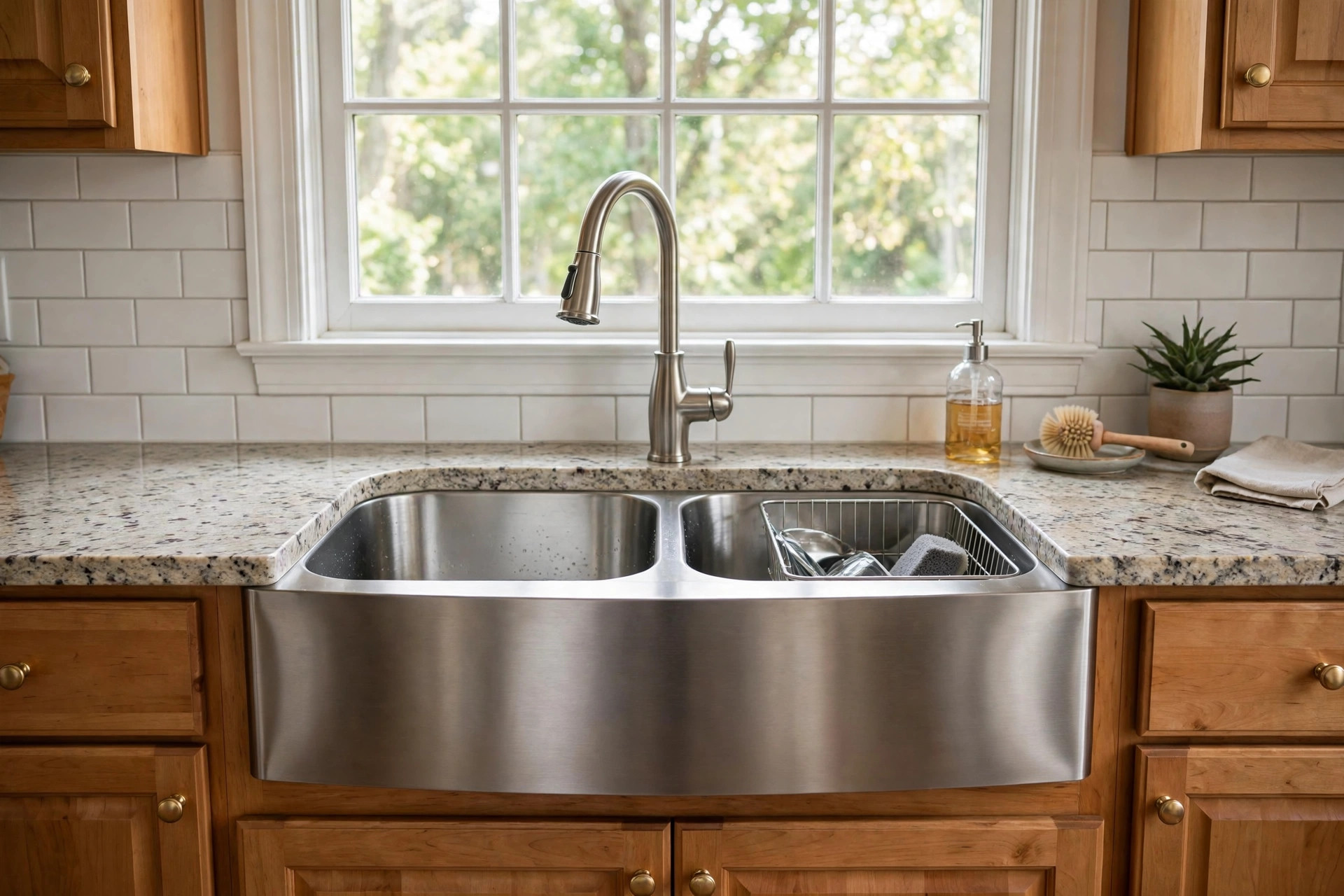

The kitchen sink is one of the most used fixtures in any American home. Families wash dishes, rinse food, and fill pots there every day. This undermount stainless sinks buying guide USA homeowners read will help you pick a sink that looks good, lasts long, and fits your budget. An undermount sink is fastened beneath the countertop. The rim does not sit on top. The edge of the counter stays clean and smooth. Crumbs can be wiped straight into the basin.
Why an Undermount Sink Matters
A top mount sink has a visible rim. That rim can catch food and grime. An undermount model hides its edge below the counter. The result is a smooth line from counter to basin. Many buyers say the kitchen looks more modern and open.
Cleaning is easier too. There is no lip to trap dirt. You sweep the counter with a sponge and the mess falls into the sink. For busy cooks this small gain adds up every day.
Undermount stainless steel is also strong. It resists heat from hot pans. It resists stains from tea, coffee, and fruit juice. It does not chip the way enamel can. A well made sink can serve for twenty years or more.
Resale value is another point. Real estate writers note that kitchens sell houses. A clean, modern sink helps the whole room look cared for. Stainless steel matches most appliances and styles.
What to Look For When You Choose: Undermount Stainless Sinks Buying Guide Usa
Steel Gauge
Gauge is the thickness of the steel. Lower numbers mean thicker metal. An 18 gauge sink is the common standard. A 16 gauge sink is thicker and stronger. It dents less and feels more solid. Thinner 20 or 22 gauge sinks cost less. They may flex and can be noisy.
For most American kitchens, 16 or 18 gauge is the right pick. Thicker steel also holds its shape better under heavy pots.
Sound Proofing
Water can be loud on bare steel. Look for sound dampening pads under the basin. Full undercoating adds more quiet. A well insulated sink keeps the kitchen calm while you rinse pans.
Finish
Brushed satin is the most common finish. It hides small scratches well. Polished mirror finishes look sharp but show marks fast. For daily family use, brushed satin is the safer choice.
Drain Shape and Corners
Rounded inside corners clean more easily than sharp square corners. A slight slope toward the drain helps water flow out. Center drains are standard. Offset or rear drains leave more room under the sink for the trash can and plumbing.
Size and Depth
Measure your base cabinet before you shop. A 30 inch cabinet fits most single bowl sinks. A 36 inch cabinet can hold a wide double bowl. Depth matters too. Eight to ten inches deep is common. Deeper bowls hide dirty dishes but can tire the back of short cooks.
Standard widths run from 23 to 33 inches. Check the cutout size in the product details. Leave room for the faucet and for knobs on the counter.
Bowl Count and Shape
Single bowls suit big pots and sheet pans. Double bowls let you wash on one side and rinse on the other. A 60/40 split gives one large bowl and one small side bowl. Zero radius sinks have sharp modern corners. They look clean but need more scrubbing.
Faucet Holes and Mounting
Undermount sinks have no faucet deck. The faucet mounts on the counter behind the sink. Check how many holes your counter has. Some buyers add a soap dispenser or an air gap for the dishwasher. Plan these holes before the counter is cut.
Types and Options
The market offers many styles. A top mount or drop in sink is the oldest kind. It drops into a cut hole and the rim rests on top. A farmhouse or apron front sink shows a deep front panel. An undermount sink hides beneath the counter. Each type needs a different counter cut.
For counter material, solid stone is best with undermount sinks. Granite, quartz, and solid surface hold the clips well. Laminate counters can be weak at the edges. Some laminate tops can still take an undermount sink with extra support, but tile and stone are safer.
Buyers who plan a full refresh may look at French door refrigerators for American homes to match their new sink. Others redo the counters in butcher block for Florida homes or add shaker cabinet doors for California homes as part of the same project.
Retailers such as Lowe’s carry wide ranges of undermount models. Advice sites like This Old House show how pros mount and seal them. The Spruce compares styles and finishes for everyday buyers.
Cost and Price
Prices vary by size, gauge, and brand. A basic undermount stainless sink can cost between $150 and $300. Mid range models run $300 to $600. They offer thicker steel, better sound proofing, and finer welds. High end hand crafted sinks can pass $1,000.
Installation adds to the cost. A plumber may charge $200 to $500 for the swap. The price depends on your area and the old plumbing. If new faucet holes are needed in stone, that work costs more.
Accessories also add up. Grids for the bowl bottom, strainer baskets, cutting boards that fit the sink, and colanders can add $50 to $150. These parts protect the steel and make daily work easier.
Total kitchen budgets should also leave room for matching gear. Many shoppers compare full appliance lines at makers like Whirlpool, GE Appliances, and Bosch Home before they finalize their spend.
Care and Upkeep
Stainless steel is low care but not no care. Rinse the sink after each use. Wipe it dry to stop water spots. Use a soft cloth or sponge. Do not use steel wool. It can scratch the finish and leave rust marks.
For weekly cleaning, use mild dish soap and warm water. For hard water marks, a paste of baking soda works well. Rinse well after. For shine, a little white vinegar on a cloth can help. Dry the sink after to avoid streaks.
Do not leave strong bleach in the basin for long. Do not leave salty water sitting overnight. Salt and bleach can harm the steel over time. Rubber mats in the sink trap water and can leave marks. Lift them often to dry the metal below.
Food waste should not sit in the sink for hours. Acidic foods like tomato and lemon can stain if left too long. Scrape plates into the trash first. Then wash.
Hard water is common in many parts of the United States. White spots form when drops dry on the steel. A soft cloth after each wash stops most of them. For old spots, warm vinegar on a cloth works well. Rub with the grain of the brushed finish. Then rinse and dry.
Garbage disposals pair well with undermount sinks. Check that the disposal flange fits your drain hole. Most standard 3.5 inch drains accept common disposals. A splash guard at the drain keeps food bits from flying out when the unit runs.
Sound Pads and Coatings
Most mid priced sinks come with rubber pads on the bottom. These cut the ring of running water. Some add a thick spray coating over the whole shell. This coating also fights sweat on the metal in humid rooms. Sweat can drip onto items stored in the cabinet below.
Polishing and Shine
After daily cleaning, you can bring back the shine with a stainless steel cleaner made for kitchens. Spray lightly. Buff with a dry cloth along the grain. Avoid wax products made for cars. They can leave a film that traps food.
If small scratches show up, they are normal. Brushed finishes hide them well. Over time the whole sink takes on an even look. Do not try to grind out a deep scratch with power tools. You may thin the metal and weaken the sink.
Yearly Check
Once a year, look under the sink. Check the clips that hold the rim. Make sure none have loosened. Look for dark lines around the seal. A thin bead of fresh silicone fixes small gaps. Check the faucet supply lines at the same time. Replace any line that looks worn or damp.
Safety
A sink is safe by nature, but a few rules help. Hot water from the tap can burn skin. Set the water heater to 120 degrees Fahrenheit. This saves energy and prevents scalds.
Heavy pots can dent thin steel. Lift large pans instead of dropping them. Sharp knives should never be left point up in a full basin. Wash and dry them right away.
Under the sink, keep cleaners out of reach of children. Cabinet locks are cheap and easy to fit. Water leaks can rot wood cabinets fast. Check the supply lines and the drain once a month. A small drip caught early saves a big repair.
For general home safety, the guides at Bob Vila cover plumbing basics in plain terms. Consumer Reports tests sinks and fixtures for durability. The efficiency tips at ENERGY STAR help keep water heating costs down while you run a busy kitchen.
FAQ
Can any countertop hold an undermount sink?
No. Solid stone, quartz, and solid surface tops work best. Laminate and tile can be weak at the cut edge. Ask your counter maker before you buy.
Is 16 gauge better than 18 gauge?
Yes, for most buyers. Sixteen gauge is thicker. It dents less and feels more solid. It also costs more. Eighteen gauge is still a good choice for normal family use.
How deep should the sink be?
Eight to ten inches suits most cooks. Deeper sinks hide dishes but can strain the back. Very tall cooks may like ten inches. Short cooks may prefer eight.
Do undermount sinks leak at the edge?
A good install does not leak. The plumber seals the rim with silicone and holds it with clips. Check the seal once a year. Re-caulk if you see gaps.
Can I install it myself?
A skilled do it yourself owner can do it. The counter must be cut clean and the sink must be held level while the seal sets. Many buyers hire a plumber for this step to be safe.
What size fits a 36 inch cabinet?
A 36 inch cabinet usually takes a sink up to 33 inches wide. Measure the inside of the cabinet and the counter cutout. Leave space for clips and plumbing on both sides.
Which accessories are worth buying?
A bottom grid is the best first buy. It lifts dishes off the steel and stops scratches. A strainer basket keeps food out of the drain. A fitted cutting board adds counter space on top of the sink.
How do I stop water spots?
Dry the sink after use. This is the simplest fix. A soft towel takes ten seconds. Water softeners also help in homes with very hard water.
A Short Final Word
A sink seems like a small choice. You touch it many times each day. A good undermount stainless steel sink makes that daily work easier and cleaner. Measure your space. Pick 16 or 18 gauge steel. Choose a brushed finish. Plan your faucet holes early. Buy from a known brand and install it with care. Follow this undermount stainless sinks buying guide USA shoppers trust, and your kitchen will look better and work better for years to come.
References
Bob Vila. (n.d.). Home improvement advice. https://www.bobvila.com Bosch. (n.d.). Home appliances. https://www.bosch-home.com Consumer Reports. (n.d.). Product reviews and ratings. https://www.consumerreports.org ENERGY STAR. (n.d.). Energy efficient products. https://www.energystar.gov GE Appliances. (n.d.). Kitchen and home appliances. https://www.geappliances.com Lowe’s. (n.d.). Home improvement products. https://www.lowes.com The Spruce. (n.d.). Home and garden advice. https://www.thespruce.com This Old House. (n.d.). Home renovation guidance. https://www.thisoldhouse.com Whirlpool. (n.d.). Home appliances. https://www.whirlpool.com
Was this guide helpful?

About Lisa Anderson
The My Garden US editorial team writes practical, in-depth home and garden guides for American homeowners — tested advice, no fluff.
You May Also Like

Dual Fuel Ranges Reviews Buying Guide USA: How to Choose the Right Range for Your Kitchen
September 1, 2026 0 views
Under Counter Wine Fridges: An American Homes Guide
May 16, 2026 0 views
Quartz Countertop Installation: A Guide for American Homes
June 30, 2026 0 views