
Why This Pothos Plants Bulk American Homes Guide Matters
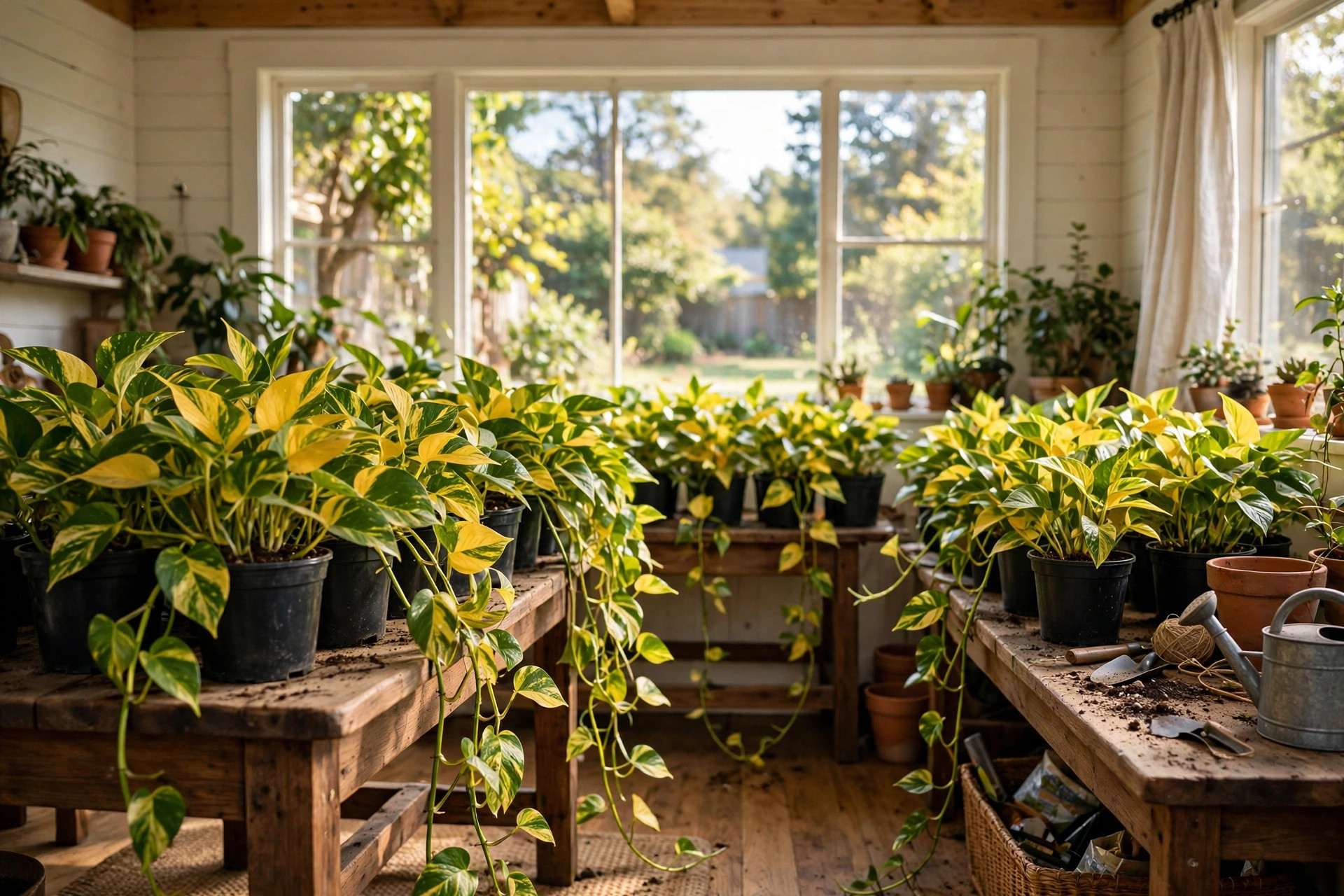
The pothos plant is one of the most common houseplants in the United States. It grows long trailing vines. It survives low light. It forgives missed waterings. For all these reasons, many people now buy pothos plants in bulk instead of one pot at a time. A new homeowner may want twenty plants for an empty house. An office manager may want thirty for a suite of rooms. A teacher may want a dozen for a classroom. Buying in quantity saves money and keeps the look even from room to room. This guide explains how to buy pothos in bulk, how to pick healthy plants, how much it costs, and how to care for the plants once they arrive.
Why Pothos Fits So Many American Homes: Pothos Plants Bulk American Homes Guide
Pothos tolerates the conditions found in most American houses. It accepts a north facing window. It accepts a shelf ten feet from a window. It accepts the dry air of winter heating. Few other plants ask so little and give so much green in return.
The plant has another strength. It cleans up a bare room fast. A single four inch pot costs little, yet within a year its vines can trail three feet or more. When a buyer fills five rooms, the effect is even stronger. The house looks finished. Guests notice the green. The plants also give beginners a win. A first time grower can learn the basics of watering and light on a plant that rarely dies from small mistakes. Those habits then carry over to ferns, herbs, and the flowers in the wildflower seed mixes buying guide usa.
Pothos also fits a wide range of decor. The vines look good in a plain clay pot. They look good in a modern white planter. They drape over bookshelves, curtain rods, and stair rails. In kitchens, a hanging pothos softens the hard lines of cabinets and steel. In home offices, a shelf of pothos breaks up the flat glow of monitors. Because the plant is so flexible, a bulk order rarely goes to waste. Any plant that does not fit the living room will fit the laundry room or the guest bath.
Buying Pothos Plants in Bulk
Where Bulk Lots Are Sold
Garden centers often sell flats of small pots in spring. A flat may hold eight, ten, or twelve four inch pots. Big box stores sell multipacks of hanging baskets near the garden entrance. Online plant shops sell box lots with free shipping over a set amount. True wholesale nurseries sell to businesses, and some sell to the public at open house events. Local nurseries may also build a custom lot on request. A buyer who calls a week ahead can often get twenty pots of one variety at a lower per plant price.
When comparing sellers, look at what ships in the box. Some sellers ship plants bare root with soil shaken off. Some ship full pots wrapped in paper. Potted plants cost more to ship, but they recover faster. The Burpee and Park Seed home pages carry houseplant seed and young plant listings that show how reputable sellers describe pot sizes and shipping terms. Reading those pages before ordering teaches a buyer which details matter.
What Bulk Lots Usually Include
A bulk lot of pothos usually holds plants of one variety and one pot size. The most common lot is twelve four inch pots of golden pothos. Hanging basket lots hold six or eight ten inch baskets. Some sellers mix varieties in a lot, but even lots are the rule. The lot may include a care card. It rarely includes pots for display. Buyers who need decorative pots should budget for them on the side.
Check the seller return policy before you pay. Plants are living goods. A fair seller replaces plants that arrive frozen or crushed. A weak seller offers store credit only, or none at all. Read the reviews that mention shipping in winter. Those reviews tell the truth about packaging. If a seller in a cold state ships year round with heat packs, that is a good sign.
What to Look For When You Choose
Leaves
Pick plants with firm, full leaves. The leaves should hold their color from edge to edge. Avoid plants with yellow rims, brown spots, or drooping leaves. A little dust on the leaves is fine. It washes off. What matters is the stem. The stem should feel firm, not mushy. A mushy stem signals rot, and rot spreads through a whole lot if the plants sit close together in a flat.
Roots
Ask to tip a pot and look at the root ball, or check the drain hole. White or tan roots are healthy. Brown, black, or sour smelling roots are not. A few roots circling the pot are normal in a nursery pot. A solid brick of roots with no soil left is a plant that will need water every day. It can still recover, but it is not the best pick for a beginner.
Soil
The soil should be damp, not wet. It should smell like earth. Soil with a white crust on top may carry fertilizer salts. That is not fatal, but the plant will need a flush of plain water. Avoid pots with moss or algae growing on the soil surface. Those pots sat too long in a wet tray. The Gardening Know How home page offers plain language guides on reading plant roots and soil that any new buyer can follow.
Common Types of Pothos
Golden pothos is the classic. Its heart shaped leaves carry yellow marbling. It is the fastest grower of the group and the cheapest in bulk. Marble queen is slower and more elegant, with white splashes across the leaf. It needs a bit more light to keep the white color. Neon pothos glows a bright chartreuse. It lights up a dark corner, but it sunburns faster than the green types.
Jade pothos is plain green with no variegation. It is tough and simple, and it tolerates low light better than marble queen. Manjula pothos has wavy leaves with creamy patches. It grows slowly and costs more. N’Joy is compact with small white edged leaves. It suits desks and small shelves. Satin pothos, sold as Scindapsus, is not a true pothos but is grown the same way. Its leaves carry a silvery sheen.
For a bulk buy, golden and jade give the most green per dollar. For variety, add marble queen or neon to a few rooms. A mixed lot across two or three types looks planned rather than plain. The Monrovia and Proven Winners home pages show photos of these varieties side by side, which helps a buyer match types to rooms before ordering.
Cost and Price
Single four inch pots sell for five to ten dollars at garden centers. Six inch pots run twelve to twenty dollars. Ten inch hanging baskets run twenty to thirty five dollars. Bulk pricing cuts these numbers. A flat of twelve four inch pots often sells for forty to seventy dollars, which is three to six dollars per plant. A case of eight hanging baskets may run ninety to one hundred forty dollars.
Shipping adds to the cost of online orders. A box of twelve small pots may carry a fifteen to twenty five dollar shipping fee. Heat packs for winter shipping add a few dollars more. Even so, online bulk orders beat single pot retail prices in most cases. The savings grow when the buyer orders one large lot instead of three small ones.
Watch for hidden costs. Decorative pots, saucers, potting mix for repotting, and fertilizer add up. A fair budget rule is to add twenty percent to the plant cost for supplies. Buyers who start seeds or cuttings instead of plants will find the organic herb seeds buying guide usa and the heirloom vegetable seeds buying guide usa useful for low cost growing projects of other kinds.
Care and Upkeep
Light
Pothos wants bright, indirect light. A spot near an east window is ideal. It will live under office fluorescents and a few feet from a north window. Keep it out of strong afternoon sun. Direct sun burns the leaves and fades the variegation. Variegated types like marble queen lose their white patches in low light. They turn mostly green. That is not harm, only a change in looks.
Water
Water when the top inch or two of soil feels dry. Lift the pot. A light pot needs water. A heavy pot does not. Pour slowly until water leaves the drain hole, then empty the saucer. Never let the pot sit in standing water. Overwatering kills more pothos than any other mistake. In winter, when growth slows, water even less. A moisture meter helps beginners, but the finger test works fine.
Soil and Feeding
A standard indoor potting mix suits pothos. The mix should drain well and hold some air. Repot when roots fill the pot, usually every one to two years. Move up one pot size only. A pot much larger than the root ball holds too much wet soil and invites rot. Feed with a balanced liquid houseplant fertilizer at half strength, once a month in spring and summer. Skip feeding in fall and winter. More fertilizer does not mean more growth. It means salt buildup and burned leaf tips.
Pruning and Propagation
Cut vines back in spring to keep the plant full. Use clean scissors. Cut just above a leaf node, which is the small bump where a leaf meets the stem. The plant will branch below the cut and grow bushier. Save the cuttings. Place them in a jar of water with the nodes below the surface. Roots appear in one to three weeks. Pot the rooted cuttings in soil, and you have new plants for free. One bulk order can become a second generation of plants within a season. The Almanac home page carries seasonal care calendars that remind growers when to prune and feed common houseplants.
Safety for Children and Pets
Pothos contains calcium oxalate crystals. Chewing a leaf causes mouth pain, drooling, and swelling in people and pets. Cats and dogs are the most common victims. The plant is not usually fatal, but it is not safe to eat. Place hanging baskets and high shelves out of reach of toddlers and pets. Teach children not to chew houseplant leaves.
If a pet chews pothos, remove plant bits from the mouth and offer water. Watch for swelling of the lips or trouble swallowing. Call a veterinarian if symptoms grow worse. Keep the plant name written on the pot or on a tag. A clear label speeds up any call to a vet or poison center. Plant toxicity lists from the Gurney’s Seed & Nursery home page and the NIFA home page links to cooperative extension resources that list which common houseplants pose risks to pets.
Frequently Asked Questions
How many pothos plants should I order for a whole house? Count the spots first. Most buyers use one plant per shelf, desk, or corner. A three bedroom house often needs twelve to twenty plants for a full look. Order ten percent more than the count. A few plants may arrive damaged, and a few may fail in the first month.
Can I mix pothos types in one bulk order? Yes. Most sellers allow mixed lots, or you can order two small lots of different types. Golden pothos and marble queen grow at different speeds, so prune the golden more often to keep them even.
Will pothos survive in a windowless office? It can survive under fluorescent or LED office lights for months. It grows slowly there and the leaves stay small. For the best look, give it a few hours of indirect daylight or a simple grow light.
How fast will bulk pothos fill in bare shelves? Golden pothos can add one to two feet of vine in a growing season with good light and monthly feeding. Marble queen and Manjula grow about half as fast. Pruning and replanting cuttings fills pots out faster than waiting on one vine.
Is it cheaper to propagate my own plants instead of buying in bulk? Propagation is free but slow. A cutting needs months to fill a four inch pot. Bulk buying wins when you need many full plants now. Many buyers do both: they buy a bulk lot for instant green and propagate cuttings for future rooms.
A Final Word
Pothos earned its place in American homes through simple virtues. It is cheap. It is tough. It looks good almost anywhere. Buying in bulk makes those virtues go further. One order can green a whole house, an office floor, or a classroom. Choose firm plants with healthy roots. Give them bright indirect light and careful water. Keep them from pets and small children. Do that, and a single bulk box of pothos will pay you back in green for years.
References
Burpee. (n.d.). Seeds, plants, and gardening supplies. https://www.burpee.com Gardening Know How. (n.d.). Gardening guides and plant care. https://www.gardeningknowhow.com Gurney’s Seed & Nursery Co. (n.d.). Seeds, plants, and garden supplies. https://www.gurneys.com Monrovia. (n.d.). Plants for home gardens. https://www.monrovia.com National Institute of Food and Agriculture. (n.d.). Agricultural research and extension. https://www.nifa.usda.gov Park Seed. (n.d.). Seeds, plants, and gardening supplies. https://www.parkseed.com Proven Winners. (n.d.). Plants and gardening inspiration. https://www.provenwinners.com The Old Farmer’s Almanac. (n.d.). Gardening calendars and advice. https://www.almanac.com
Was this guide helpful?

About Emily Rodriguez
The My Garden US editorial team writes practical, in-depth home and garden guides for American homeowners — tested advice, no fluff.
You May Also Like
Heirloom Vegetable Seeds Reviews Buying Guide USA
June 10, 2026 0 views
Heirloom Vegetable Seeds for Sale USA: A Plain Guide for Home Gardeners
March 9, 2026 0 views
Garlic Bulbs for Planting: USA Online Deals and Growing Guide
April 26, 2026 0 views