Where the Search Begins
Many home gardeners type heirloom vegetable seeds deals near me into a search box each spring. They want packets of seed that cost less but grow well. They want tomatoes that taste like the ones their grandparents grew. They want beans that were passed down through families for a hundred years. The good news is that heirloom seed deals are easy to find when you know where to look.
Heirloom vegetables are old varieties. They were grown before modern hybrids took over the seed trade. Their seeds breed true. That means you can save seeds from this year’s crop and plant them next year. The new plants will look and taste like the parents. This trait alone makes heirloom seed a smart buy for any home garden.
This guide will show you where to find deals close to home. It will also show you how to judge a good deal and how to avoid a bad one. By the end, you will know how to shop for heirloom vegetable seeds with care and confidence.
Why Heirloom Seeds Deserve a Place in Your Garden: Heirloom Vegetable Seeds Deals near Me
Heirloom varieties offer flavors that many modern hybrids lack. A Brandywine tomato grown from an old line can taste rich and sweet. A Cherokee Purple tomato has a smoky depth that store fruit never has. These flavors come from genetics that have been stable for decades. Seed houses like Burpee and Park Seed have kept many of these lines alive for home growers.
Heirloom seeds also save money over time. One packet can plant a whole row. At season’s end, you can dry and store the seeds from the best fruit. Next spring, those saved seeds cost you nothing. This cycle turns a small purchase into years of harvests. It is one of the oldest forms of thrift in American gardening.
There is a third reason. Heirloom varieties keep plant diversity alive. Every time a gardener plants an old variety, it stays in the world. The National Institute of Food and Agriculture supports work that keeps crop diversity strong. Your backyard can be part of that quiet work.
Where to Look for Heirloom Vegetable Seeds Deals Near You
Local shops are the best place to start. Independent garden centers often carry heirloom lines from regional growers. These shops know which varieties grow well in your soil and your weather. Ask the staff which packets sell out first. Their answers will teach you more than any label can.
Farmers markets are another good source. Many small seed growers sell at market tables. They often price their packets below the big catalogs. They can also tell you the story behind each variety. That story is part of what makes an heirloom special.
Libraries and community centers run seed exchanges in many towns. At a seed exchange, gardeners swap saved seeds for free. You can walk in with nothing and walk out with five or six packets. Search online for seed libraries near your town. The Old Farmer’s Almanac site also lists garden events by region.
Nurseries with a focus on organic growing tend to stock heirloom seeds. Big box stores carry them too, but the stock turns over fast in spring. Shop early for the best picks. Late in the season, the same stores mark leftover packets down. That is when the deepest deals appear.
If local stock runs thin, mail order is a fine backup. Gurney’s has sold seeds to American families since the 1800s. Their catalog carries many heirloom vegetables. Ordering from a trusted house is often cheaper than driving to three stores.
What to Look for Before You Buy
A good deal is not just a low price. Read the packet before you pay. Check the date on the back. Most vegetable seeds stay strong for two to three years when stored in a cool, dry place. A packet dated three years back is not a deal at any price.
Look at the seed count. One company may sell 25 tomato seeds for a dollar. Another may sell 100 seeds for two dollars. The second packet is the better buy. Price per seed matters more than price per packet.
Read the variety name with care. True heirlooms have known histories. Names like Mortgage Lifter, Black Krim, and Dragon Tongue have been grown for decades. If a packet calls a brand-new hybrid an heirloom, the label is wrong. Gardening Know How keeps clear notes on many classic varieties and their traits.
Check the germination rate if it is printed. A rate of 85 percent or higher is solid for most vegetables. A lower rate means you must sow more seed to fill a row. That cuts into the deal.
Note the packet’s origin. Seeds grown in your region often sprout faster in your soil. Local seed companies test their stock in local fields. Their packets may cost a bit more, but the plants repay the difference.
Types of Heirloom Vegetables Worth Seeking
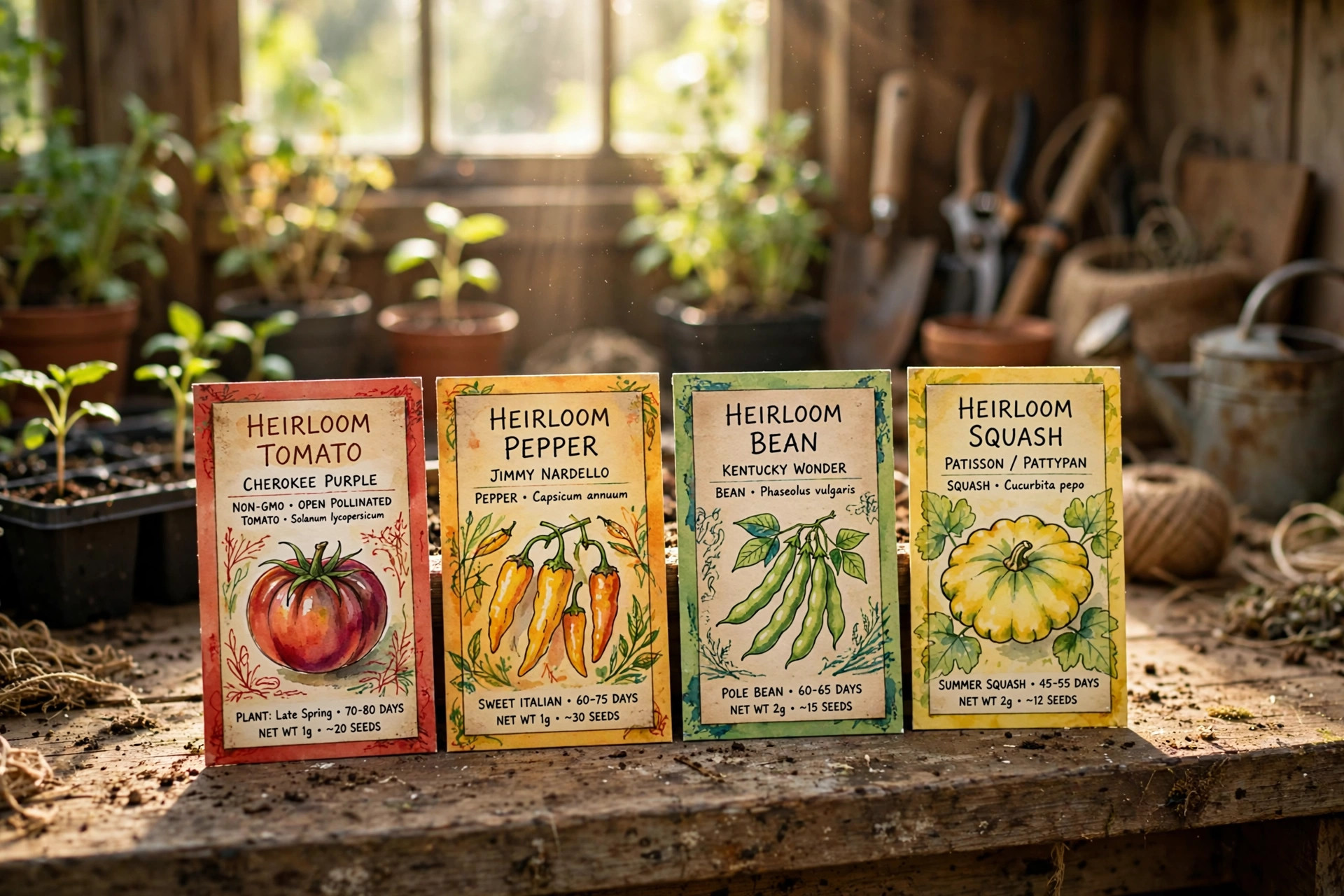
Tomatoes lead every heirloom list. They offer the widest range of color and flavor. Beefsteak types like Brandywine are famous. Cherry types like Matt’s Wild Cherry grow fast and shrug off disease. Paste types like Amish Paste make thick sauce.
Peppers are a close second. Heirloom peppers range from sweet bells to hot chilies. California Wonder is an old sweet bell that still performs. Fish peppers have striped leaves and a sharp bite. They look as good as they taste.
Beans are among the easiest heirlooms to grow. Pole beans like Kentucky Wonder climb a trellis and bear for months. Bush beans like Provider give a fast, heavy crop. Dry beans like Jacob’s Cattle store all winter in a jar.
Squash and pumpkins offer big flavor and big yields. Butternut types like Waltham store for months after harvest. Summer squash like Costata Romanesco bears early and often. One or two plants can feed a family.
Greens deserve more notice. Heirloom lettuces like Black Seeded Simpson grow fast in cool weather. Collards like Georgia Southern feed a family through fall. These crops cost little and give back a lot.
Root crops round out the list. Heirloom carrots like Scarlet Nantes are sweet and crisp. Beets like Detroit Dark Red grow in poor soil. Turnips like Purple Top mature in under two months. For growing tips on all of these, The Spruce keeps a large garden section.
How Much Heirloom Seeds Should Cost
Most heirloom vegetable seed packets sell for one to six dollars. This range holds true at garden centers, markets, and online shops. A standard packet holds enough seed for a home garden row.
Deals drop the price in a few ways. End-of-season sales can cut prices by half. Buy-one-get-one offers are common in March and April. Bulk bins at co-ops sell seed by the scoop for pennies per packet. Seed swaps cost nothing at all.
Watch for false deals. A packet priced at fifty cents may hold only ten seeds. A three-dollar packet may hold two hundred. Do the math before you choose. Price per seed tells the true story.
Shipping costs can erase a mail-order deal. A two-dollar packet with six dollars of shipping is an eight-dollar packet. Look for free shipping offers or order with friends to split the cost. Many catalogs waive shipping on orders above a set amount.
A smart yearly budget for a home vegetable garden runs between fifteen and forty dollars in seed. That sum plants a large garden. Saved seeds cut the next year’s cost to nearly zero.
Getting the Most from Each Packet
Start seeds indoors to stretch every packet. A seed tray on a sunny windowsill lets you sow fewer seeds with better results. You control the water and the warmth. Weak seedlings get culled early. Strong ones go to the garden. If you want a deeper look at seed starting, see our heirloom vegetable seeds buying guide usa.
Thin with care, not with haste. Many gardeners sow thick and thin late. Late thinning wastes seed. Sow at the spacing the packet suggests. You will use less seed and get stronger plants.
Save your own seeds from the best plants. Let one or two fruits ripen past eating stage. Scoop out the seeds, rinse them, and dry them on a paper plate. Store them in a paper envelope in a cool drawer. Label each envelope with the variety and the year. This habit is the heart of heirloom growing.
Share extras with neighbors. A packet of beans plants more than one garden needs. Split packets with friends. Everyone saves money, and everyone tries new varieties.
Store leftover seed right. Keep packets sealed and dry. A glass jar in a cool closet works well. Do not store seed in a damp basement or a hot garage. Heat and damp are the two great foes of stored seed. Monrovia and Proven Winners both publish plant care notes that stress the same point: dry, cool storage keeps living things strong.
Safety Notes for Seed Shoppers and Growers
Seeds themselves are safe to handle. Still, wash your hands after sowing. Some seed coatings contain treatments that you do not want on food or in your eyes.
Keep seed packets away from small children and pets. A few kinds of seeds are toxic if eaten in number. Store them on a high shelf or in a locked box.
Read labels for treated seed. Some packets are coated with fungicide to stop rot in cold soil. The coating is often dyed pink or blue. If you garden organic, choose untreated seed. The packet will say so.
Check local rules before planting certain crops. A few towns limit front-yard vegetable gardens. Most do not, but a quick check saves trouble later.
When buying from a stranger at a swap, ask about the seed’s age and source. Most swappers are honest and glad to share notes. Trust your judgment as you would at any market.
Frequently Asked Questions
Are heirloom seeds harder to grow than hybrid seeds? No. Heirlooms grow the same way hybrids grow. They need sun, water, and decent soil. Some heirlooms resist disease less well than modern hybrids. Pick varieties known to do well in your area, and the difference is small.
What does “heirloom” mean on a seed packet? It means the variety is old and open-pollinated. Its seeds grow into plants like the parent. Most growers use fifty years as the mark, though some use thirty. The key trait is that saved seeds breed true.
Can I save seeds from grocery store vegetables? It is not a good plan. Most store vegetables are hybrids. Their seeds will not grow true. Buy named heirloom seed from a trusted source instead. Our heirloom vegetable seeds for sale usa page lists more places to look.
How long do vegetable seeds last? Most last two to three years in cool, dry storage. Beans and peas can last four or five years. Onion seed fades fast, often in one year. When in doubt, sow a few extra seeds.
Do heirloom seeds cost more than hybrid seeds? Sometimes a little more, sometimes less. The price ranges overlap a lot. The real saving comes from seed saving. One heirloom purchase can serve for years. Hybrids must be bought fresh each spring.
Where can I find free heirloom seeds near me? Try seed libraries, community swaps, and garden clubs. Many public libraries now lend seeds the way they lend books. Ask at your local library or search online for a seed exchange in your county.
A Short Final Word
The search for heirloom vegetable seeds deals near me ends best in your own town. Local shops, markets, and swaps offer fair prices and sound advice. A careful eye on dates, counts, and labels turns a low price into a true deal. And if you also grow herbs, our organic herb seeds buying guide usa covers that ground too.
Plant what your family likes to eat. Save seeds from the best plants. Share the extras. In a few seasons, you will have a garden shaped by your own hand, and a seed box that cost you almost nothing. That is the quiet reward of heirloom growing.
References
Burpee. (n.d.). Seeds, plants, and gardening supplies. https://www.burpee.com Gardening Know How. (n.d.). Gardening guides and plant care. https://www.gardeningknowhow.com Gurney’s Seed & Nursery Co. (n.d.). Seeds, plants, and garden supplies. https://www.gurneys.com Monrovia. (n.d.). Plants for home gardens. https://www.monrovia.com National Institute of Food and Agriculture. (n.d.). Agricultural research and extension. https://www.nifa.usda.gov Park Seed. (n.d.). Seeds, plants, and gardening supplies. https://www.parkseed.com Proven Winners. (n.d.). Plants and gardening inspiration. https://www.provenwinners.com The Old Farmer’s Almanac. (n.d.). Gardening calendars and advice. https://www.almanac.com The Spruce. (n.d.). Home and garden advice. https://www.thespruce.com
Was this guide helpful?

About Lisa Anderson
The My Garden US editorial team writes practical, in-depth home and garden guides for American homeowners — tested advice, no fluff.