---
Table of Contents
Table of Contents
- Clean Baseboards without Bending Over: Why Baseboards Get So Dirty
- Method 1: The Long-Handled Microfiber Mop
- Method 2: The Dryer Sheet Trick
- Method 3: The Extendable Duster
- Method 4: The Broom-Wrapped Cloth
- Method 5: The Vacuum with a Brush Attachment
- Method 6: The Damp Mop for Grime
- Handling Scuffs and Stains
- How Often Should You Do This?
- Protect Your Back While You Work
- Keep Them Clean Longer
- References
Baseboards are the dustiest part of the house that nobody looks at until they do. Then they see the gray line of dust along every wall and sigh, because cleaning them the old way means crawling along the floor with a rag. There is a better way.
Learning how to clean baseboards without bending over is mostly about using long-handled tools and letting physics do the work. Standing upright, you can dust a whole house of baseboards in twenty minutes. Here are the methods that actually work.
Clean Baseboards without Bending Over: Why Baseboards Get So Dirty
When it comes to clean baseboards without bending over, getting the details right makes all the difference.
When it comes to clean baseboards without bending over, getting the details right makes all the difference.
Many homeowners find that clean baseboards without bending over is easier than they expected once they know the basics.
Baseboards sit at floor level, right where dust settles. Every time the furnace kicks on, every time someone walks through, fine dust drifts down and lands on that narrow ledge. In kitchens, cooking grease joins the dust and turns it into a sticky film. Near entryways, shoes and vacuum cleaners leave scuff marks. Pet hair wraps around the corners.
The good news: most of it is loose dust. Loose dust comes off easily with the right tool. The heavy scrubbing is only needed when the dust has been left alone long enough to turn into grime. That is why a quick standing dusting every couple of weeks beats a yearly hands-and-knees marathon.
Method 1: The Long-Handled Microfiber Mop
Many homeowners find that clean baseboards without bending over is easier than they expected once they know the basics.
Many homeowners find that clean baseboards without bending over is easier than they expected once they know the basics.
The key to clean baseboards without bending over is choosing the right approach for your space and budget.
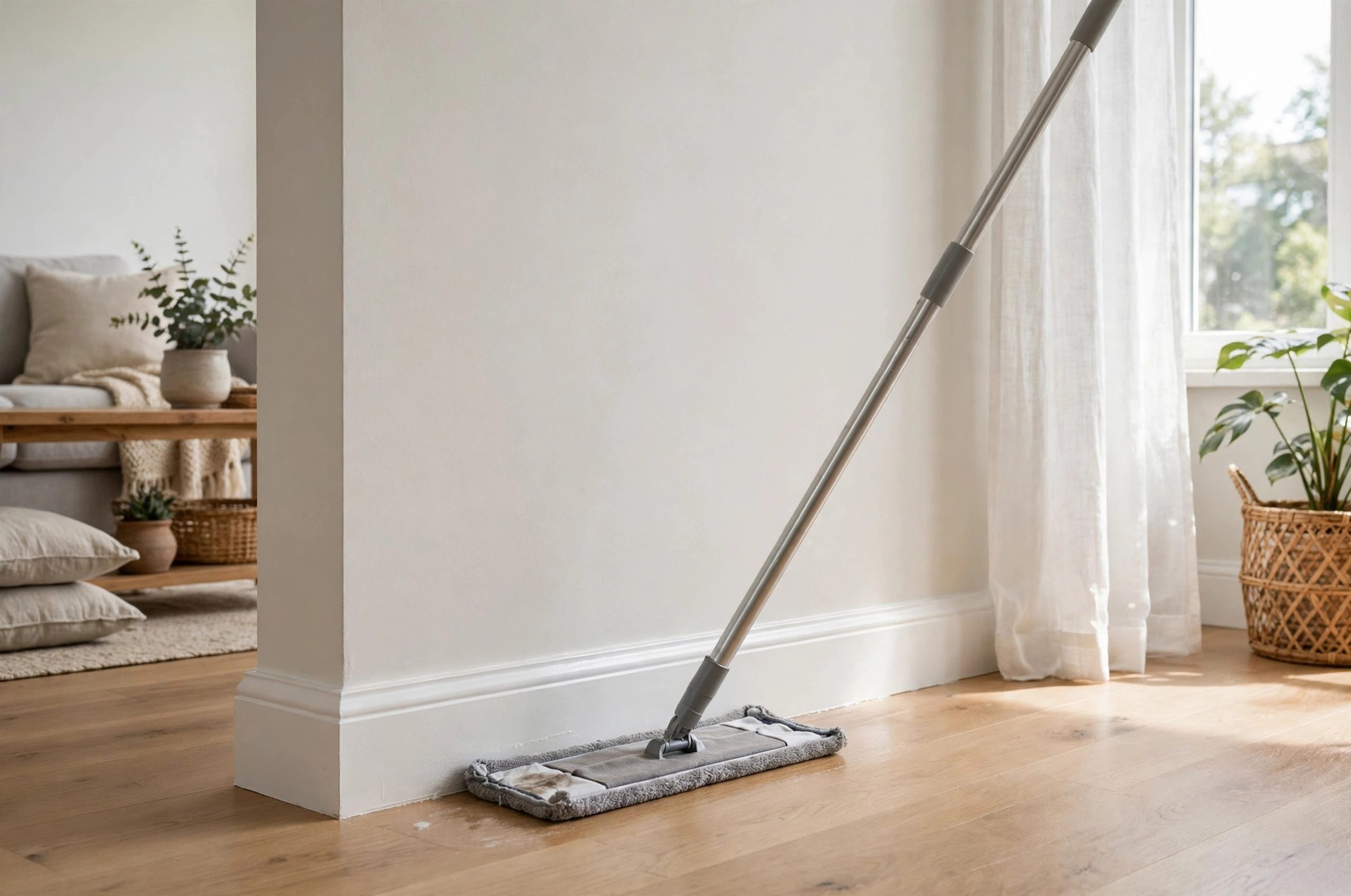
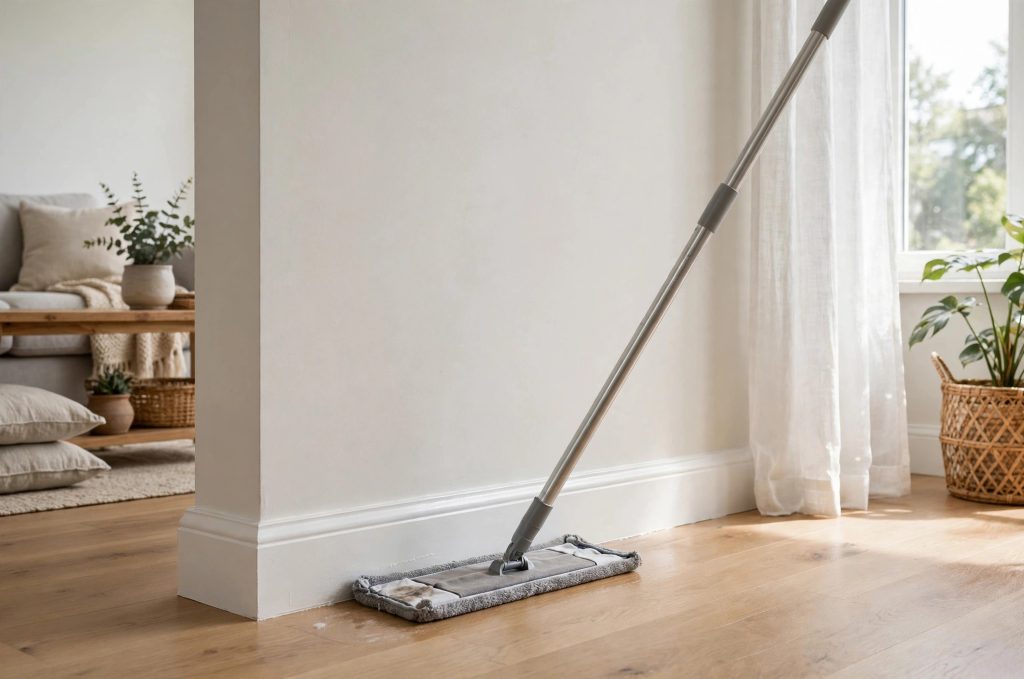
This is the workhorse method, recommended by professional cleaners for routine maintenance. A flat microfiber mop with a long handle reaches the baseboard while you stand comfortably upright.
1. Attach a clean, dry microfiber pad to the mop head. 2. Angle the mop so the pad presses lightly against the face of the baseboard. 3. Walk slowly around the room, letting the pad glide along the trim. 4. When the pad looks dirty, shake it out or swap in a clean one.
Microfiber attracts dust through static, so it grabs the dust instead of pushing it around. The Marching Maids guide to cleaning baseboards without bending over recommends starting with this dry pass before any moisture, since wetting dust first just makes mud. Homes & Gardens cleaning experts say the same in their best ways to clean baseboards: a long-handled mop with a microfiber head is the easiest way to do the job without hurting your back.
Method 2: The Dryer Sheet Trick
The key to clean baseboards without bending over is choosing the right approach for your space and budget.
With a little planning, clean baseboards without bending over can fit even a busy schedule.
Used dryer sheets are one of the best baseboard tools in the house. They pick up dust with static, and they leave behind a light coating that repels dust for a while afterward. Many homeowners find their baseboards stay cleaner longer after a dryer-sheet pass.
To use one standing up:
1. Wrap a dryer sheet around the head of a flat mop or a Swiffer-style tool. 2. Hold it in place with a rubber band. 3. Glide it along the baseboards, standing upright.
Real Simple's guide on how to clean baseboards notes that the sheet leaves a very thin coat that reduces static cling, which is why dust does not resettle as fast. Taste of Home's baseboard cleaning hack pairs the dryer sheet with a vacuum crevice tool for the same effect. The Medium guide to cleaning baseboards without bending over calls this the professionals' favorite trick, and it costs nothing.
Method 3: The Extendable Duster
With a little planning, clean baseboards without bending over can fit even a busy schedule.
Before you start, it helps to understand how clean baseboards without bending over works in real homes.
An extendable duster with a fluffy or microfiber head is made for this. Extend the pole, bend the head to hug the baseboard, and walk the room. The flexible head gets into corners and behind furniture legs without moving anything.
This method is best for light dust on a regular schedule. It will not cut through greasy kitchen grime, but for weekly upkeep in living rooms and bedrooms, it is the fastest option. Shake the duster out outdoors or vacuum it clean when it loads up. A dirty duster just moves dust around.
Method 4: The Broom-Wrapped Cloth
Before you start, it helps to understand how clean baseboards without bending over works in real homes.
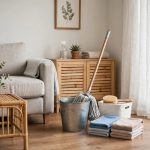
No special tools? Wrap a damp microfiber cloth around the head of a broom and secure it with rubber bands or clips. Lightly mist the cloth with water and a drop of dish soap, not the wall. Then run it along the baseboards.
This is the standing version of hand-wiping, and it handles the jobs a dry duster cannot: the sticky kitchen film, the entryway scuffs, the spots behind the trash can. The Bea Cleaner guide on cleaning baseboards without bending over walks through this technique step by step, including the important warning to wring the cloth well. Too much water on painted trim can damage the paint or swell the wood underneath.
Method 5: The Vacuum with a Brush Attachment
A good plan for clean baseboards without bending over saves time, money, and frustration.
A vacuum with a long hose and a soft brush attachment sucks dust off baseboards without touching them. Walk the room holding the brush just above the trim. It is fast, it is thorough, and there is no dust left floating in the air to resettle.
This is also the best first step before any wet cleaning. Getting the loose dust off with the vacuum means the damp wipe that follows deals only with the stuck-on stuff. Housewife How-Tos' baseboard cleaning guide starts with exactly this order: vacuum or dust first, then wipe, then dry.
Method 6: The Damp Mop for Grime
For most people, clean baseboards without bending over comes down to a few smart choices.
For baseboards that have gone too long, a damp pass is needed. Use a flat mop with a microfiber pad, dampened with warm water and a few drops of dish soap. Wring the pad until it is barely damp. Glide it along the boards, then follow with a dry pad or cloth to pick up the moisture.
Spray the pad, never the wall. Water running down behind the trim can damage drywall and paint. Hellamaid's baseboard cleaning guide lays out the full sequence: solution, damp wipe, dry wipe, and the optional dryer-sheet finish to repel future dust.
Handling Scuffs and Stains
If you are new to clean baseboards without bending over, start with the simplest option and build from there.
Scuff marks from shoes and furniture need a little more than dusting:
- Melamine sponge. A damp melamine sponge erases most scuffs from painted baseboards. Rub lightly. Pressing hard can dull the paint's sheen, so test in a hidden spot first.
- Baking soda paste. For sticky spots, dab on a paste of baking soda and water, wait a few minutes, and wipe off. Baking soda is mildly abrasive, so be gentle.
- Pencil eraser. A clean art gum eraser takes scuffs off natural or stained wood trim without chemicals.
- Touch-up paint. If cleaning reveals chips and worn spots, a small brush and matching paint make baseboards look new. The Mom Survival Guide's baseboard tips notes that a fresh coat on badly worn trim beats endless scrubbing.
Southern Living's guide to reviving dingy baseboards adds that if baseboards are yellowing and cleaning does not help, the cause may be old oil-based paint or grease, and repainting with a water-based latex is the real fix.
How Often Should You Do This?
When it comes to clean baseboards without bending over, getting the details right makes all the difference.
A quick standing dusting once or twice a month keeps baseboards from ever getting bad. Homes & Gardens' piece on how often to clean baseboards quotes cleaning pros who say monthly wipedowns are enough for most homes, with a deeper scrub once or twice a year. Homes with pets, kids, or allergies benefit from more frequent dusting, since pet hair and dander collect fast at floor level.
The TMJ4 three-step method (dust, wipe, dry) is worth memorizing. Every baseboard job, big or small, follows that order.
Protect Your Back While You Work
The whole point is to stay upright, so a few ergonomics tips:
- Keep the handle long enough that you stand straight. Hunching over a short handle defeats the purpose.
- Switch hands every room to avoid straining one side.
- Move the ladder, not your body. If you do need to reach a high spot like the top of tall trim, reposition instead of stretching.
- Wear supportive shoes. Twenty minutes on hard floors is easier in real shoes than in socks.
For the once-a-year deep clean where hands-and-knees work is truly needed, a kneeling pad saves the knees. But with regular standing maintenance, that deep clean gets easier every time. Many people find they never need to kneel again.
Keep Them Clean Longer
After the boards are clean, slow down the next round of dust:
- Run the dryer-sheet pass as the final step. The anti-static coating buys you weeks.
- Vacuum with an eco-friendly HEPA vacuum regularly. Less airborne dust means less dust settling on the trim. A self-emptying robot vacuum running on a schedule handles this without any effort.
- Wipe up kitchen splatters when they happen. Fresh grease wipes off. Old grease needs scrubbing.
- For the whole-house deep clean that includes baseboards, windows, and everything above them, a professional deep cleaning service resets the baseline, and your standing routine keeps it there.
References
- Bea Cleaner. (n.d.). How to clean baseboards without bending over. https://www.beacleaner.com/how-to-clean-baseboards-without-bending-over
- Dust Bunnies. (n.d.). The safe way to clean baseboards without bending over or scrubbing. https://medium.com/@dustbunnies033/the-safe-way-to-clean-baseboards-without-bending-over-or-scrubbing-bfc897f90fda
- Hellamaid. (n.d.). How to clean baseboards: Cleaning tips. https://hellamaid.com/cleaning-guide/how-to-clean-baseboards/
- Homes & Gardens. (n.d.). Cleaning pros share the best ways to clean baseboards. https://www.homesandgardens.com/life-design/best-way-to-clean-baseboards
- Homes & Gardens. (n.d.). How often should you clean your baseboards? https://www.homesandgardens.com/life-design/how-often-should-you-clean-your-baseboards
- Housewife How-Tos. (n.d.). How to clean baseboards (including tips to avoid bending over). https://housewifehowtos.com/clean/how-to-clean-baseboards/
- Marching Maids. (n.d.). The right way to clean baseboards without bending over. https://marchingmaids.com/blog/the-right-way-to-clean-baseboards-without-bending-over/
- Real Simple. (n.d.). How to clean baseboards the easy way. https://www.realsimple.com/how-to-clean-baseboards-12005639
- Southern Living. (n.d.). How to make dingy baseboards look like new, without repainting. https://www.southernliving.com/how-to-revive-baseboards-12028550
- Taste of Home. (n.d.). How to clean baseboards. https://www.tasteofhome.com/article/baseboard-cleaning-hack/
- The Mom Survival Guide. (n.d.). How to clean baseboards without bending over: 5 quick and easy tips. https://themomsurvivalguide.com/clean-baseboards-without-bending-over/
- TMJ4. (n.d.). How to clean baseboards in 3 simple steps. https://www.tmj4.com/how-to-clean-baseboards-3-simple-steps
Was this guide helpful?

About My Garden US
The My Garden US editorial team writes practical, in-depth home and garden guides for American homeowners — tested advice, no fluff.
You May Also Like
Cordless Stainless Steel Appliance Cleaners Buying Guide
July 27, 2026 27 views
Cordless Air Duct Cleaning Services Near Me
January 27, 2026 13 views
Reliable Ceiling Fan Dusters Buying Guide
March 6, 2026 19 views