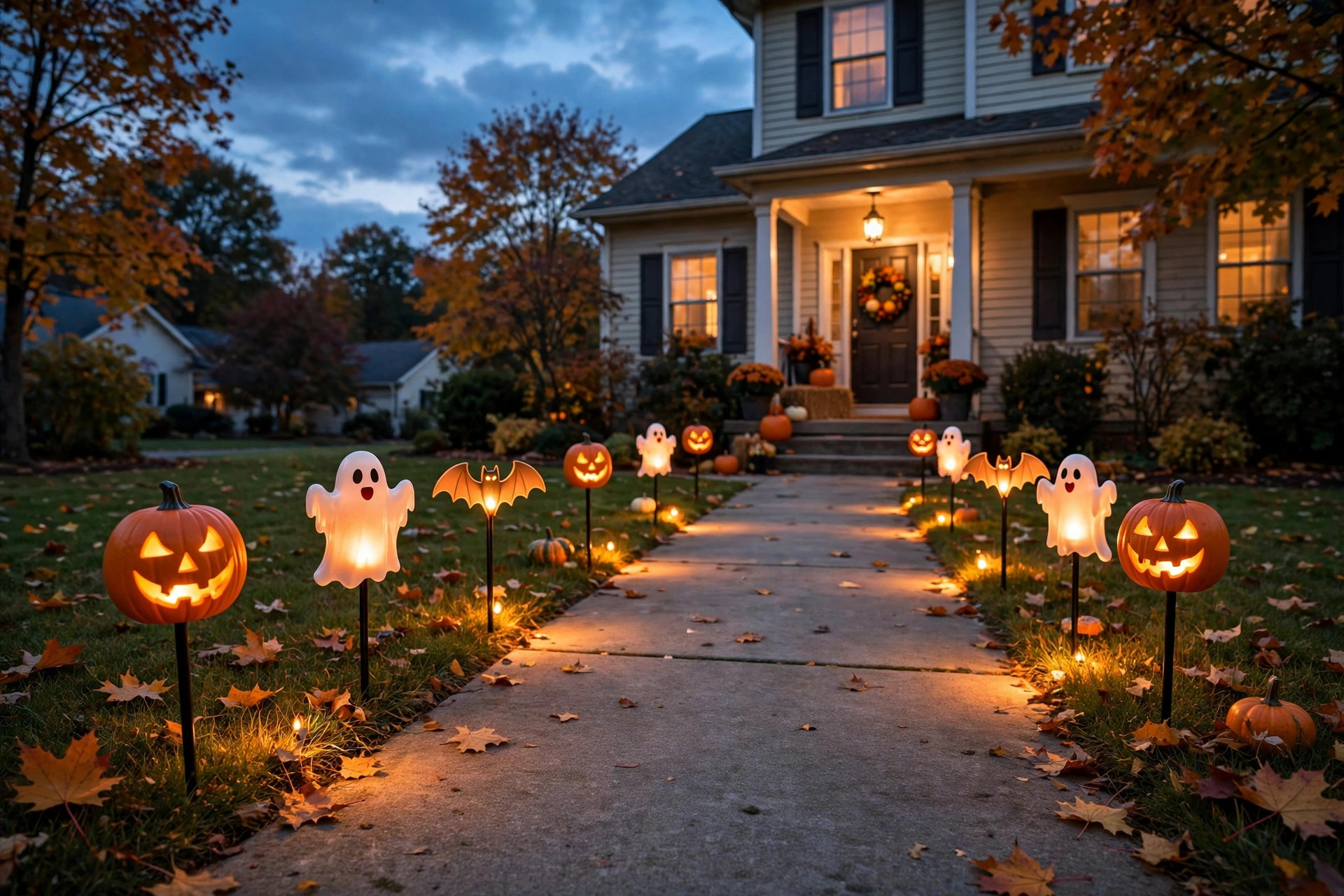
The best halloween yard stakes for pathway lighting turn a dark front walk into a safe and spooky welcome. They mark the path for trick-or-treaters. They also give the whole yard a festive glow. Homeowners in many towns now line their walkways with pumpkins, ghosts, bats, and witches that light up at night. This guide explains why these stakes matter, what to look for when you shop, which types work best, what they cost, and how to keep them working for many seasons.
Why Pathway Lighting Stakes Matter
Halloween night brings many small feet to the door. Children walk up driveways and sidewalks in the dark. A dark path can hide steps, cracks, and lawn edges. Lighted yard stakes solve this problem in a simple way. They push into the ground along the path. They glow with warm or colored light. Each one marks the safe route to the door.
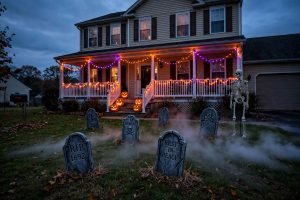
These stakes also set the mood. A row of glowing jack-o-lanterns tells visitors that the house is ready for Halloween. It says, “Come on up, we have candy.” A dark house with no lights may tell children to skip the stop. So pathway stakes serve two jobs at once: safety and fun.
Many families add them to a larger display. They pair well with larger front yard figures such as inflatables. A set of lighted stakes in front and a big inflatable behind them fills the whole yard with color. They also work alone. A small porch or a short walk needs only six or eight stakes to look complete.
What to Look For When You Choose: Best Halloween Yard Stakes for Pathway Lighting
Brightness and Light Color
Look at how the stake lights the ground. Warm white light looks like candlelight. It feels old and classic. Orange light feels like fire and pumpkins. Purple and green light feel strange and spooky. Many sets now use LED bulbs. LED bulbs stay cool. They also use little power. Solar models charge in the day and turn on at dusk by themselves.
Test the brightness in a dark store aisle if you can. The light should be strong enough to show the path edge. It should not be so bright that it hurts the eyes. A soft pool of light under each stake is just right.
Stake Height and Size
Most pathway stakes stand between 18 and 30 inches tall. Short stakes near 18 inches give a low line of light close to the ground. Tall stakes near 30 inches show their faces and shapes from the street. A good rule is to match the stake height to the width of the path. Wide paths look best with taller stakes. Narrow paths look best with shorter ones.
Space the stakes about three to four feet apart. This gives a steady line of light with no dark gaps. Count your path length before you shop. A 20-foot walk needs about six stakes at three-foot spacing.
Power Source
Three main power types exist. Solar stakes need no cords and no batteries to change. They charge by day and glow by night. They work best in yards that get full sun. Plug-in stakes use low-voltage wire. They give steady bright light all night. They need an outdoor outlet and a transformer. Battery stakes use small AA or AAA batteries. They are easy to place anywhere. But you must change or charge the batteries through the season.
Solar is the most popular choice for most homes. It is clean and simple. But if your walk sits under trees, a plug-in or battery set may work better.
Weather Strength
October weather can be rough. Rain, wind, and cold nights all test these decorations. Look for stakes with a sealed light box. The plastic should feel thick and firm. The metal or plastic stake part should be stiff, not bendy. Good sets say they are rated for outdoor use. The product box should list this clearly.
Shape and Style
Pumpkins are the classic pick. Ghosts, skulls, bats, black cats, and witches are also common. Some sets mix shapes in one box. Some sets keep one shape for a neat, even look. Pick shapes that fit the tone you want. Sweet and friendly shapes suit homes with small children. Scarier shapes suit a full haunted yard.
Shoppers who like a bold fright may also look at scary yard decorations for ideas that match their stakes. The stakes mark the path while bigger pieces fill the lawn.
Types and Options
Solar Lighted Stakes
Solar stakes are the top pick for most buyers. Each stake holds a small solar panel on top. The panel charges a battery by day. A sensor turns the light on at dusk. Most run for six to eight hours on a full charge. They cost nothing to run. They need no wires. Just push them into soft ground and walk away.
The weak point is shade. If your walk gets little sun, the lights may dim early. Trim back bushes that block the panel. Wipe the panel clean with a damp cloth once a week. Dust cuts the charge.
Low-Voltage Plug-In Stakes
These stakes connect to a low-voltage line that runs from a transformer at an outdoor outlet. They shine bright and steady from dusk until you turn them off. Many have timers. Wind and clouds do not affect them. They are the best pick for long paths and shady yards.
The cost is the extra work. You must run the wire along the path and hide it under mulch or soil. The transformer and timer add to the price. But the light is the most reliable of all types.
Battery-Operated Stakes
Battery stakes are simple to set up. Put in the batteries and push the stake in the ground. Many have timers that run six hours on and eighteen hours off. This saves battery life. They are good for spots far from the house where no outlet exists.
The weak point is upkeep. Cheap batteries die fast in cold weather. Use good alkaline or rechargeable batteries. Keep a spare set on hand for Halloween week.
String and Rope Light Stakes
Some sets use one long line with several glowing figures on it. Each figure has its own ground stake. These give a connected, even look. They often plug in. They are good for long, straight paths.
Cost and Price
Prices range widely. Small solar sets of six cost about 15 to 25 dollars. These are simple plastic shapes with small LED bulbs. They are fine for one season or two. Mid-range sets cost 30 to 60 dollars. They use thicker plastic, brighter LEDs, and better solar panels. Many last three to five seasons with care.
Large or plug-in sets cost 60 to 120 dollars or more. These may include ten to twelve tall figures, a transformer, and a timer. They give the brightest light and the longest life. Hand-painted resin figures cost the most. They look like real craft pieces in daylight.
Buy early in September for the best pick. Prices often drop in the last week of October. But the popular shapes sell out first. Store sales at big home stores carry many brands side by side. You can compare brightness in person. Craft stores also stock wide ranges each fall, and many shoppers browse seasonal aisles at Michaels for new shapes each year. Big home improvement stores list full lines online, including the seasonal range at The Home Depot and the outdoor lighting section at Lowe’s. Large home goods sellers like Wayfair and Target also carry many sets with customer reviews that help you compare.
Watch for multi-packs. A pack of ten often costs less per stake than a pack of four. If you need only six, split a pack with a neighbor. Many blocks now line whole streets with matching stakes, and the effect is grand.
Care and Upkeep
Good care makes cheap stakes last longer. Pull the stakes out of the ground after Halloween. Do not leave them out through winter. Ice and snow crack the plastic. Wipe each figure with a damp cloth before you store it. Let it dry fully. Damp storage grows mold and stains.
Remove batteries from battery models before storage. Old batteries leak and ruin the contacts. Wrap the stakes in newspaper or old towels. Store them in a box in a dry garage or attic. Keep heavy boxes off them so the shapes do not bend.
For solar models, check the rechargeable battery each fall. Most use a small AA-size rechargeable cell under a cover. These cells wear out after two or three seasons. New ones cost little. A fresh cell can bring an old set back to full brightness.
Check the ground stakes for cracks. The thin lower part takes the most force. If one snaps, you can often tape a short wooden dowel inside as a splint. Keep spare stakes from old sets for parts.
Home care guides with simple seasonal tips appear on many trusted sites, such as the how-to library at The Spruce and the outdoor living ideas at HGTV. Style ideas for the season also run each fall in Country Living.
Safety
Safety comes first with any lighted decoration. Keep these rules in mind.
Buy only sets marked for outdoor use. Indoor-only items can short out in rain. Look for a UL or ETL mark on the box. This means a lab tested the wiring.
Keep the stakes clear of the walking surface. Place them at least one foot off the path edge. A stake that leans over the walk can trip a child in a costume. Push each stake deep so wind cannot tip it over.
Do not overload outdoor outlets. Plug-in sets draw little power, but many plugs in one outlet can still trip a breaker. Use one outdoor-rated extension cord if you must extend. Never run cords across the walk where feet can catch them.
Check wires each year for cuts and cracks. Throw away any set with bare wire showing. For general product safety news and recall lists, the federal agency site at CPSC is worth a visit before the season starts.
Keep real candles out of the display. LED and solar lights give the same warm glow with no flame. If you use a yard fog machine with your stakes, keep the fog outlet away from the path so the walk stays clear.
Pets may chew on low wires and figures. Keep dogs away from the display or pick stakes with no dangling cords.
FAQ
How many stakes do I need for my walkway?
Measure the walk in feet. Divide by three. That gives the count for stakes three feet apart. A 15-foot walk needs five stakes. A 24-foot walk needs eight. Buy one or two extra in case one breaks.
Do solar Halloween stakes work on cloudy days?
They work, but the glow time drops. A full sunny day gives six to eight hours of light. A cloudy day may give only three or four hours. Place the panels where they catch the most sun. Wipe them clean.
Can I leave them out all October?
Yes. Most outdoor-rated sets handle a full month of October weather. Bring them in during heavy storms with high wind. Take them in for good after Halloween night.
Are LED Halloween stakes safe around children?
Yes. LEDs stay cool to the touch. They do not burn like old bulbs. Make sure the stakes stand firm so children cannot pull them down. Keep small parts away from toddlers.
What is the best color for pathway stakes?
Orange and warm white are the most classic. They look like pumpkin light. Purple, green, and red add a spooky feel. Pick one main color for a neat look. Mixing too many colors can look messy.
How do I stop stakes from tipping over in wind?
Push them deep into soft soil. In hard or frozen ground, water the spot first to soften it. For tall figures, add a small garden stake behind each one and tie them together with dark string. Bring tall sets inside on very windy nights.
A Short Final Word
The best halloween yard stakes for pathway lighting are simple, safe, and bright enough to guide small feet to the door. Solar sets suit most yards. Plug-in sets suit long or shady walks. Battery sets fill the gaps. Pick a shape you love, space the stakes well, and store them dry. Do that, and your glowing path will welcome trick-or-treaters for many Halloweens to come.
References
Country Living. (n.d.). Country home and lifestyle. https://www.countryliving.com HGTV. (n.d.). Home and garden ideas. https://www.hgtv.com Lowe’s. (n.d.). Home improvement products. https://www.lowes.com Michaels. (n.d.). Arts and crafts supplies. https://www.michaels.com Target. (n.d.). Retail store. https://www.target.com The Home Depot. (n.d.). Home improvement products. https://www.homedepot.com The Spruce. (n.d.). Home and garden advice. https://www.thespruce.com U.S. Consumer Product Safety Commission. (n.d.). Product safety information. https://www.cpsc.gov Wayfair. (n.d.). Furniture and home goods. https://www.wayfair.com
Was this guide helpful?

About Robert Taylor
The My Garden US editorial team writes practical, in-depth home and garden guides for American homeowners — tested advice, no fluff.