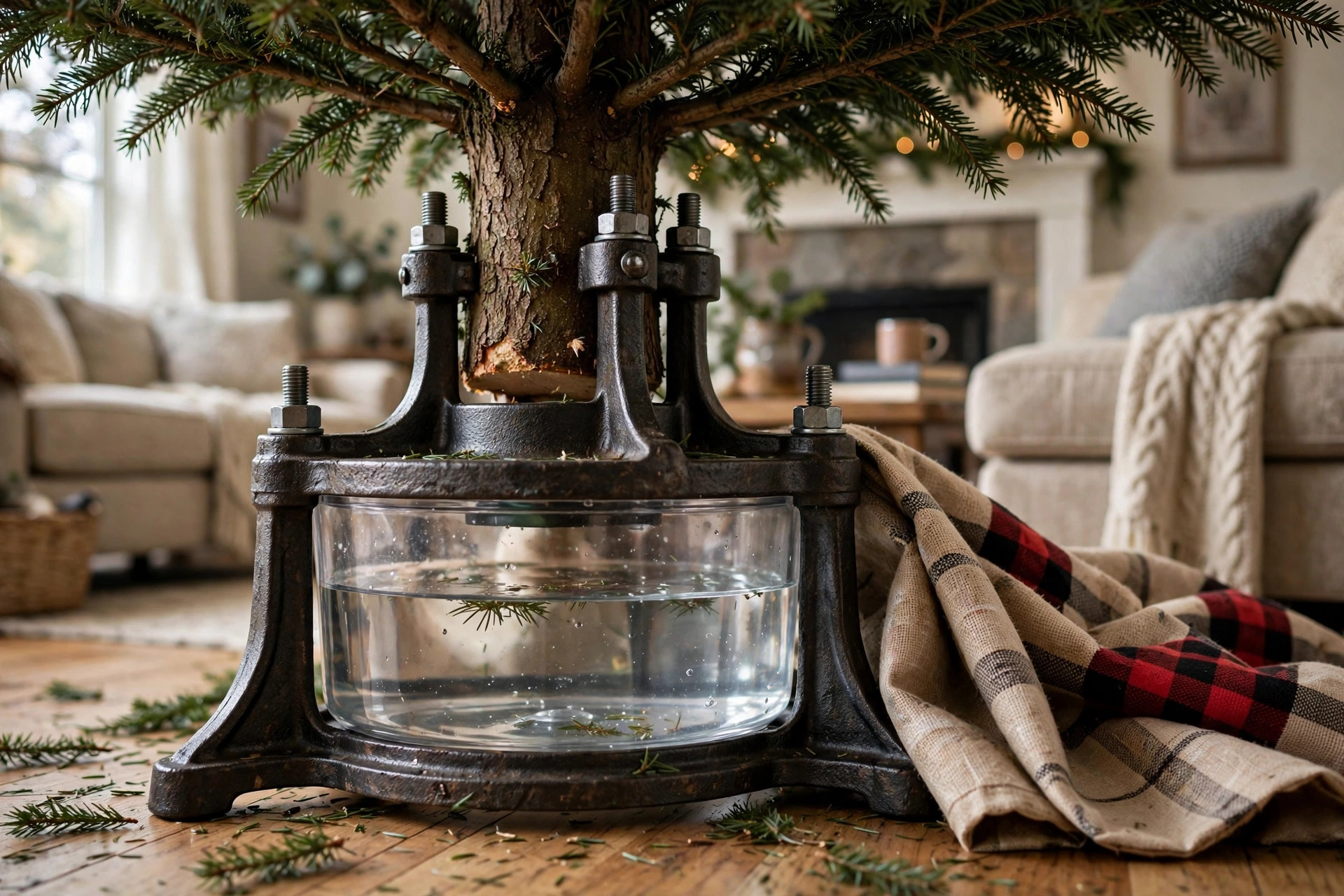

A christmas tree stand for real trees heavy duty is not a small detail. It is the base that holds your whole holiday together. A real tree can weigh a lot. It can stand nine feet tall. It can lean, shift, and dry out in a warm room. A weak stand lets all of that happen. A heavy duty stand keeps the tree straight, steady, and watered from the day you bring it home until the day you take it down.
Many trees fall because of the stand, not the tree. A trunk that is loose will lean more each day. A water bowl that is too small lets the cut dry and seal. Then the tree stops drinking. Then the needles drop. The right stand stops all of this trouble before it starts.
Why a Heavy Duty Stand Matters
A real tree is heavy at the top and narrow at the base. That shape wants to tip. A heavy duty stand answers with weight of its own and with strong bolts or clamps that grip the trunk. Cast iron and steel stands do this work best. They do not crack or flex the way thin plastic does.
Water is the second reason. A fresh cut tree drinks a large amount of water each day in the first week. A one gallon bowl may run dry by night. A heavy duty stand holds more water, sometimes two gallons or more. That keeps the trunk base wet. A wet base keeps the tree fresh. A fresh tree is safer too, because dry trees catch fire far more easily.
Families with pets and small children have one more reason. A cat can climb. A toddler can pull. A strong stand with a wide base resists these pushes. It lowers the chance of a tree falling across the room.
What to Look for When You Choose: Christmas Tree Stand for Real Trees Heavy Duty
Weight Capacity and Tree Size
Match the stand to the size of tree you plan to buy. Stands list a trunk diameter limit, often three to seven inches, and a height limit, often up to ten or twelve feet. Measure your tree trunk before you shop. Cut a small disc of paper to the stated limit and test the trunk against it. A stand that is too small will strain no matter how strong its metal.
Strong Bolts or Clamps
The gripping system is the heart of the stand. Eye bolts are common. You turn them by hand until they bite into the bark. Four bolts beat three for wide trunks. Spike or blade clamps are another style. They press hard with less turning. Look for steel, not soft pot metal that bends.
Water Capacity
More is better here. Aim for at least one gallon for medium trees and two gallons for trees over eight feet. A wide mouth makes filling easy. A deep bowl keeps the water near the cut end of the trunk. Some stands include a funnel or spout to help you pour without spilling on the floor.
Wide, Stable Legs
Four legs give more stability than three. Legs that spread wide resist tipping. Metal legs beat plastic feet. Check that the legs have floor protection so they do not scratch hardwood. Felt pads or rubber caps do this job.
Ease of Setup
You will set this up once a year, often with help from family. A good stand lets one person hold the tree while another tightens the bolts. Guides that center the trunk save time. Some stands have a foot pedal lock that keeps the trunk straight while you tighten. This feature is worth the extra cost if you set the tree up alone.
Types of Heavy Duty Stands
Cast iron stands are the old favorite. They are heavy, simple, and nearly unbreakable. A five legged cast iron stand can hold a ten foot tree. The trade is weight. They are hard to move and to store.
Welded steel stands give strength at less weight. They use a cage or ring frame with long bolts. Many hold large water volumes. They cost more than cast iron but are easier to carry.
Resin and plastic heavy duty stands are lighter still. Good ones use thick walls and steel hardware. They suit trees up to eight feet. They do not rust, which helps in damp rooms.
Revolving stands sit on a turntable so the whole tree can spin. They look fun for showing off ornaments. They cost more and the moving parts add a point of failure. They are fine for lighter trees but less ideal for tall ones.
Pedal lock stands use a foot lever to clamp the trunk. This makes solo setup easy. The lock must be strong metal. Cheap pedal locks slip under load.
Cost and Price
Expect to pay more for a stand that lasts. Basic plastic stands cost little but rarely survive many seasons with a real tree. A solid cast iron stand in the heavy duty class often runs in the middle price range. Welded steel models with large water bowls sit higher. Premium pedal lock stands are the most costly.
Think of it as cost per year. A strong stand can serve ten to fifteen years. Spread over that time, the better stand is cheaper than replacing a weak one every other season. Buy the stand to match the largest tree you might ever bring home, not the smallest.
Watch for sales after the holidays. Stands often drop in price in January. This is a good time to buy for next year.
How to Set Up Your Tree the Right Way
Cut a fresh slice off the trunk base when you get home, about half an inch thick. A fresh cut opens the tree so it can drink. Skip the old advice about drilling holes or hammering the base. A flat cut is all it needs.
If the trunk is not round, note this before you tighten. Real trunks are often oval. Turn the tree so the narrow side faces the front of the stand. Then tighten the bolts on the long sides first. This evens the grip. A crooked trunk set at an angle will lean more each day, so take time here. Some heavy duty stands include a centering pin at the base. Press the trunk onto the pin before you tighten. It holds the tree upright while your hands are free.
Place the stand where the tree will live. Do this before you add the tree. Assemble the stand and set the water bowl in place. Have one person hold the tree straight while another tightens each bolt a little at a time. Turn the tree as you work so it faces its best side to the room.
Tighten in a star pattern, moving from one bolt to the bolt across from it. This keeps the trunk centered. Step back often and look from across the room. Small leans are hard to see up close.
Fill the bowl with water right away. Check it daily for the first week. A fresh tree can drink a full bowl in one day. Keep the level above the cut end of the trunk at all times. If the water drops below the cut, the trunk may seal and stop drinking.
Care and Upkeep During the Season
Check the water level every morning. This one habit does more for freshness than any other. Keep the tree away from heat vents, radiators, and fireplaces. Heat dries the needles fast.
Tighten the bolts once more after the first day or two. Wood shrinks a little as it settles. A quick recheck keeps the grip firm.
Use a tree skirt that lies flat under the stand to catch dropped needles and hide the base. A skirt made for large trees will drape well around wide legs. You can read more about best christmas tree skirt for large trees if you are shopping for one.
If you add lights and a topper, keep the top light. A best christmas tree topper for tall trees made of light material will not tip a tall tree the way a heavy glass topper can.
After the season, empty the water and dry the stand fully. Store it in a dry spot. Oil the bolts lightly to stop rust. A stand stored dry will be ready next December without fuss.
Safety
A real tree is safe when it is fresh and watered. A dry tree is not. Keep the stand full of water. Check the bowl each day without fail.
Keep the tree at least three feet from heat sources. Use lights that are listed by a testing lab and in good shape. Turn the lights off at night or when you leave the house. The Consumer Product Safety Commission gives clear guidance on tree and light safety each season.
Never use real candles on a tree. Never overload outlets with too many light strings. If the tree stops drinking and needles fall at a touch, take it down. A dry tree should leave the house.
Pets may chew low branches or drink the stand water. Some tree water additives are unsafe for animals. Use plain water and keep the bowl covered if your pet shows interest. A skirt can help block the bowl.
FAQ
How big a stand do I need for a nine foot tree?
Look for a stand rated for trees nine to twelve feet tall with a trunk capacity near six inches. A water bowl of two gallons or more is wise for a tree this size. Four legs with wide spacing give the best stability.
Should I put anything in the water?
Plain water is best. Studies show that additives like sugar, bleach, or aspirin do not help and can hurt pets. Fresh water each day is all a tree needs. Keep the level high.
Why does my tree lean after two days?
Wood settles and shrinks as it dries in a warm room. This loosens the bolts a little. Tighten them again on day two. Set the tree straight when it is first placed and recheck it from across the room.
Can one person set up a large tree alone?
It is hard but possible with the right stand. Pedal lock stands hold the trunk while you work. A tall step ladder and a helper are still safer. Do not climb with the tree in your arms.
How long will a real tree last in a good stand?
With daily water, a fresh tree can last four to six weeks. Cut trees from a local farm last longer than trees cut weeks ago at a distant lot. Check the needles. They should bend, not snap.
Do I need a different stand for a flocked tree?
No. Flocking adds little weight. The same heavy duty stand works. Keep flocked branches dry, though, since water spots can mark the flocking.
A Short Final Word
The stand is the least seen part of your Christmas and the most important. Choose one built for real trees and heavy duty work. Give it a fresh cut, plenty of water, and a straight set. Then enjoy the season. Add christmas garland for staircase and mantel usa along the stairs and your home will feel complete.
You can find stands at The Home Depot, Lowe’s, Wayfair, and Michaels. For care ideas and display tips, see The Spruce, HGTV, JOANN, and This Old House.
References
Country Living. (n.d.). Country home and lifestyle. https://www.countryliving.com HGTV. (n.d.). Home and garden ideas. https://www.hgtv.com JOANN. (n.d.). Fabric and craft supplies. https://www.joann.com Lowe’s. (n.d.). Home improvement products. https://www.lowes.com Michaels. (n.d.). Arts and crafts supplies. https://www.michaels.com The Home Depot. (n.d.). Home improvement products. https://www.homedepot.com The Spruce. (n.d.). Home and garden advice. https://www.thespruce.com This Old House. (n.d.). Home renovation guidance. https://www.thisoldhouse.com U.S. Consumer Product Safety Commission. (n.d.). Product safety information. https://www.cpsc.gov Wayfair. (n.d.). Furniture and home goods. https://www.wayfair.com
Was this guide helpful?

About James Carter
The My Garden US editorial team writes practical, in-depth home and garden guides for American homeowners — tested advice, no fluff.
You May Also Like

Best Thanksgiving Candle Rings for Table Decor
March 6, 2026 0 views
Fall Pumpkin Decor for Mantel and Table: A Simple Guide
March 24, 2026 0 views
The Best Christmas Stocking Stuffer Ideas for Adults
September 10, 2026 0 views