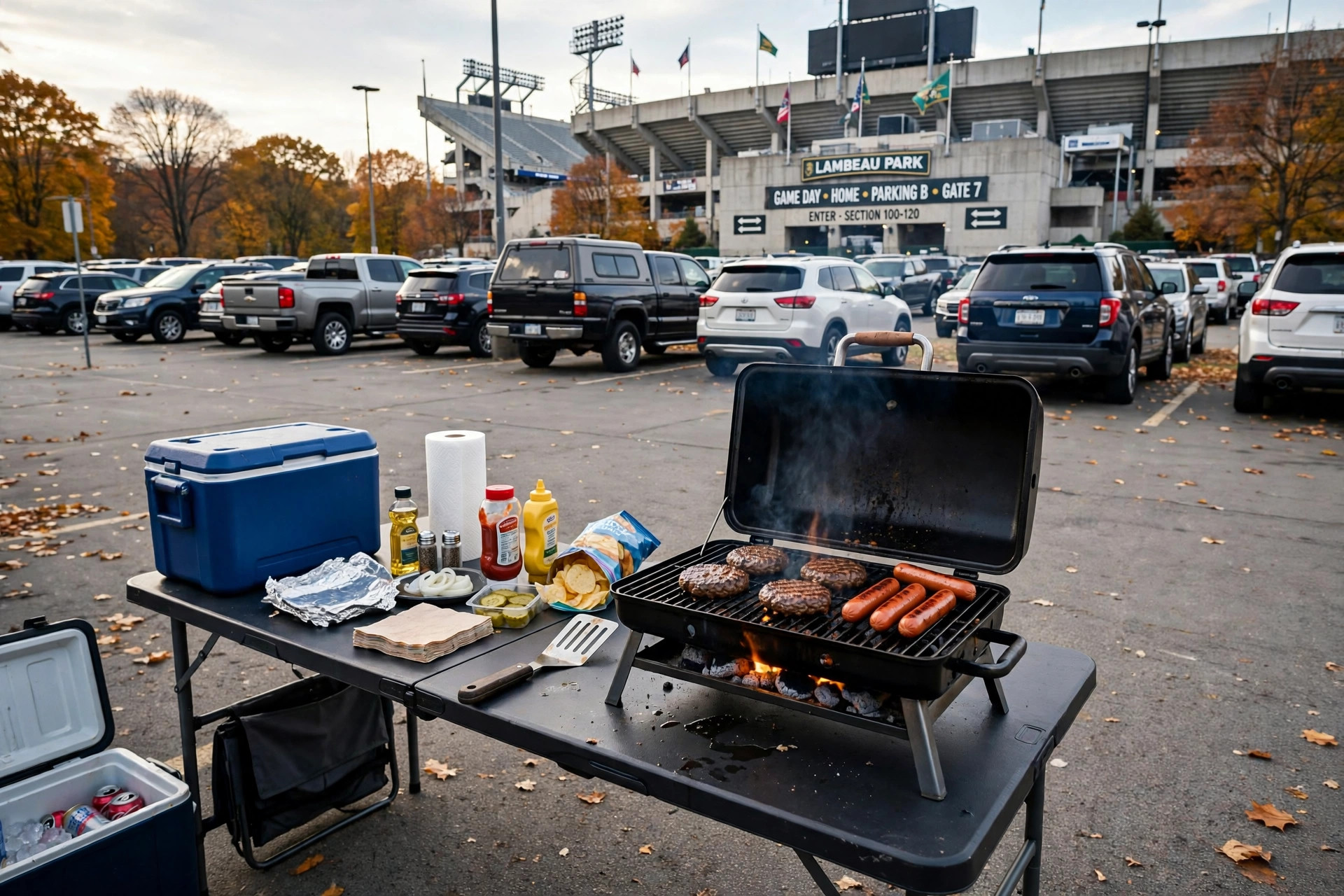
Tailgating is a game-day ritual. Fans arrive hours early, open the trunk, and set up food before kickoff. The grill sits at the center of it all. This guide to the best grill for tailgating portable reviews will help you choose a cooker that fits in your car, sets up fast, and cooks well. You do not need the biggest grill. You need the right one for the parking lot.
Why a Portable Grill Matters at a Tailgate
A tailgate is not a backyard barbecue. You cannot roll a full-size grill out of the garage. You need a grill that travels. A good portable grill folds up, fits in a trunk or truck bed, and lights in minutes.
Space is tight at a tailgate. Cars park close together. A portable grill takes up a small patch of asphalt. You can set it on a folding table or on the ground. When the game starts, you pack it up and go.
Food tastes better at a tailgate when it is hot. A portable grill lets you cook burgers, dogs, and chicken right before kickoff. Guests remember good food. Reviews of portable tailgate grills focus on this point again and again. The best models heat fast and hold steady heat.
A portable grill also works after the season ends. Take it to the beach, the lake, or a campsite. Many owners use their tailgate grill for backyard cookouts too. One grill can serve many needs.
What to Look for in a Portable Tailgate Grill: Best Grill for Tailgating Portable Reviews
Reviews of the best grill for tailgating portable models point to the same four features. Check each one before you buy.
Fuel Type
Fuel decides how you cook and what you carry.
Propane gas grills are the most popular choice for tailgates. They light with a button. They heat in about ten minutes. Small one-pound propane canisters fit in a cooler bag. Weber makes tabletop gas grills that many tailgaters trust.
Charcoal grills give a smoky flavor that gas cannot match. They take longer to light and longer to cool. You must carry charcoal, starter, and ash bags. Some lots ban open charcoal flames, so check the rules first. Char-Broil offers compact charcoal models with tight-fitting lids.
Pellet grills run on wood pellets and give real smoke flavor with easy controls. They need power for the fan and auger, which limits them at a lot without a plug. Electric grills face the same limit. They work well only where an outlet is near.
Size and Weight
A tailgate grill should weigh under 30 pounds. Many good models weigh between 15 and 25 pounds. That is light enough for one person to carry from the car.
Look at folded size too. Measure your trunk or truck bed. A grill that folds flat fits behind seats or under gear. Latches that lock the lid keep grease inside during the drive.
Cooking Surface
Most tailgate grills offer 180 to 300 square inches of cooking space. That cooks eight to twelve burgers at once. It is enough for a small group. Larger groups may need two grills or a longer cooking time.
Cast iron grates sear meat well and hold heat. Porcelain-coated grates clean up faster. Both work fine. Deep lids let you roast thicker cuts like chicken halves.
Setup and Cleanup
At a tailgate, time matters. You want to start cooking fast and pack up fast. The best portable grills set up in under five minutes. Folding legs and snap-in parts help.
Cleanup should be simple. Grease trays that slide out save time. Ash catchers on charcoal models keep hot ash off the asphalt. Bring a stiff brush and a bag for trash.
Lid, Legs, and Build
A tight lid matters more than it seems. It holds heat and lets you roast with the cover down. A lid that locks shut keeps grease inside on the drive home.
Legs should fold flat and lock open. Wobbly legs spill hot food. Steel frames last longer than thin wire frames. Handles that stay cool protect your hands.
Heavy is not always better. Thick cast iron grates cook well but add weight. Aluminum bodies stay light and resist rust. Stainless steel sits in the middle on both weight and price. Read owner reviews to see how a model holds up after a season of use.
Types of Portable Grills
Tailgate grills fall into three main groups. Each suits a different cook.
Tabletop Gas Grills
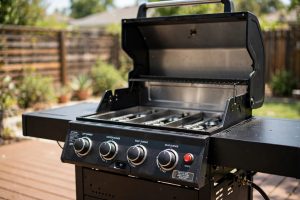
A tabletop gas grill sits on a folding table. It runs on small propane canisters. It lights with a push-button starter. Heat control is easy with a dial.
These grills are the easiest to use at a tailgate. You can set them on a camp table at standing height. Napoleon and Broil King both make portable gas models with folding legs and locking lids.
Gas models cost more than basic charcoal grills. They also need propane canisters on hand. Bring an extra canister so you never run out at halftime.
Portable Charcoal Grills
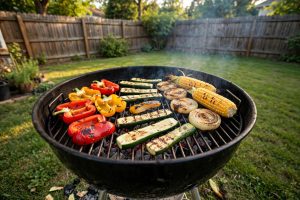
A portable charcoal grill is simple and cheap. The classic kettle shape travels well. Barrel and box shapes pack flat. Charcoal grills give strong smoke flavor at a low price.
They take about twenty minutes to reach cooking heat. Cooling takes longer. You need time after the game to pack up safely. Carry a metal ash can with a tight lid.
Small charcoal grills suit cooks who love real fire flavor. They also fit tight budgets. If you read portable grill reviews for game day cooking, charcoal fans praise the taste and the low price.
Portable Pellet and Electric Grills
Pellet grills burn wood pellets for smoke flavor with push-button ease. They hold a set temperature well. That helps with slow-cooked ribs and brisket.
The catch is power. Most pellet grills plug in. Some tailgaters run them from a portable power station. Traeger is the best-known name in pellet cooking.
Electric grills also need a plug. They produce no smoke and little flame. Some lots allow electric grills where gas and charcoal are banned. Check your stadium rules before game day.
Cost and Price
Portable grills cost less than full-size models. Most tailgate grills sell for between 80 and 350 dollars.
Basic portable charcoal grills start near 50 dollars. They cook well and last for years with care.
Tabletop gas grills range from 120 to 300 dollars. Better heat control and sturdier grates cost more. Home Depot and other large stores stock many models in this range.
Portable pellet grills cost the most. Prices start near 300 dollars and rise from there. They also need wood pellets, which add to the cost of each cook.
Think about fuel cost too. A one-pound propane canister cooks for about two hours. Charcoal costs a few dollars per cook. Pellets run a few dollars per cook as well.
Reviews from Consumer Reports show that price does not always match quality. Mid-priced grills often rate as well as premium models. Read reviews before you spend more.
Care and Upkeep
A portable grill lasts longer with simple care. Clean the grates after every cook while they are still warm. A stiff brush removes most stuck food.
Empty the grease tray before you drive home. Grease sloshing in the trunk is a mess you will not forget. Wipe the inside of the lid with a damp cloth.
For charcoal grills, dump ash only when it is fully cool. A metal can with a lid is the safe choice. Never pour hot ash on grass or asphalt.
Store the grill in a dry place. A grill cover or a plastic tote keeps dust off. Check propane seals each season. Replace cracked hoses before they leak.
Season cast iron grates with a thin coat of oil after cleaning. This step stops rust. It also keeps food from sticking.
At the end of the season, give the grill a deep clean. Wash the grease tray with warm soapy water. Check all screws and latches. Tighten what is loose. A grill that starts the next season clean cooks better and lasts longer.
Guides at AmazingRibs give detailed care steps for grills of all types. A few minutes of care after each cook adds years to a grill.
Safety
Grills and crowds need care. Set the grill on flat, stable ground away from cars. Keep it at least ten feet from any vehicle.
Never grill inside a car, a truck bed with a cover, or under a low tent. Carbon monoxide from grills can kill in closed spaces. Keep air moving around the cooker.
Keep children and pets away from the hot grill. Set up a clear zone of a few feet. Hot lids and grease cause most tailgate burns.
For gas grills, check connections for leaks before lighting. Brush soapy water on the hose joints. Bubbles mean a leak. Do not light a leaking grill.
For charcoal, use a chimney starter, not lighter fluid, when you can. Let coals cool fully before you pack up. Many tailgaters bring a bucket of sand or water for coals.
Stadium lots have rules. Some allow gas only. Some ban all open flames. Read the lot rules for your stadium before game day. Reviews of The Spruce Eats often note which models meet common lot rules.
Frequently Asked Questions
What size portable grill do I need for a tailgate? A grill with 180 to 300 square inches of cooking space suits most tailgates. It cooks eight to twelve burgers at once. That feeds a group of four to six people. Larger groups may want a bigger model or two small grills.
Are gas or charcoal grills better for tailgating? Gas grills are easier and faster. They light in minutes and cool down fast. Charcoal grills give smokier flavor at a lower price. They take longer to light and cool. Many tailgaters pick gas for speed.
Can I use a portable grill at every stadium? No. Each stadium sets its own lot rules. Some allow gas grills only. Some ban grills entirely. Check your stadium parking rules before game day so you do not carry a grill you cannot use.
How do I transport a portable grill safely? Let the grill cool fully first. Lock the lid. Empty grease and ash. Place it in the trunk or truck bed on a mat or old towel. Secure it so it does not slide. Carry propane canisters upright.
How long does a one-pound propane canister last? About two hours of steady cooking on medium heat. High heat burns through it faster. Bring two canisters to a long tailgate. An extra canister weighs little and saves the day.
What is the best portable grill for beginners? A simple tabletop gas grill is the best start. It lights with a button and holds steady heat. You learn temperature control fast. Models like the best grill smoker combo for beginners are also worth a look if you want smoke flavor. If you love charcoal, a small kettle grill is easy to learn. Pair your setup with the best outdoor ice chest for parties to keep drinks cold, and a best grill basket for vegetables reviews pick for easy side dishes.
A Short Final Word
The best grill for tailgating portable reviews agree on one thing. The right grill is the one you will actually carry and use. Pick a size that fits your car. Pick a fuel you can handle. Read reviews from real owners. Then cook, eat, and enjoy the game.
Check grills from trusted makers like Big Green Egg. Compare a few models. Read owner reviews. A good portable grill will serve your tailgate for many seasons.
References
AmazingRibs.com. (n.d.). Barbecue and grilling science. https://www.amazingribs.com Big Green Egg. (n.d.). Kamado grills and outdoor cooking. https://www.biggreenegg.com Broil King. (n.d.). Gas and charcoal grills. https://www.broilkingbbq.com Char-Broil. (n.d.). Gas and charcoal grills. https://www.charbroil.com Consumer Reports. (n.d.). Product reviews and ratings. https://www.consumerreports.org Napoleon. (n.d.). Fireplaces, grills, and heating products. https://www.napoleon.com The Home Depot. (n.d.). Home improvement products. https://www.homedepot.com The Spruce Eats. (n.d.). Recipes and cooking guides. https://www.thespruceeats.com Traeger. (n.d.). Wood pellet grills. https://www.traeger.com Weber. (n.d.). Grills and outdoor cooking. https://www.weber.com
Was this guide helpful?

About Michael Thompson
The My Garden US editorial team writes practical, in-depth home and garden guides for American homeowners — tested advice, no fluff.