
Why Good Clay Matters for Kids
Finding the best modeling clay for kids crafts home projects is worth a little thought. Clay is one of the oldest toys in the world. Long before plastic bricks and video games, children shaped animals, bowls, and figures from wet earth with their hands. Modern modeling clay keeps that simple joy alive, but it adds bright colors, soft textures, and formulas that dry without a kiln.
Clay work is good for young hands. Rolling, pinching, and flattening clay builds the small muscles in fingers and wrists. These are the same muscles children use when they hold a pencil or use scissors. Teachers call this fine motor skill, and clay is one of the best ways to build it at the kitchen table.
There is also the quiet value of making something real. A child who shapes a small dog or a turtle from clay feels proud. The figure can sit on a shelf for weeks. That pride lasts longer than the rush of a screen game. Parents who want calm, creative time at home often reach for a tub of clay first.
But not all clays are the same. Some crumble. Some stain the carpet. Some dry out before the child is done. Others need a hot oven and close adult care. The right choice depends on the age of the child, the kind of projects planned, and the budget. This guide walks through all of it in plain terms.
What to Look for When You Choose: Best Modeling Clay for Kids Crafts Home
Before you buy, check five things. Each one matters more than the brand name on the box.
Age Range
Most clay packages print a suggested age. Believe it. Clay for toddlers should be soft and safe if a small piece reaches the mouth. Clay for older children can be firmer and can include tools like plastic knives and rollers. Many sets sold at craft store Michaels Michaels list clear age guides on the front of the package, which makes shopping easier.
Texture and Softness
Young children need soft clay that yields to small hands. Air-dry clays and soft dough clays work well here. Older children can handle firmer modeling clay that holds sharp detail, such as ears on a cat or windows on a house. If the clay is too hard, the child will give up. If it is too sticky, it will end up in the hair.
How It Hardens
Some clay never hardens. It stays soft and can be used again and again. Oil-based modeling clay works this way. Other clay hardens in the air over a day or two. Polymer clay hardens only in an oven. Pick the method that fits your home. Families without patience for a long wait often prefer reusable clay. Families who want keepsake figures prefer air-dry clay.
Safety
Check the label for non-toxic marks. In the United States, look for the words “non-toxic” and the ASTM D-4236 note. This means the product was reviewed under art material safety rules. The U.S. Consumer Product Safety Commission CPSC publishes guidance on toy and craft safety that parents can read before they shop.
Cleanup
Soft dough clays can leave color on light carpet and on some fabrics. Air-dry clays wash off hands with water. Oil-based clays do not dry on fabric, so a spot on a shirt can be a lasting problem. Think about where your child will work before you choose.
Types and Options of Kids Modeling Clay
There are four main kinds of clay sold for children. Each has its own strengths.
Oil-Based Modeling Clay
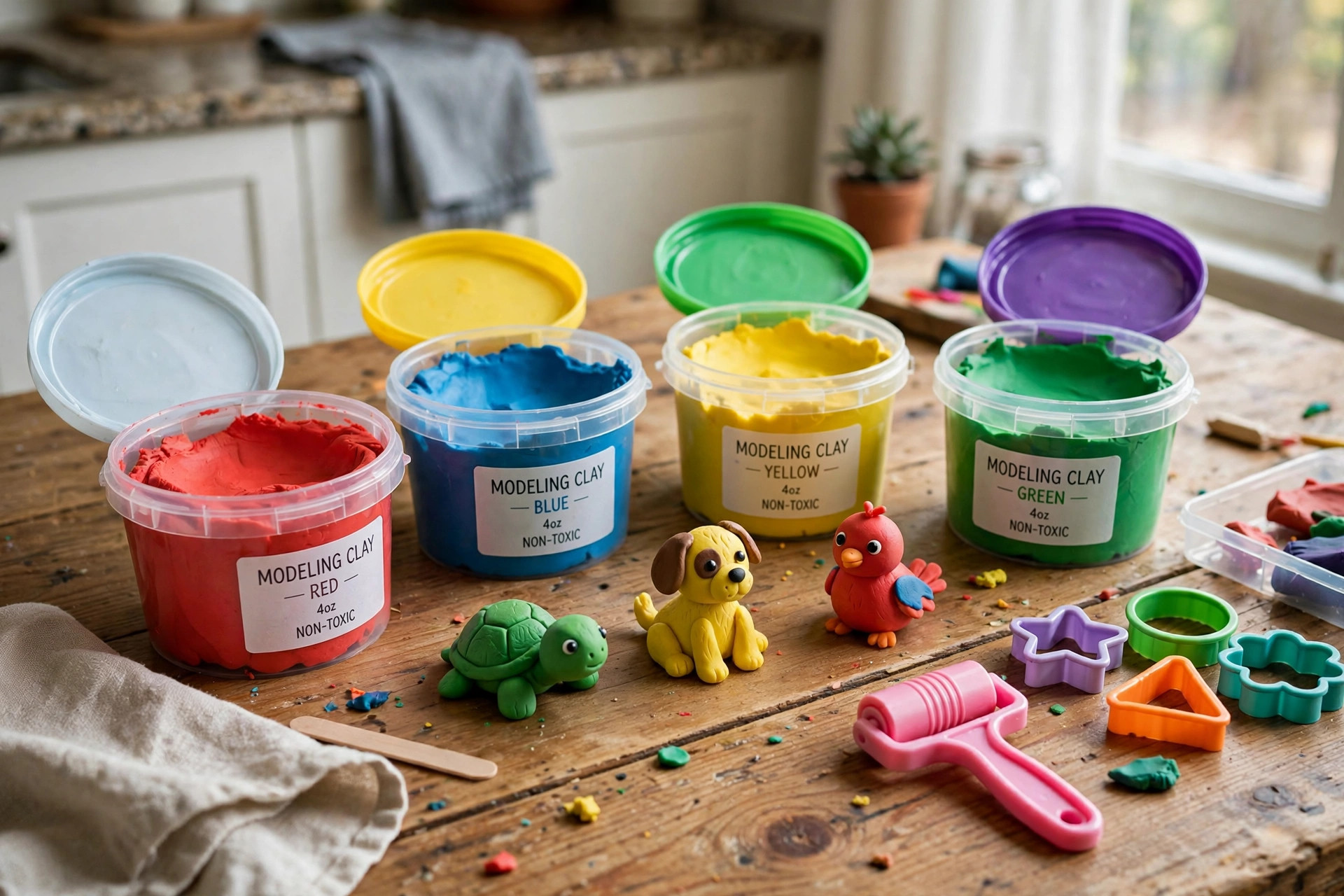
This is the classic colored clay in sticks or tubs. It never dries out. A child can shape it, smash it flat, and start over. It holds detail well, so faces and animals look sharp. The downside is that it can stain clothes and feels a bit greasy. It is best for play, practice, and children who like to build and rebuild. Stores such as Target Target and Walmart Walmart carry these sets in the toy aisle at low prices.
Air-Dry Clay
Air-dry clay feels like real pottery clay but lighter. Children shape it, and it hardens on its own in one to three days. No oven is needed. Once dry, figures can be painted with acrylic paint. This is the best choice for keepsake projects: ornaments, small gifts for grandparents, and school art class models. The cost is a little higher than oil-based clay, and dried pieces can crack if they are made too thick. Families who shop at JOANN JOANN will find many air-dry options in the kids craft section.
Polymer Clay
Polymer clay comes in small blocks in many bright colors. It stays soft until it is baked in a home oven at a low heat, usually with an adult doing the baking. Baked pieces are strong and keep fine detail, which is why older children and teens like it for charms and beads. It is not the right pick for small children because of the oven step and the small parts. Art supply shops like Dick Blick Dick Blick stock wide color ranges for older kids and hobbyists.
Soft Dough Clay
Soft dough clay is the softest kind. It is made for toddlers and preschool children. It smells pleasant, squeezes with almost no effort, and comes with simple tools like rollers and shape cutters. Most dough clay can be reused if it is kept in a sealed tub. It is not made for keepsakes because pieces dry out and crumble over time. For pure play at the kitchen table, though, it is hard to beat.
Cost and Price
You do not need to spend much to start. A basic set of oil-based modeling clay in twelve colors often costs between five and twelve dollars at large stores. Soft dough clay sets with tools run from ten to twenty-five dollars. Air-dry clay in a two or three pound tub usually costs eight to eighteen dollars. Small blocks of polymer clay sell for two to four dollars each, so a starter set of many colors can reach twenty to thirty dollars.
Price per ounce drops when you buy larger tubs. If your child works with clay every week, the big tubs are the better deal. Home improvement giant Home Depot Home Depot sometimes carries bulk craft clay in its project sections, and its prices can beat small craft packs.
Watch for holiday sales. Craft stores run deep discounts in late summer before school starts and again before the winter holidays. A parent who buys clay in August for Christmas gifts often pays half the spring price. Two or three starter sets bought on sale can supply a whole year of rainy day projects.
Care and Upkeep
Clay lasts longer when it is stored right. Keep reusable clay in sealed tubs or zip bags. Press out the air before you close the lid. Oil-based clay kept this way can last for years. Air-dry clay is the opposite: once the package is open, the clock starts. Wrap unused portions tightly in plastic and use them within a few weeks.
Set up a simple work area. A plastic tablecloth or an old shower curtain on the kitchen table protects the surface. A tray or cookie sheet gives each child a border to work inside, which keeps clay off the floor. Keep a damp cloth nearby for hands. These small steps take five minutes and save a long cleanup.
Tools need care too. Plastic rollers, cutters, and molds wash clean with warm soapy water. Let them dry before they go back in the box. Metal wire tools, if the set has any, should be dried well so they do not rust. Good habits here teach children to respect their materials, a lesson that carries into every craft they try later, from a diy birdhouse kit for kids woodworking usa to a paper mache kit for kids art projects home.
If air-dry projects crack, small cracks can be filled with a bit of fresh clay smoothed over the spot before the piece fully dries. Thick pieces dry best when they are hollow or built around a core of crumpled paper. Paint dried pieces with acrylic paint and seal them with a clear craft varnish for a finish that lasts for years on the shelf.
Safety
Safety comes first with any kids craft. Read the label every time, even on a brand you have bought before, because formulas can change.
Keep clay away from the mouths of children under three. Even non-toxic clay is not food. Small pieces can be a choking risk. Watch toddlers while they play, and put the clay away when play time ends.
Polymer clay needs an adult at the oven. Follow the baking temperature on the package exactly. Never use a microwave. Bake in a room with fresh air moving through it, and do not bake food in the same oven at the same time.
Check for allergies. Wheat-based dough clays can bother children with wheat allergies. Most packages note this in small print. If your child has sensitive skin, wash hands after play and watch for redness.
Store clay out of reach of pets. Dogs in particular will chew colorful clay, and a vet visit costs far more than the clay. A high shelf or a latched craft bin solves the problem.
Project guides from trusted DIY sources, such as the workshop articles on Family Handyman Family Handyman and the how-to features on This Old House This Old House, often include their own safety notes for home projects with children. Their advice is worth a read before any big craft day.
FAQ
What is the best modeling clay for kids crafts home for a four-year-old?
Soft dough clay is the best pick for a four-year-old. It is very soft, easy to squeeze, and simple to clean. Choose a set with basic tools like a roller and cutters. Skip polymer clay and any clay that needs an oven until the child is older.
How long does air-dry clay take to harden?
Most air-dry clay hardens in twenty-four to seventy-two hours. Thin pieces dry faster. Thick pieces take longer and can crack if they dry too fast in hot sun. Let pieces dry slowly at room temperature, turning them once so the bottom dries too.
Can kids paint their clay figures?
Yes. Once air-dry clay is fully dry, children can paint it with washable or acrylic paint. Acrylic paint gives brighter color and lasts longer. An adult should handle any spray sealant. Oil-based clay and dough clay should not be painted because they never fully harden.
Is modeling clay safe if my child puts it in their mouth?
Non-toxic clay is made to be safer, but no clay is meant to be eaten. If a child swallows a small piece of non-toxic clay, it is usually not an emergency, but call your local poison control line if you are worried. For children who still mouth toys, stick with dough clay made for toddlers and watch them closely.
What is the difference between air-dry clay and polymer clay?
Air-dry clay hardens on its own in the air over a day or two. Polymer clay stays soft until an adult bakes it in an oven. Baked polymer pieces are stronger and hold finer detail. Air-dry clay is simpler and safer for younger children, while polymer clay suits older kids who want jewelry and small charms.
How should I store leftover clay?
Seal reusable clay in airtight tubs or zip bags with the air pressed out. Keep it in a cool, dry place away from sun. Use opened air-dry clay within a few weeks, wrapping the unused part tightly in plastic wrap. Label each tub with the color and the date you opened it.
Final Word
The best modeling clay for kids crafts home use is the one that fits your child and your house. Toddlers do best with soft dough clay. School-age children love air-dry clay for keepsakes they can paint and give as gifts. Older kids ready for detail work can move up to polymer clay with adult help at the oven. Start small, buy on sale, set up a simple work tray, and keep safety labels in mind. Once the clay is on the table, step back and let small hands do the work. The figures may be lopsided, but the pride will be real. For your next craft day, you might pair clay time with flat paper crafts using the best craft foam sheets for kids projects for a full afternoon of making.
References
Blick Art Materials. (n.d.). Art and craft supplies. https://www.dickblick.com Family Handyman. (n.d.). DIY home repair and maintenance. https://www.familyhandyman.com JOANN. (n.d.). Fabric and craft supplies. https://www.joann.com Michaels. (n.d.). Arts and crafts supplies. https://www.michaels.com Target. (n.d.). Retail store. https://www.target.com The Home Depot. (n.d.). Home improvement products. https://www.homedepot.com This Old House. (n.d.). Home renovation guidance. https://www.thisoldhouse.com U.S. Consumer Product Safety Commission. (n.d.). Product safety information. https://www.cpsc.gov Walmart. (n.d.). Everyday low prices. https://www.walmart.com
Was this guide helpful?

About James Carter
The My Garden US editorial team writes practical, in-depth home and garden guides for American homeowners — tested advice, no fluff.
You May Also Like

Best Craft Light for Sewing and Detailed Work
August 20, 2026 0 views
Macrame Cord Kit for Wall Hanging DIY: A Beginner’s Guide to Handmade Decor
June 30, 2026 0 views
The Best Acrylic Paint for Outdoor Crafts That Stays Weatherproof
August 29, 2026 0 views