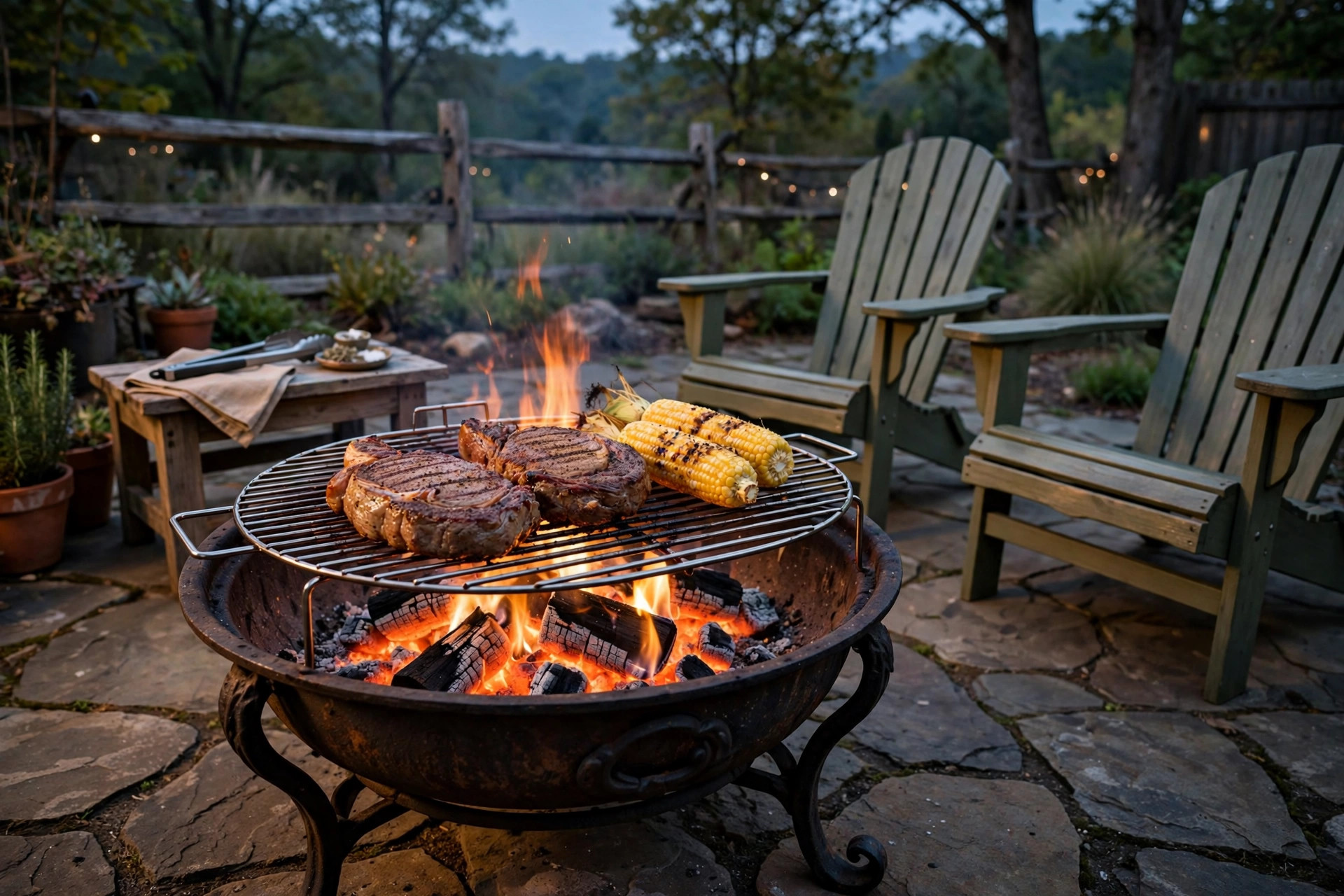

A backyard fire pit is a fine thing. It gives light and warmth on a cool night. But the best outdoor fire pit for cooking does more. It turns a simple fire into a small kitchen under the sky. You can grill steaks, roast corn, and simmer stews over real wood heat. Many families buy a fire pit for looks and then wish it could cook. This guide saves you that mistake. It shows you how to pick a fire pit that cooks well and lasts for years. Read it before you spend a dime.
Why a Cooking Fire Pit Is Worth Having
Food tastes different over a live fire. The smoke adds a flavor that no gas grill can copy. A cooking fire pit also costs less than a full outdoor kitchen. You do not need to pour concrete or hire a builder. You can move most models to any flat spot in the yard.
A cooking fire pit also brings people together. Guests stand around it while the food cooks. Everyone shares the warmth and the wait. The fire pit earns its keep on nights when you never cook at all. It is a heater, a lamp, and a gathering place in one.
Families who cook outdoors often eat outdoors more. That is a healthy habit. A simple meal of grilled vegetables and chicken tastes like a feast in the open air. If you already own seating, a fire pit completes the setup. Pair it with a sturdy outdoor coffee table with fire pit for drinks and snacks, and the patio becomes a second living room.
What to Look for When You Choose One: Best Outdoor Fire Pit for Cooking
Not every fire pit cooks well. A pretty bowl with thin walls may warp or rust in a year. Look at the details below before you buy.
Fuel Type
Wood fire pits give the best flavor. Hardwood logs burn hot and make good coals. Oak, hickory, and maple are top choices.
Propane fire pits are simple. You turn a knob and get a flame. They are cleaner and often allowed where wood fires are banned. But propane gives little heat for cooking. The flame is thin. Most propane models are not made for grilling. If cooking is your main goal, choose wood. Some fire pits burn both fuel types.
Size and Bowl Shape
A bowl 30 to 36 inches wide suits most families. It holds enough wood for a steady fire but does not eat a pile of logs. Bowls smaller than 24 inches cook only small meals. Bowls wider than 44 inches are hard to tend. You cannot reach the center to stir or add wood.
Deep bowls hold heat well and shield the flame from wind. Shallow bowls spread heat wider but lose coals faster. For cooking, a medium depth with a wide rim works best. The rim gives you a place to rest tools.
Materials and Build
Steel is the most common material. It is strong and fairly priced. Painted steel rusts over time, so look for a heat-resistant finish. Stainless steel lasts longer but costs more. Cast iron holds heat best of all. It seasons like a skillet and cooks evenly. But it is heavy. A cast iron pit may weigh 100 pounds or more.
Check the grate. A cooking fire pit needs a grill grate or a swing arm. The grate should be thick steel or cast iron. Thin chrome grates bend and burn off their coating. Some models include a rotisserie mount or a tripod arm. These extras add fun but also cost. Buy the grate first. Add toys later.
The Main Types of Cooking Fire Pits
Bowl Fire Pits with Grill Grates
This is the classic type. It is a round bowl on legs with a cooking grate on top. Prices range from modest to high. These pits cook much like a charcoal grill. They are good for burgers, kebabs, and fish. Many backyard fire pit guides from sources such as Bob Vila rate this type as the best all-around choice for beginners.
Chiminea Cookers
A chiminea has a tall chimney and a round belly. The chimney pulls smoke up and away from the cook. You sit close without tears in your eyes. Some chimineas include a small grill grate in the belly door. They cook smaller meals well. They use less wood than open bowls. Their narrow mouth limits what you can grill.
Fire Pit Tables
A fire pit table has a low table around the fire. Guests set plates on the table edge. Some tables include a grill grate or a lid that covers the fire. Most fire pit tables burn propane, so they are weak for cooking. A few wood-burning tables exist. They cost more and weigh more. If you want a table that truly cooks, read the fine print before you buy.
Campfire Tripods and Swing Arms
A tripod stands over any fire. You hang a pot or kettle from a chain. A swing arm pivots over the fire and swings away when you need to tend the logs. Both tools turn an ordinary fire pit into a cooker. They are cheap and simple. They are also slower than a grill grate. A tripod is best for stews, soups, and coffee.
In-Ground and Stone Fire Pits
Some owners build a permanent stone pit. It can last for decades. A built pit often has a steel liner and a heavy grate. It cooks well because the stone walls hold heat. The cost is the labor. You either build it yourself or pay a mason. Check local rules first. Some towns ban open wood fires or require a permit.
Cost and Price
Cooking fire pits come in clear price bands. Knowing them helps you set a budget.
Under 150 Dollars
In this band you find basic steel bowls with thin grates. They work for a season or two. Expect light steel, simple legs, and a basic grate. They cook fine at first. Rust comes fast if you leave them out. Cover them or store them under a roof. Shoppers at home improvement stores will find many options in this range.
150 to 500 Dollars
This is the sweet spot for most buyers. You get thicker steel, better grates, and extras like spark screens and covers. Cast iron models start in this band. Many good cooking features appear here: swing-out grates, rotisserie mounts, and log grates. A 300-dollar pit often cooks as well as one costing twice as much.
Over 500 Dollars
Here you find heavy cast iron, stainless steel, and designer models. Some include gas starters, ash drawers, and fitted covers. These pits last ten years or more with care. Independent product testing from Consumer Reports suggests that build quality matters more than brand name at this level. Check welds, grate thickness, and the warranty before you pay.
Remember the running costs too. A cord of hardwood costs real money. Propane tanks need refills. Grates wear out and need replacement. Budget for a cover and a spark screen.
Care and Upkeep
A cooking fire pit needs regular care. Do this and it will last.
Clean out ash after every few fires. Ash holds water and causes rust. Wear gloves and a mask when you handle fine ash. Keep a metal bucket with a lid for ash storage. Hot coals can smolder for days.
Oil the grate. After cooking, scrub the grate with a wire brush. Wipe it with a thin coat of cooking oil. This builds a seasoning layer like a cast iron pan. It stops food from sticking and slows rust.
Cover the pit. Rain is the main enemy. A fitted cover keeps water out of the bowl. If you have no cover, tip the bowl to drain after rain. Some owners apply a high-heat paint each spring to fight rust.
Store wood well. Dry wood burns hotter and makes less smoke. Stack split logs off the ground under a tarp or in a rack. Season fresh wood for six to twelve months. Wet wood smokes, pops, and cooks poorly.
Teak and wood furniture near the pit needs care too. If you own a wooden patio set, a teak patio set maintenance guide will help you keep it looking fine despite the smoke and heat.
Safety Rules for Cooking Over an Open Fire
Fire is fun and fire is danger. Follow these rules every time.
Place the pit on a safe surface. Stone, brick, gravel, or concrete are best. Never set a fire pit on a wood deck unless the model is rated for it. Keep the pit at least ten feet from the house, fences, and low trees. Check wind before you light up. Sparks can travel far on a windy night.
Use a spark screen. Embers pop and jump. A mesh screen stops most of them. Keep children and pets at least three feet back. A simple ring of chairs marks the line. Never leave a fire alone, even for a minute.
Keep water close. A garden hose or a large bucket of water should stand ready. Know how to douse the fire fully. Stir the coals, add water, and stir again. The coals must be cold to the touch before you leave.
Watch what you burn. Use only clean, dry wood. Never burn treated lumber, painted wood, or trash. Treated wood gives off poisons that settle on food. Save the fire pit for real fuel.
Check local laws. Many cities limit wood fires. Some allow them only at certain hours. A few ban them in dry months. A quick call to the fire department tells you the rules. Fines cost more than a permit.
How to Cook Well on a Fire Pit
Good fire cooking is a skill. These tips help you learn fast.
Build two heat zones. Push most coals to one side. This gives you a hot side for searing and a cool side for gentle cooking. Move food between zones as needed. This one trick fixes most burned meals.
Wait for coals. Flames look pretty but cook badly. Let the wood burn down to glowing coals. Coals give steady, even heat. Add a log now and then to keep the heat up.
Use the right tools. Long tongs, a heavy spatula, and thick gloves are a must. A cast iron skillet and a Dutch oven are the best pans for fire cooking. They take the heat and hold it. Avoid thin pans. They warp and burn food.
Control the height. Food closer to the coals cooks faster. A swing arm or an adjustable grate lets you raise and lower food. If your pit has a fixed grate, move the coals instead. Rake them thin for less heat and pile them high for more.
Start simple. Grill burgers, sausages, and corn first. Learn how your pit behaves. Then try whole chickens or slow stews. Keep a notebook of what worked.
For menu ideas, patio design sites often pair fire pit meals with full outdoor dining plans. And luxury outdoor living catalogs show how hosts set a fine table beside the fire.
Frequently Asked Questions
Can I cook on any fire pit? No. A fire pit built only for looks may have thin walls, toxic paint, or no grate. Buy a model rated for cooking. Look for a grill grate, food-safe materials, and a maker that says cooking is allowed.
What is the best wood for cooking? Dry hardwoods are best. Oak, hickory, maple, and fruit woods burn hot and taste good. Avoid pine and other softwoods. They burn fast, pop sparks, and coat food with soot. Never cook over treated or painted wood.
How hot does a fire pit get? A good wood fire reaches 600 to 900 degrees at the coal bed. That is plenty for searing meat. The grate runs cooler, often 400 to 550 degrees. This is a fine range for most grilling.
Is cooking on a fire pit safe? Yes, if you follow the rules. Use food-safe grates, burn only clean wood, and keep the fire under control. Let coals burn down before you cook. Keep water close. Never leave the fire alone.
Can I use a fire pit on a patio? Often yes, but check first. The pit must sit on stone, brick, or concrete. Keep it clear of railings and roofs. Some homeowner groups ban open fires on patios. Read your lease or association rules before you buy.
How do I clean a cooking grate? Scrub it while it is warm with a stiff wire brush. Burn off stuck food over hot coals. Then wipe the grate with oil on a cloth. Do this after each use. A seasoned grate cooks better and rusts less.
Setting Up Your Patio Around the Fire
A fire pit works best in a planned space. Leave room to walk around it. Three to four feet of clear space on all sides is a good rule. Place seating in a circle or a half circle. Keep a small table within reach for plates and tools.
Think about comfort. An Adirondack chair built for tall people gives long-legged guests a seat that fits. Weatherproof outdoor furniture stands up to sparks and smoke. Affordable patio furniture lets you outfit a large circle without a large bill. For style ideas, browse outdoor living inspiration collections.
A fire gives warm light, but add a few lanterns or string lights on the paths. Guests should see where they walk after dark.
A Final Word
The best outdoor fire pit for cooking is the one that fits your yard, your budget, and your habits. A simple steel bowl with a thick grate serves most families well. A cast iron model serves them longer. A stone pit serves them for life. Pick your fuel, mind the safety rules, and learn the coals. Soon you will cook meals that taste of smoke and summer. The fire does the hard work. You take the praise.
References
Bob Vila. (n.d.). Home improvement advice. https://www.bobvila.com Consumer Reports. (n.d.). Product reviews and ratings. https://www.consumerreports.org Frontgate. (n.d.). Outdoor furniture and decor. https://www.frontgate.com HGTV. (n.d.). Home and garden ideas. https://www.hgtv.com IKEA. (n.d.). Home furnishings. https://www.ikea.com Lowe’s. (n.d.). Home improvement products. https://www.lowes.com Polywood. (n.d.). Outdoor furniture. https://www.polywood.com The Spruce. (n.d.). Home and garden advice. https://www.thespruce.com
Was this guide helpful?

About James Carter
The My Garden US editorial team writes practical, in-depth home and garden guides for American homeowners — tested advice, no fluff.
You May Also Like

How to Winterize Outdoor Furniture Cushions: A Complete Guide
June 21, 2026 0 views
Best Patio Sectional with Fire Table: A Buyer’s Guide
May 25, 2026 0 views
Teak Patio Set Maintenance Tips Guide
March 15, 2026 0 views