
A round jute rug for entryway for sale is one of the simplest ways to dress a front hall. It costs little. It looks warm. And it stands up to the traffic that a front door sees every day. Shoppers meet dozens of choices. Sizes vary. Weaves vary. Prices swing from under thirty dollars to well over two hundred. This guide walks through the whole matter in plain terms. It covers why these rugs work in entryways, how to pick the right one, what types exist, what they cost, how to keep them clean, and how to stay safe with them.
Why a Round Jute Rug Suits an Entryway
The entryway is the hardest-working floor in the house. Shoes land there. Wet boots rest there. Keys drop there. A rug must take this wear and still look decent. Jute is a natural plant fiber. It is rough to the touch. That roughness is an asset at the front door. It scrapes dirt off shoe soles before the dirt reaches the rest of the house.
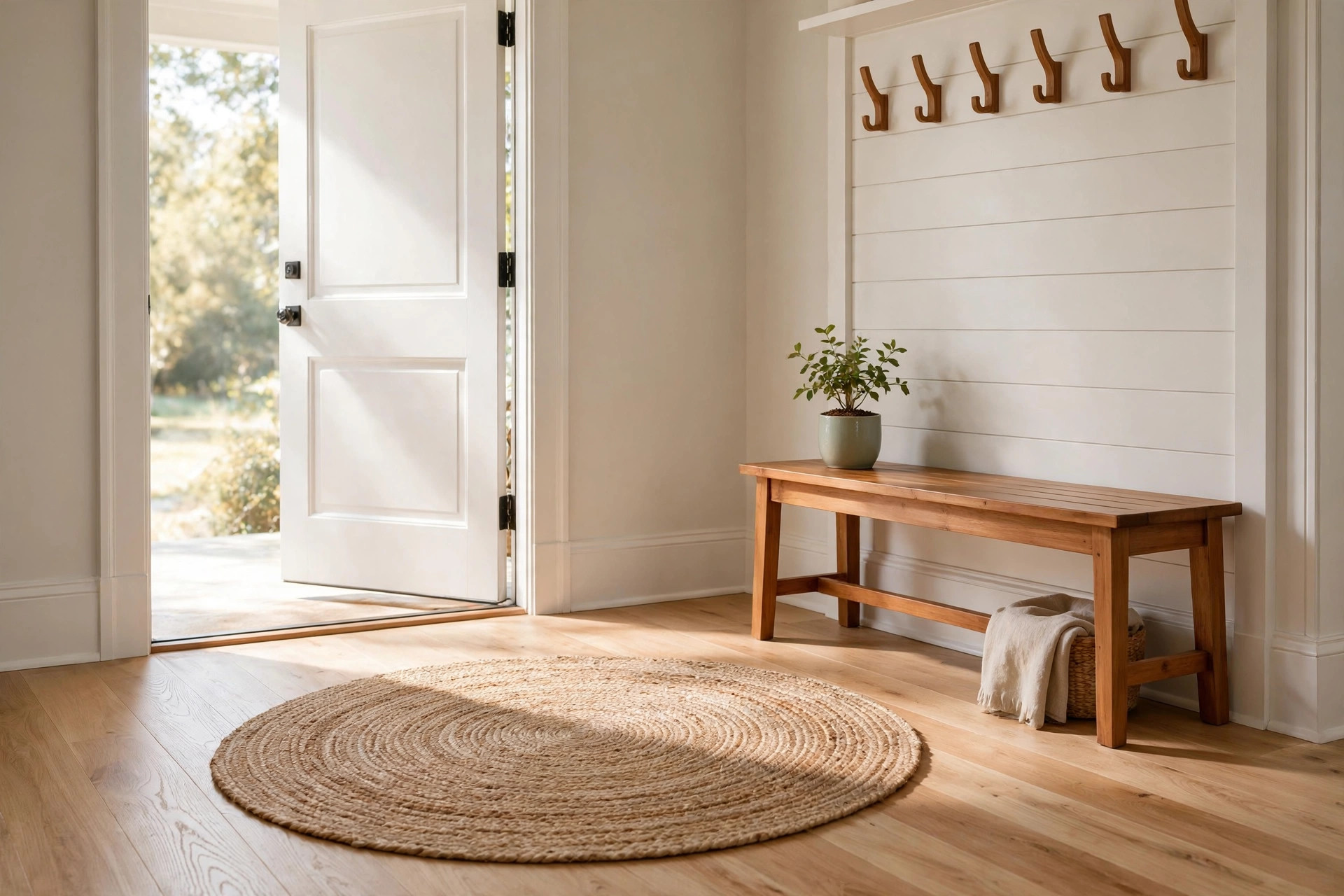
A round shape has its own logic. Most entryways are tight squares of floor. A round rug breaks the hard corners. It gives the eye a soft spot to rest. It also fits well in front of a single door where a long runner would crowd the space. Many homeowners pair a round jute rug with a small bench or a coat rack to form a complete landing zone.
Jute also fits many styles. It reads rustic in a farmhouse hall. It reads coastal in a beach cottage. It reads simple and modern in a city flat with wood floors. The golden-brown tone of natural jute goes with almost every wall color. It does not shout. It grounds the room. Designers at The Spruce often note that natural fiber rugs add texture without adding pattern, and that quiet quality is exactly what a small hall needs.
What to Look for When You Shop: Round Jute Rug for Entryway for Sale
Size
Measure the floor first. A rug that is too small looks lost. A rug that is too large crowds the door swing. For a standard single door, a round jute rug between three and four feet across works well. A double door or a wide foyer can take five or six feet. Leave at least six inches of bare floor around the rug so the room still breathes.
Weave and Thickness
Jute rugs come in tight weaves and loose weaves. A tight braid or tight coil weave lasts longer. It sheds less. It lies flatter. A loose hand-woven style looks more casual, but it may buckle at the edges. Thickness matters too. A rug under half an inch thick sits low under a door. Doors that open inward need clearance. Check the gap under your front door before you buy.
Backing
Many jute rugs have no backing. They sit straight on the floor. On hardwood, a bare jute rug can slide. On tile, it can slide too. Plan to buy a rug pad. A thin natural rubber pad keeps the rug still and protects the floor. Pads are cheap, and LL Flooring carries the same kind of floor care thinking in its guides for wood and laminate surfaces.
Color and Tone
Natural jute runs from pale straw to deep gold. Some rugs blend jute with cotton or wool for a two-tone pattern. A plain natural color hides dirt best. A rug with a white border looks sharper but shows soil faster at the edges. If the entryway gets heavy muddy traffic, stay with the natural tone.
Types and Options on the Market
Not every round jute rug is the same. The differences come from how the fiber is made into a rug.
Braided Jute Rugs
Braided rugs are built from thick cords of twisted jute, sewn or stitched into a circle. They are the classic choice. The braid gives a firm, even surface. These rugs wear slowly and evenly. They are also easy to flip if one side starts to look tired.
Woven Flat-Weave Jute Rugs
Flat-weave rugs use thinner strands on a loom. They sit lower and feel smoother underfoot. They suit doors with tight clearance. The trade-off is life. A flat weave wears through faster in a high-traffic hall than a thick braid.
Jute Blend Rugs
Many sellers mix jute with other fibers. Cotton blends soften the feel. Wool blends add warmth and hold color better. A jute and chenille blend is common in modern lines sold by Wayfair and IKEA. Blends cost more than pure jute. They also clean differently, so read the care label.
Round vs. Oval and Square
Round is the most popular shape for entryways, but oval works in narrow halls and square suits wide foyers. The advice in this guide applies to all of them. If you love the jute look and want more of it, consider how a larger area rug might carry the same tone into the living room.
Cost and Price: What to Expect
Prices for a round jute rug for entryway for sale follow size and build.
– Small rounds (3 feet): twenty-five to sixty dollars. – Medium rounds (4 feet): fifty to one hundred twenty dollars. – Large rounds (5 to 6 feet): one hundred to two hundred fifty dollars.
Hand-braided rugs cost more than machine-made ones. A hand-braided five-foot round from a specialty maker can pass three hundred dollars. Big-box stores keep prices lower. Home Depot and Lowe’s both stock round jute rugs in the common sizes, and their web listings often include buyer reviews that mention shedding and thickness.
Shipping can add cost. A five-foot jute rug is bulky. Some sellers ship free. Others charge freight. Watch the total at checkout, not just the list price. Also watch return terms. A rug may look different in your hall than in a photo. Stores with easy returns take the risk out of the purchase.
The market for small round jute rugs for foyer spaces stays competitive, which keeps prices fair. Sales cluster around spring and the year-end holidays. If you can wait, you can often save twenty to thirty percent.
Care and Upkeep
Jute is strong but not washable. Keep water away from it. Water makes jute fibers swell and can leave brown stains. That single rule shapes all care.
Vacuum the rug weekly on the suction-only setting. A beater bar can pull fibers loose. Shake the rug outdoors every month or two to knock out trapped grit. Grit is the quiet enemy. It works into the weave and wears the fibers from the inside.
Spot clean spills at once. Blot, never rub. Use a dry cloth first, then a cloth barely dampened with mild soap if needed. Dry the spot with a fan or open window. Never soak a jute rug. Never steam clean it.
Rotate the rug twice a year. The area in front of the door wears fastest. A quarter turn spreads the wear. Sun also fades jute over time. If the rug sits in a patch of direct sun, rotate it so the fade stays even.
Sellers of carpet and hard flooring give the same basic advice. Shaw Floors and Mohawk Flooring both publish care pages that stress regular vacuuming and quick spill response for natural fibers. The guidance fits jute rugs as well as wall-to-wall carpet.
When a jute rug finally wears thin, it is easy to replace. The fiber is biodegradable. Old jute can go in the compost or the yard waste bin in most towns.
Safety in the Entryway
A rug that slides is a hazard. This matters most where people step in with wet shoes. Use a rug pad with grip. Test the rug after you place it. Step on the edge and try to push it with your foot. If it moves, the pad is wrong or missing.
Keep the rug flat. A curled edge is a trip point. Heavy furniture or a few days under books can flatten a curled edge on a new rug. If the rug rocks on an uneven threshold, trim the problem or move the rug a few inches.
Fire safety deserves a note. Jute is a plant fiber. It can burn. Keep jute rugs away from space heaters and fireplace sparks. This is standard advice for any natural fiber rug, and This Old House covers it in its home safety material.
Where to Buy
Shoppers have three main routes. Big-box home stores offer low prices and easy returns. Specialty rug shops offer better weaves and honest advice. Online marketplaces offer the widest choice. Each route suits a different buyer.
If you want to see the rug before you pay, visit a store. Feel the weave. Check the thickness against your door. If you know your size and want the best price, buy online. Read the reviews with care. Look for comments about shedding, smell, and true color. New jute often has an earthy smell that fades in a week. Daltile is known for tile rather than rugs, but its showroom approach shows why seeing a material in person helps before a purchase.
For buyers who want to buy a jute rug online in the USA, measure twice and check the return policy once. A clear photo of the weave in the listing is a good sign. A listing with no close-up is a warning.
Frequently Asked Questions
Do round jute rugs shed?
Yes, at first. New jute rugs shed loose fibers for a few weeks. Regular vacuuming clears it. A tightly braided rug sheds less than a loose weave. If shedding continues past two months, the rug may be low quality.
Can I put a jute rug on top of carpet?
You can, but it may wrinkle. A rug pad between the carpet and the jute rug helps. Use a thin pad made for rug-on-carpet use. Without a pad, foot traffic will push the round rug out of shape.
Are jute rugs good for homes with pets?
They are fair. Claws can snag the weave. Cats may scratch a jute rug the way they scratch a sisal post. Dogs do fine on jute, and the rough fiber cleans paws well. If pets rule the house, a tight braid holds up best.
How long does a round jute rug last in an entryway?
Three to five years is normal for a good rug in a busy hall. Light-traffic entries can see seven years or more. Rotation and regular vacuuming add a year or two. When the center wears thin, replace it. Jute rugs are priced to be replaced.
Can jute rugs go outside?
No. Jute rots in rain and heavy damp. A covered porch with no direct weather can work for a season, but a true outdoor space needs a synthetic rug. Keep jute indoors where it stays dry.
What is the best pad for a jute rug on hardwood?
A thin natural rubber pad. It grips the floor and the rug. It adds almost no height, so doors still clear. Avoid PVC pads on wood floors. Some can stain the finish over time.
A Short Final Word
A round jute rug for entryway for sale is a small purchase with a big daily effect. It catches the dirt. It softens the step. It tells guests the home is cared for. Measure the space. Pick a tight weave. Add a pad. Keep it dry. Do those four things and the rug will serve the hall well for years. Start with size and budget, compare two or three sellers, and buy the one whose weave feels firm in the hand and honest in the photo.
References
Daltile. (n.d.). Ceramic and porcelain tile. https://www.daltile.com IKEA. (n.d.). Home furnishings. https://www.ikea.com LL Flooring. (n.d.). Hardwood, vinyl, and tile flooring. https://www.llflooring.com Lowe’s. (n.d.). Home improvement products. https://www.lowes.com Mohawk Flooring. (n.d.). Flooring products. https://www.mohawkflooring.com Shaw Floors. (n.d.). Flooring products. https://www.shawfloors.com The Home Depot. (n.d.). Home improvement products. https://www.homedepot.com The Spruce. (n.d.). Home and garden advice. https://www.thespruce.com This Old House. (n.d.). Home renovation guidance. https://www.thisoldhouse.com Wayfair. (n.d.). Furniture and home goods. https://www.wayfair.com
Was this guide helpful?

About David Wilson
The My Garden US editorial team writes practical, in-depth home and garden guides for American homeowners — tested advice, no fluff.
You May Also Like

Best Flooring for Kitchens with Dogs USA: A Practical Guide for Pet Owners
January 28, 2026 0 views
The Best Time to Buy Flooring on Sale USA: A Plain Guide
February 15, 2026 0 views
Temporary Flooring for Renters Reviews USA
July 15, 2026 0 views