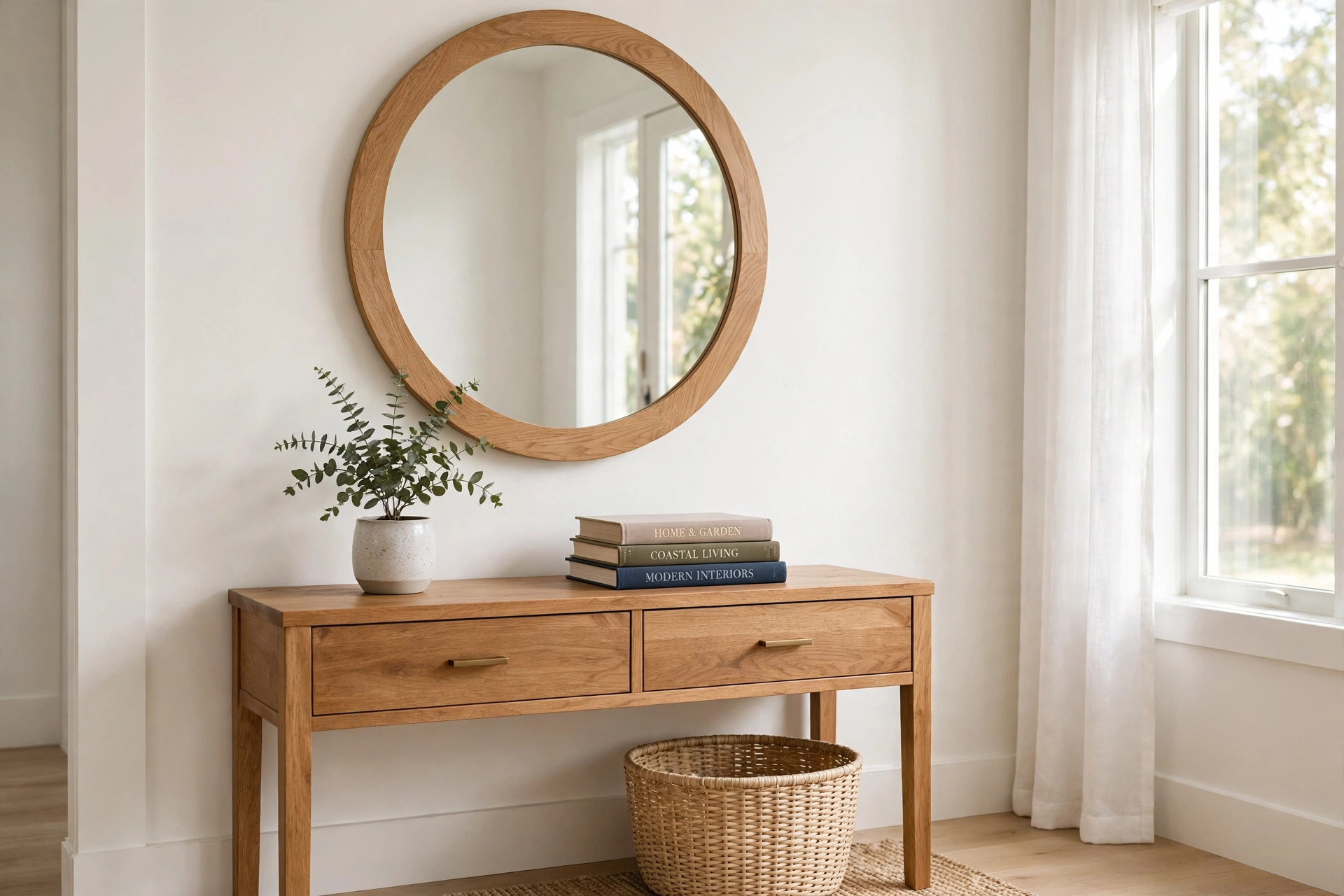

The entryway is the first room a guest sees. It is also the last room you see before you leave for work. A good mirror can make this small space feel larger, brighter, and more welcoming. Many shoppers want to know exactly where to buy entryway decorative mirrors in the USA without wasting time or money. This guide answers that question in plain terms. It covers why these mirrors matter, what to look for, the main styles, fair prices, safe hanging, and simple care. By the end, you will know where to shop and how to choose a mirror that suits your home.
Why an Entryway Mirror Matters
A mirror in the entryway does more than show your face. It bounces light from a window or a lamp into dark corners. It makes a narrow hall feel twice as wide. It gives you a last look at your coat and hair before you step out the door. Real estate agents have long said that a bright entry makes a strong first impression on visitors. A mirror is one of the least costly ways to get that effect.
Decorative mirrors also set the tone of the home. A round wood-framed mirror says warm and casual. A tall arched mirror says calm and classic. A bold brass frame says modern and sharp. The entryway is small, so one piece can define the whole space. That is why so many American homeowners now search for entryway decorative mirrors where to buy usa before they start any larger project in the hall.
What to Look for When You Choose One: Entryway Decorative Mirrors Where to Buy Usa
Size comes first. A mirror that is too small looks lost above a console table. A mirror that is too large crowds the wall. A safe rule is to pick a mirror about two thirds the width of the table or bench below it. Measure the wall before you shop. Write the numbers down and carry them with you or keep them on your phone.
Shape is next. Round mirrors soften a hall full of straight lines. Rectangles add height to low ceilings. Arched tops give a calm, old-world feel. Odd shapes, such as ovals or free-form designs, work well in modern homes. Think about the other shapes in the room. The mirror should echo them, not fight them.
The frame sets the style and the price. Solid wood frames cost more but last for decades. Metal frames are thin, light, and modern. Rattan and cane frames suit coastal and farmhouse homes. A plain frameless mirror with a beveled edge looks clean and costs less. Check the back of the frame in the store or in the product photo. Good frames have solid corner joints and strong hanging wire or D-rings.
Weight matters more than most people think. A large wood-framed mirror can weigh thirty pounds or more. You must hang it on a wall stud or use a proper wall anchor. Light mirrors can hang on a simple hook. Always read the listed weight before you buy.
Popular Types and Styles
Round mirrors are the most common choice for entries. They hang well above a console table and they suit almost any style. Sizes from twenty-four to thirty-six inches across fit most halls.
Arched mirrors are rising in favor. The curved top draws the eye up and makes low ceilings feel taller. They pair well with narrow console tables and tall plants.
Full-length rectangle mirrors serve two jobs at once. They show your whole outfit and they make a small entry feel deep. Many are made to lean against the wall, which means no drilling. Leaning mirrors need a stable floor and a wall they can rest against at a slight angle.
Sunburst and sculptural mirrors act as wall art. They have rays, rings, or metal petals around a small center mirror. They reflect less light, but they add drama. Use them in entries that already have a window for light.
Mirrors with shelves or hooks combine form and use. A mirror with a small ledge holds keys and mail. A mirror with hooks holds a hat or a light jacket. These pieces are ideal for very small entries where every inch counts.
Where to Buy Entryway Decorative Mirrors
American shoppers have more choices than ever. Large online stores carry hundreds of designs and ship to every state. Wayfair lists one of the widest mirror ranges, with filters for size, shape, and price. Article sells modern designs with clean lines and honest prices. CB2 offers bold, modern mirrors that suit city apartments and new builds.
West Elm is a favorite for mid-century and bohemian styles. Its stores in most large cities let you see frames in person before you buy. IKEA keeps prices low and stocks simple mirrors that work in rental homes and first apartments. Crate & Barrel carries classic designs with strong build quality and a long warranty.
Home and garden media sites also help with research. HGTV publishes entryway design ideas that show how real homes use mirrors. The Spruce offers plain buying guides that explain sizes and hanging methods. Apartment Therapy focuses on small spaces and shows smart mirror placement in narrow halls.
Compare prices across two or three stores before you decide. Online prices change often, and the same mirror can sell for less on one site than on another. Read a few buyer reviews as well. Reviews often note the true color of the frame and the quality of the glass, which photos can hide. A little research at the start prevents a return later.
Local stores still have a place. Home goods chains, antique shops, and flea markets often carry unique frames you will not find online. Measure first, and check that the hanging hardware is sound on any secondhand piece. For the best value, watch for seasonal sales. Many shoppers find entryway decorative mirrors usa online deals during spring and fall home events, when stores clear stock.
If you also need pieces for other rooms, the same stores carry them. Shoppers who like the entryway range often browse bedroom dressers with mirrors at our guide to bedroom dressers mirror where to buy usa. Those who want art to pair with a mirror can look at living room wall art in living room wall art florida homes usa.
Cost and Price Ranges
Prices for decorative entryway mirrors vary widely. Small round mirrors from budget stores start near twenty dollars. Mid-range mirrors with wood or metal frames run from eighty to two hundred fifty dollars. Large designer mirrors with brass or carved wood frames can cost four hundred dollars or more.
What drives the price? Size is the biggest factor. Glass costs rise fast past thirty inches. Frame material is second. Solid oak or brass costs more than painted composite. Beveled edges and hand finishes add labor, which adds cost. Brand name adds a premium, but it often brings better hanging hardware and a warranty.
Set a budget before you shop. A budget of one hundred to two hundred dollars buys a strong, good-looking mirror for most entries. Check the return policy, since glass is fragile and photos can mislead. Stores that sell decorative entryway mirrors for sale with free returns save you risk. Shipping for large mirrors can add twenty to fifty dollars, so factor that in.
Care and Upkeep
Mirror glass needs little care, but it needs the right care. Dust the frame and glass once a month with a soft dry cloth. For spots, spray glass cleaner on the cloth, never straight on the mirror. Spray on the mirror can run down behind the glass and damage the silver backing. That damage shows as dark spots at the edges.
Wood frames like a dry room. Keep them away from a door that stays open in rain. Wipe wood with a slightly damp cloth and dry it at once. Metal frames need only a dry wipe; harsh cleaners can dull brass and bronze finishes.
Check the hanging hardware once a year. Wire can stretch. Hooks can loosen in drywall. Tighten or replace weak parts before the mirror falls. In homes with small children, make sure the bottom of a leaning mirror sits flat and the top rests firmly on the wall.
Safety Tips
Glass is heavy and sharp when it breaks. Hang mirrors with care. Use a stud finder and drive screws into wood studs when the mirror weighs more than twenty pounds. In drywall with no stud, use toggle bolts or rated wall anchors, not plain plastic plugs. Never hang a heavy mirror from a single nail.
Place mirrors away from swing paths of doors. A door that hits a mirror can crack the glass. In earthquake-prone states, use museum putty or safety straps on leaning mirrors. Keep cleaning sprays away from the back edge of the glass to protect the reflective coating.
If a mirror cracks, do not try to save it. Tape the front with packing tape to hold the pieces, then lift it down with gloves. Wrap it in a blanket before you carry it out. Most cities take broken mirrors in regular trash if wrapped, but check local rules first.
Frequently Asked Questions
What size mirror is best for an entryway? For most entries, a mirror between twenty-four and thirty-six inches wide works well. It should span about two thirds of the width of the console table below it. In a very narrow hall, one smaller mirror near the door is enough. Where to buy large entryway mirrors in the USA is a common follow-up question; the large online stores listed above carry sizes up to forty-eight inches and beyond.
Can I hang a mirror on drywall without a stud? Yes, if you use the right anchor. Toggle bolts and snap-toggle anchors hold fifty pounds or more in half-inch drywall. Read the rating on the package. Keep the mirror close to the wall so the load pulls straight down, not outward.
Are leaning mirrors safe in the entryway? They can be, with care. The floor must be level and the wall solid. Lean the mirror at a slight angle with the top touching the wall. In homes with children or pets, fix the top to the wall with a strap or bracket. Do not lean a mirror near a door swing.
Round or rectangular: which shape is better? Neither is better in all cases. Round mirrors soften square halls and suit farmhouse, coastal, and bohemian styles. Rectangular mirrors add height and suit modern and traditional styles. Match the shape to your furniture and to the lines already in the room.
How much should I spend on an entryway mirror? Most buyers spend between eighty and two hundred fifty dollars. That range buys good glass, a solid frame, and safe hardware. Below fifty dollars, check the frame joints and the hanging wire with care. Above four hundred dollars, you pay for designer names and hand finishes.
Do mirrors really make a small entryway look bigger? Yes. A mirror doubles what it reflects, so a narrow hall with a mirror looks twice as wide. Hang it across from a window or a light source for the best effect. Even a modest mirror can lift a dark corner.
Final Word
An entryway mirror is a small buy with a large payoff. It adds light, space, and style for less than most furniture pieces. Start with your measurements, pick a shape that suits your home, and buy from a store with a fair return policy. Whether you shop a big online store or a local antique shop, the right mirror will greet you every time you walk through the door.
References
Apartment Therapy. (n.d.). Home design ideas and inspiration. https://www.apartmenttherapy.com Article. (n.d.). Modern furniture. https://www.article.com CB2. (n.d.). Modern furniture and decor. https://www.cb2.com Crate and Barrel. (n.d.). Furniture and home decor. https://www.crateandbarrel.com HGTV. (n.d.). Home and garden ideas. https://www.hgtv.com IKEA. (n.d.). Home furnishings. https://www.ikea.com The Spruce. (n.d.). Home and garden advice. https://www.thespruce.com Wayfair. (n.d.). Furniture and home goods. https://www.wayfair.com West Elm. (n.d.). Modern furniture and home decor. https://www.westelm.com
Was this guide helpful?

About James Carter
The My Garden US editorial team writes practical, in-depth home and garden guides for American homeowners — tested advice, no fluff.
You May Also Like
Living Room TV Stands: How to Find the Best USA Online Deals
April 29, 2026 0 views
Dining Room Sets Buying Guide USA: How to Choose the Right Table and Chairs
September 20, 2026 0 views
Mid Century Chairs in Florida Homes: A Buyer’s Guide to Style, Comfort, and Care
January 17, 2026 0 views