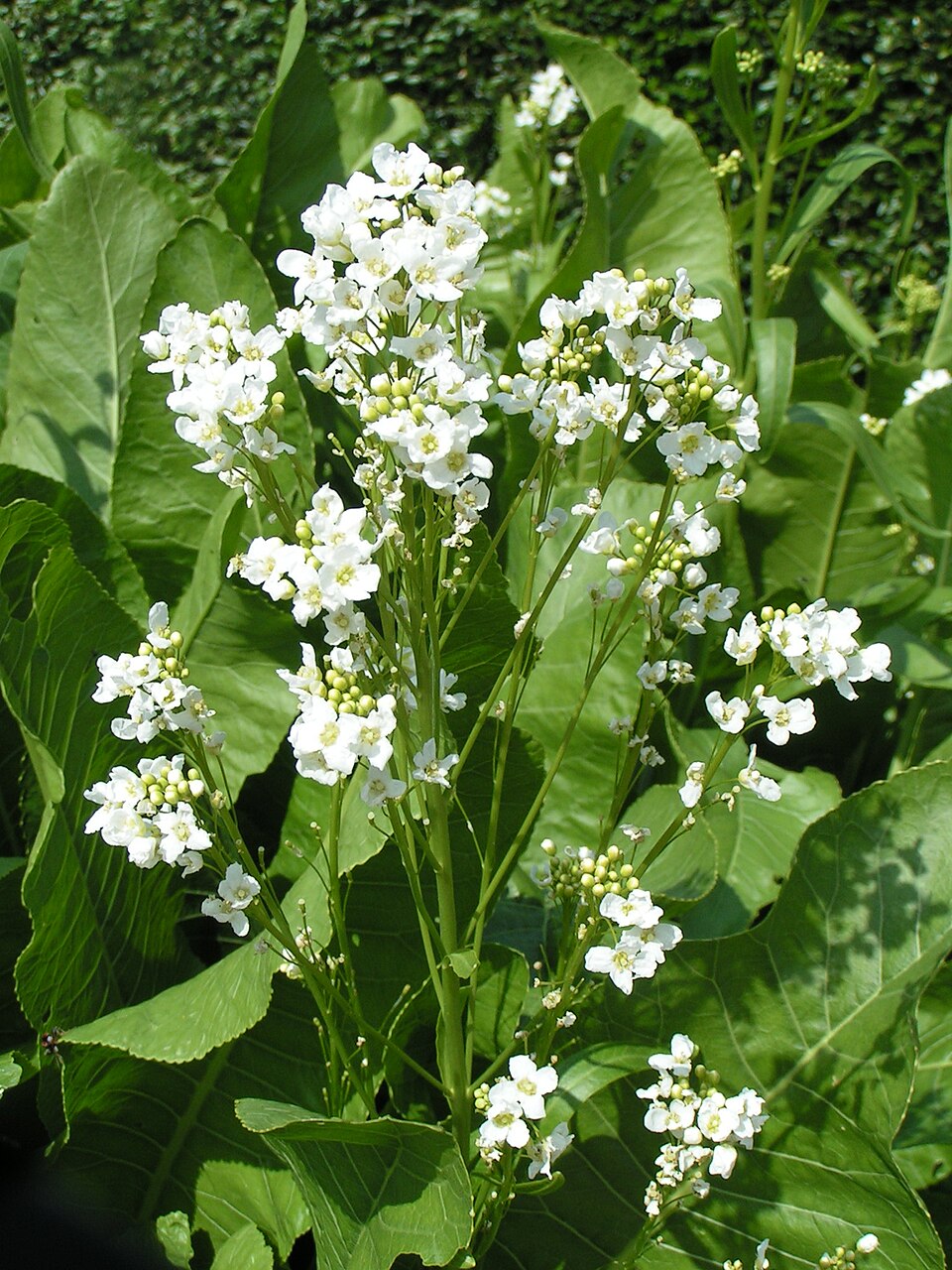
If your garden has a sunny bed to spare, Horseradish deserves strong consideration. It yields well for the space it takes, and the growing routine is simple once it is set up. Learning how to grow horseradish comes down to timing, soil, water, and harvest: this guide covers each one in detail for American home gardeners.
Table of Contents
Table of Contents
Before we dig in, a word on expectations. Horseradish is hardy in USDA zones 3 through 9, and expect harvest roughly 150 to 210 days after sowing. That range covers most of the country, though gardeners at the edges of it should read the timing section with extra care. The Old Farmer's Almanac keeps excellent general growing references if you want a second opinion on any step below.

Photo: Wikimedia Commons
Choosing a Variety
When it comes to how to grow horseradish, getting the details right makes all the difference.
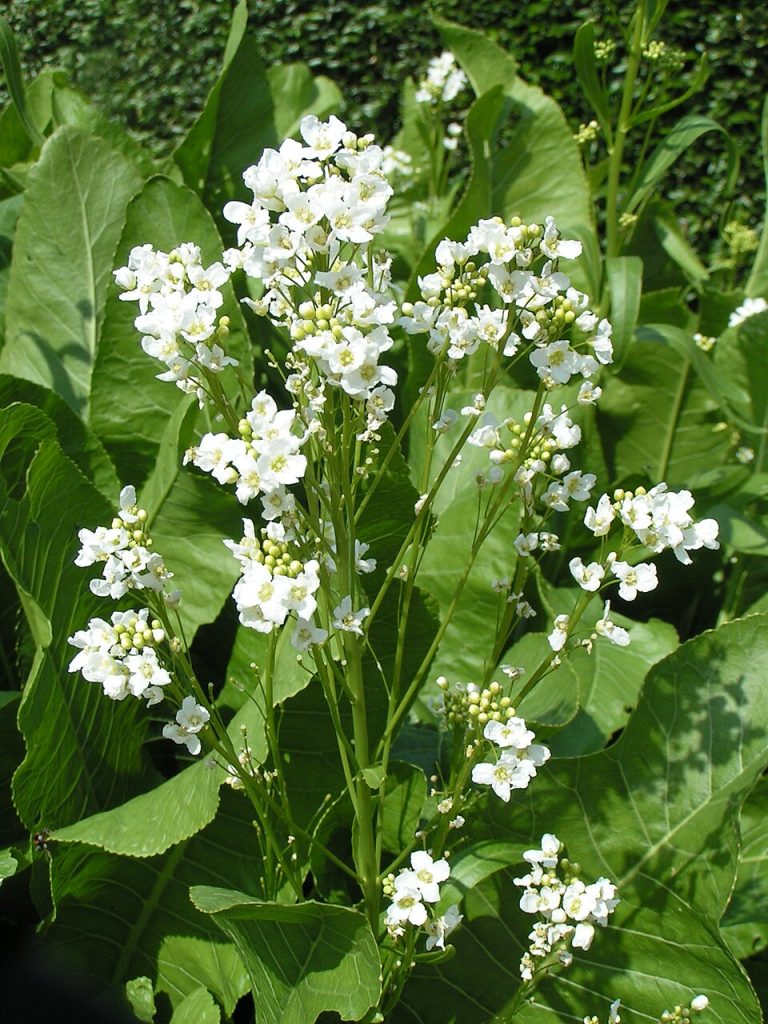

Many homeowners find that how to grow horseradish is easier than they expected once they know the basics.
Variety choice matters less than timing and soil for horseradish, but it still pays to shop smart. Root cuttings, called sets, from a garden supplier rather than seed. Choose varieties described as suited to your part of the country, and favor disease resistance when the catalog mentions it. Common horseradish is the standard; Bohemian types are sometimes listed as more disease resistant. Any healthy set grows vigorously.
Whatever you buy, inspect it. Seed packets should be dated for the current season. Transplants should have white, fibrous roots, not a brown tangled mat. The Missouri Botanical Garden plant finder is a useful place to compare descriptions and confirm you are buying the right species. And if a neighbor grows horseradish well, ask where their stock came from: local success is the best recommendation there is.
If you already grow herbs or vegetables, you may enjoy our companion guide to growing turkish rocket for ideas on what to plant alongside.
When to Plant Horseradish
Many homeowners find that how to grow horseradish is easier than they expected once they know the basics.
The key to how to grow horseradish is choosing the right approach for your space and budget.
Every region has its own rhythm, but horseradish follows frost dates the way most garden plants do. Here is the timing that works: direct sow right around your last spring frost.
Those offsets are relative to your frost dates, not anyone else's, so check your USDA zone planting dates on our planting calendar and write down your last spring frost and first fall frost before you sow. The Old Farmer's Almanac planting calendar lets you look up dates by zip code, which takes the guesswork out of it. For the botanical details and native range, the USDA PLANTS database is the authoritative reference.
Keep a simple record of sowing dates and results. After two or three seasons you will know your own microclimate better than any chart, and your horseradish timing will dial itself in.
Write your dates on the calendar the day you read this. A garden journal with actual frost dates beats memory every time, and horseradish rewards the gardener who plants on schedule.
Soil and Sun
The key to how to grow horseradish is choosing the right approach for your space and budget.
With a little planning, how to grow horseradish can fit even a busy schedule.
Before a seed goes in the ground, read the site the way the plant will read it. Horseradish calls for Full sun with soil that is Deep, rich, well-drained soil. A bed that matches those two needs will outperform a pampered bed that does not.
Test your soil before amending it. A basic test from your state extension service tells you pH and nutrients for a few dollars, and it beats guessing. Horseradish is not terribly fussy, but it does its best work in ground that matches the description above. The Clemson Home & Garden Information Center publishes clear, practical soil guides for home gardeners.
Plan the water along with the site. Horseradish needs regular watering the first year, so a bed near a hose or rain barrel will get better care than one at the far end of the yard. Convenience matters in midsummer.
Planting Step by Step
With a little planning, how to grow horseradish can fit even a busy schedule.
Before you start, it helps to understand how how to grow horseradish works in real homes.
Horseradish grows from root cuttings called sets, planted in spring 2 inches deep at a slant, 12 inches apart, in full sun and deep, loose soil. Mark the top of each set so it goes in the right way up. Give it its own corner, because horseradish is aggressively invasive and any root fragment regrows.
Here is the planting routine for horseradish, in order:
1. Prepare the bed a week or two ahead: loosen the soil, work in compost, and rake it level.
2. Set transplants at exactly the depth they grew in their nursery pots, with the crown level with the soil surface. Planting too deep is one of the most common mistakes with nursery stock.
3. Consider sinking a bottomless bucket or lining the planting hole to contain the spreading roots.
4. Space plants about 18 inches apart each way, giving each one room to reach full size without crowding.
5. Water the bed thoroughly right after planting so the soil settles around the roots or seed.
6. Mulch lightly to hold moisture and discourage weeds, keeping mulch a couple of inches back from stems.
7. Label the row with the variety and date; you will thank yourself later.
Work on a calm, overcast day if you can; transplants establish faster without sun and wind stress. The UF IFAS Gardening Solutions planting guides walk through the same steps with photos, if you want a visual reference.
Watering and Feeding
Before you start, it helps to understand how how to grow horseradish works in real homes.
A good plan for how to grow horseradish saves time, money, and frustration.
Horseradish needs regular watering the first year. That is the headline; the details are about consistency. Even moisture matters more than volume: plants stressed by alternating drought and flood never perform their best.
Mulch is the hardest-working tool in the watering routine. A few inches of straw, shredded leaves, or bark holds moisture, cools the soil, and starves weeds. Pull it back a couple of inches from stems so crowns stay dry. Guidance from Gardenia.net on mulching ornamentals and edibles alike is worth a read.
Feed modestly. A side-dressing of compost mid-season suits horseradish better than heavy doses of synthetic fertilizer, which push soft growth at the expense of flavor and sturdiness. If a soil test showed a real deficiency, correct that specifically rather than feeding blindly.
Care Through the Season
A good plan for how to grow horseradish saves time, money, and frustration.
For most people, how to grow horseradish comes down to a few smart choices.
Established horseradish plants are tougher than seedlings, but the season is not on autopilot yet. Keep up with watering and weeding, check the undersides of leaves now and then, and the plants will carry themselves to harvest.
When you want a second opinion on routine care, the Missouri Botanical Garden plant profiles cover feeding, pruning, and seasonal tasks in welcome depth.
It needs almost no care: water in drought, pull weeds, and otherwise ignore it. Flea beetles may chew the leaves but never harm the root. Do not fertilize heavily, which produces forked, hairy roots. The foliage dies back with frost and returns faithfully every spring.
Keep up with the small jobs and the season mostly runs itself. If you grow other plants in the same category, our guide to growing witloof chicory covers seasonal routines that transfer well.
Weed little and often. A ten-minute pass with a hoe every few days beats a lost Saturday battling established weeds, and young horseradish plants compete poorly for water and light. Never let weeds go to seed in the bed.
Grower's tip: Plant root cuttings in spring and harvest roots the following fall. Grow in a sunken container to stop it spreading.
Harvest
For most people, how to grow horseradish comes down to a few smart choices.
If you are new to how to grow horseradish, start with the simplest option and build from there.
Harvest is the payoff, and with horseradish the timing of it matters as much as the growing. Pick too early and you lose yield; pick too late and you lose quality. The notes below tell you exactly what ripe looks like.
For region-specific harvest and storage advice, University of Minnesota Extension publishes practical, research-based factsheets worth reading before the picking season starts.
Dig roots after frost in fall or in early spring before growth resumes, when the pungency is strongest. Grate fresh in a ventilated area; the fumes are fierce. Store unwashed roots in a cool, humid spot for months. Pro tip: grow horseradish in a buried bottomless bucket or a dedicated bed you never till, or it will colonize your whole garden.
Harvest in the cool of the morning when plants are crisp and full of moisture. Midday-picked produce wilts faster and keeps poorly. This one habit improves keeping quality more than any storage trick.
For more harvest-timing ideas across the garden, see our guide to growing tomato.
Troubleshooting
If you are new to how to grow horseradish, start with the simplest option and build from there.
When it comes to how to grow horseradish, getting the details right makes all the difference.
Horseradish is a sturdy plant, but a few pests, diseases, and climate limits can spoil the crop. This section covers the ones American gardeners actually meet, and what to do about each.
Requires winter chilling to break dormancy; in zones 10-13 crowns rot and never develop strong roots.
Start with identification, not treatment. Pluck an affected leaf, compare it with photos from University of Minnesota Extension or your own state extension, and then choose the least disruptive fix. Removing affected leaves, improving air flow, and adjusting water solve most home-garden problems without any spray at all.
Quick-Grow Facts
When it comes to how to grow horseradish, getting the details right makes all the difference.
Many homeowners find that how to grow horseradish is easier than they expected once they know the basics.
- Botanical name: Armoracia rusticana
- USDA zones: 3 to 9
- Sun: Full sun
- Soil: Deep, rich, well-drained soil
- Water: Regular watering the first year
- Spacing: about 18 inches apart
- Days to maturity: 150 to 210
There is real satisfaction in a crop you grew yourself, and horseradish delivers it without demanding expert skills. Follow the timing, mind the water, harvest at the peak moment, and enjoy the results. Your garden, and your table, will be better for it.
References
Many homeowners find that how to grow horseradish is easier than they expected once they know the basics.
Old Farmer's Almanac. (n.d.). Home gardening growing guides. https://www.almanac.com/
Missouri Botanical Garden. (n.d.). Plant finder. https://www.missouribotanicalgarden.org/
Old Farmer's Almanac. (n.d.). Planting calendar by zip code. https://www.almanac.com/planting-calendar
U.S. Department of Agriculture. (n.d.). PLANTS database. https://plants.usda.gov/home
Clemson University. (n.d.). Home & Garden Information Center factsheets. https://hgic.clemson.edu/
Was this guide helpful?

About My Garden US
The My Garden US editorial team writes practical, in-depth home and garden guides for American homeowners — tested advice, no fluff.